
Spas & Hot TubsGuide
Hot Tub in Winter: Keep It Running or Winterize It
What the hot tub makers' manuals say about winter: freeze protection, power cuts, snow on the cover, and how to winterize a tub you won't be using.
13 minUpdated Oct 4, 2026

Founder
· 15 years in the industry
I spent more than fifteen years working just about every side of this industry. Weekly service routes, testing and dosing other people’s water. Equipment repair and warranty work, which mostly meant turning up to a pool where something expensive had died and working out why. New construction, from the dig through to handing over the keys. And time behind the counter at a pool store, testing samples people brought in.
That last one is why this site exists. You spend a few years watching the same six problems walk through the door, explaining the relationship between cyanuric acid and chlorine to people who have owned a pool for a decade and were never once told about it, and it stops being a chemistry problem. It becomes an information problem.
Almost every expensive thing that happens to a pool is preventable, and the reason it happens anyway is that nobody explained the underlying mechanism to the owner in plain language. Not because the industry is dishonest, but because there is no time to teach someone water chemistry between stops on a route.
PoolBuff is that explanation, written down properly. No upsells, no affiliate-driven verdicts, and no filler before the answer.
136 articles
What the hot tub makers' manuals say about winter: freeze protection, power cuts, snow on the cover, and how to winterize a tub you won't be using.

What the spa makers' manuals say to check when hot tub jets go weak, surge or stop: the water level, filter, pump speed, air controls, valves and airlocks.
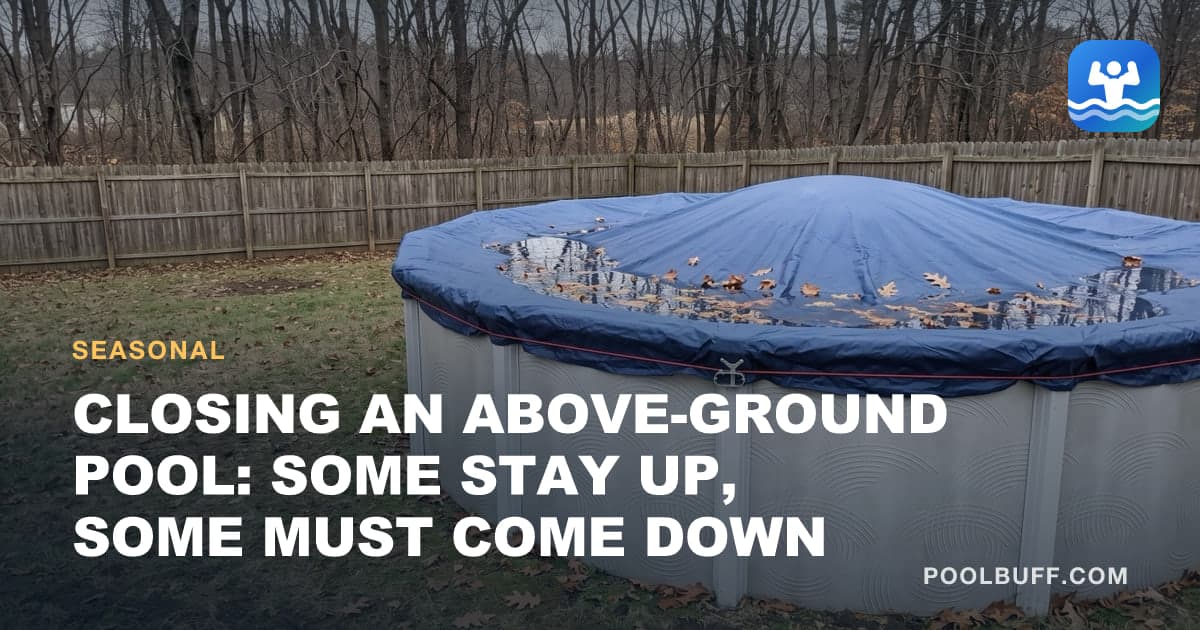
Which above-ground pools can stay up, how far each maker says to lower the water, and the plugs, pillow and cover that keep winter ice off the wall.
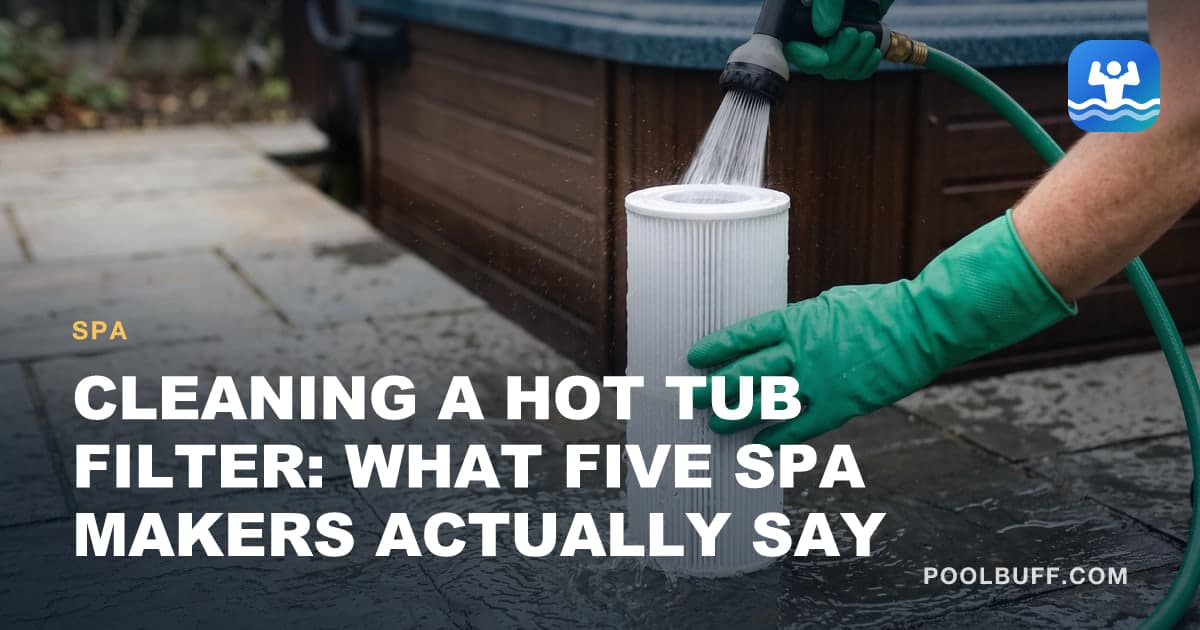
How Hot Spring, Jacuzzi, Sundance, Caldera and Bullfrog say to clean a hot tub filter, how often, what to soak it in, and when to replace it.
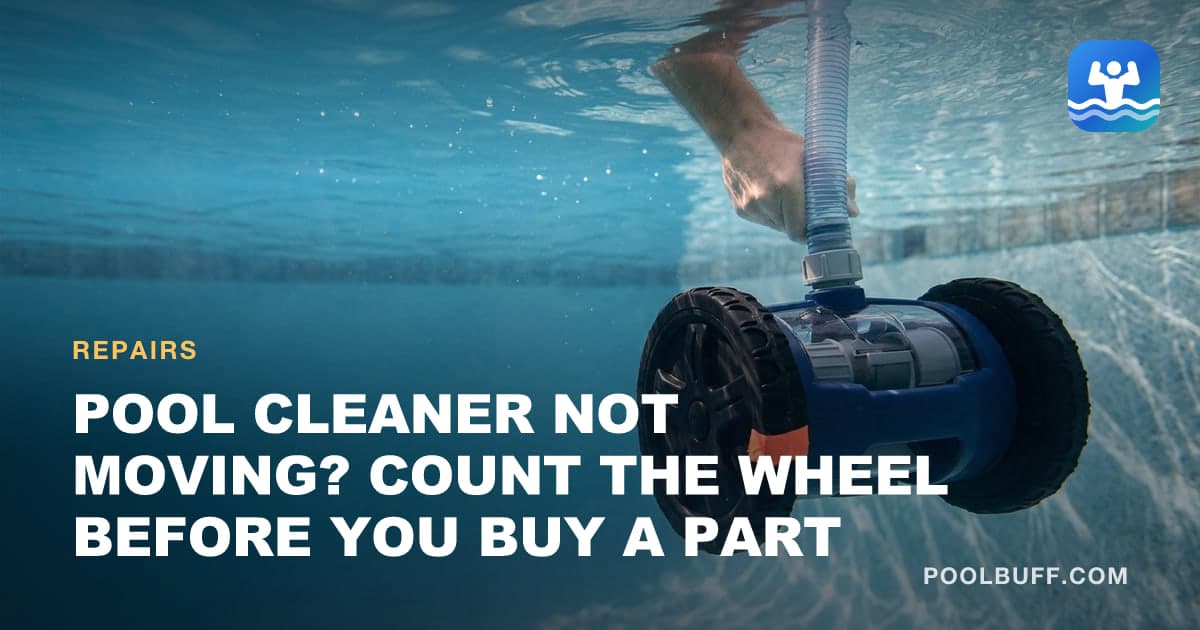
Why a suction or pressure-side pool cleaner stalls, sticks or circles, the speed test each maker gives, and the parts that really do wear out.
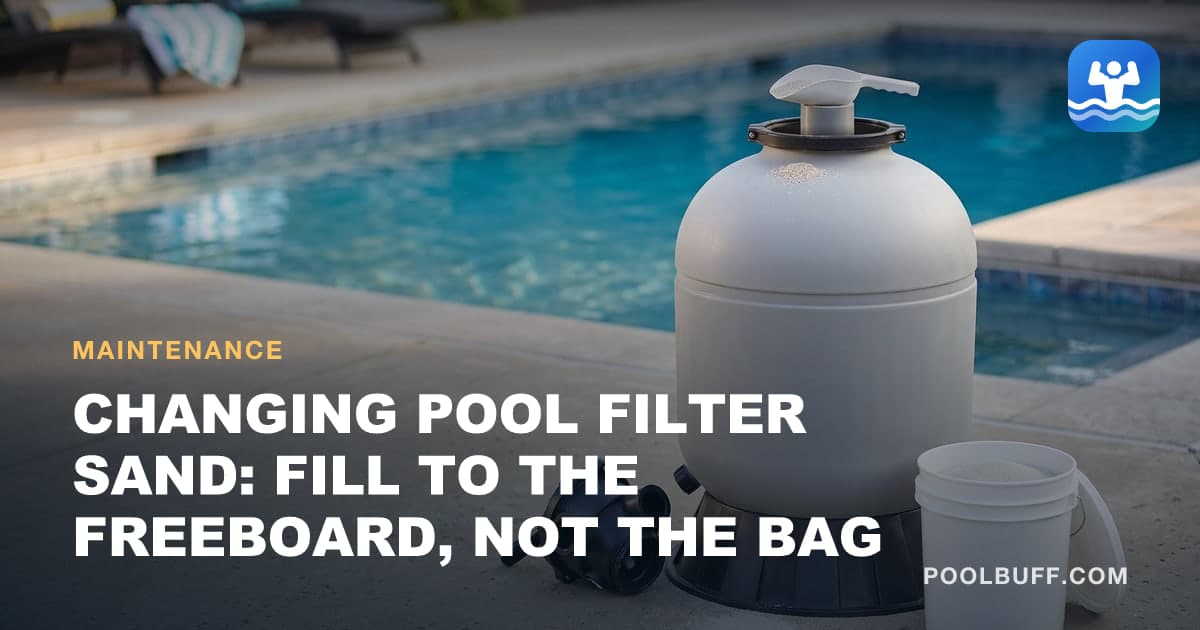
When filter sand really needs changing, how much each Hayward, Pentair and Jandy filter takes, and the fill step that protects the laterals underneath.
Chlorine reading high? Make sure the test isn't lying, stop whatever is feeding it, and let the sun do the work. When a neutralizer is worth using.
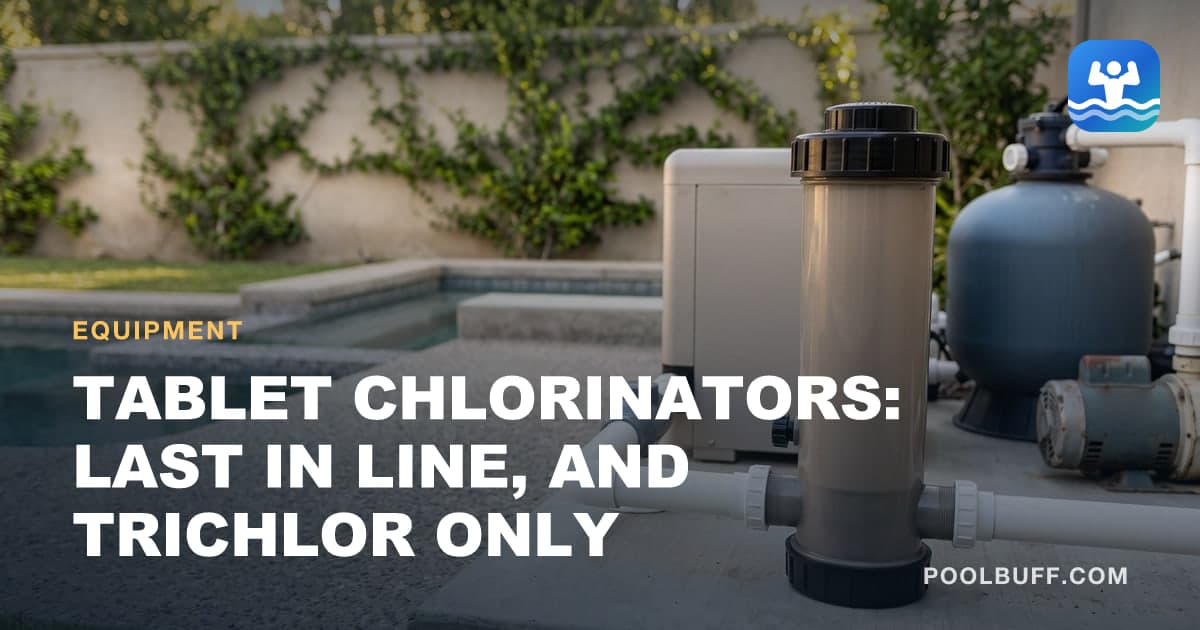
How inline and offline tablet chlorinators work, where they go in the plumbing, what the dial means, and the two mistakes that ruin heaters or start fires.
How a pool pump fails to start tells you where to look. Silent, humming, tripping the breaker or GFCI, or shutting off hot: what each means and what to check.
What switching from a single-speed pump really saves, what federal rules now let you buy, and when a new motor beats a whole new pump.
A puff after recharging is normal. Powder that keeps coming is often too much DE, not a torn grid. What the makers say, where it gets in, and the fix.
What actually goes wrong while you're gone, how to set the chlorine and the pump before you leave, and when a pool genuinely needs someone to visit.
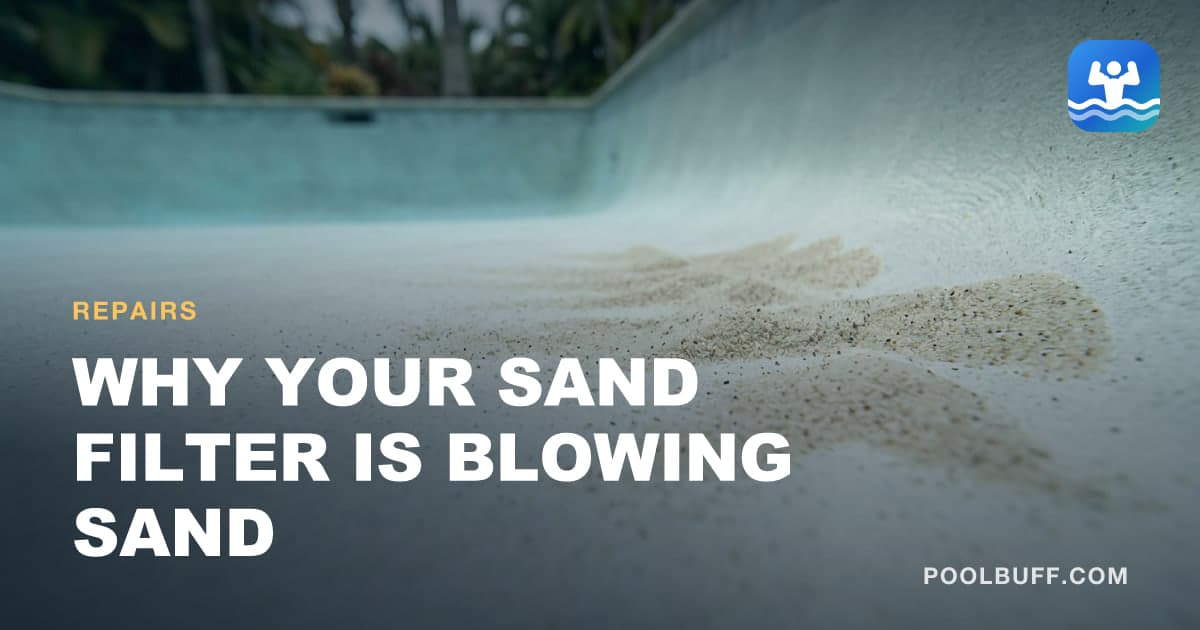
A cracked lateral is the usual answer, but not the only one. How to tell filter sand from plaster grit, what the makers' troubleshooting says, and the fix.
Aeration, soda ash or baking soda: which one your test calls for, how much to add, and why pH below 7.0 takes far more than the rule of thumb says.
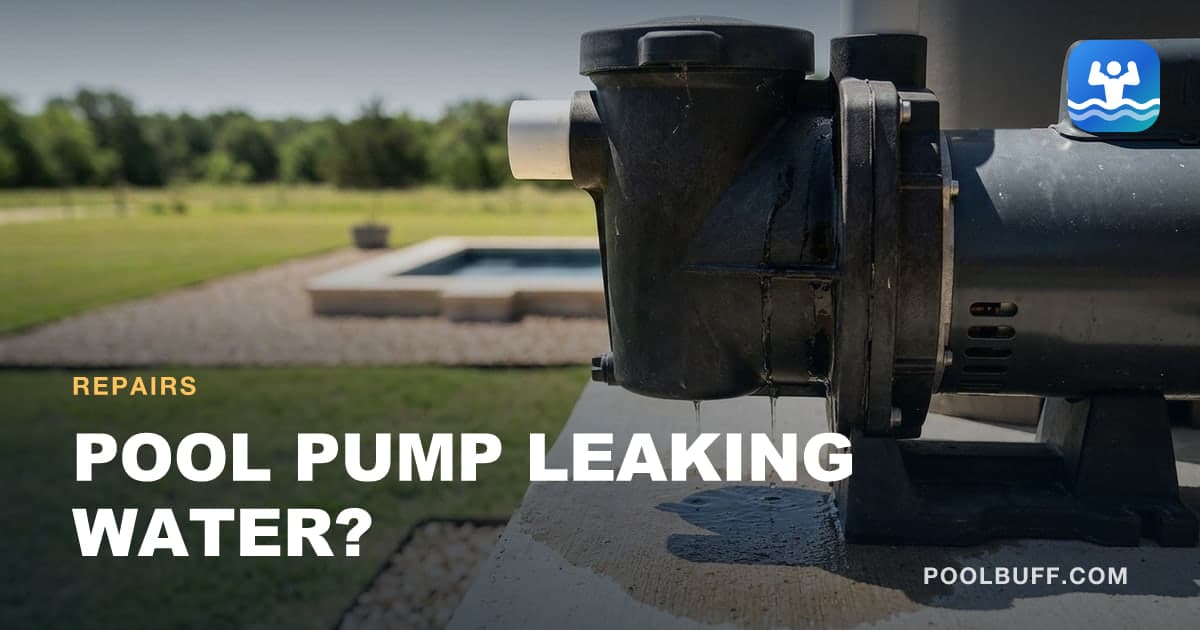
Water between the motor and pump body is the shaft seal, and it can't wait. The lid, the middle joint, the ports and the drain plugs each mean something else.
Borates slow pH creep and the labels claim algae suppression. What the EPA labels really say, how much to add, the pH catch, and why only draining removes them.
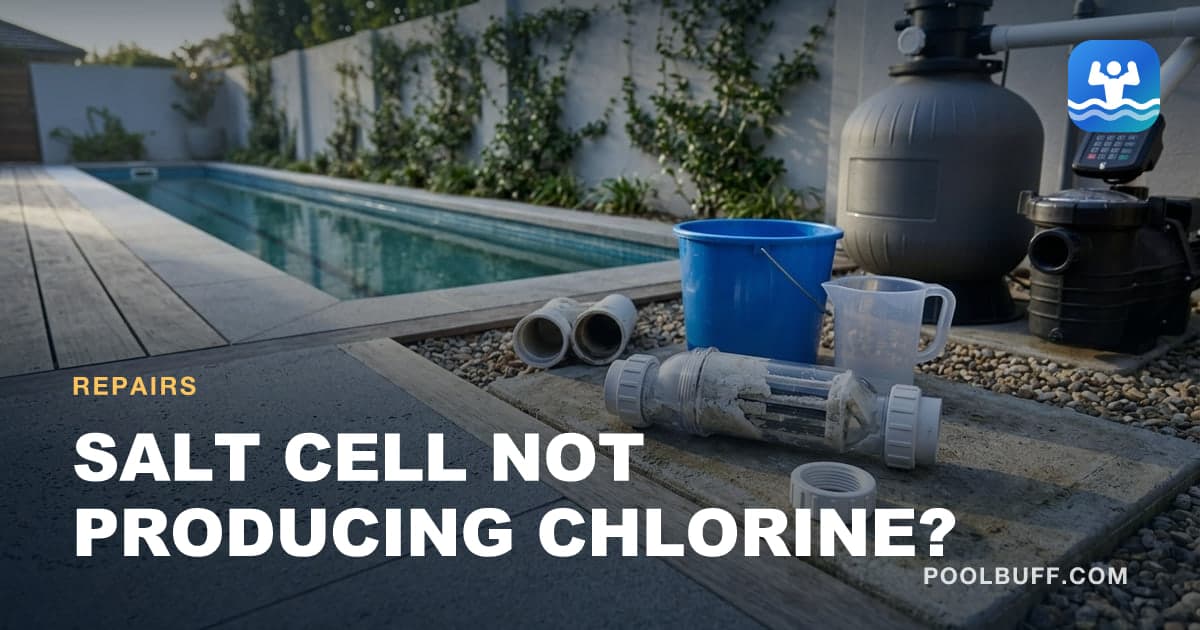
Most dead salt cells are not dead. The flow switch, cold water, a salt reading that lies, and a controller set to the wrong cell — in the order to check them.
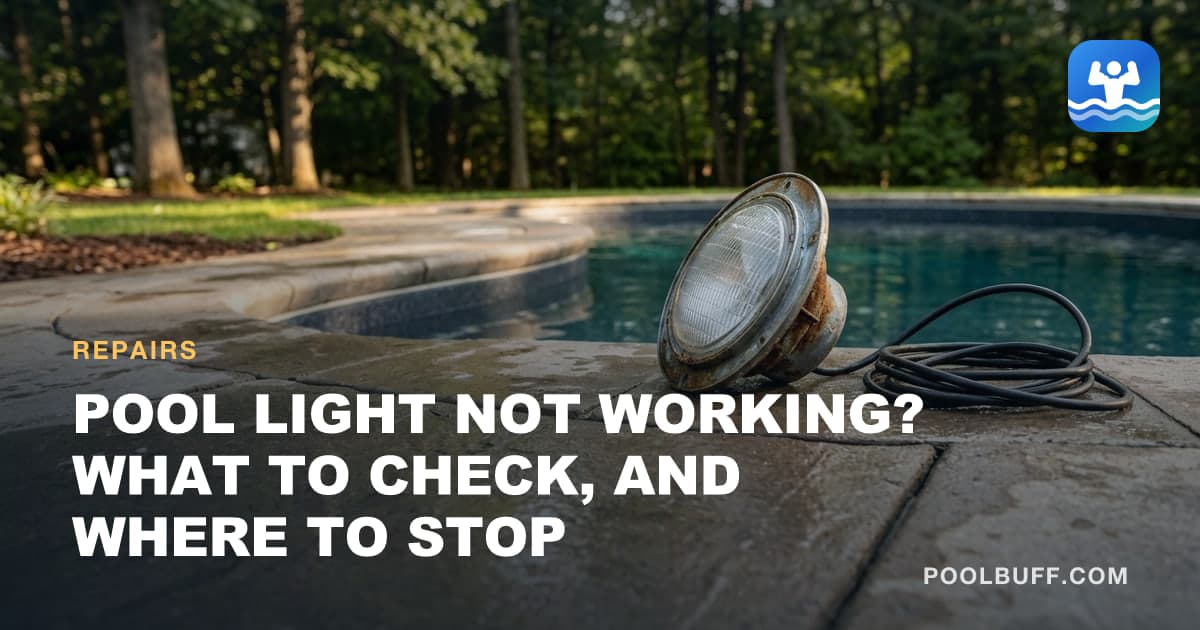
Most dead pool lights are the GFCI, the bulb, or normal color-cycling mistaken for a fault. The order to check, and where to stop.
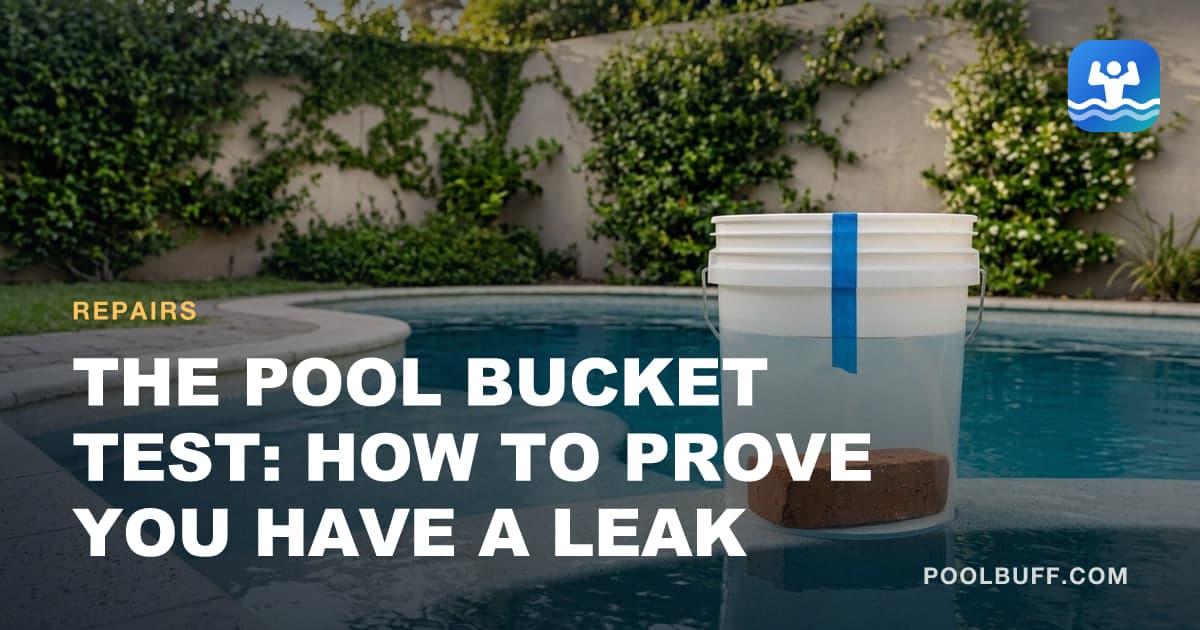
The free 24-hour test that separates a real leak from ordinary evaporation, the five things that quietly invalidate it, and how to read the answer.
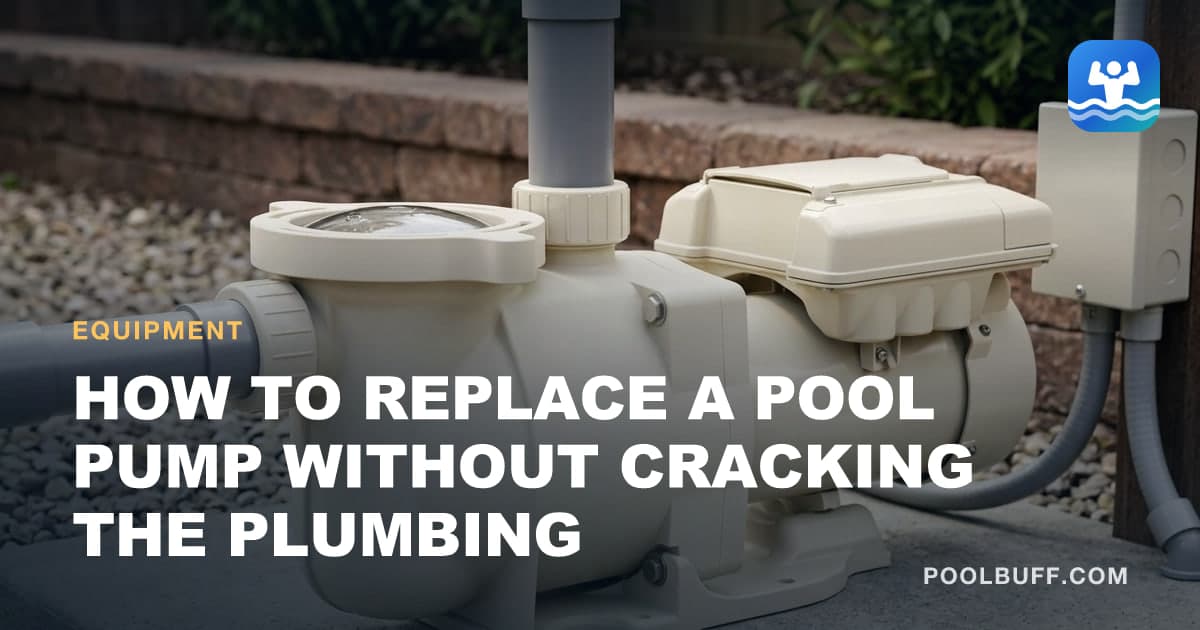
Whether you need a whole pump or just the motor, the port size that catches people out, and the two mistakes that turn a two-hour job into a plumbing repair.
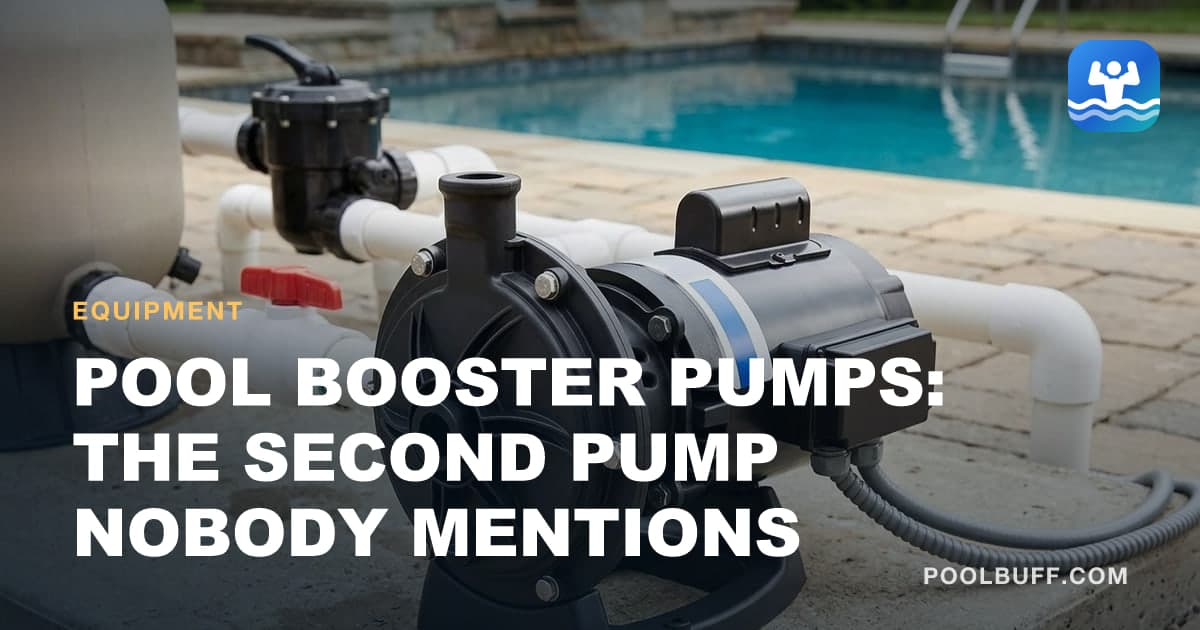
A pressure cleaner needs a second pump running just for it. What it adds to the bill, the wiring rule that decides its life, and how a dying one sounds.
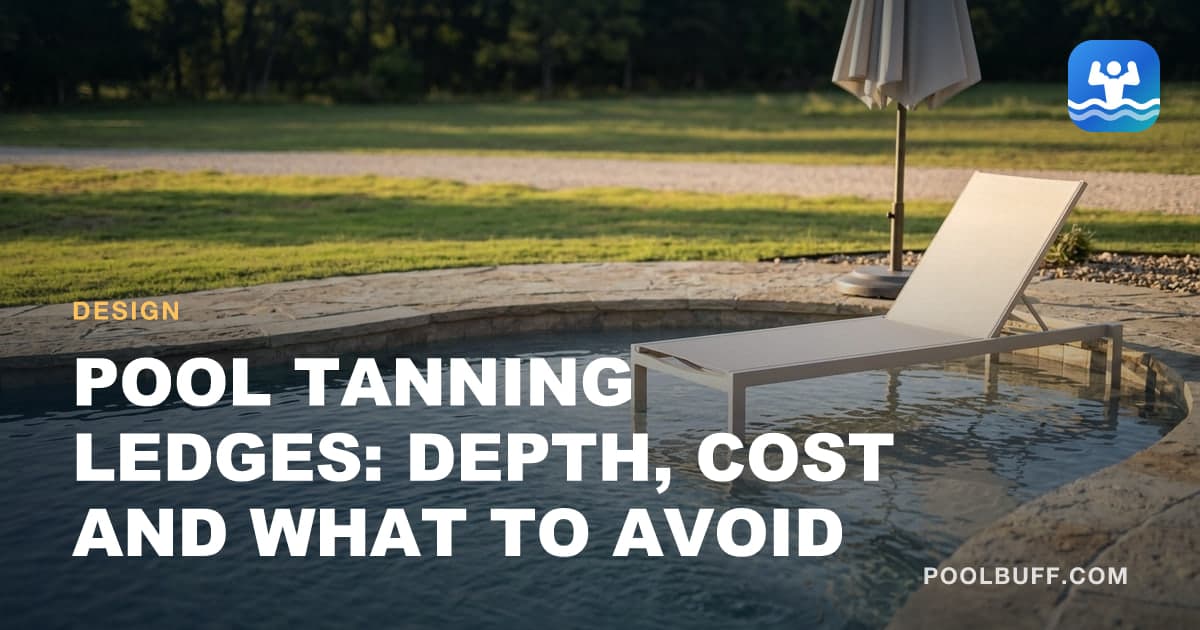
Nine to twelve inches is the whole decision. Get the depth wrong and the furniture floats or the water cooks — plus the circulation problem nobody mentions.
It raises alkalinity, not pH — which is why people add it, get the wrong result, and add more. How much to use, and when soda ash is the right product.
It is not algae, it has roots, and it builds a shell over itself. Why chlorine alone never touches it, and the brushing protocol that actually clears it.
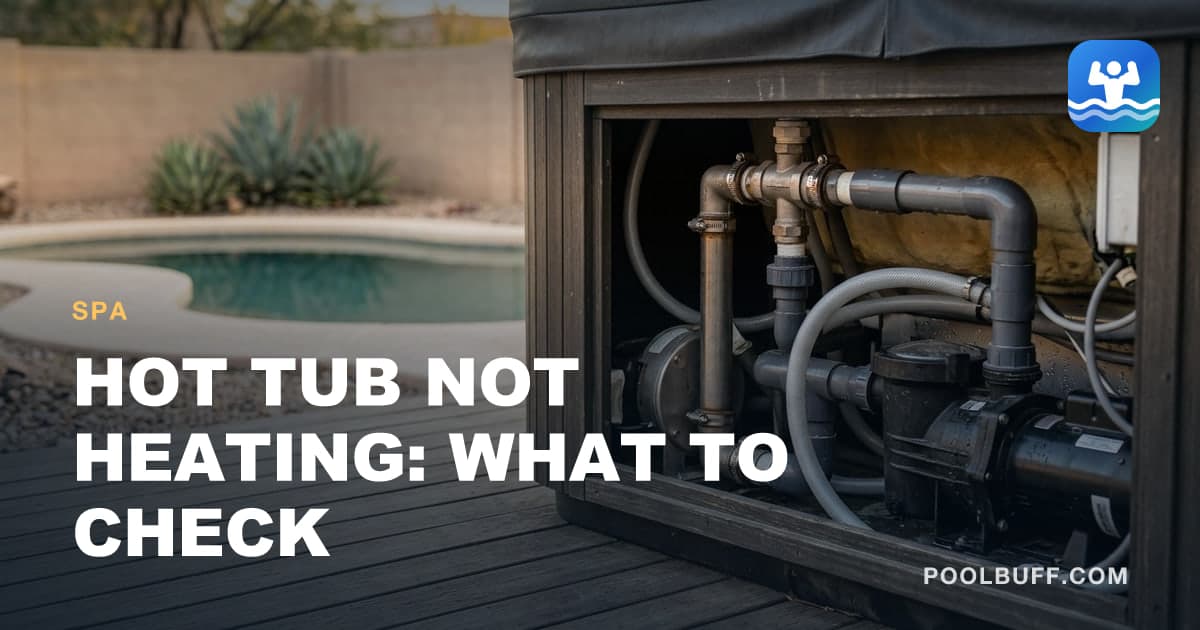
What the spa makers' manuals say to check when a hot tub won't heat: settings, power, flow, the high-limit and the cover, and where it stops being your job.

It is a water problem before it is a skin problem. What lets the bacteria survive a hot tub, and the sanitizer habits that stop it recurring.
The honest answer is not a number of hours. It is a chlorine reading — and knowing which one saves you a day of waiting or an evening of stinging eyes.
Muriatic acid or dry acid, how much to add, and why the pH you keep chasing back down is usually an alkalinity problem wearing a disguise.
Kit prices by type and size, installation, the extras nobody quotes, running costs, and the cost per year that decides which pool is actually cheaper.

Bubbles blowing from the jets mean air is being sucked in before the pump. Here's the order to check, from a free fix to the expensive one.
Whether a dead pool light takes a new lamp or a whole new fixture, the three fixtures worth buying, and why this stays an electrician's job.
A shop vac, a compressor and which one the manuals allow. Line order, how much pressure is too much, and why antifreeze is the backup rather than the plan.
Too low and the water eats your plaster. Too high and it scales everything. Targets by surface, how to raise it, and why lowering it means draining.
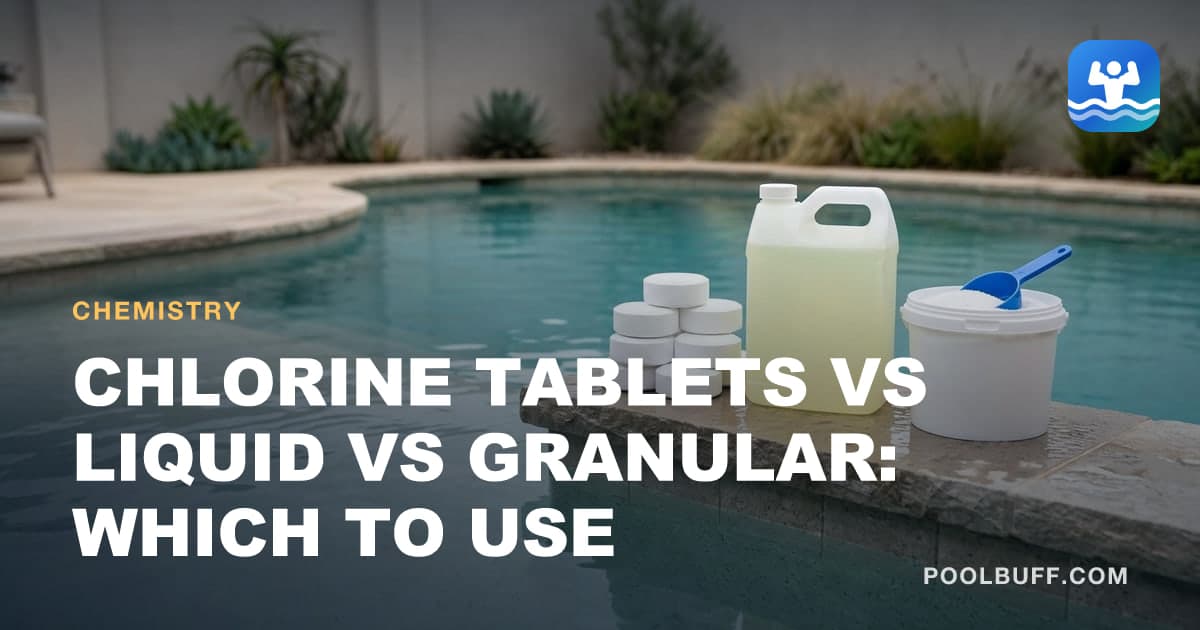
Every chlorine product adds something besides chlorine — stabilizer, calcium or salt. Pick the one whose leftovers your water can still absorb.

Why hot tubs foam and why they go cloudy, from the spa makers' own manuals, and how to find which cause you have before you buy another bottle of something.
What a pool actually does to resale value, the four things that decide it, and why the investment framing is the wrong way to think about it.
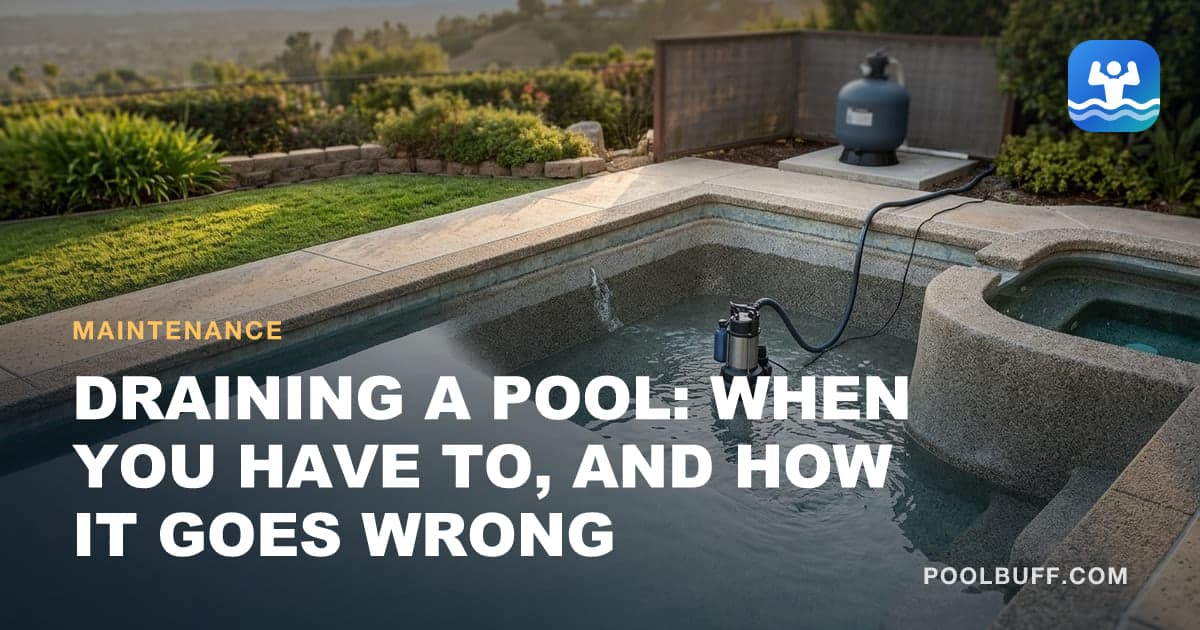
An empty pool can float out of the ground. When a partial drain is enough, when a full drain is genuinely needed, and the checks that come first.
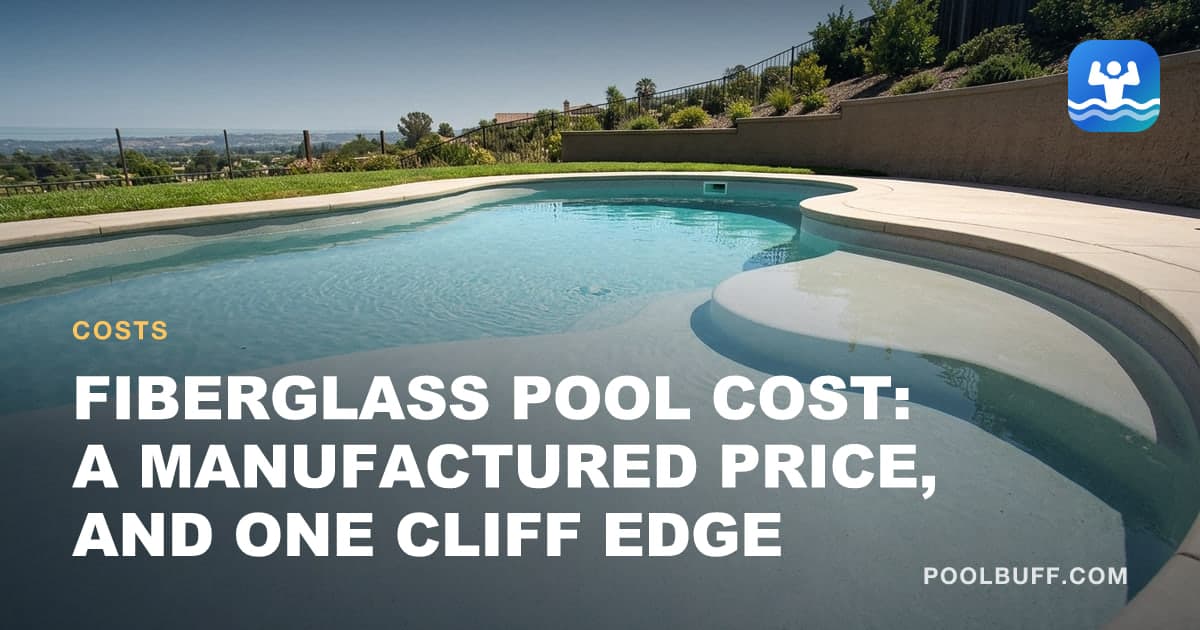
What a fiberglass pool costs installed, why the quotes vary less than gunite, the access problem that can end a job, and the twenty-year math.
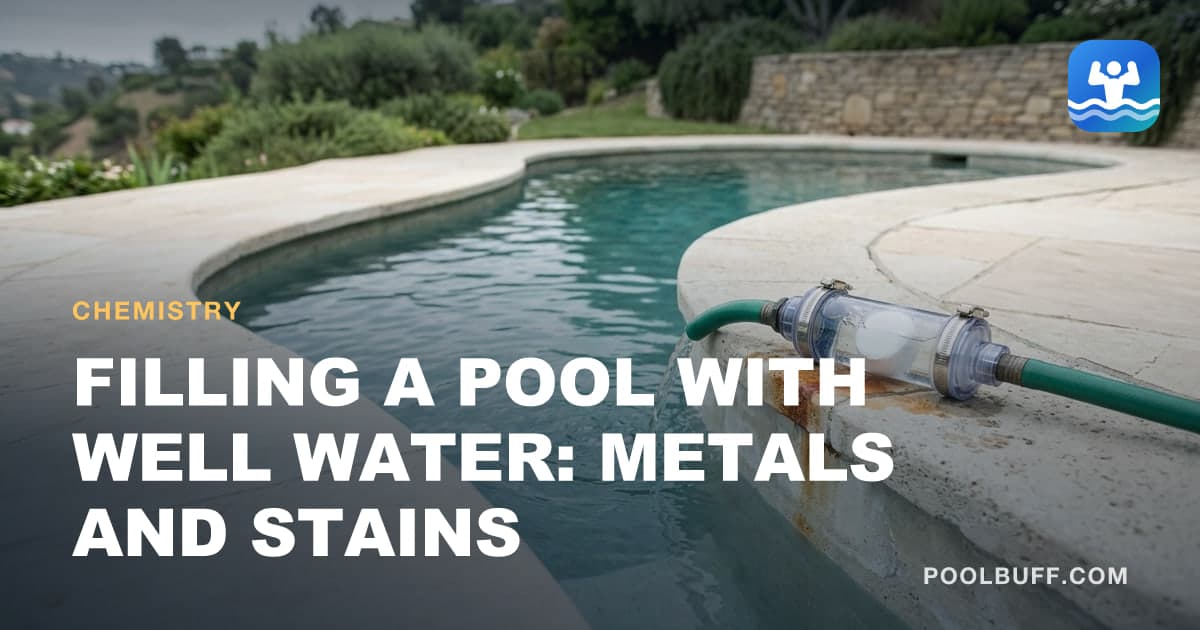
Iron, copper and manganese ride in on the fill water and stain the pool the moment you chlorinate. How to test first, and what a sequestrant cannot do.
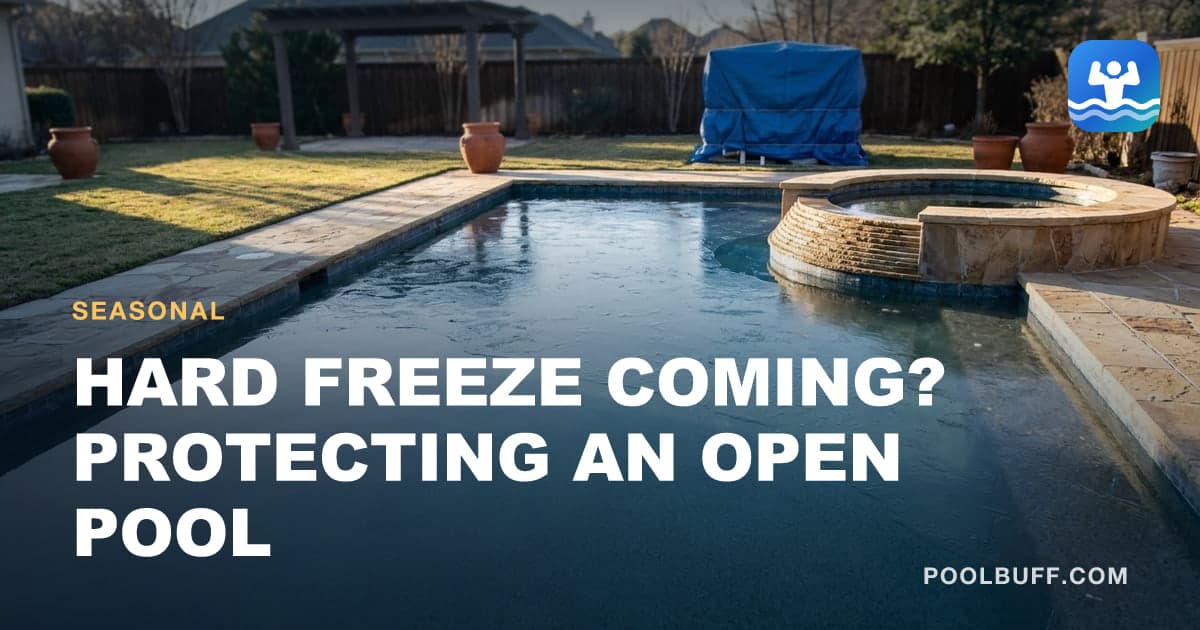
Moving water is the whole strategy, right up until the power fails. What to do while the pump runs, and what to do the moment it stops.

What a hot tub needs after each soak, each week and each month, by the spa makers' own manuals, and the dissolved-solids test that says when to drain.
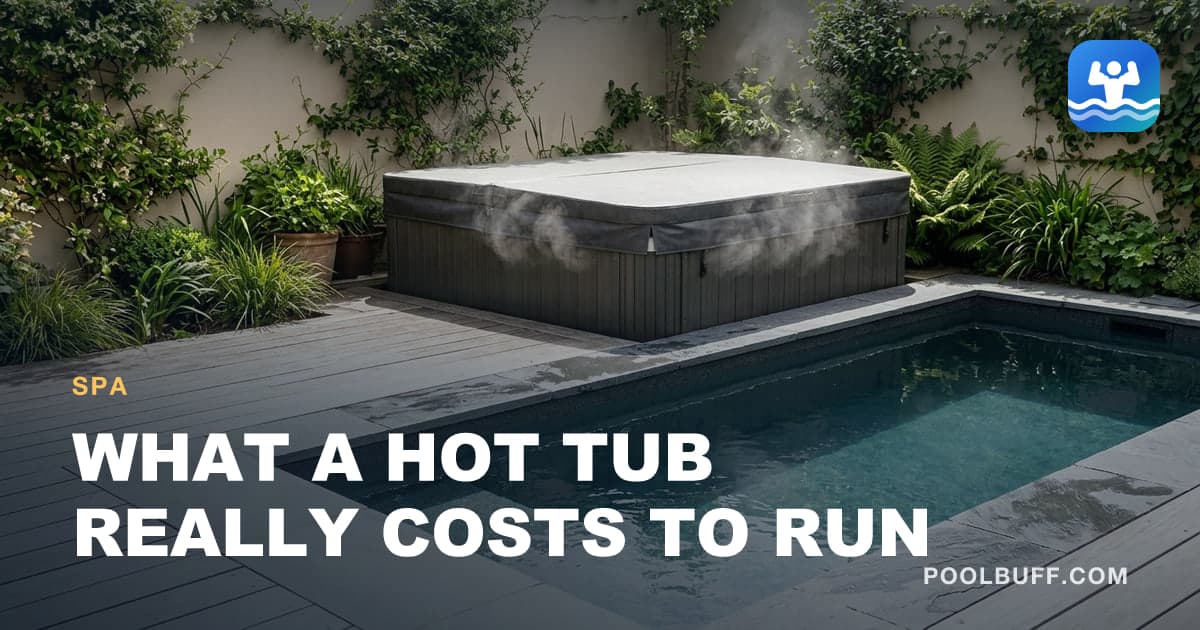
A hot tub's electricity cost, worked from the standby watts each model is certified at and your own rate, plus filters, water and the costs nobody can pin down.

Bromine versus chlorine in a spa, the target ranges that differ from a pool, and why 400 gallons at 102 degrees is a completely different problem.

How to vet a pool builder, what has to be in the contract, the exclusions that blow budgets, and the equipment line in the spec that nobody reads.
The full drain and refill: power off at the breaker first, what each spa maker says to clean the shell with, and how to refill without an airlock.
Do not drain the pool, do not put the furniture in it, and do not cover it. The short list that protects your surface and your equipment before a storm.
No main drain, a wall that moved over winter and a fraction of the volume. The opening steps that change on an above-ground, and the two that matter most.
Phosphates feed algae, but a high reading is not why your pool went green. What the number means and when removing it is money well spent.
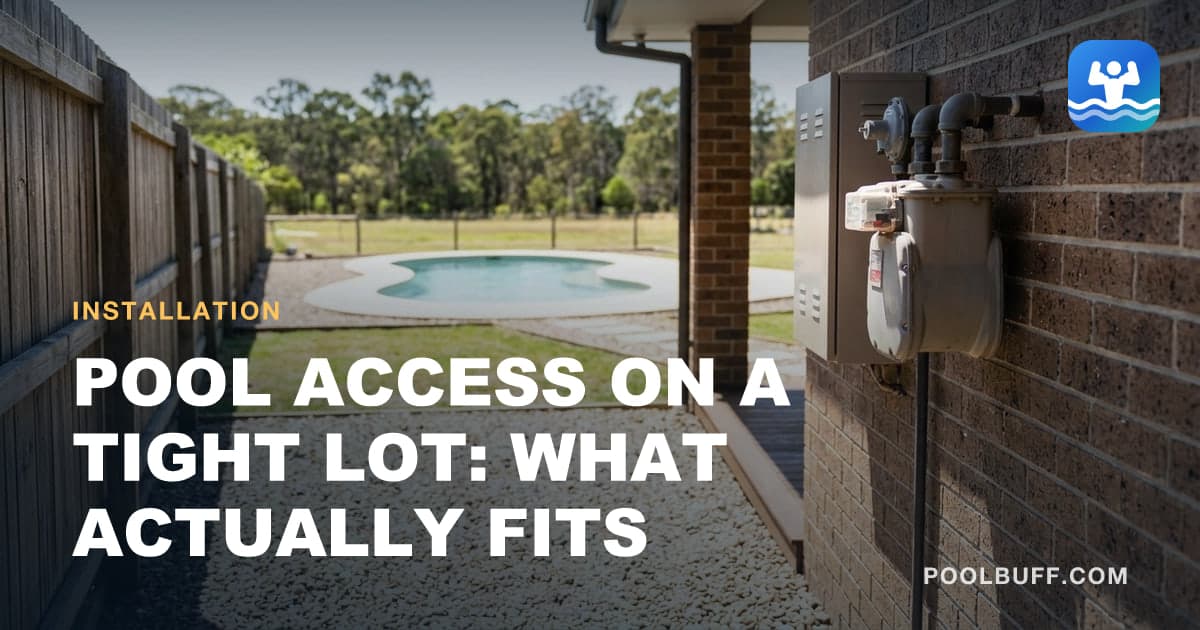
More small-lot pool projects die on access than on space. Gate widths, what each machine needs, and the options ladder when nothing fits.
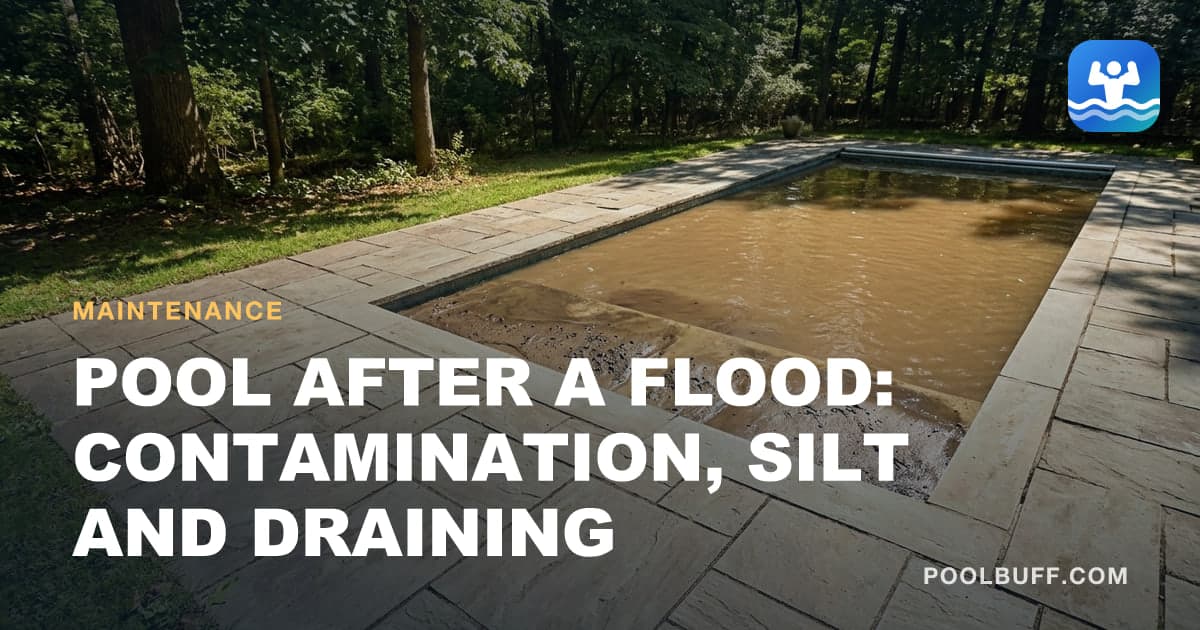
Floodwater is a health problem, not a chemistry problem. What to do first, what to replace, and why the pool stays full while the ground is saturated.
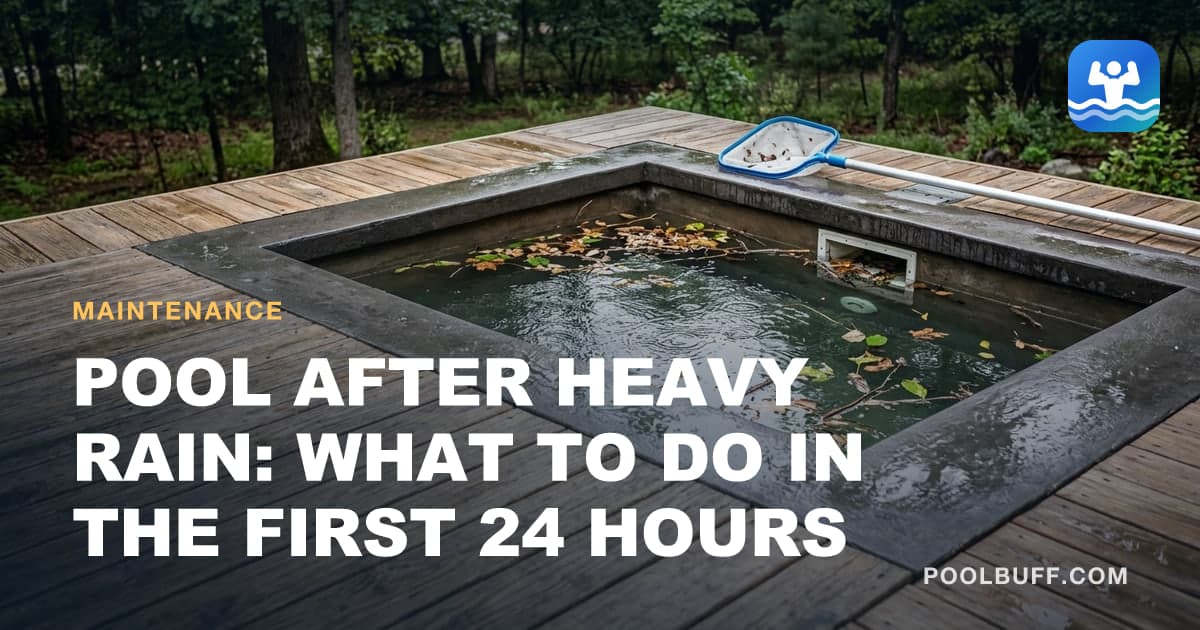
Rain dilutes your chemistry and dumps organic load in at the same time. The order to work through, and the one thing to do before the storm arrives.
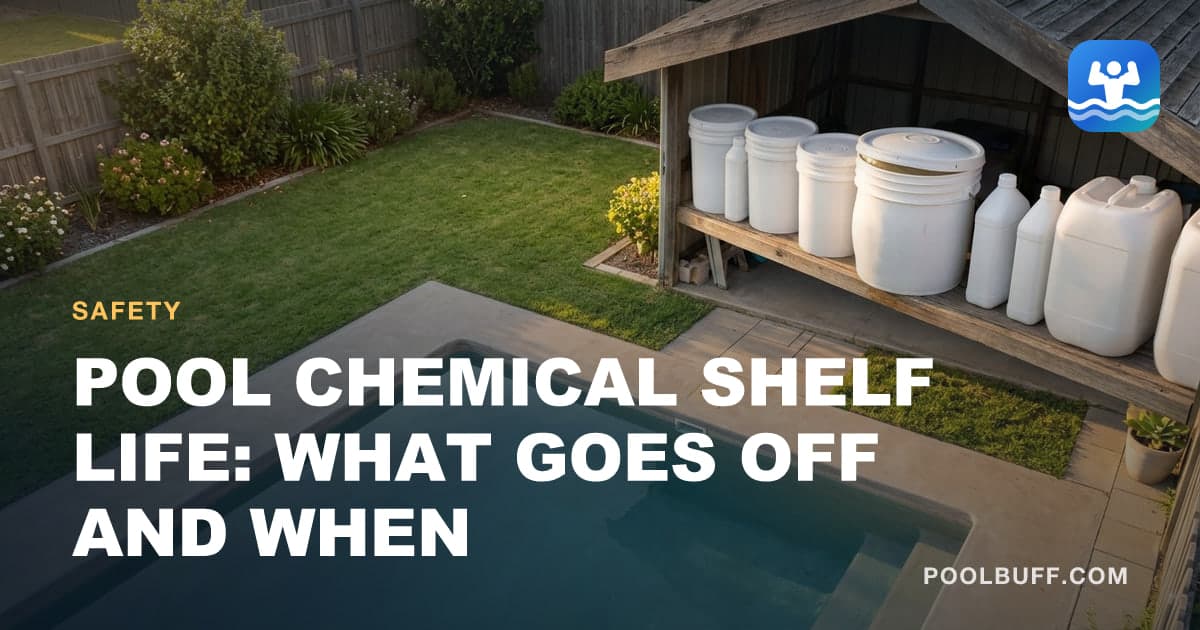
Liquid chlorine is perishable, tablets pressurize a sealed bucket, and cal hypo cakes without losing its bite. How long each product lasts and how to tell.
The specific combinations that cause fires and gas, plus the five ordinary moments they happen in — a shared scoop, a topped-up feeder, a leaking shelf.
Eight products cover a season. Two of them are sold at four times the price under a pool label, and most of the rest of the shelf treats symptoms.
Green at opening is a shock-and-hold job on a clock, not an algaecide problem. The sequence, realistic timings, and when refilling beats treating.
What a service actually charges to open and close a pool, what the DIY version costs in parts, and the one line item that decides which is worth it.
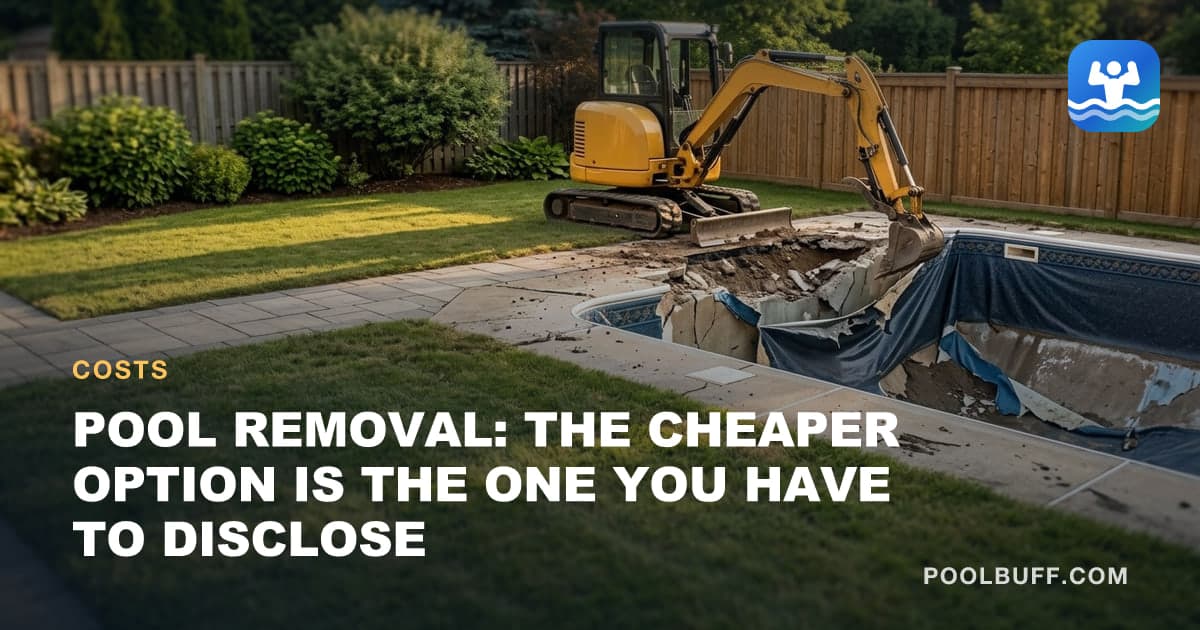
What it costs to remove an inground or above ground pool, why partial removal is half the price, and the resale problem that comes with it.
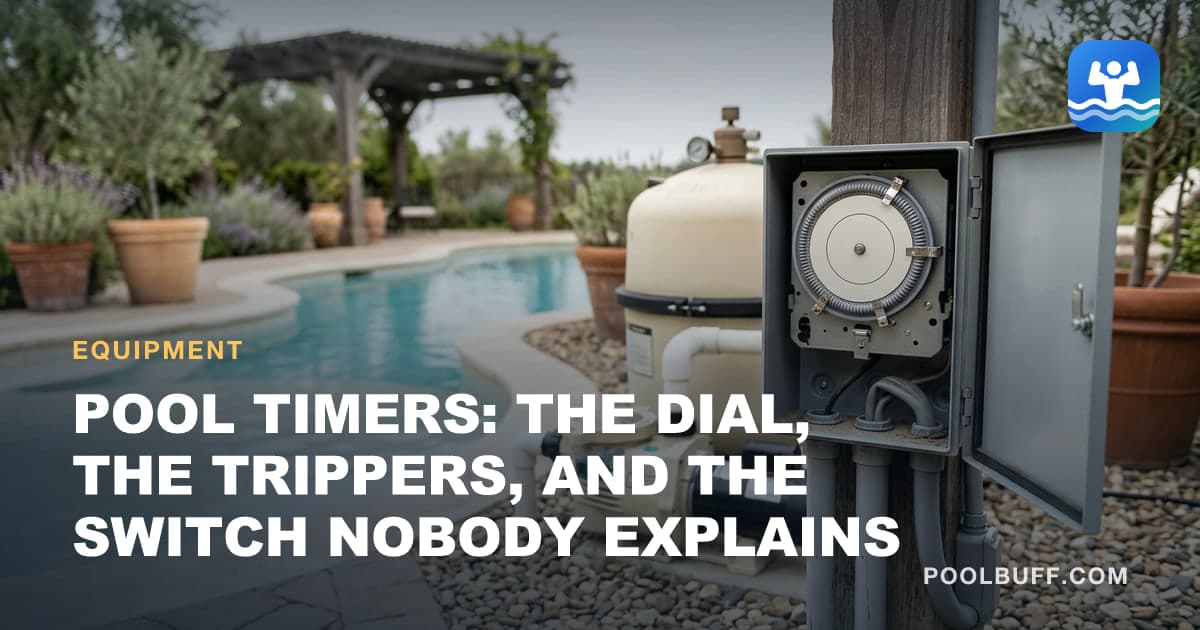
Setting a mechanical pool timer properly, what the fireman's switch does, what fails first, and why a variable-speed pump usually should not be on one.
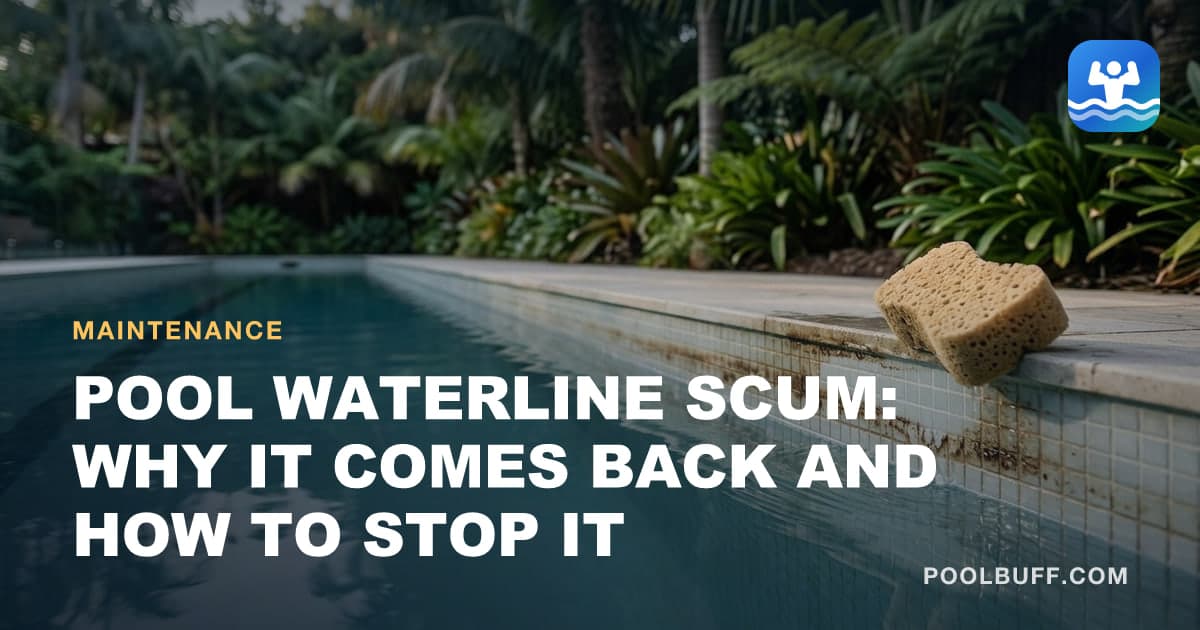
That greasy band at the waterline is body oil, sunscreen and dust. Here's how to remove it properly and stop it returning every week.
Chlorine gone by morning means something is consuming it. The overnight test that tells you what, and why ammonia is the one that needs a shocking dose.
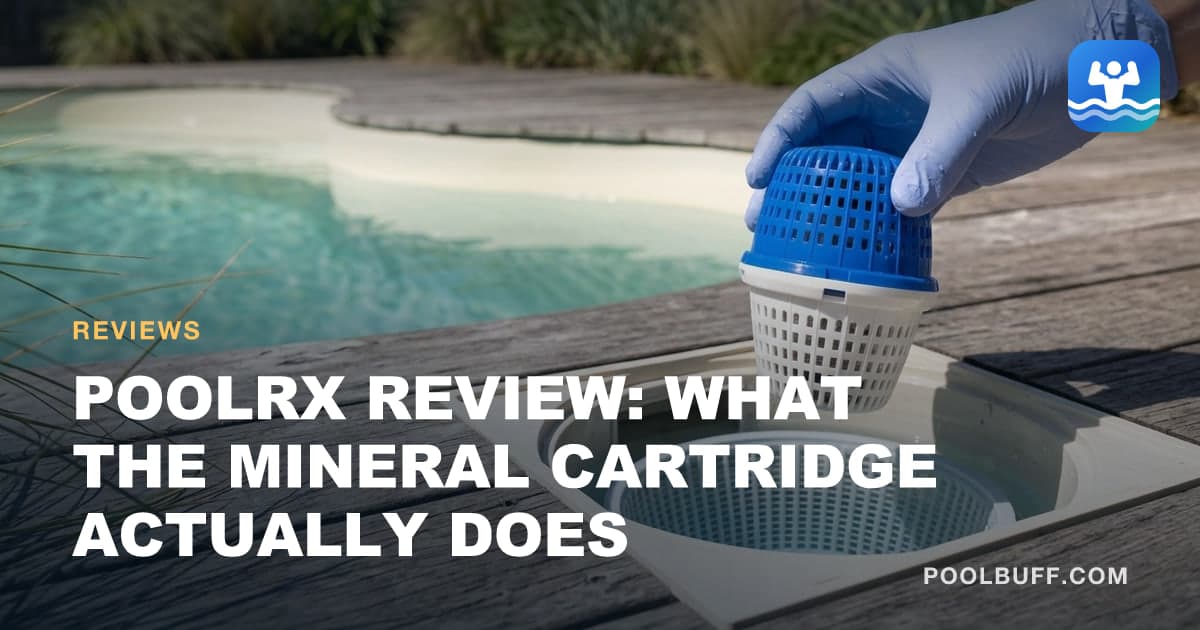
A chelated copper cartridge that genuinely suppresses algae for months. Here's what it does, what it doesn't, and the chlorine advice to ignore.
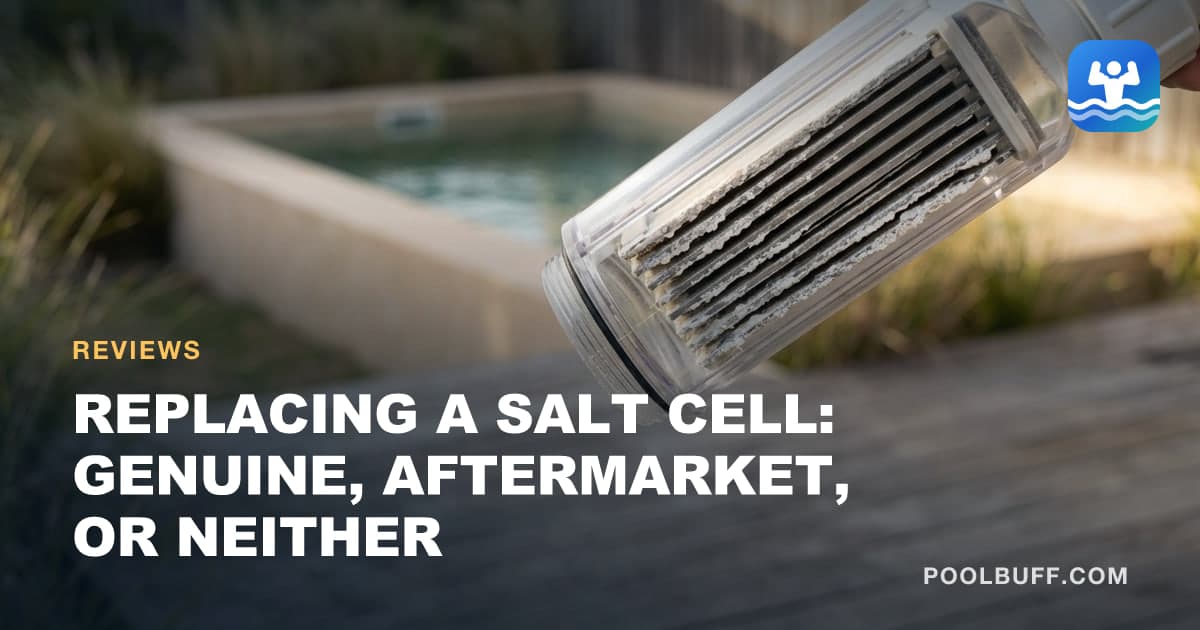
Cells are not interchangeable, and half of them get replaced while still working. What to check first, and how the warranty math actually falls.
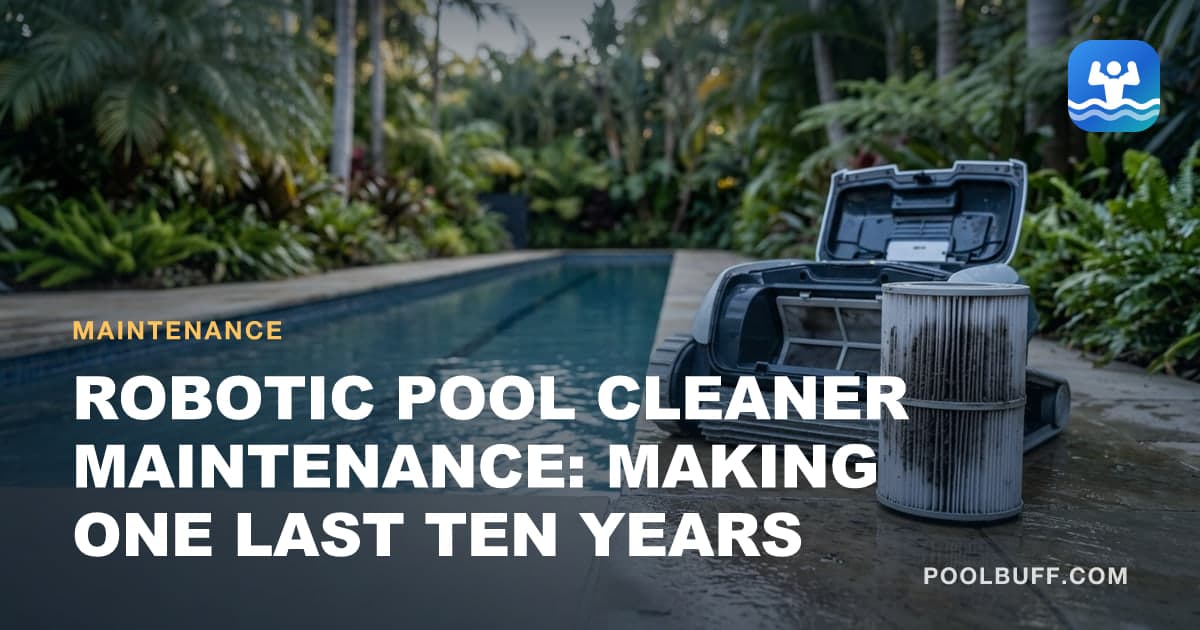
Filter panels, brushes, cable memory and off-season storage. The procedures behind the checklist, and the three habits that kill robots early.
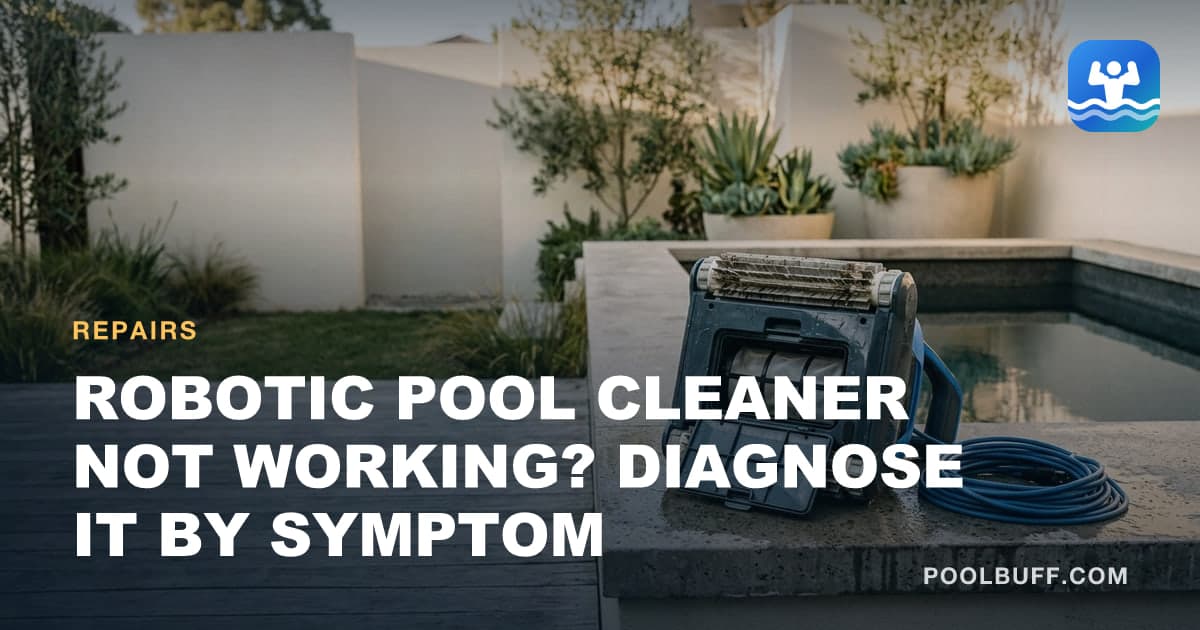
Won't climb, stops mid-cycle, misses half the pool or won't power on at all. What each symptom actually means, and the cheap causes to rule out first.
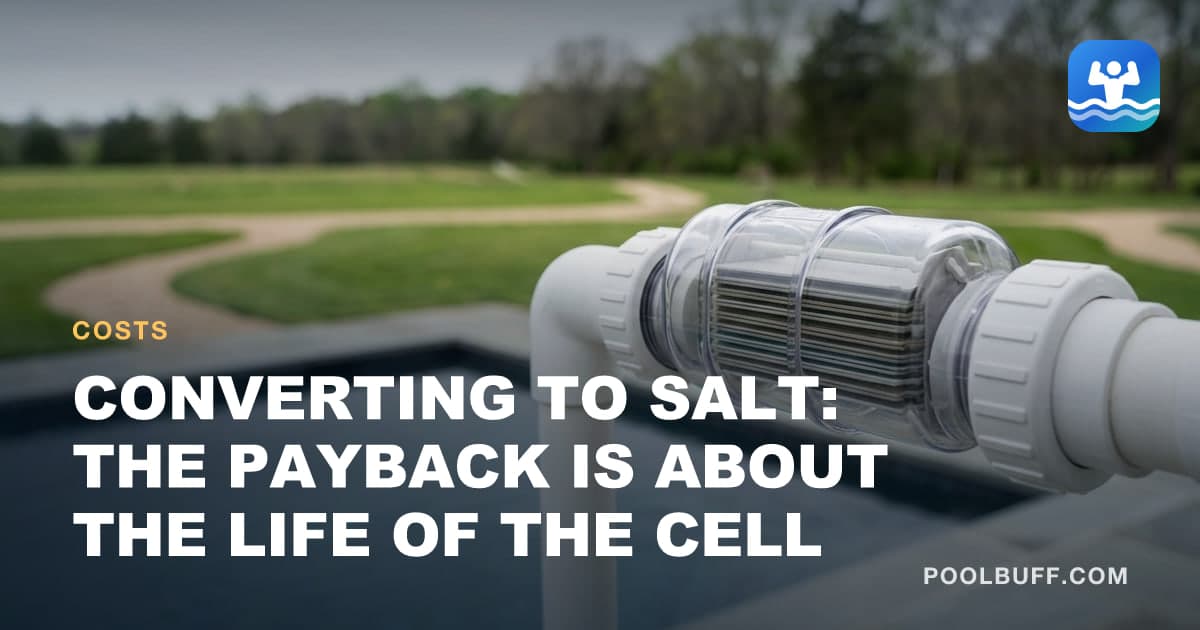
What a saltwater conversion costs installed, the cell replacement nobody budgets for, and the honest payback math on switching.
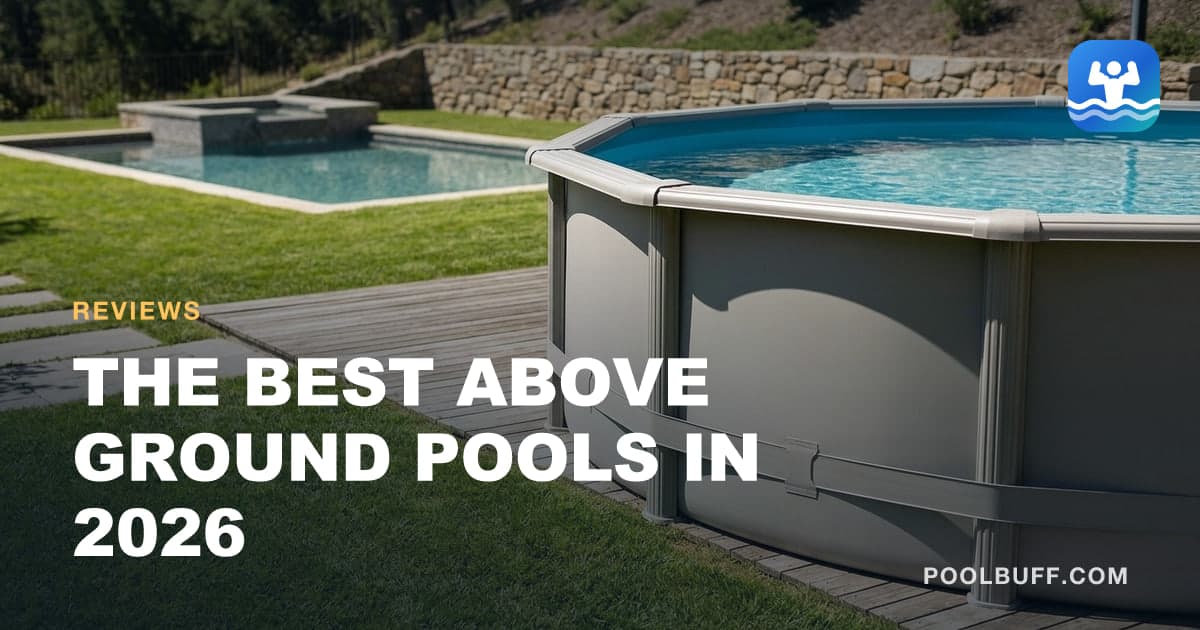
Frame pools and steel-wall pools are different products with different lifespans and prices. Which you are shopping for, and what the set leaves out.

An alarm is the last layer, not the first. Which type covers which gap, what ASTM certification means, and the failure that makes all of them useless.

What to actually keep in the shed. Which chlorine to buy for daily dosing, which for shocking, and the two you should never store side by side.
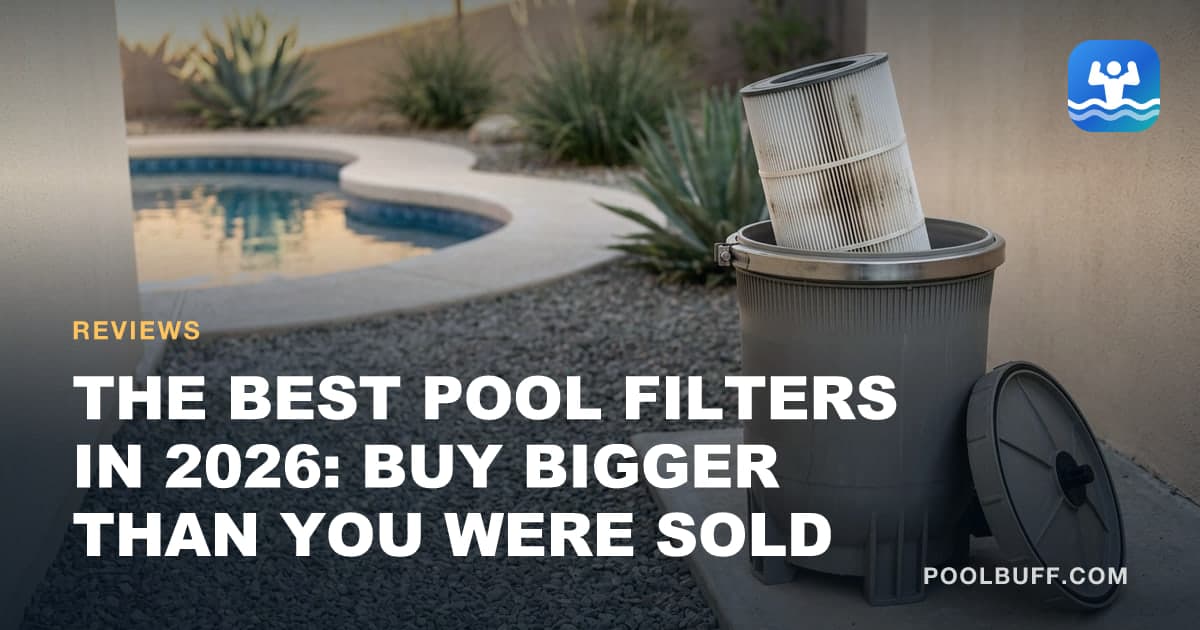
Filter area decides how often you clean and how hard your pump works. Real models compared, and why the one your builder fitted is probably too small.
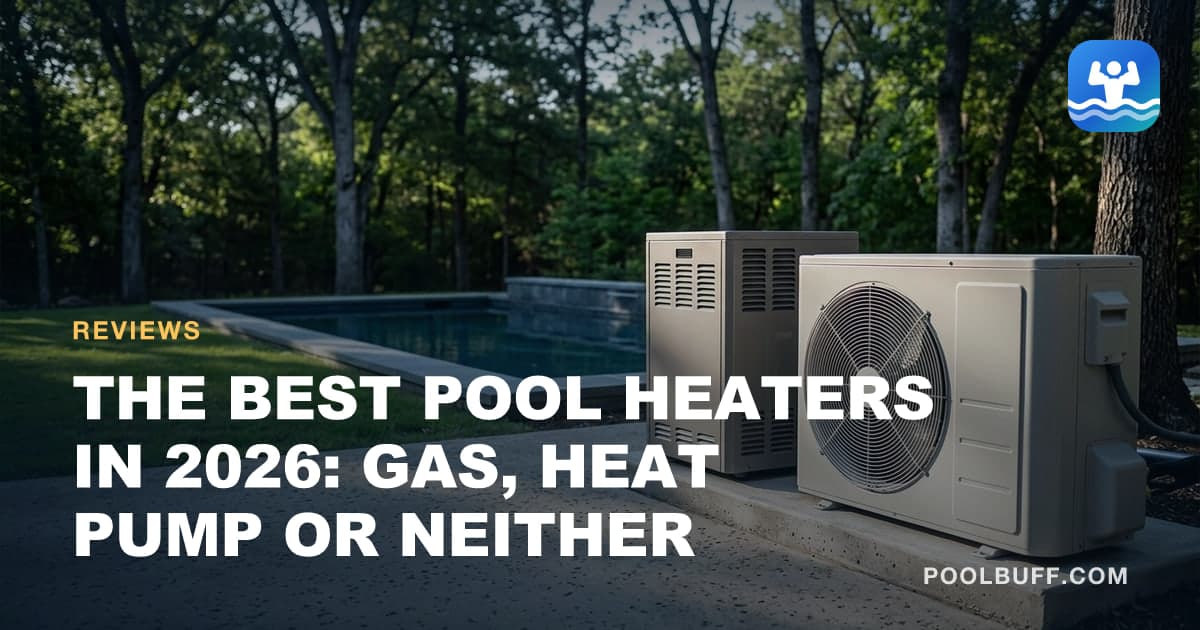
Gas heats fast and costs a lot to run. A heat pump is the reverse. Which one suits your climate and swim season, with real models and honest running costs.
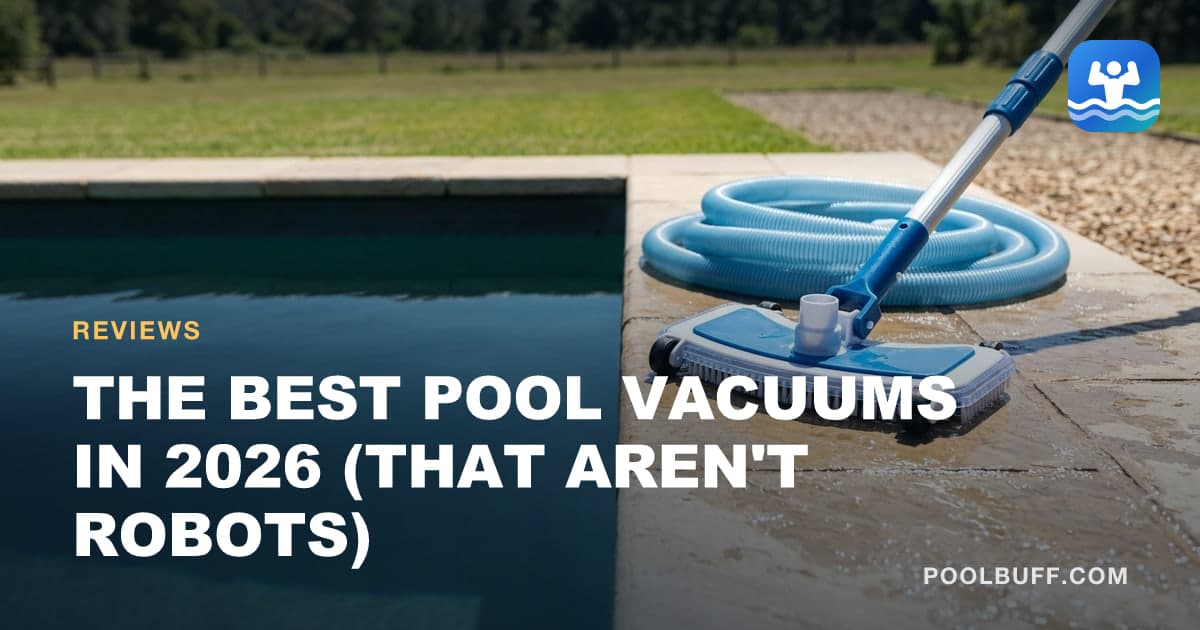
Suction-side, pressure-side and manual. Which one suits your debris, your pump and your plumbing — and when a robot is the cheaper answer anyway.
What to buy for a hot tub, starting from your maker's own sanitizer list: chlorine granules, a weekly oxidizer, and bromine only if your tub allows it.
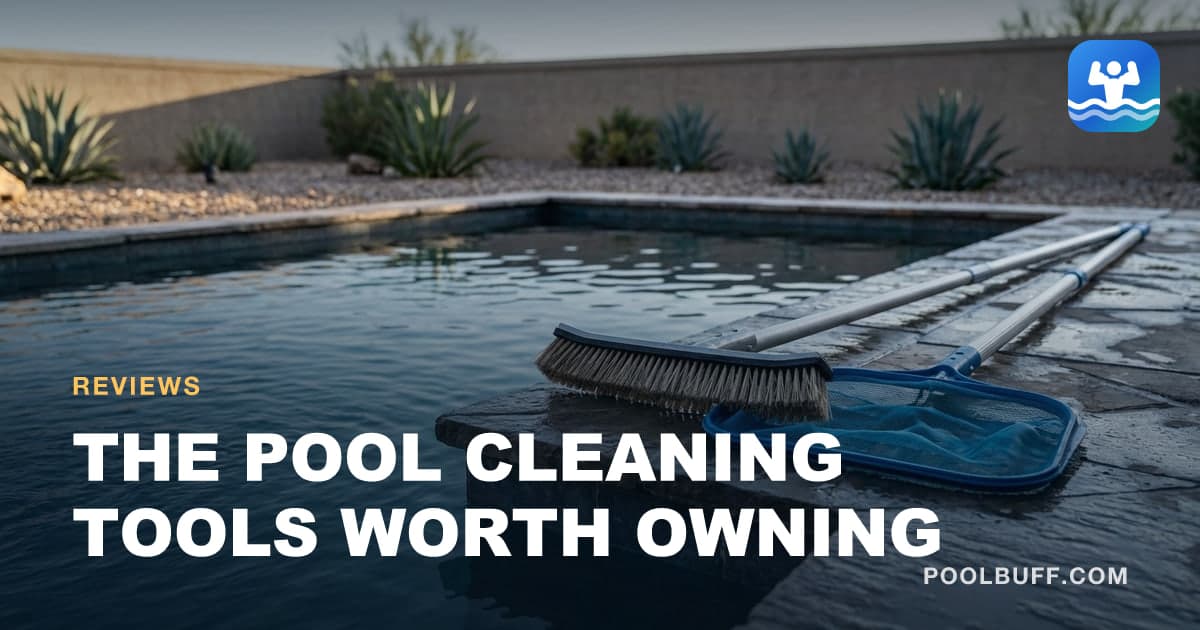
Six tools cover almost every job a pool asks of you. Which to buy, which brush your surface actually needs, and where spending more genuinely pays.

What a plunge pool (or dipping pool) is, the sizes and depths the shell makers build, what one costs installed, and why a heated one is cheap to keep warm.

What automatic pool covers cost, how the tracks, ropes and drum work, what the makers' warranties cover, what wears out, and when one is a safety cover.
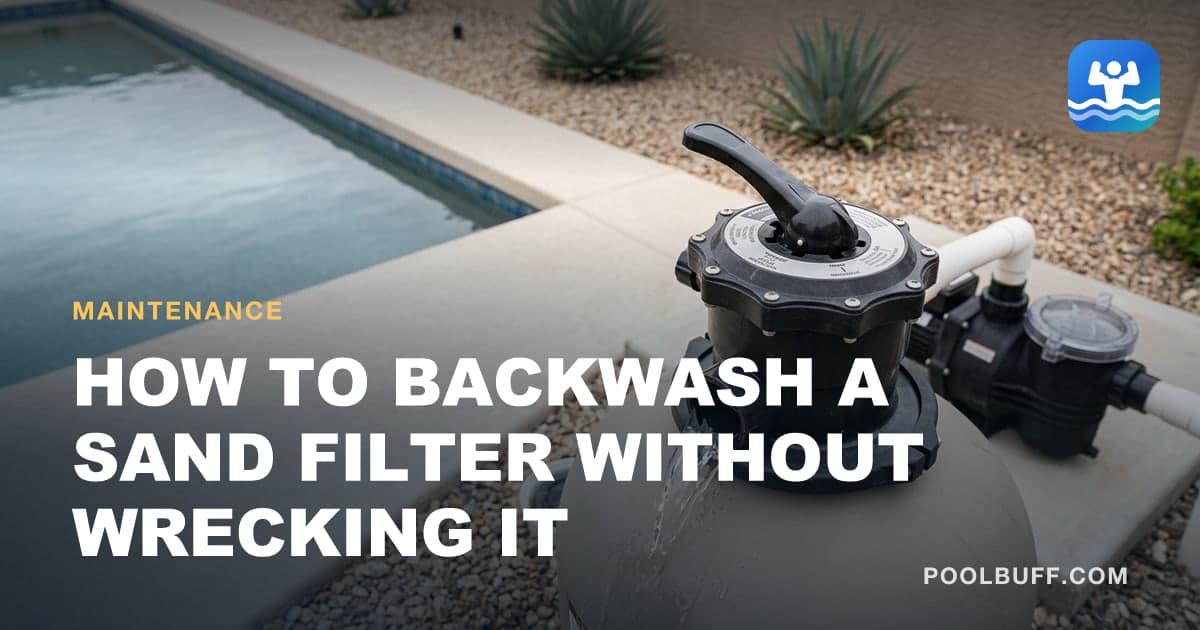
The full backwash sequence step by step, when pressure says it is time, and why backwashing on a schedule makes your water worse rather than better.
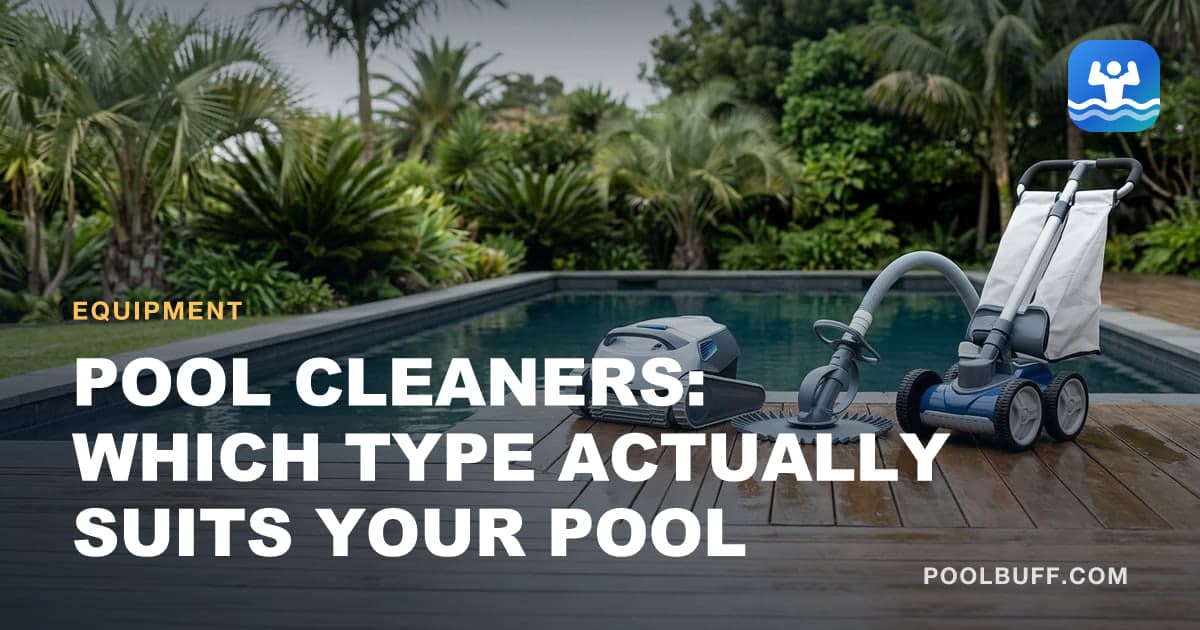
How suction, pressure and robotic pool cleaners really differ on debris, running cost and what they do to your filter. Plus which one fits which pool.
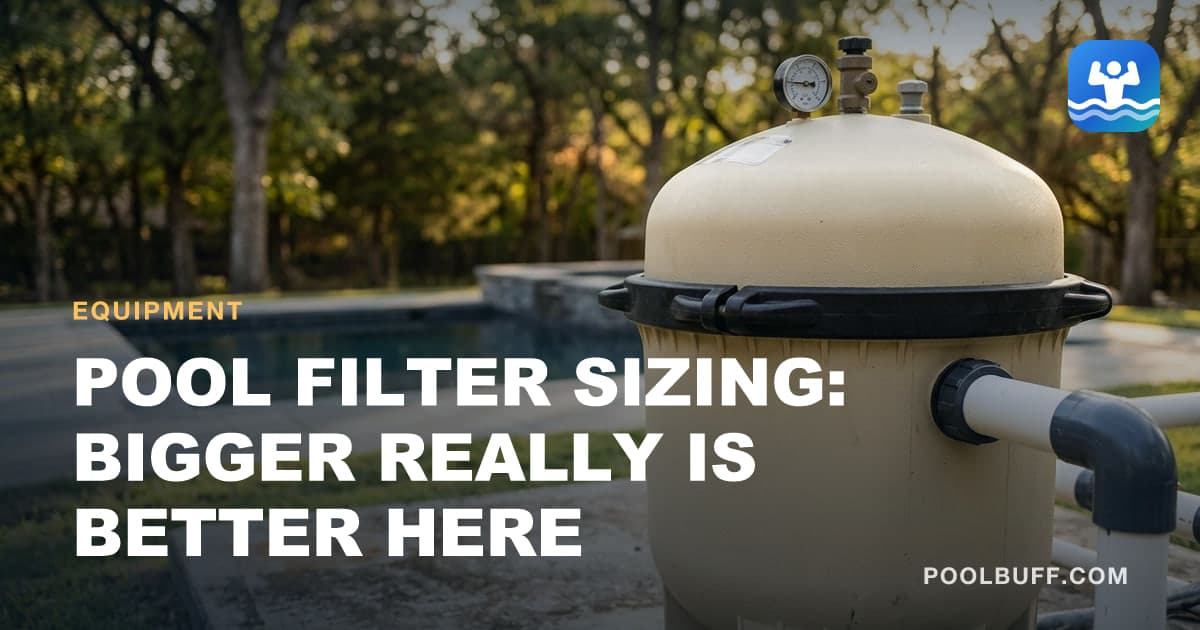
How to size a pool filter to your pump rather than your pool, what square footage buys you, and why oversizing a filter is nothing like oversizing a pump.
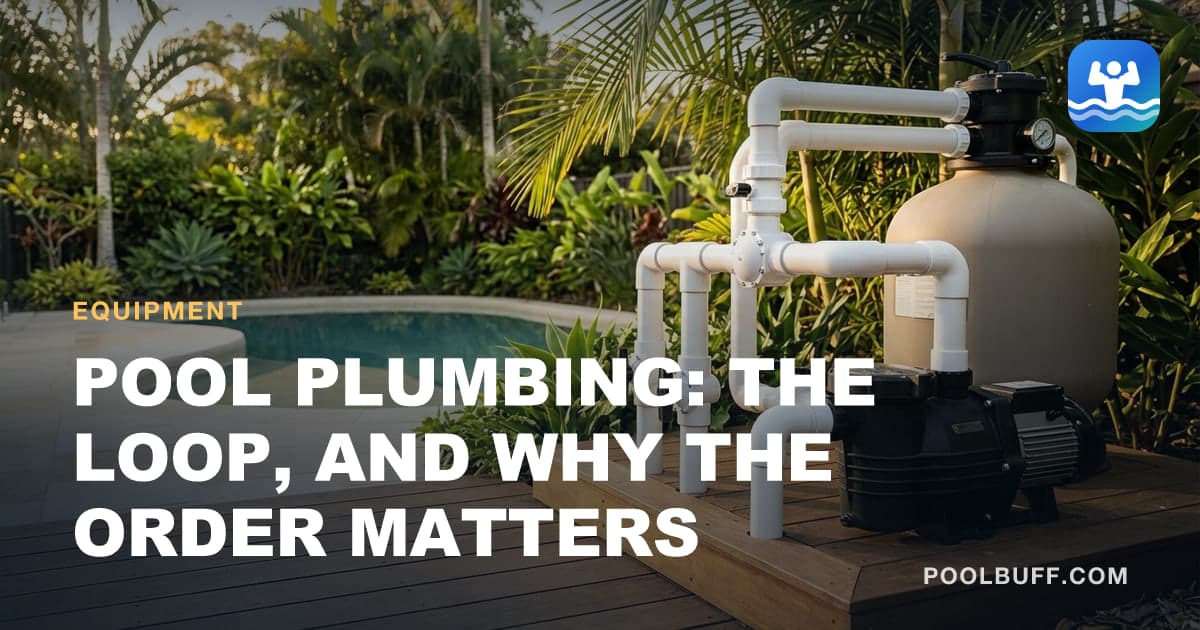
The circulation loop from skimmer to return, why suction and pressure leaks look nothing alike, and the equipment order that protects your heater.
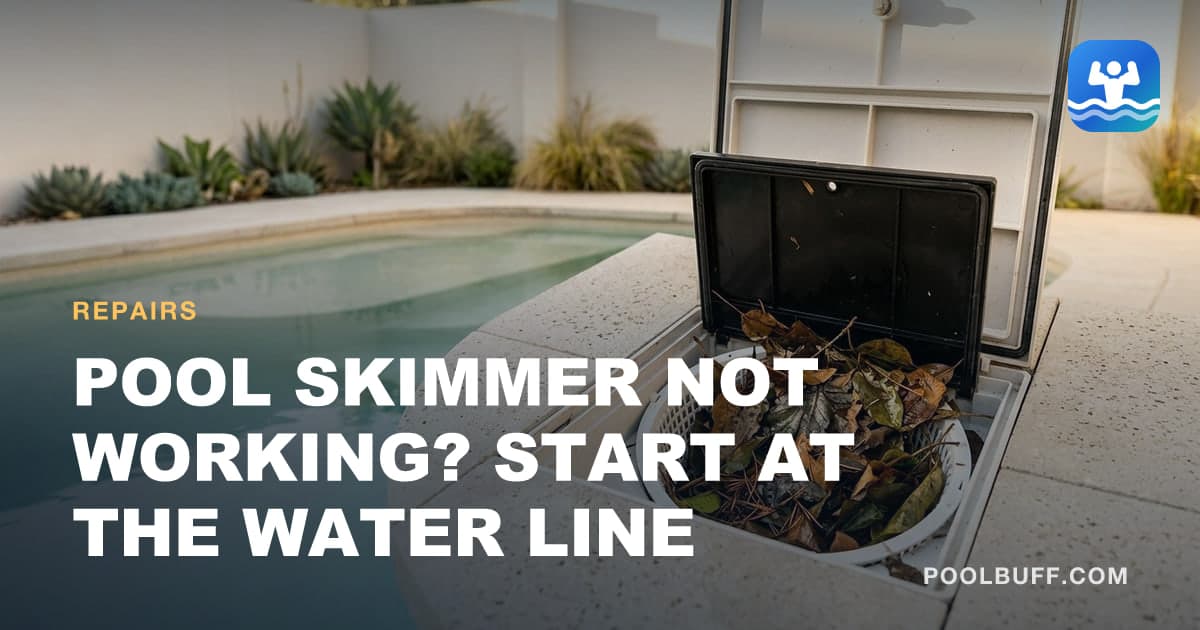
Why a skimmer stops pulling, where the air is getting in, and how to tell a cracked skimmer from a leaking faceplate before you start digging.
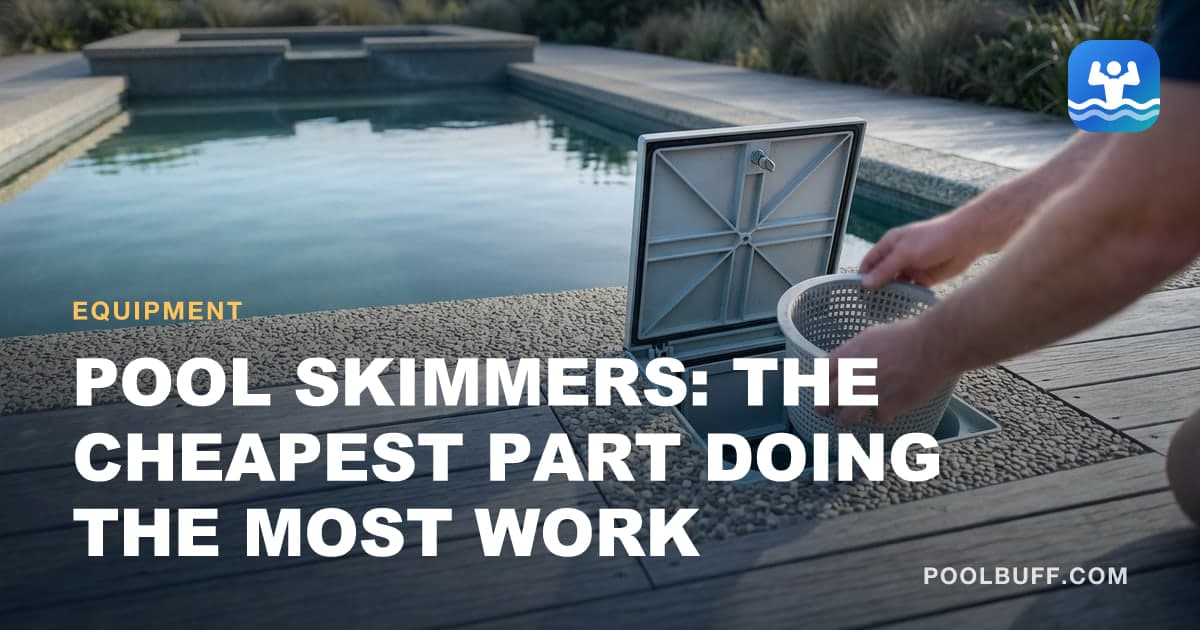
Every part of a pool skimmer explained, why water level decides whether it works at all, and what the equalizer line at the bottom is really for.
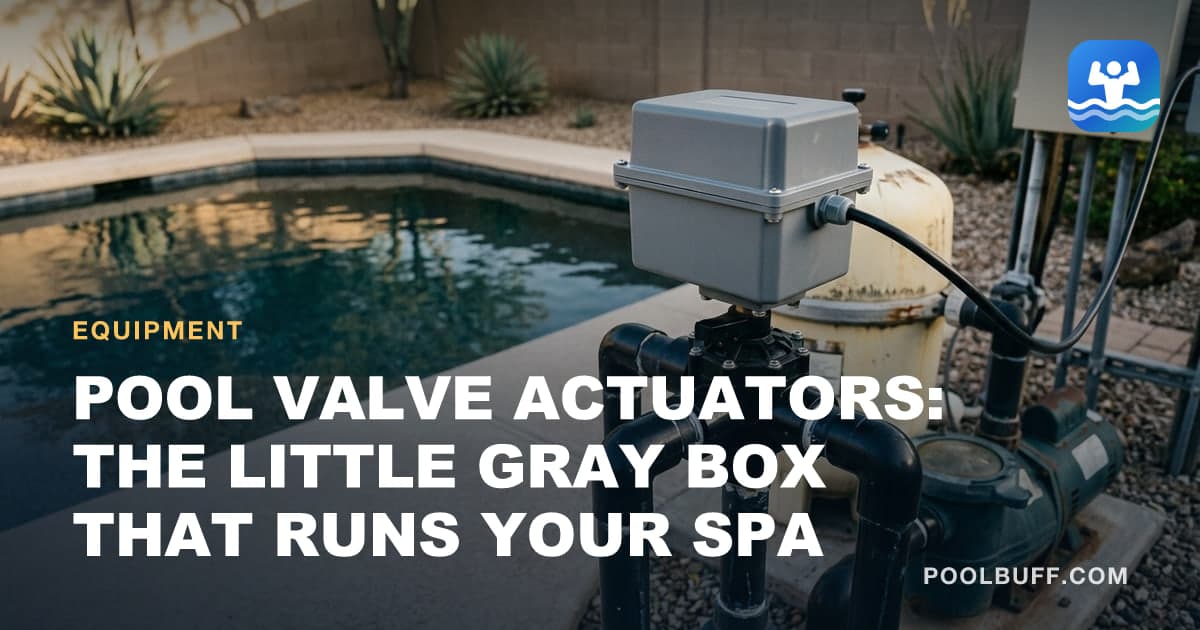
What a pool valve actuator does, how to set the travel and cams so it stops in the right place, and how to tell a dead actuator from a dead relay.
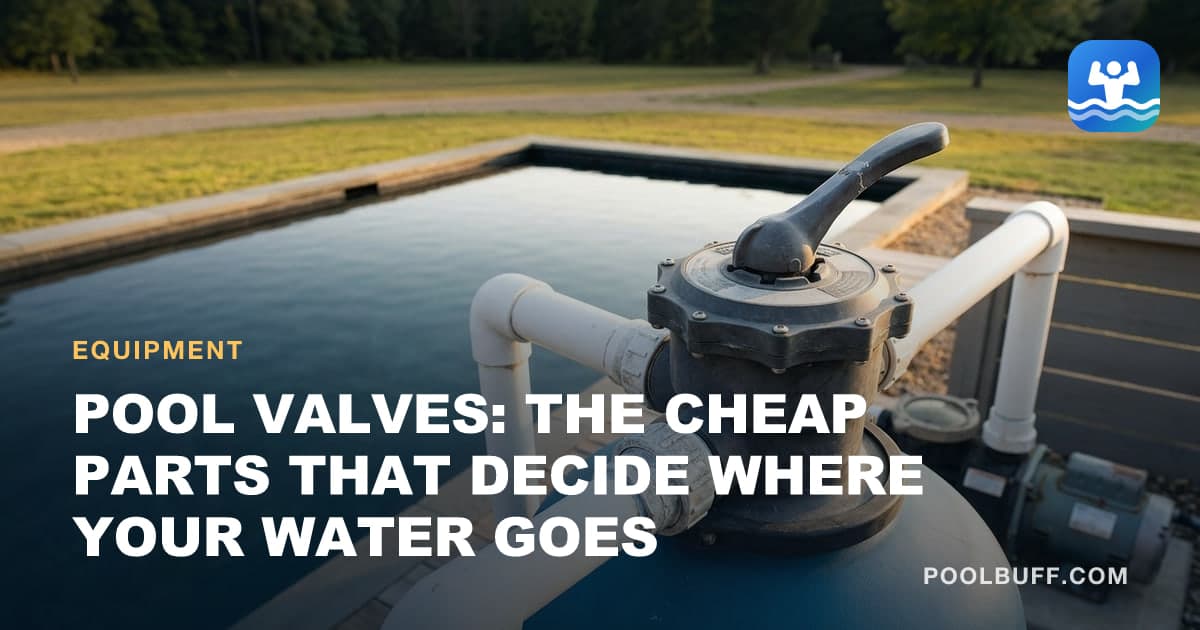
What every valve on a pool does, which handle position means what, and the one move that destroys a multiport valve — plus how to spot one failing.

Which way up a solar cover goes, how much heat it really adds, how long one lasts, and the safety point that matters more than any of it.
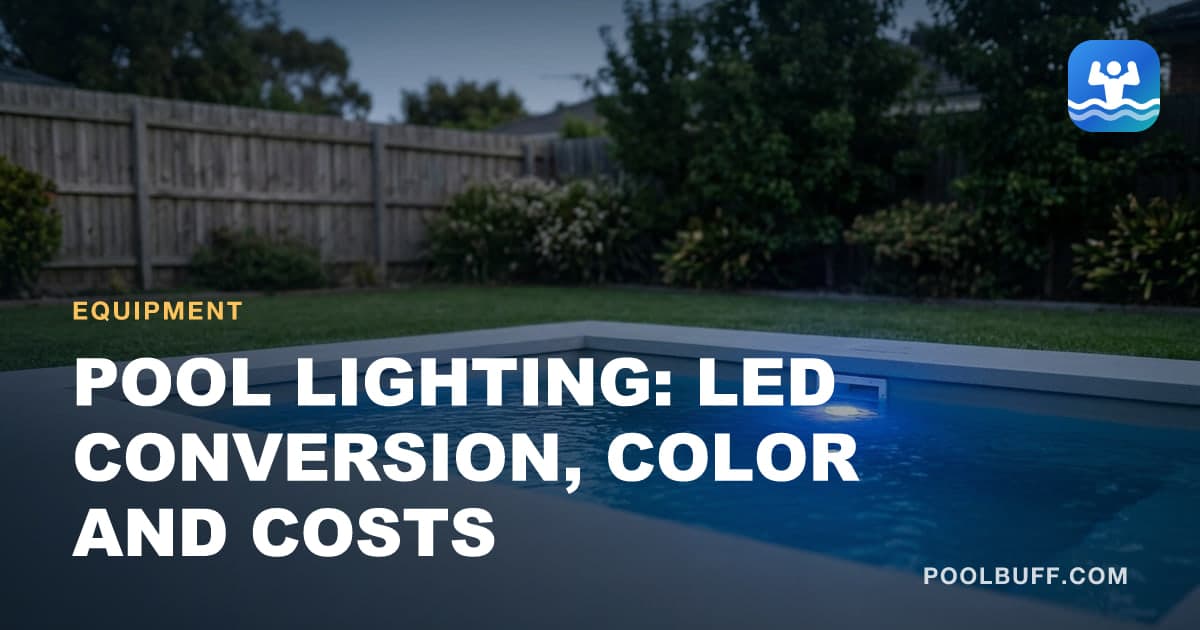
Why LED conversion pays for itself, what color systems actually give you, and the electrical rules that make this a licensed job.
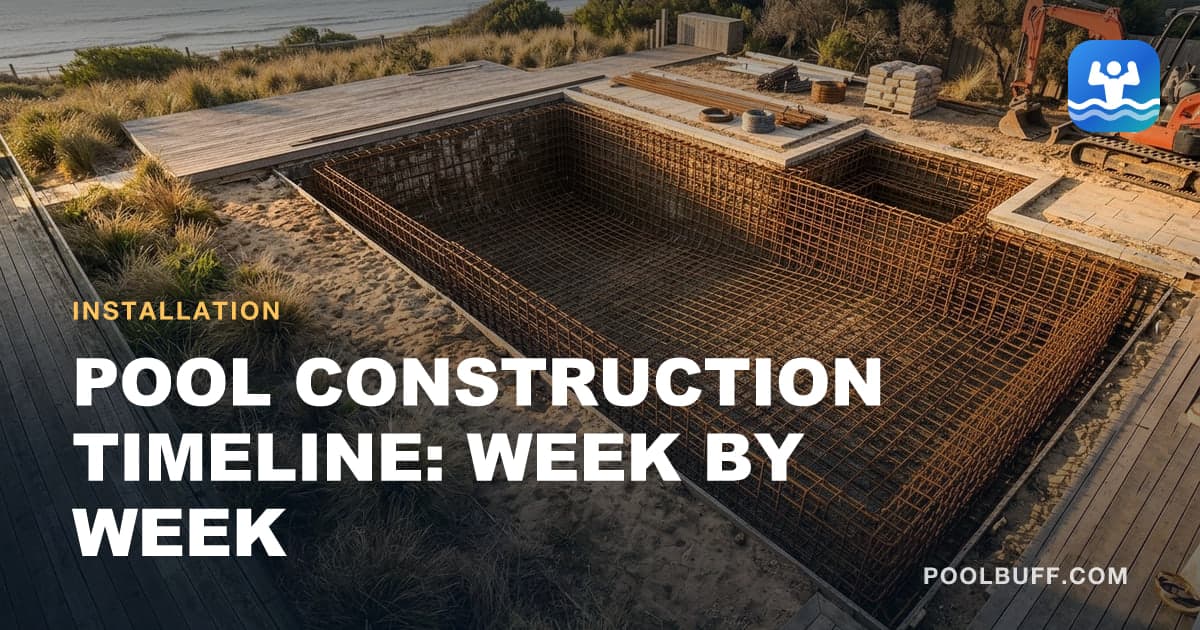
The real build sequence for gunite, fiberglass and vinyl pools, where delays come from, and what your yard looks like at each stage.
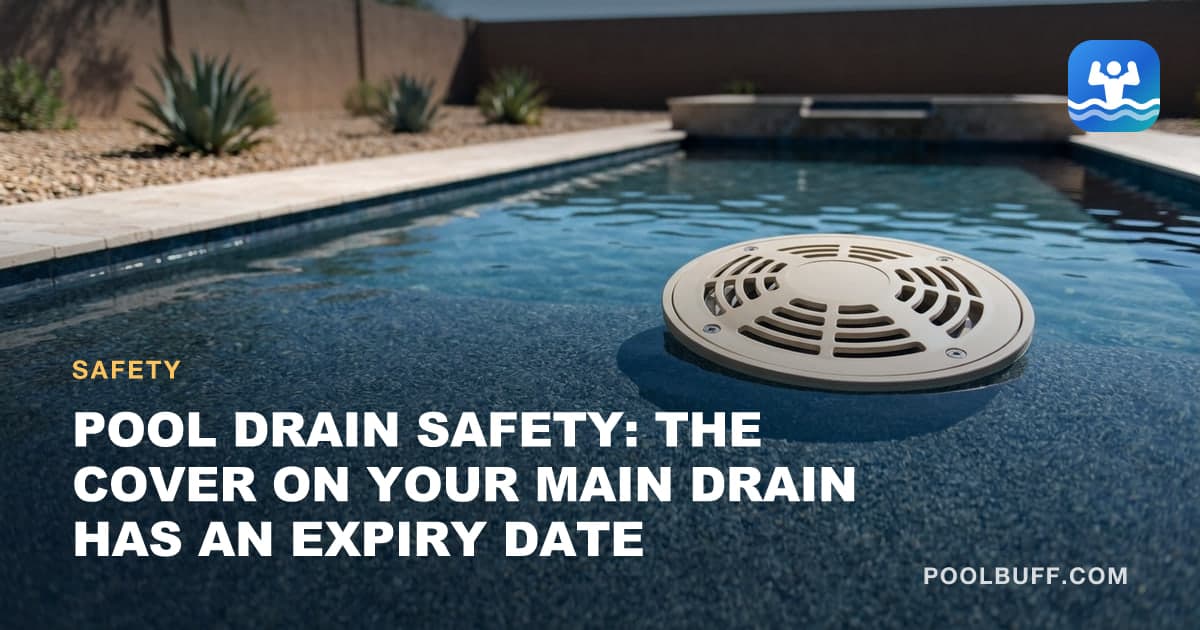
Entrapment risk, VGB compliance, and the date-stamped drain cover almost no homeowner has ever checked.
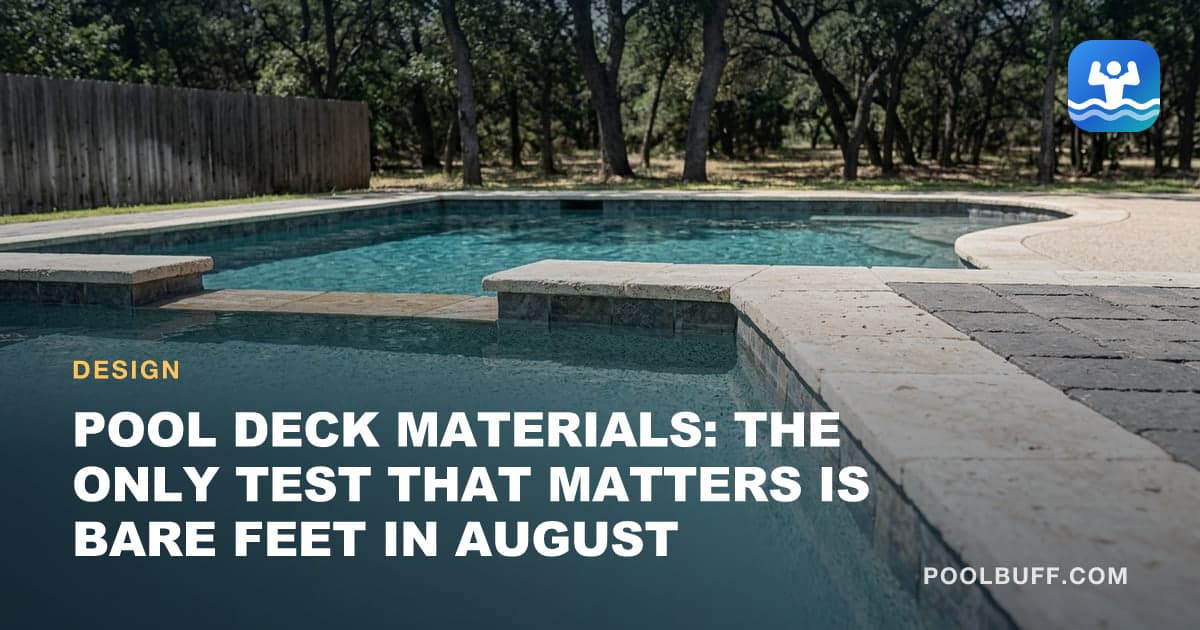
Surface temperature, wet grip, cost and maintenance for every common pool deck material — compared honestly.
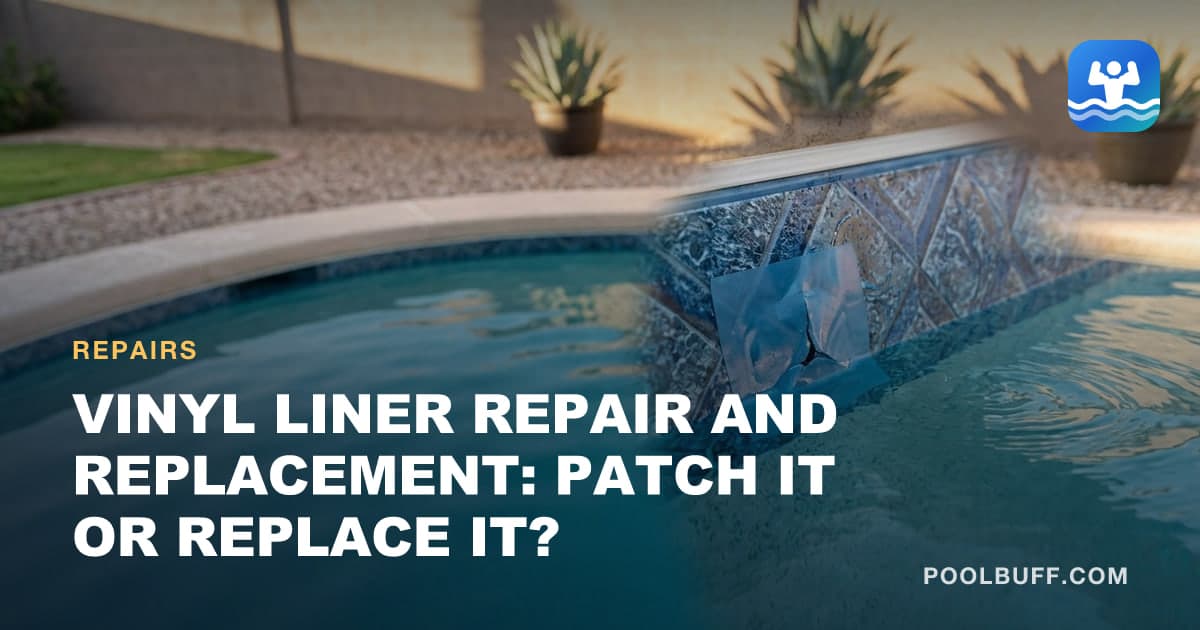
How to find and patch a liner leak underwater, what shortens liner life, and how to know when patching stops making sense.

In mild climates, not closing is usually less work and less money. Here's the reduced winter schedule and the freeze protection that makes it safe.
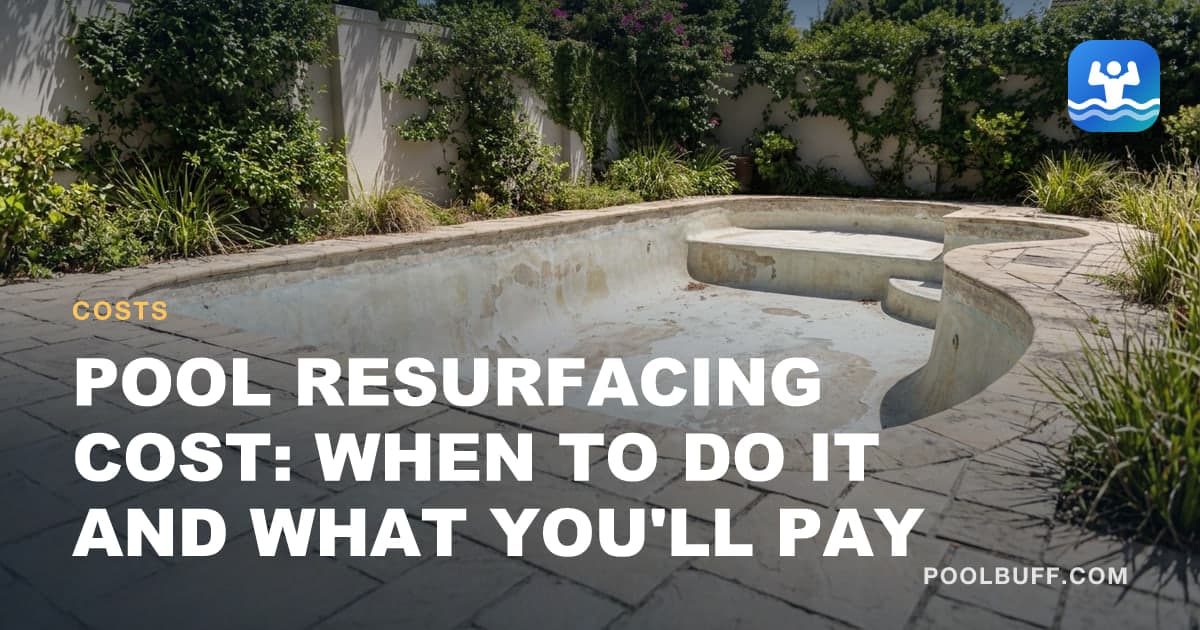
How long each interior finish lasts, what resurfacing costs by material, and the signs it's overdue rather than merely tired.
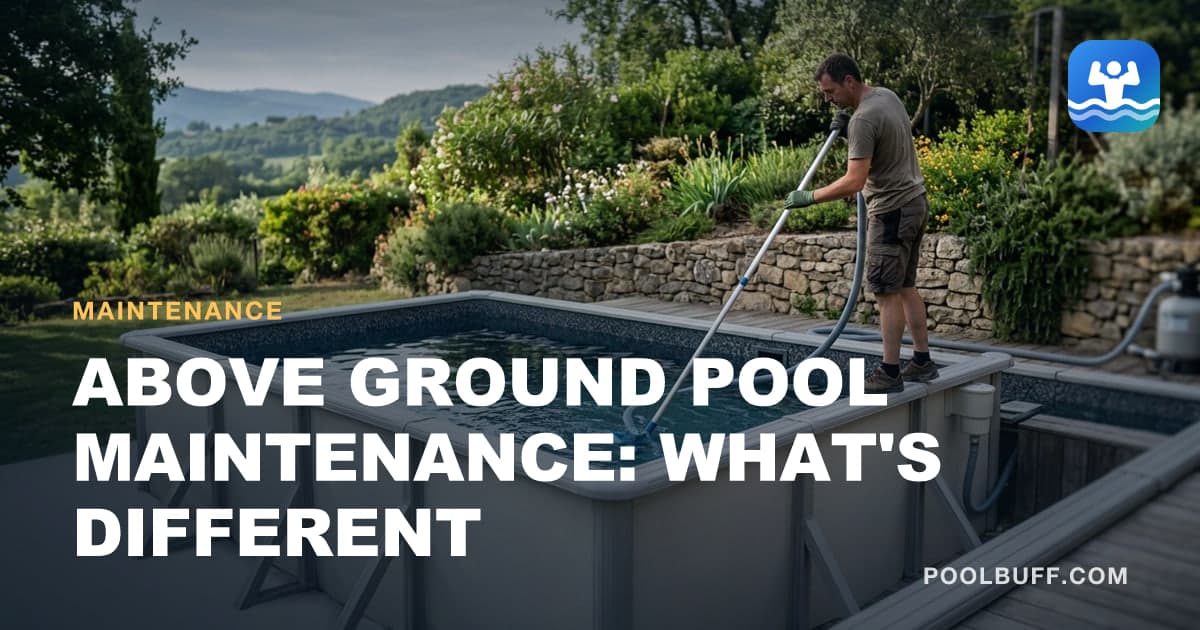
Smaller volume means faster chemistry swings. Here's what changes, plus the wall and liner care nobody mentions.
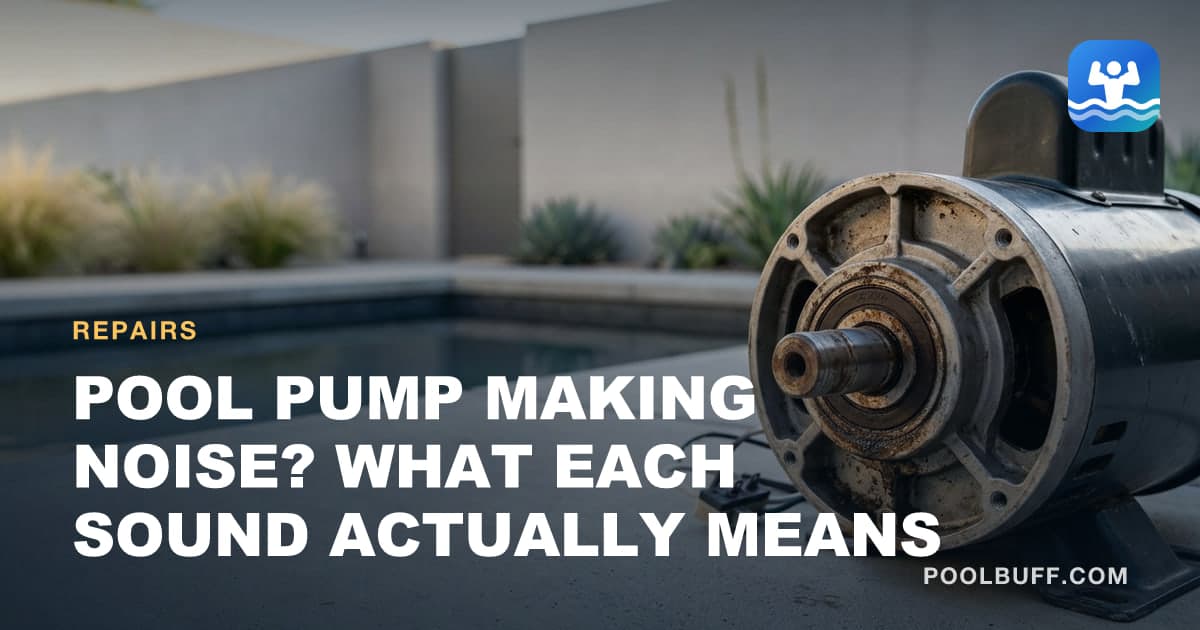
Grinding, screeching, rattling and gravel-in-a-bucket all point at different failures. Here's how to tell them apart before something expensive breaks.
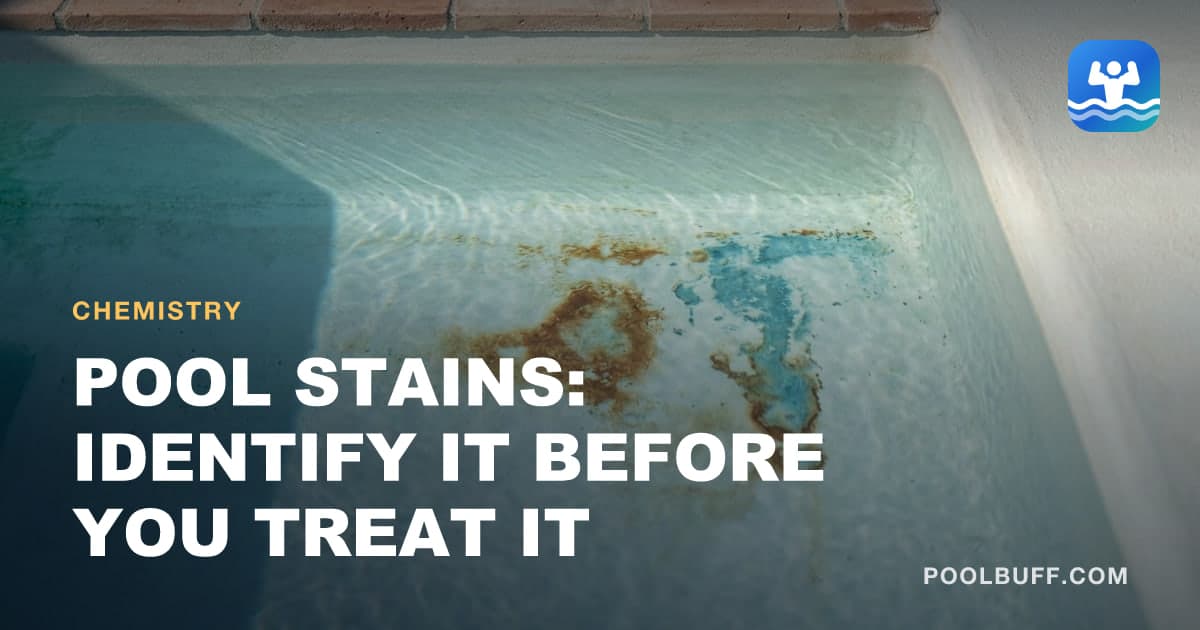
Metal stains, organic stains and scale all look similar and need completely different treatments. Here's how to tell them apart.
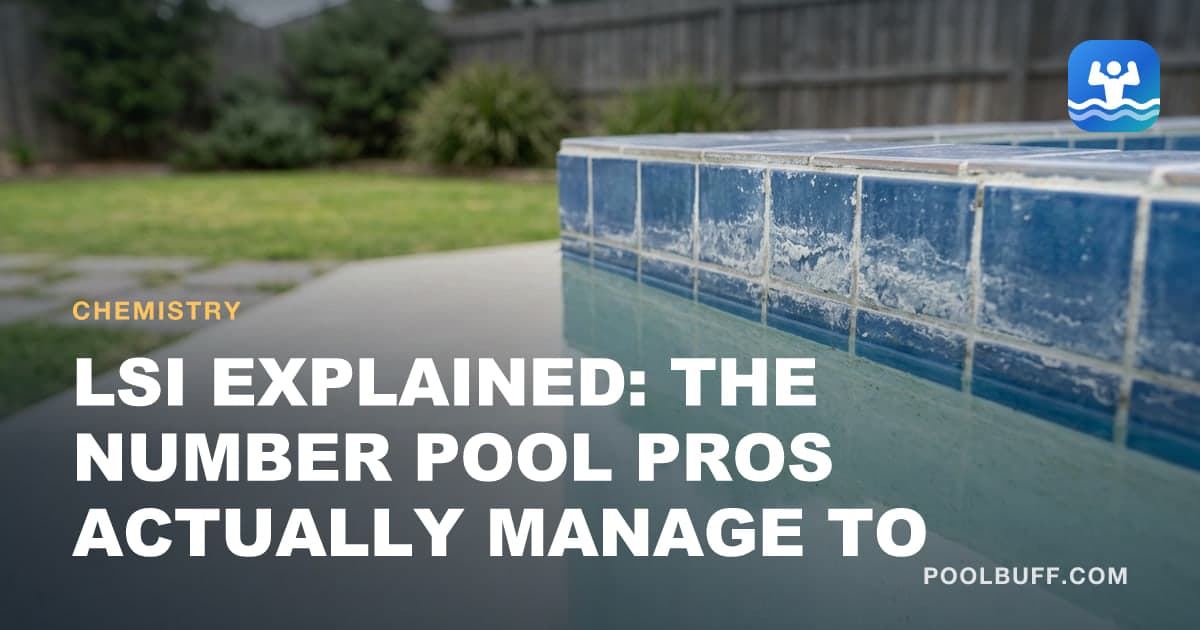
Why two pools with identical test results behave completely differently, and how the saturation index ties all your numbers together.
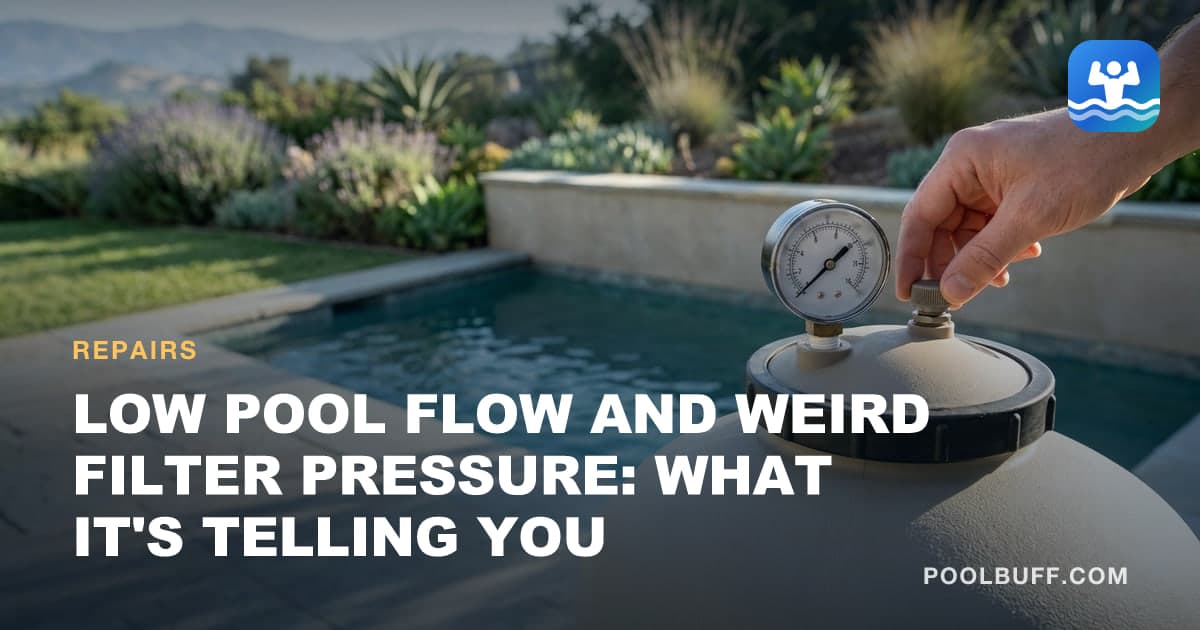
High pressure and low pressure mean opposite things. Here's how to read your gauge and find the restriction.
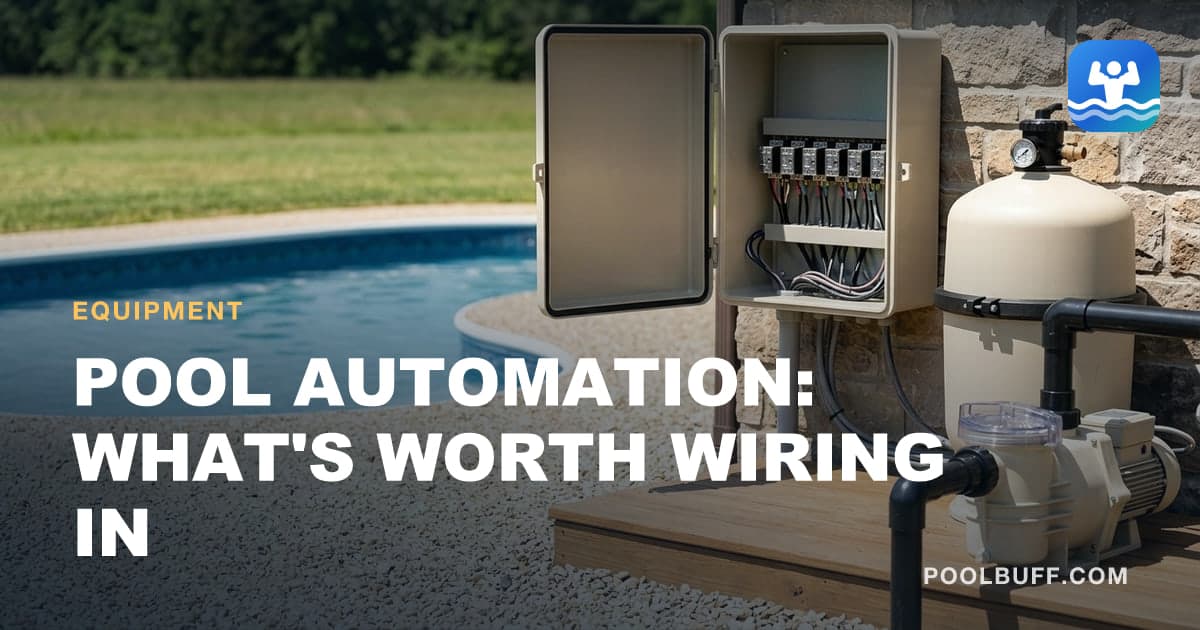
What pool automation actually controls, when it earns its cost, and the features that turn out to be a login you never use.

Sampling technique, which test kit to buy, what to test how often, and the reading errors that send people chasing problems they don't have.
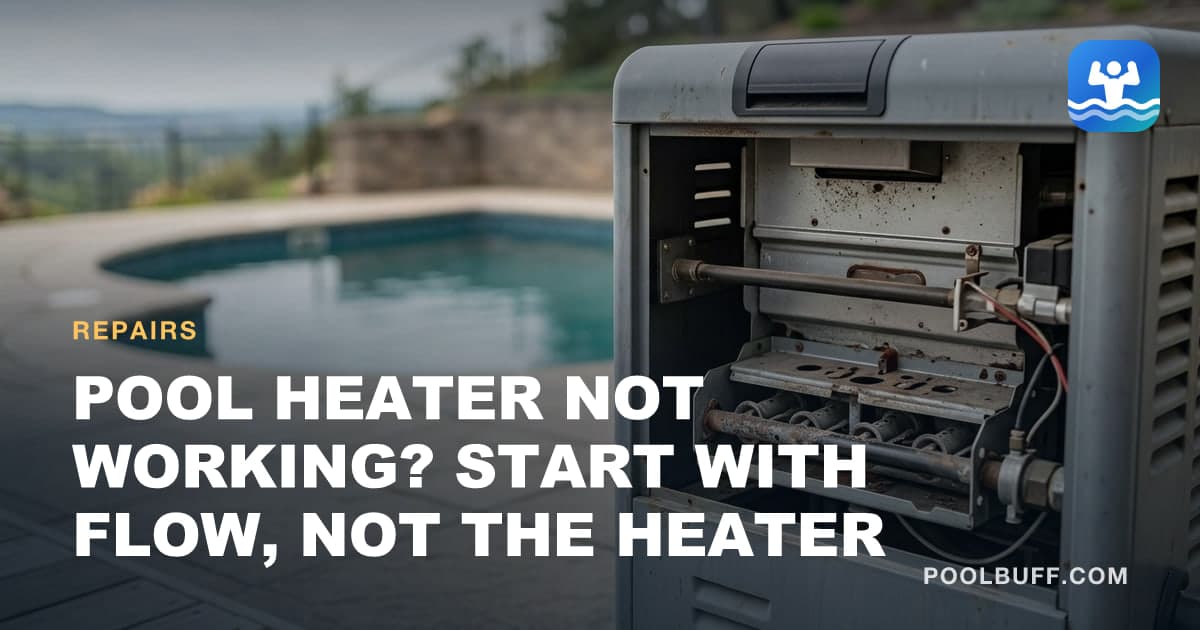
Most heater faults are flow problems, gas supply problems or a dirty sensor. Here's the order to check things, and where to stop and call a pro.
That strong chlorine smell means you don't have enough chlorine, not too much. Here's what free, combined and total chlorine each tell you.
What permits you need, how long they take, the contract terms that cause disputes, and how to compare three quotes that all say different things.
Solar, winter, safety and automatic pool covers compared from the makers' manuals: what each one is for, what its warranty covers, and which hold weight.
When to close, how far your cover's maker says to lower the water, and the pump, filter and heater steps from the manuals, so nothing cracks in a freeze.
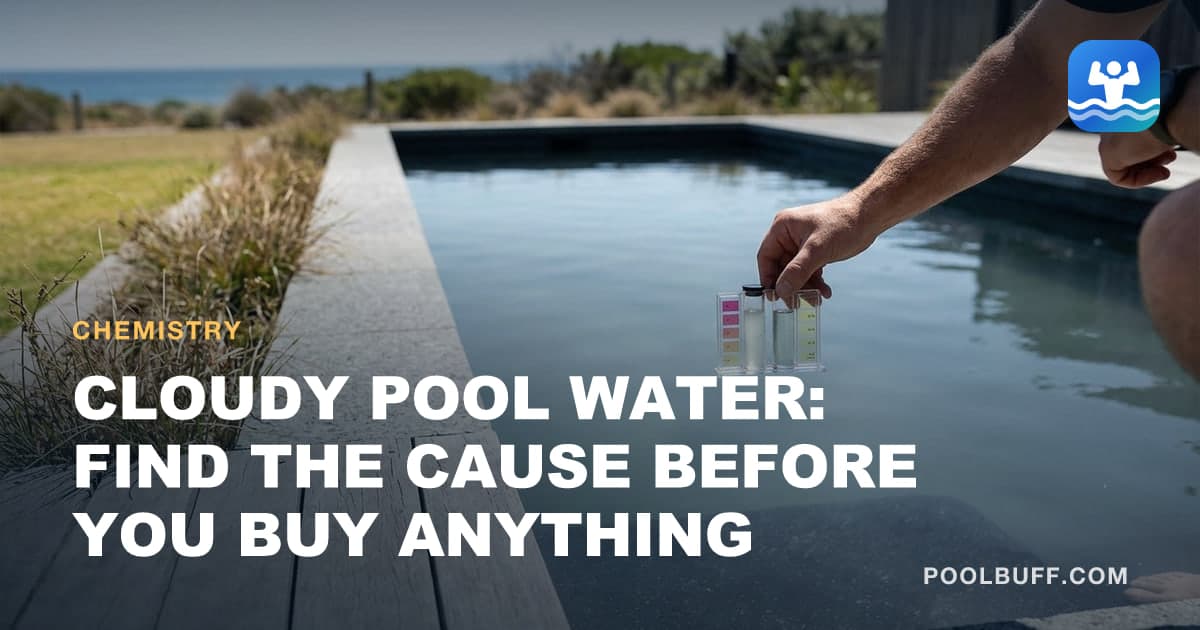
Six things turn pool water cloudy and only one of them needs clarifier. Work through them in this order and you'll fix it in a day instead of two weeks.
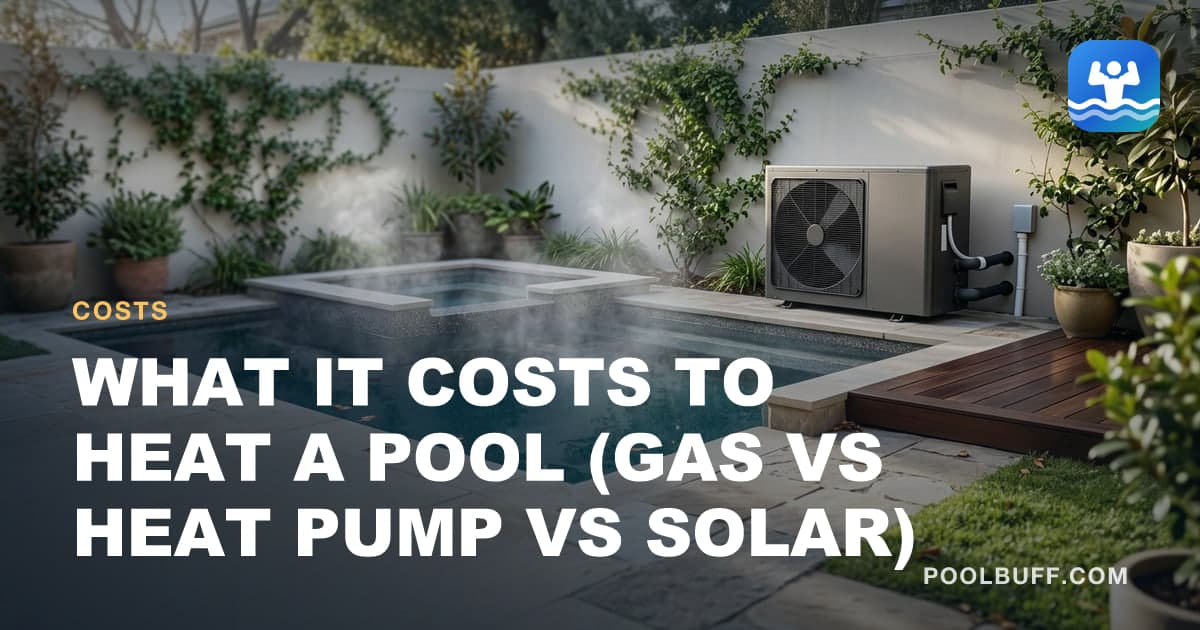
Real running costs for each heater type by climate, why a cover changes the math more than the heater does, and what to expect per month.

Bucket test, dye test, and how to tell a plumbing leak from a shell leak. Most suspected leaks turn out to be evaporation.
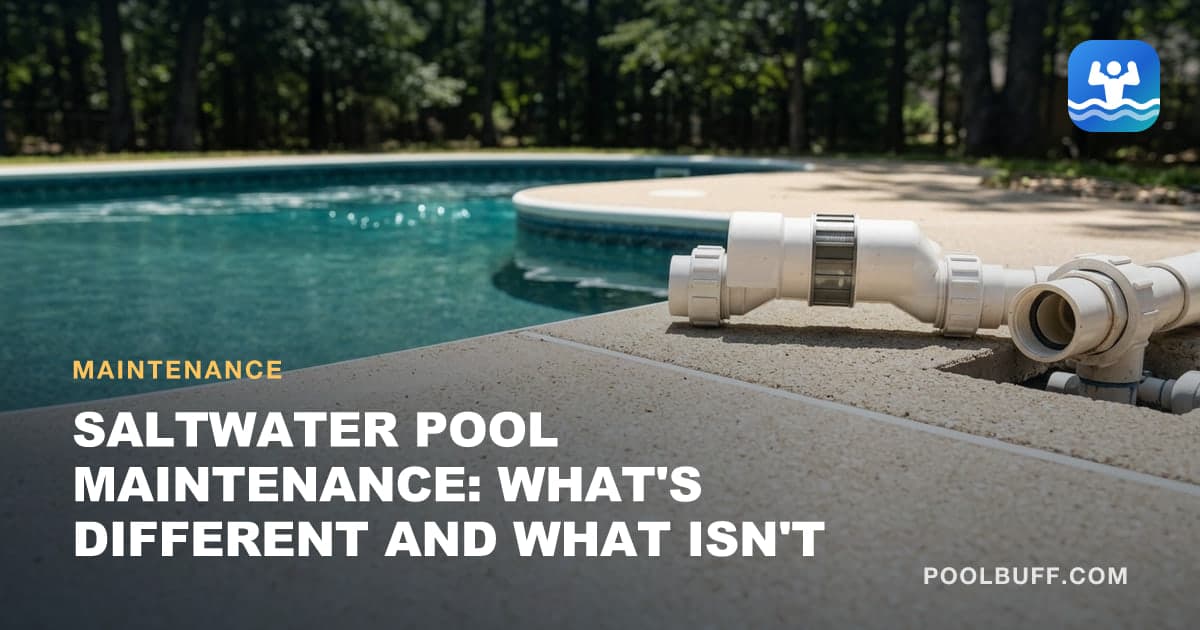
Salt pools need the same weekly care plus three specific things. Here's what changes, what doesn't, and the mistakes that kill cells early.
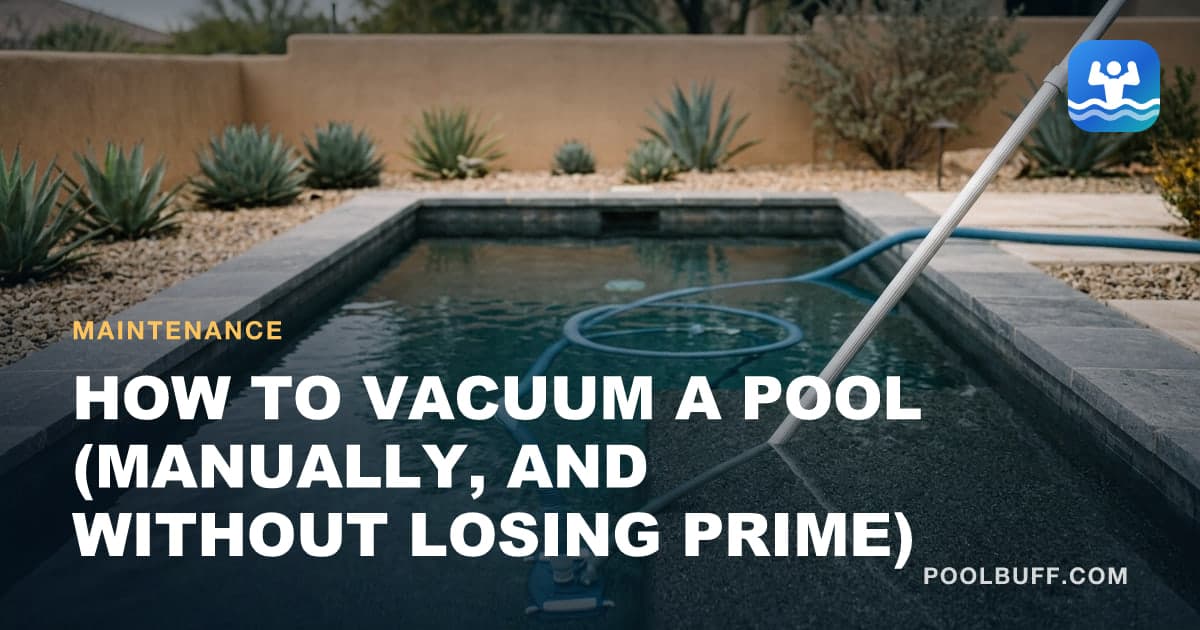
Manual vacuuming done properly, including when to vacuum to waste instead of through the filter, and the priming trick that saves the pump.

Which plants work near a pool, which ones will fill your filter every week, and how to plan deck and planting together.
Pool chemicals cause thousands of ER visits a year, almost all preventable. Storage rules, handling order, and what to do when something goes wrong.

Shock isn't a product, it's a level. Here's how to work out the right target for your pool, how much to add, and why the bag instructions fail so often.
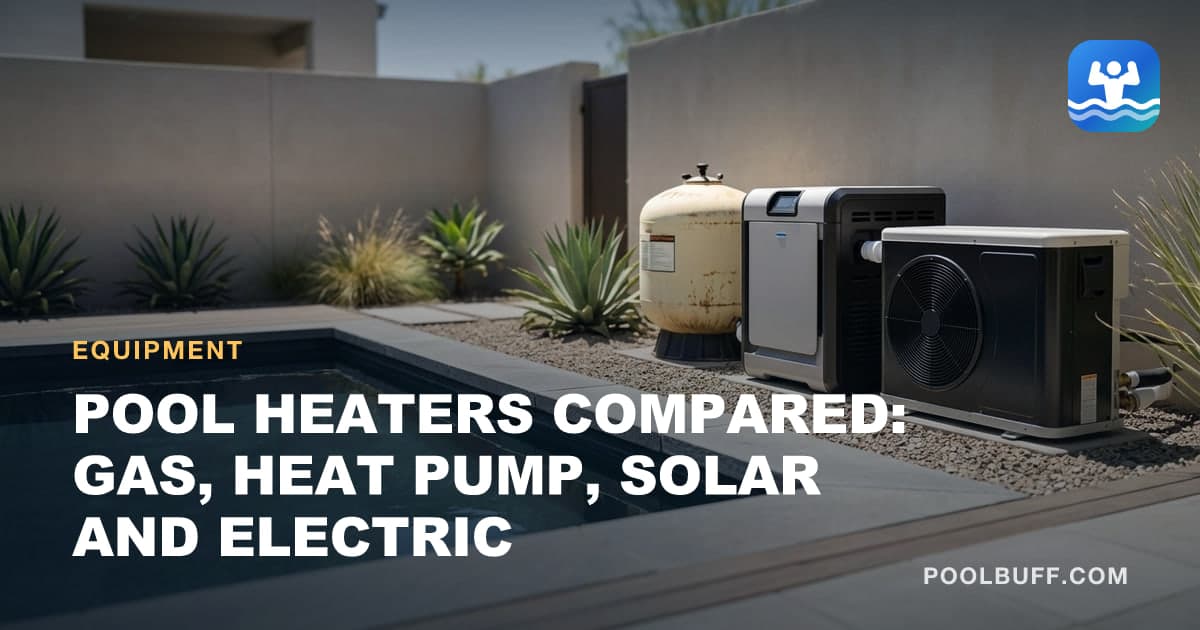
Which heater suits which climate and use pattern, how to size one properly, and where the marketing numbers fall apart.
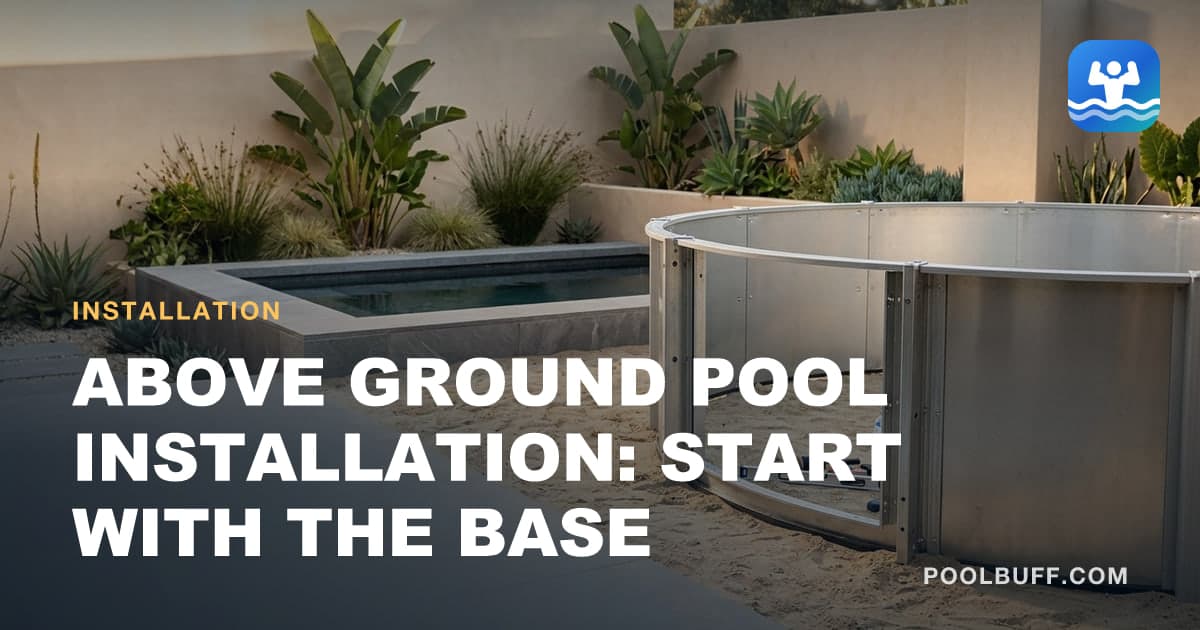
Site prep, leveling tolerances, what actually shortens an above ground pool's life, and where people go wrong on day one.

Real models and real prices. Why a $150 drop kit beats a $20 box of strips, and what each one can and cannot actually measure.
If you're adding acid every three days, you don't have a pH problem. Here's what alkalinity actually does and how to stop chasing the number.
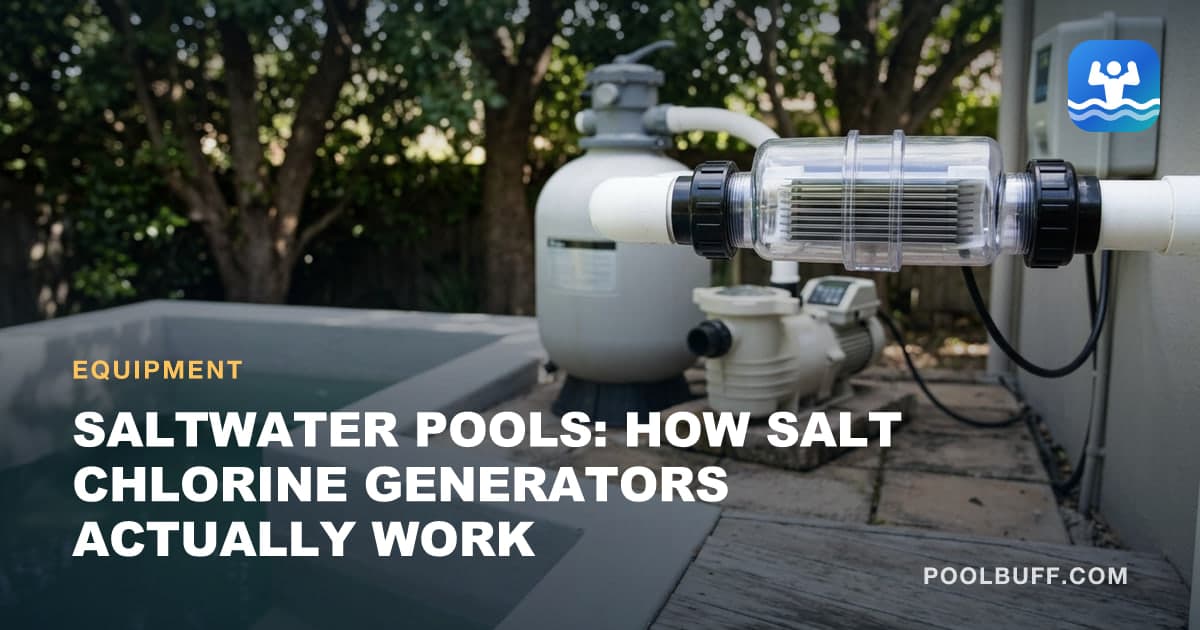
A salt pool is still a chlorine pool. What the cell does, what it costs to run, when to replace it, and the myths worth ignoring.
Drowning is fast, silent and usually happens during a gap in supervision at a pool the family knows well. Here's what each safety layer catches.
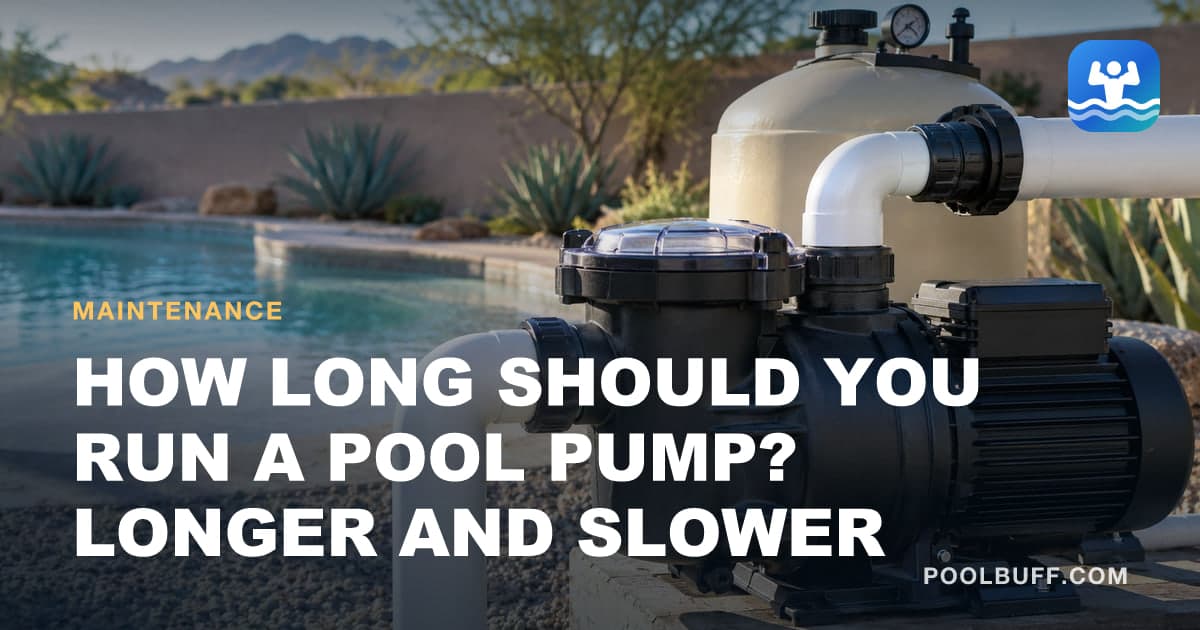
The 8-hours-a-day rule came from single-speed pumps and cheap power. Here's how to work out your actual run time and what it costs.
Real monthly running costs broken down by line item, DIY versus service, and where most owners quietly overspend.
Four types of pool algae, four different fights. How to identify what you've got, kill it properly, and stop it coming back in three weeks.
What each filter type actually catches, what it costs to run, and which one suits which pool. No brand preference, no hedging.
Real model numbers, real prices and the spec that actually decides which variable-speed pump you should buy. Hint: it isn't energy savings.

What CYA actually does to your chlorine, why 30-50 ppm is the sweet spot, and how to bring it down when tablets have run it up to 100.
Barrier heights, gap limits, gate hardware and the climbable-surface rule that fails more inspections than anything else.
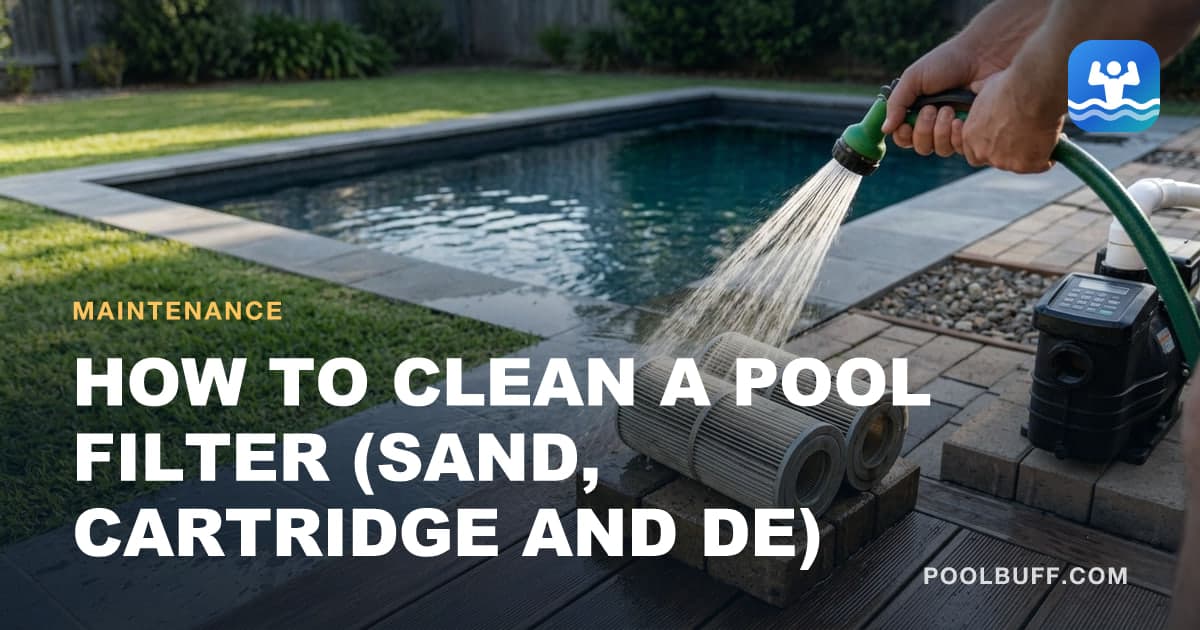
Backwashing isn't cleaning. Here's how to actually clean each filter type, when to do it, and when the media needs replacing instead.

Dolphin's Nautilus robots carry one year of warranty and its Premier and Sigma three. Here's what that means for which robot is worth buying, with real specs.
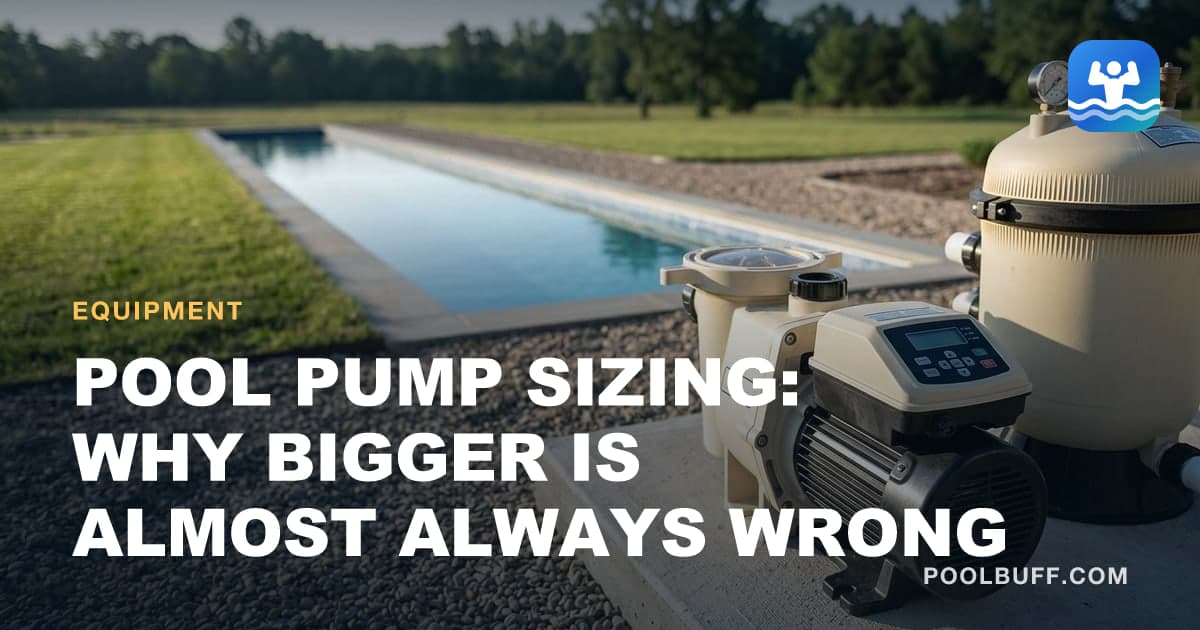
How to size a pool pump properly using turnover and head, why oversized pumps are the industry default, and what variable speed changes.
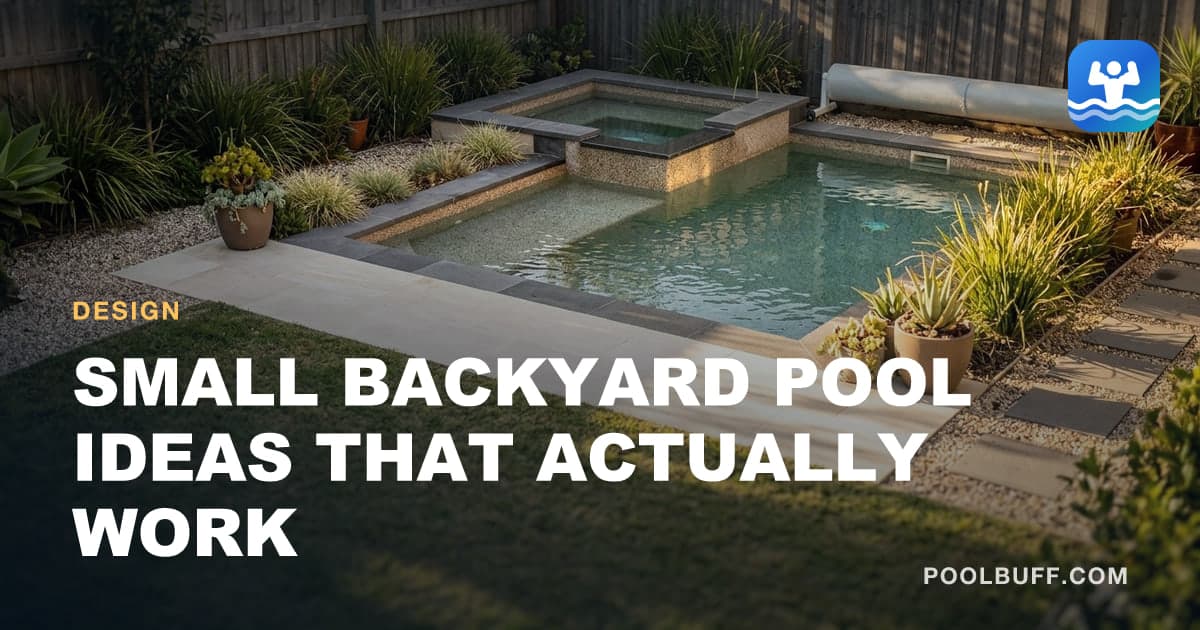
Small backyard pool ideas for a tight lot: eight kinds of small pool, the best shape, the sizes that work, what they cost, and the layout rules.
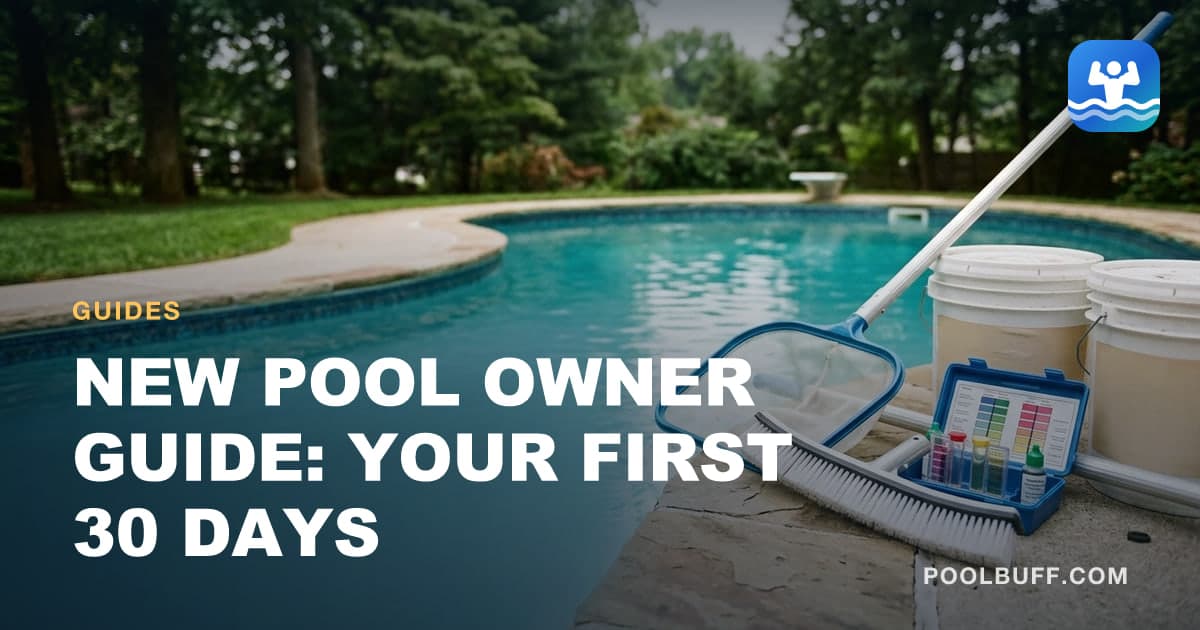
A pool came with the house and nobody explained it. Here's what to identify, what to test, what to buy and what to ignore in your first month.
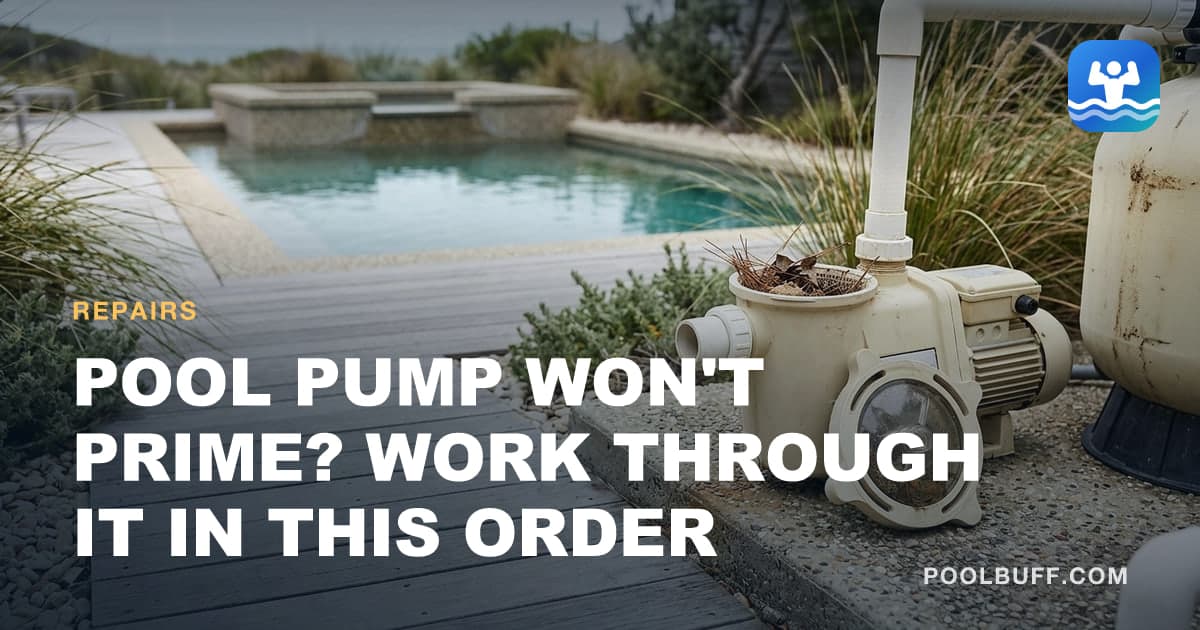
A proper diagnostic tree for a pump that won't prime or won't hold prime. Cheapest causes first, with the tests that actually find the air leak.
Everything a new pool owner needs to know about keeping water clear, in the order you'll actually need it.
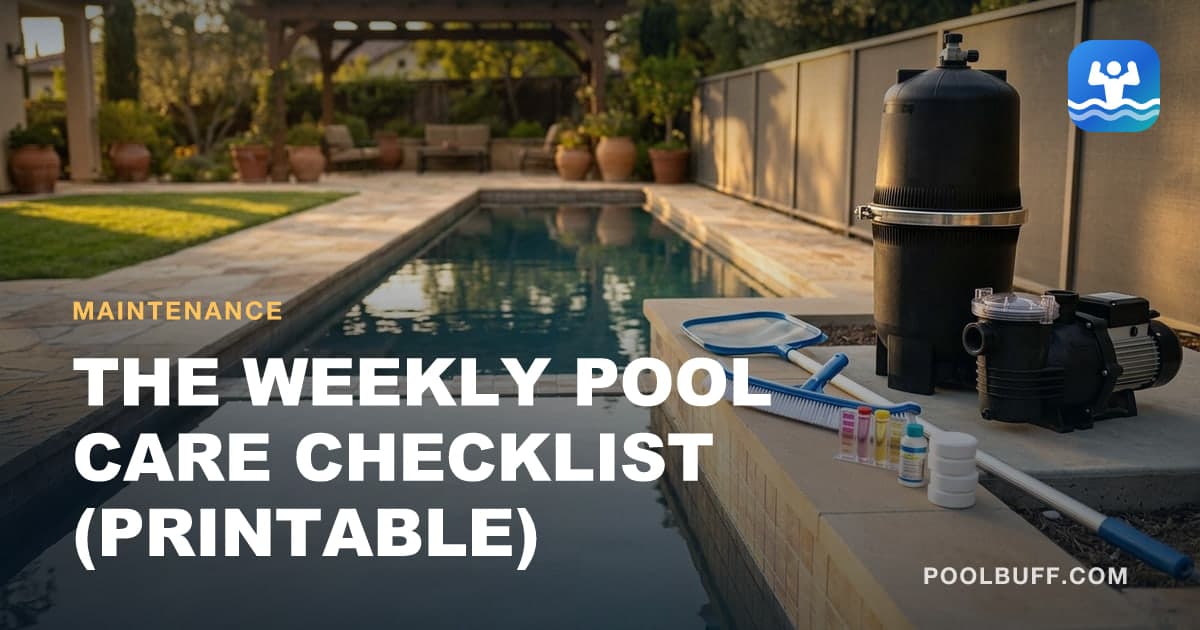
The exact weekly pool routine, in order, with the twice-weekly jobs separated from the once-weekly ones. Takes about 25 minutes.
Real installed costs by pool type and region, what's inside a quote versus outside it, and the allowances that blow budgets.

A builder's honest comparison of the three inground pool types — build time, real lifespan, running costs and what you can't change later.
Opening early beats every chemical you can buy in April. The full sequence, in order, including what to do if it's already green.
The five numbers that matter, the order to fix them in, and the doses that actually work. Written by people who've done this on real pools for 20 years.