Nobody mentions this when they sell you a pool, and it's the biggest single cost of ownership after the build itself.
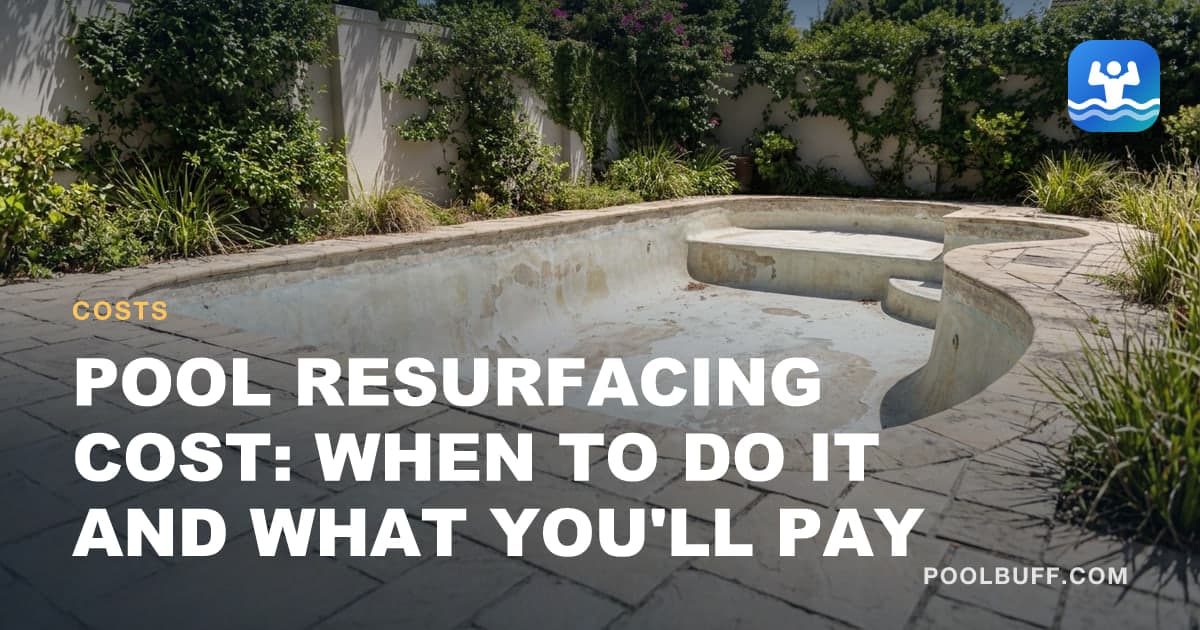
Interior finishes are consumables. Plaster wears out. It's not a defect, it's the material doing what it does. Budget for it and it's a project you plan; ignore it and it's a crisis in year eleven.
Key takeaways
- Interior finishes are consumables. Every concrete pool needs resurfacing eventually.
- Pebble costs more up front and works out cheaper per year than white plaster.
- Rough plaster that scrapes feet is past due, not merely tired.
- Water chemistry is the single biggest factor in how long a finish lasts.
- Do the tile, coping and any plumbing while the pool is drained. Doing it separately costs far more.
What each finish costs and lasts
| Typical cost | LifeMy default | Cost per year | |
|---|---|---|---|
| White plaster (marcite) | $6,000-$15,000 | 7-12 yrs | $700-$1,500 |
| Colored plaster | $7,000-$16,000 | 7-12 yrs | $800-$1,600 |
| Quartz aggregate | $8,000-$18,000 | 10-15 yrs | $650-$1,300 |
| Pebble finish | $10,000-$20,000 | 15-20 yrs | $550-$1,100 |
| Glass bead | $18,000-$35,000 | 20+ yrs | $800-$1,600 |
| Vinyl liner replacement | $3,000-$8,000 | 8-12 yrs | $400-$800 |
| Fiberglass gelcoat refinish | $8,000-$18,000 | 15-20 yrs | $500-$1,000 |
That last column is why I generally steer people toward pebble or quartz if they're staying in the house. White plaster is cheapest today and most expensive over twenty years.
How the number is actually built
The ranges are wide because resurfacing is priced by surface area, and surface areas vary more than pool sizes suggest.
Interior surface is the floor plus the walls, not the water's footprint. A 16-by-32 pool with a deep end carries roughly 1,000 to 1,100 square feet of interior surface — around twice the 512 square feet you see looking down at it. A pool with a lot of wall relative to its floor, or one with steps, a bench and a tanning ledge, has more surface again for the same number of gallons.
Industry pricing for the work itself runs about $6 to $8 per square foot for white plaster and roughly $10 to $15 for pebble, which is a far more useful way to sanity-check a quote than the headline range. Most of the spread in that table is pool size rather than pricing: a 1,000 square foot pool at $7 lands near $7,000, and the top of the plaster range belongs to a large pool with a full chip-out rather than to a typical one.
Two things move a quote outside those bands. Chip-out versus bond coat is often several thousand dollars by itself, and a pool already resurfaced twice generally needs the full chip, because layers cannot keep accumulating. And access matters more than people expect — a crew that can back a truck up to the pool prices differently from one carrying material through a side gate by hand.
When you compare quotes, ask each contractor what square footage they measured. Two quotes built on different measurements are not comparable, and that difference is occasionally the entire gap between them.
When to do it
Timing is worth a thought, because two considerations push the same way.
Late summer into fall is the right window in most climates. The ground is at its driest, which matters when the pool stands empty for several days. Plaster also cures better in moderate temperatures than in extreme heat, and a crew working in 105°F is fighting the material rather than placing it.
Book early. Resurfacing crews are seasonal and the good ones fill up. A pool that will need doing next spring is worth quoting this fall.
Signs it's actually due
Rough enough to scrape feet. This is the practical test. If children are getting scraped toes, the finish is past due, not merely worn.
Aggregate showing through. On a pebble or quartz finish, if the stones are standing proud rather than sitting flush, the cement matrix has eroded away from around them.
Staining that no longer responds. A porous worn surface absorbs stains that a sound surface would shed.
Spider cracking — a fine web of surface cracks. Cosmetic on its own, and a sign the finish is at the end of its life.
Plaster flaking off when brushed. Delamination. Past due.
Rising chemical use. The early clue nobody connects. A worn porous surface gives algae far more to hold onto, so you find yourself running higher chlorine to hold the same water. If your chemical bill has crept up and your habits haven't changed, look at the surface.
Structural cracks are a different matter entirely — those need investigating before any resurfacing, because a new finish over a moving crack will crack again.
What actually determines how long it lasts
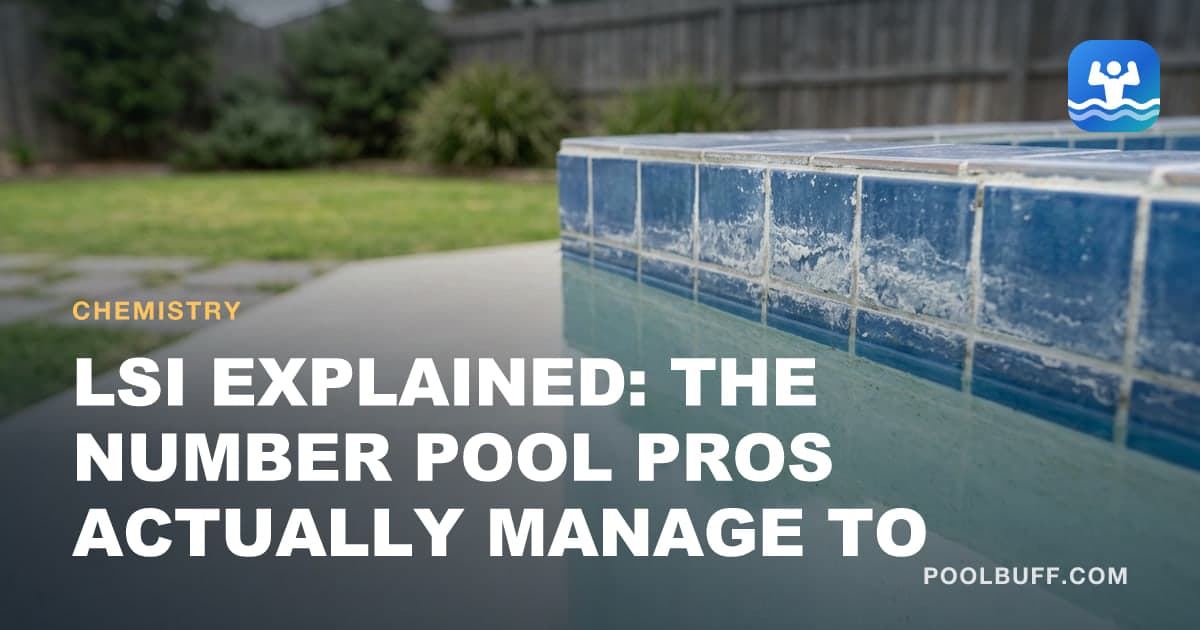
Water chemistry, by a wide margin. Aggressive water dissolves the cement matrix. I've seen plaster fail at five or six years on a pool that was run with chronically low pH and alkalinity, and I've seen twenty-year-old plaster in good condition on a pool that was managed properly.
This is where LSI earns its keep. Individual numbers in range is not the same as balanced water, and winter is when the damage usually happens.
The startup. The first 28 days of a new plaster surface determine a lot of its life. There's a proper procedure — daily brushing, careful pH management, no chlorine for the first few days on some methods — and crews vary in how rigorously they follow it. Get the startup procedure in writing and confirm who's doing it.
Application quality. Mix ratio, weather on the day, how well the old surface was prepped. Not something you can assess afterward, which is why the crew matters.
What the job involves
- Drain the pool. With a groundwater check first — this is where pools float if nobody thought about the hydrostatic relief valve.
- Chip out the old surface, or at minimum prep and bond-coat it. A full chip-out costs more and gives a better result, particularly if there have been previous resurfaces.
- Repair any structural issues now that the shell is visible.
- Tile and coping, if you're doing them — and you should be.
- Apply the new finish.
- Start filling immediately. New plaster shouldn't sit dry.
- Startup procedure — daily brushing and careful chemistry for the first month.
Five to ten days for a straightforward job. Longer with tile and coping.
Getting quotes
Ask specifically:
- Full chip-out or bond coat over the existing surface? Big difference in price and in result.
- What's the startup procedure and who performs it? Get it in writing.
- Is tile and coping included or extra?
- What's the warranty, on materials and on workmanship separately?
- Who handles the drain, and have they checked the water table?
- What happens if structural issues are found once it's chipped out?
That last one matters. Chipping out sometimes reveals problems, and you want the pricing mechanism agreed before anyone finds anything.
Get three quotes and compare on chip-out method and finish product, not just the headline number.
Go deeperSelling soon?Buyers price in repairs generously, and rarely in your favor. Go deeperWhen repair money approaches removal moneyWhat it costs to take a pool out, and when that is the better call. Go deeperGelcoat versus plaster over twenty yearsThe surface-renewal math that makes the fiberglass case, done honestly.Frequently asked questions
How much does it cost to resurface a pool?
Standard white plaster runs $6,000-$15,000 for a typical residential pool. Quartz aggregate finishes are $8,000-$18,000, and pebble finishes $10,000-$20,000. Size, access, the condition of the existing surface and your region all move those numbers substantially.
How often does a pool need resurfacing?
White plaster every 7-12 years, quartz every 10-15, and pebble every 15-20. Water chemistry is the biggest variable — a pool with chronically aggressive water can need resurfacing in five or six years, while a well-managed pool routinely exceeds the top of these ranges.
What are the signs a pool needs resurfacing?
Surface rough enough to scrape feet, visible aggregate where plaster has worn through, staining that no longer responds to treatment, spider cracking across the finish, and plaster that flakes off when brushed. Rising chemical consumption is an early clue, because a porous worn surface harbors algae.
Is pebble better than plaster for a pool?
It lasts roughly twice as long and hides staining better, at 40-60% more cost. Per year of service it's usually cheaper. The trade-off is texture — pebble is rougher underfoot, which some people dislike, particularly with young children.
How long does pool resurfacing take?
Five to ten days for a straightforward replaster once the pool is drained: chip out the old surface, prep, apply the new finish, then start the fill immediately. Add time for tile and coping work. Then there's a startup period of daily brushing and careful chemistry for the first month.