FeaturedRepairs
Pool Pump Won't Prime? Work Through It in This Order
A proper diagnostic tree for a pump that won't prime or won't hold prime. Cheapest causes first, with the tests that actually find the air leak.
9 min readUpdated Sep 14, 2026
Most pool repairs start with a symptom and a guess, and the guess is usually expensive. A pump that will not prime gets a new pump when it needed a two-dollar o-ring. A pool that is "leaking" is often just evaporating.
Every troubleshooting guide here runs cheapest-and-most-likely first, so you rule things out in the order that saves you money.
Something wrong right now? Work through it in two or three questions18 guides in this section
Start here
If you only read one page in this section, make it this one. Everything else here builds on it.
A proper diagnostic tree for a pump that won't prime or won't hold prime. Cheapest causes first, with the tests that actually find the air leak.
Everything published on repairs, newest first.
Why a suction or pressure-side pool cleaner stalls, sticks or circles, the speed test each maker gives, and the parts that really do wear out.
How a pool pump fails to start tells you where to look. Silent, humming, tripping the breaker or GFCI, or shutting off hot: what each means and what to check.
A puff after recharging is normal. Powder that keeps coming is often too much DE, not a torn grid. What the makers say, where it gets in, and the fix.
A cracked lateral is the usual answer, but not the only one. How to tell filter sand from plaster grit, what the makers' troubleshooting says, and the fix.
Water between the motor and pump body is the shaft seal, and it can't wait. The lid, the middle joint, the ports and the drain plugs each mean something else.
Most dead salt cells are not dead. The flow switch, cold water, a salt reading that lies, and a controller set to the wrong cell — in the order to check them.
Most dead pool lights are the GFCI, the bulb, or normal color-cycling mistaken for a fault. The order to check, and where to stop.
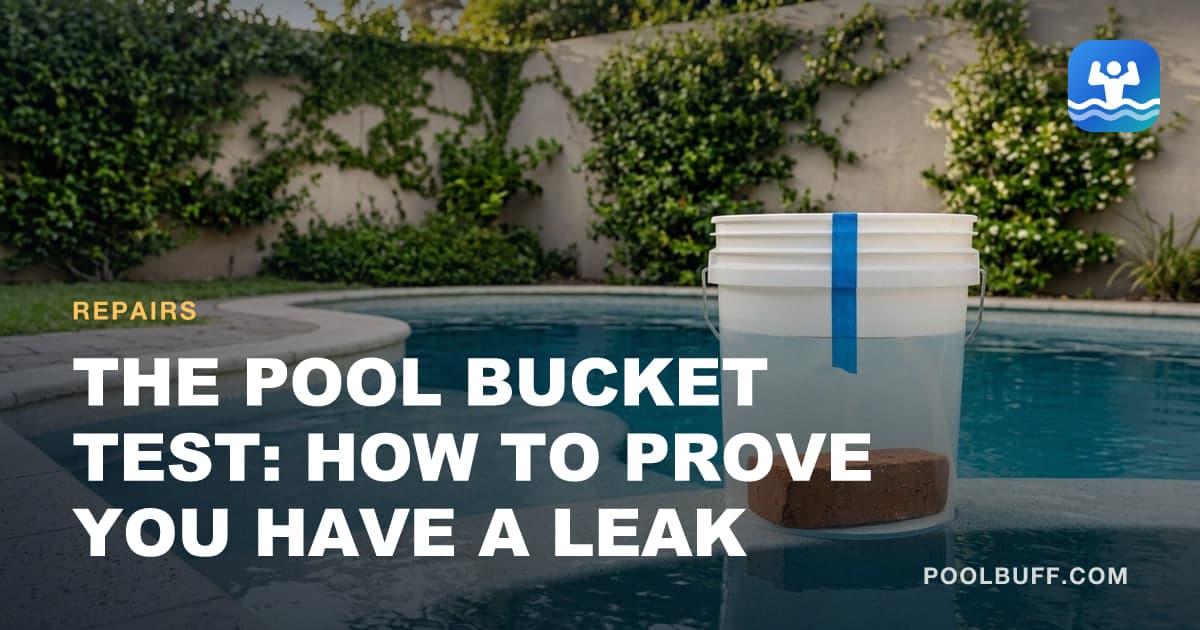
The free 24-hour test that separates a real leak from ordinary evaporation, the five things that quietly invalidate it, and how to read the answer.

Bubbles blowing from the jets mean air is being sucked in before the pump. Here's the order to check, from a free fix to the expensive one.
Chlorine gone by morning means something is consuming it. The overnight test that tells you what, and why ammonia is the one that needs a shocking dose.
Won't climb, stops mid-cycle, misses half the pool or won't power on at all. What each symptom actually means, and the cheap causes to rule out first.
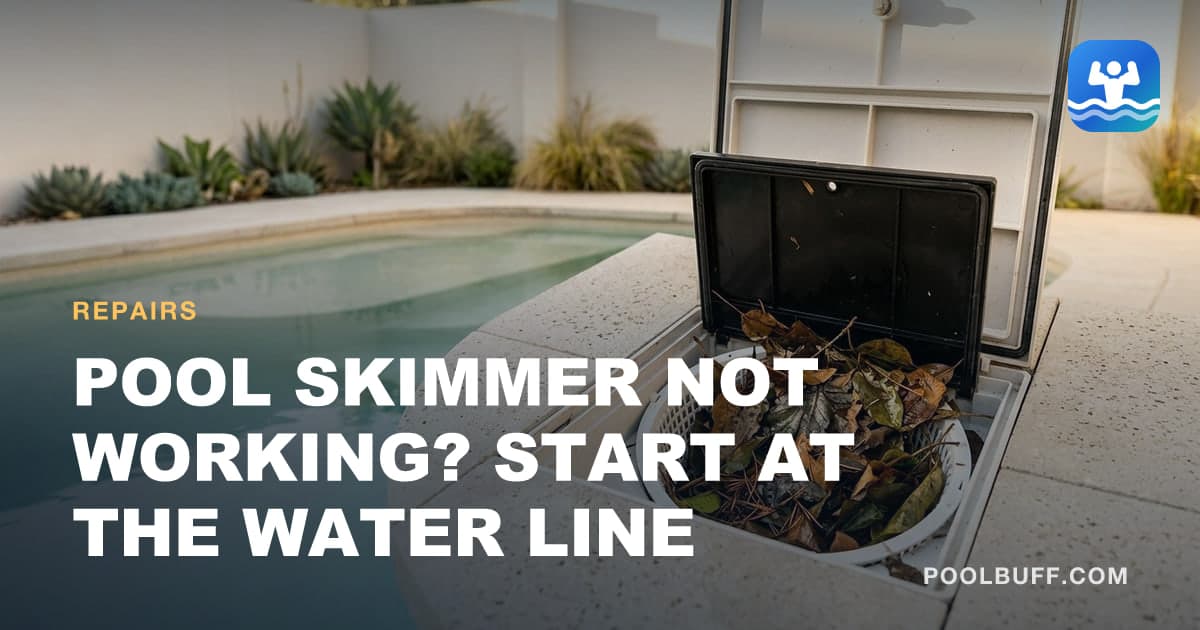
Why a skimmer stops pulling, where the air is getting in, and how to tell a cracked skimmer from a leaking faceplate before you start digging.
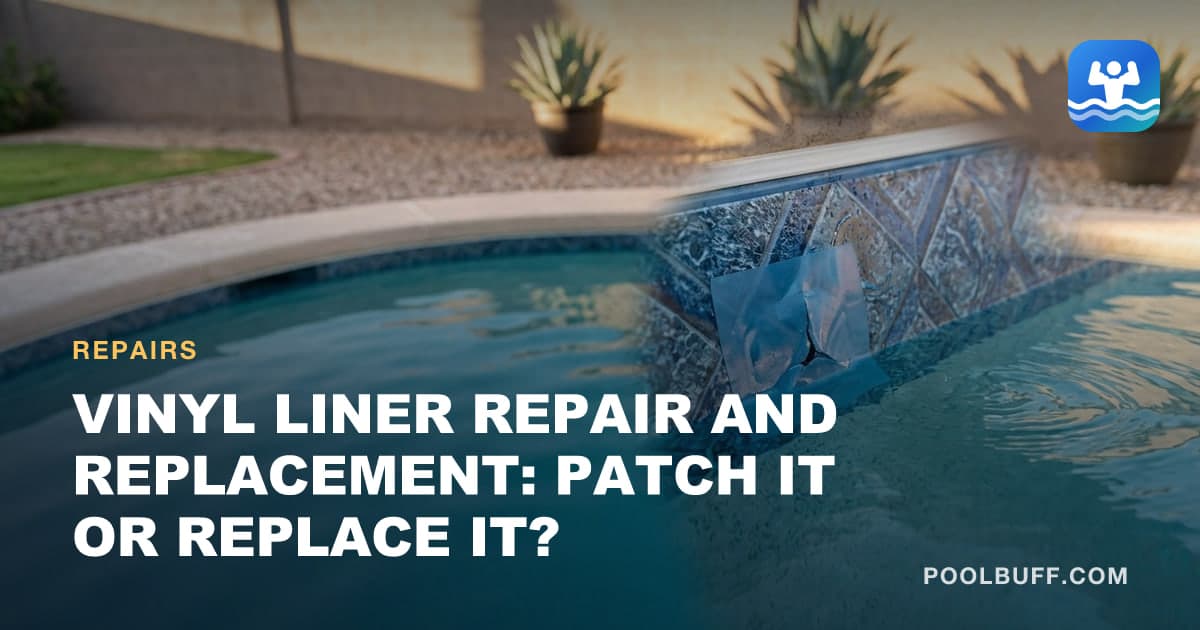
How to find and patch a liner leak underwater, what shortens liner life, and how to know when patching stops making sense.
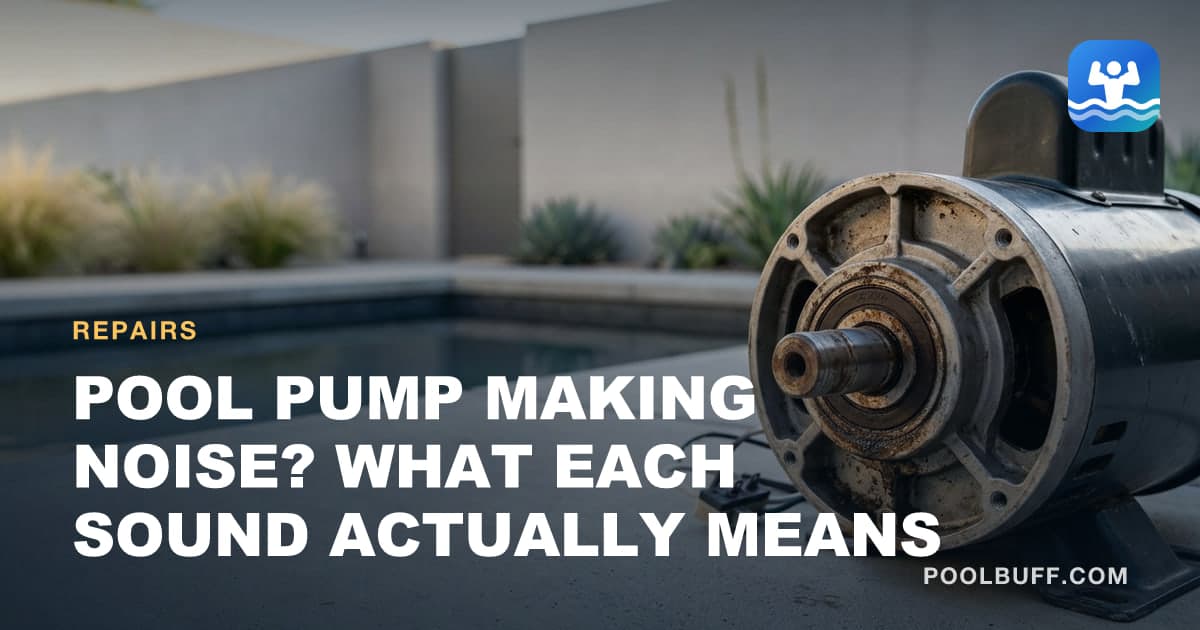
Grinding, screeching, rattling and gravel-in-a-bucket all point at different failures. Here's how to tell them apart before something expensive breaks.
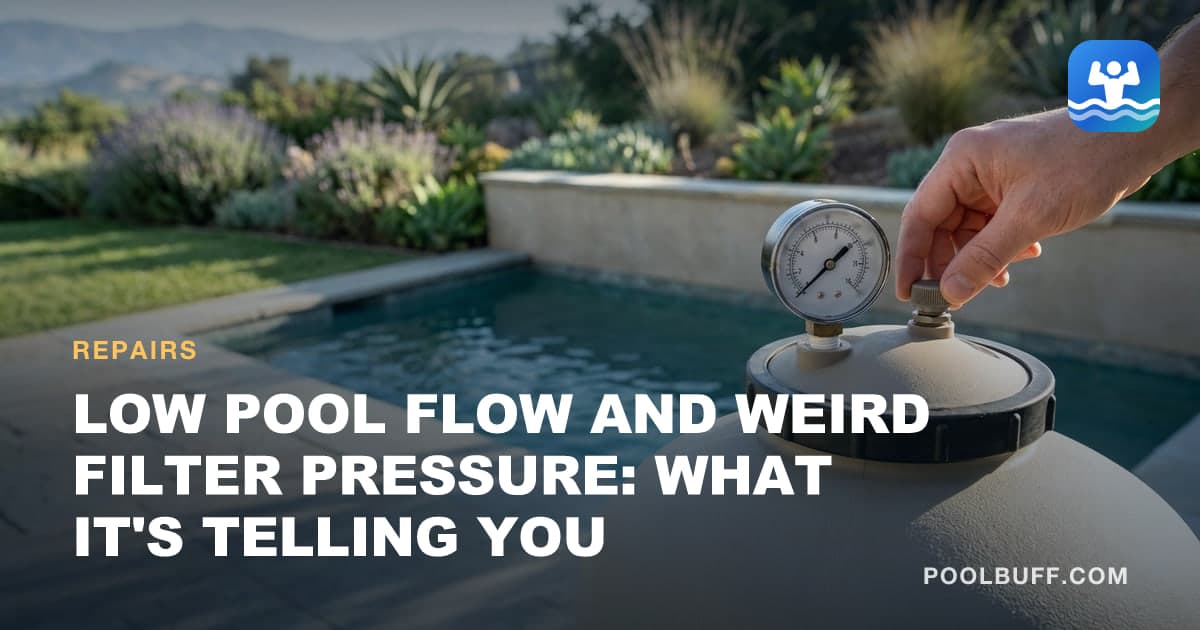
High pressure and low pressure mean opposite things. Here's how to read your gauge and find the restriction.
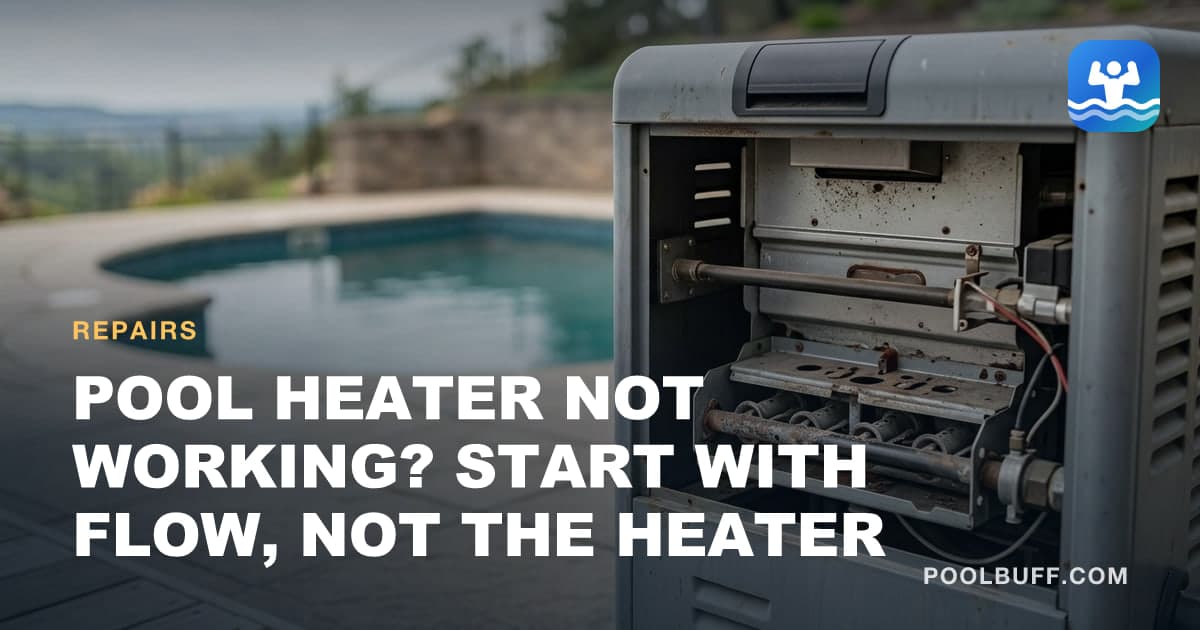
Most heater faults are flow problems, gas supply problems or a dirty sensor. Here's the order to check things, and where to stop and call a pro.

Bucket test, dye test, and how to tell a plumbing leak from a shell leak. Most suspected leaks turn out to be evaporation.
Run a bucket test. Set a weighted bucket on a step, fill it to match the pool level, mark both, and compare after 24 hours with the pump running normally. If the pool drops noticeably more than the bucket, you have a leak. Evaporation affects both equally.
Almost always air getting in on the suction side: a low water level, a dry or cracked pump lid o-ring, a loose lid, a clogged skimmer or pump basket, or a leaking suction-side valve or union. Pressure-side leaks drip water; suction-side leaks pull air and kill prime.
The leak itself usually is not — insurers treat it as maintenance. Sudden resulting damage sometimes is, for example if a burst line undermines a patio. Document the date you noticed it, keep the plumber invoice, and ask before you dig.
One short email with the seasonal jobs that matter, the fixes worth doing yourself, and the gear that earned its price.
Keep going
Pool problems rarely stay in one category. These are the ones that come up next.
Pumps, filters, heaters, salt cells, automation and lighting — how each one works, how to size it correctly and what actually justifies the upgrade.
18 articlesExploreWeekly, monthly and seasonal pool maintenance done properly — brushing, vacuuming, filter cleaning and the routines that keep water clear with less work.
14 articlesExploreStep-by-step pool guides for owners at every level — from your first week with a pool to the jobs most people pay a service company to handle.
4 articlesExplore