Guide
Hot Tub in Winter: Keep It Running or Winterize It
What the hot tub makers' manuals say about winter: freeze protection, power cuts, snow on the cover, and how to winterize a tub you won't be using.
13 minUpdated Oct 4, 2026
A hot tub is not a small pool. Four hundred gallons at 102 degrees with four people in it is the hardest water chemistry problem most owners will ever meet.
These guides cover sanitizer choice, the weekly routine, draining and refilling without an airlock, and the two problems every owner hits: foam and cloudy water.
Something wrong right now? Work through it in two or three questions11 guides in this section
Everything published on spas & hot tubs, newest first.
What the hot tub makers' manuals say about winter: freeze protection, power cuts, snow on the cover, and how to winterize a tub you won't be using.
What the spa makers' manuals say to check when hot tub jets go weak, surge or stop: the water level, filter, pump speed, air controls, valves and airlocks.
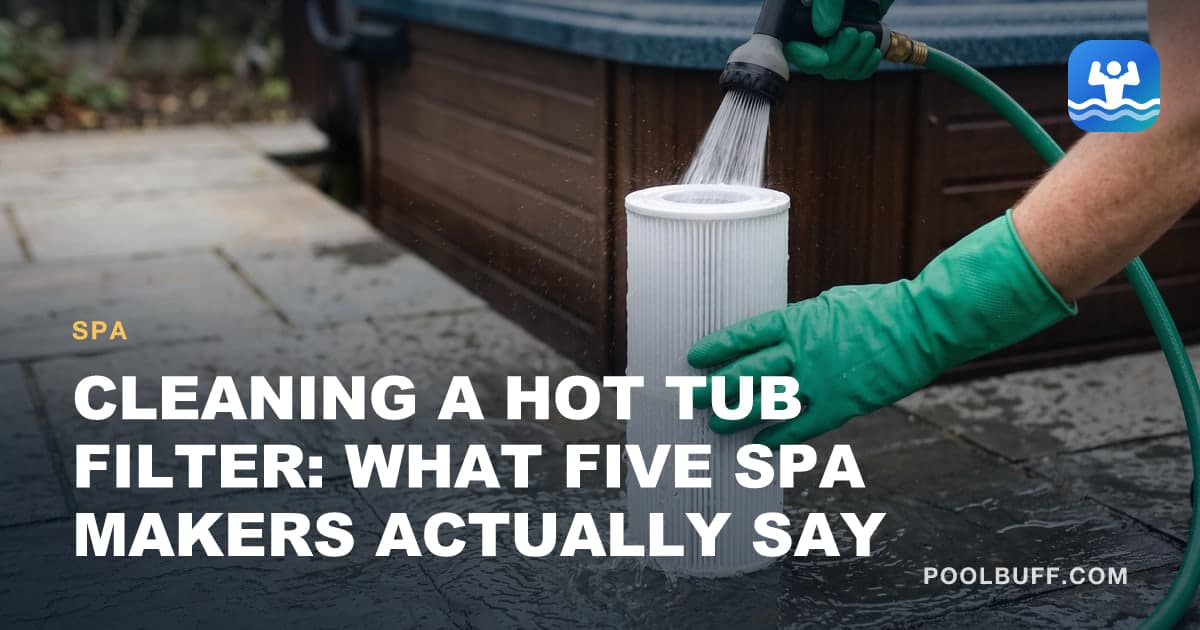
How Hot Spring, Jacuzzi, Sundance, Caldera and Bullfrog say to clean a hot tub filter, how often, what to soak it in, and when to replace it.
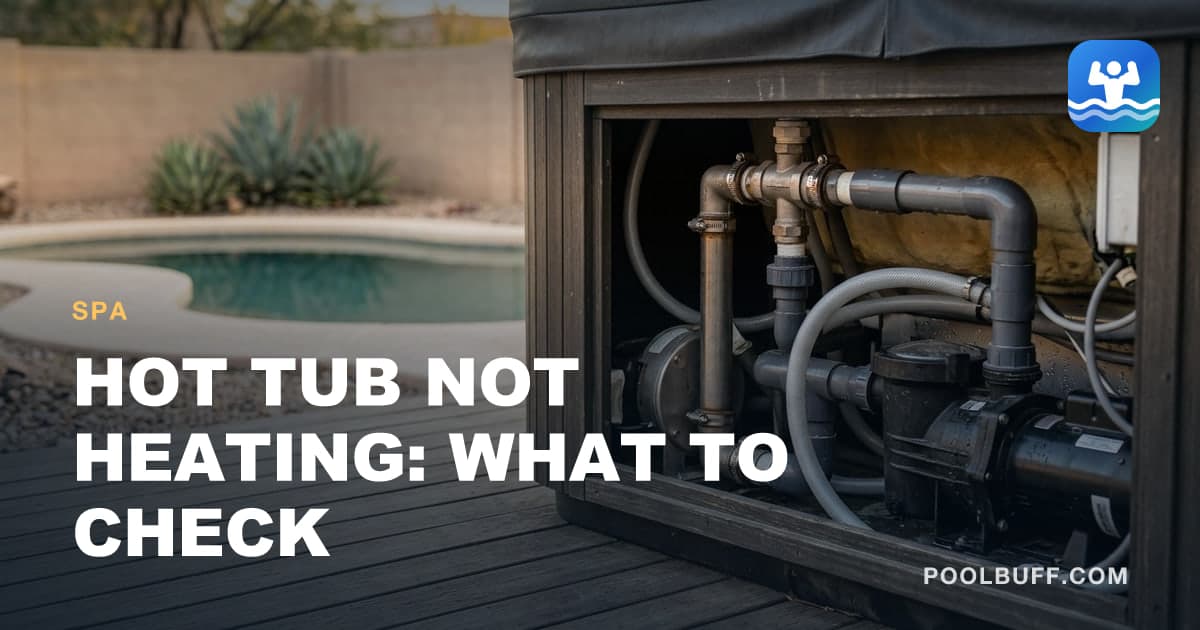
What the spa makers' manuals say to check when a hot tub won't heat: settings, power, flow, the high-limit and the cover, and where it stops being your job.

It is a water problem before it is a skin problem. What lets the bacteria survive a hot tub, and the sanitizer habits that stop it recurring.
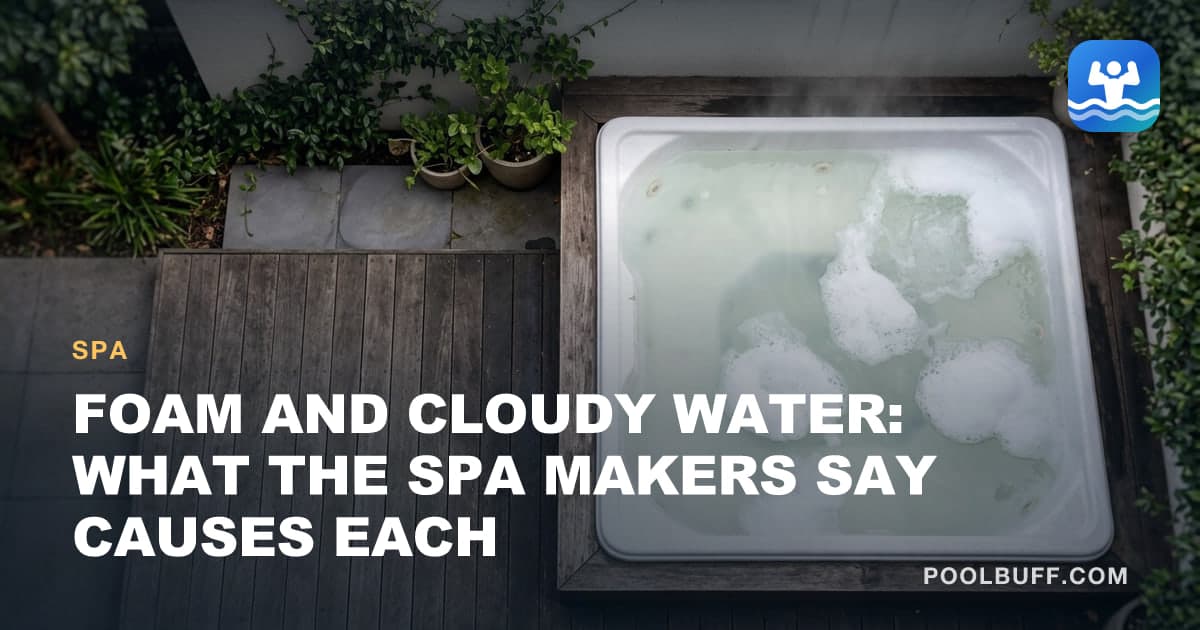
Why hot tubs foam and why they go cloudy, from the spa makers' own manuals, and how to find which cause you have before you buy another bottle of something.

What a hot tub needs after each soak, each week and each month, by the spa makers' own manuals, and the dissolved-solids test that says when to drain.
A hot tub's electricity cost, worked from the standby watts each model is certified at and your own rate, plus filters, water and the costs nobody can pin down.

Bromine versus chlorine in a spa, the target ranges that differ from a pool, and why 400 gallons at 102 degrees is a completely different problem.
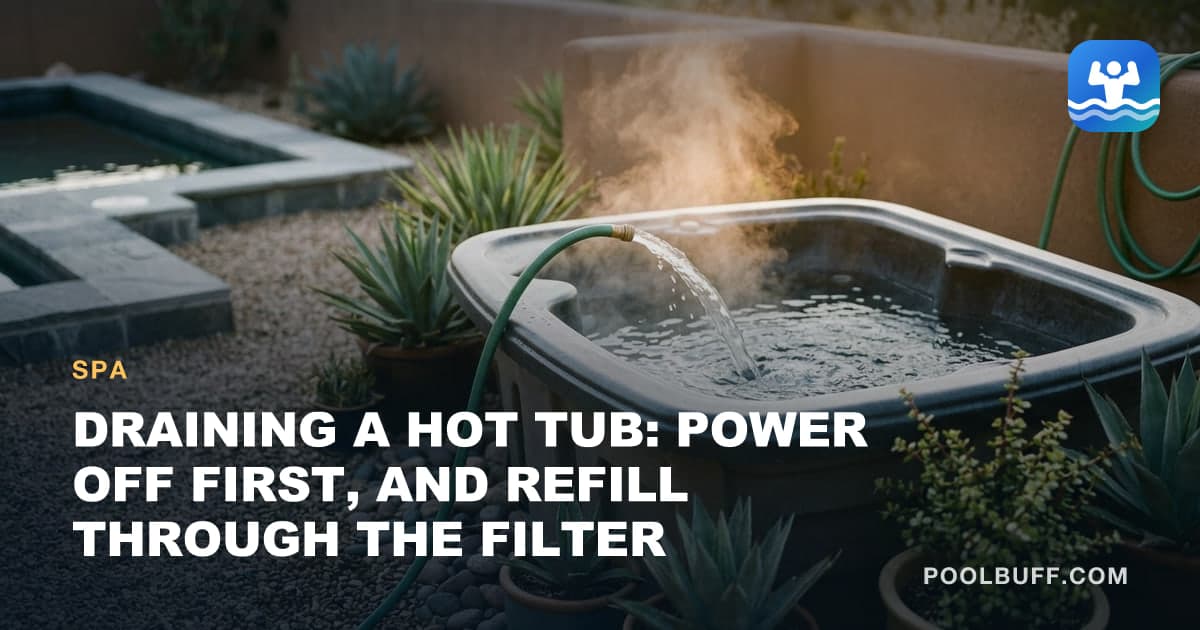
The full drain and refill: power off at the breaker first, what each spa maker says to clean the shell with, and how to refill without an airlock.

What to buy for a hot tub, starting from your maker's own sanitizer list: chlorine granules, a weekly oxidizer, and bromine only if your tub allows it.
The routine is smaller but far less forgiving. A hot tub holds a fraction of the water at nearly double the temperature, so sanitizer burns off faster, pH climbs faster from the jets, and a single heavy session moves the chemistry further than a whole weekend does in a pool. The jobs are quicker. The margin for error is much thinner.
Bromine holds up better in hot water and keeps working across a wider pH range, which is why most spa dealers recommend it. Chlorine acts faster and costs less, and works well if you test regularly. Use granular dichlor rather than the trichlor tablets sold for pools, which are far too acidic for a spa.
Every three to four months for most households. A common rule of thumb is gallons divided by bather load: take the volume, divide by the average number of bathers per day times three, and that is roughly your days between drains. Heavy use shortens it considerably.
One short email with the seasonal jobs that matter, the fixes worth doing yourself, and the gear that earned its price.
Keep going
Pool problems rarely stay in one category. These are the ones that come up next.
Chlorine, pH, alkalinity, cyanuric acid and calcium explained in plain English — with the dosing math, target ranges and fixes that actually hold.
20 articlesExploreWeekly, monthly and seasonal pool maintenance done properly — brushing, vacuuming, filter cleaning and the routines that keep water clear with less work.
14 articlesExploreWhat pools really cost to build, run and repair. Transparent price ranges for installation, monthly upkeep, heating, resurfacing and common repairs.
10 articlesExplore