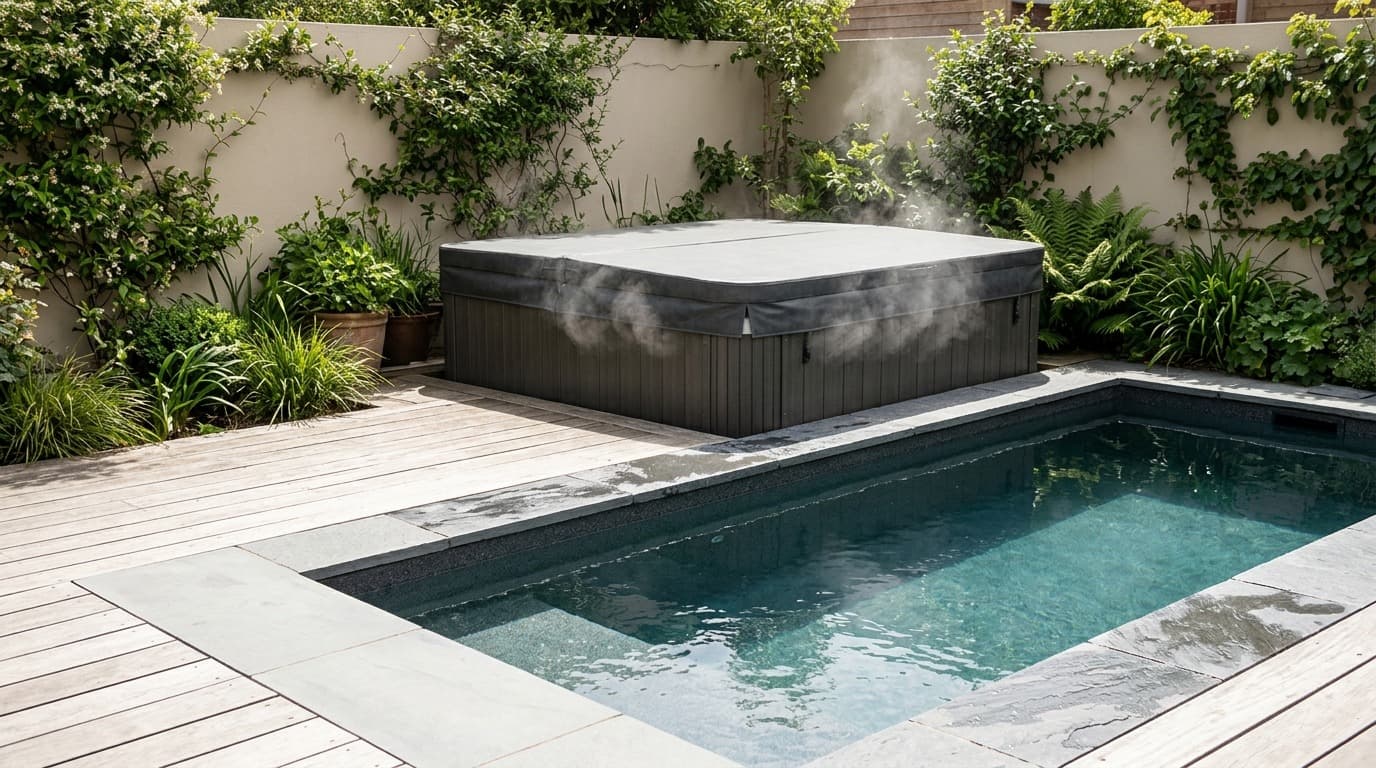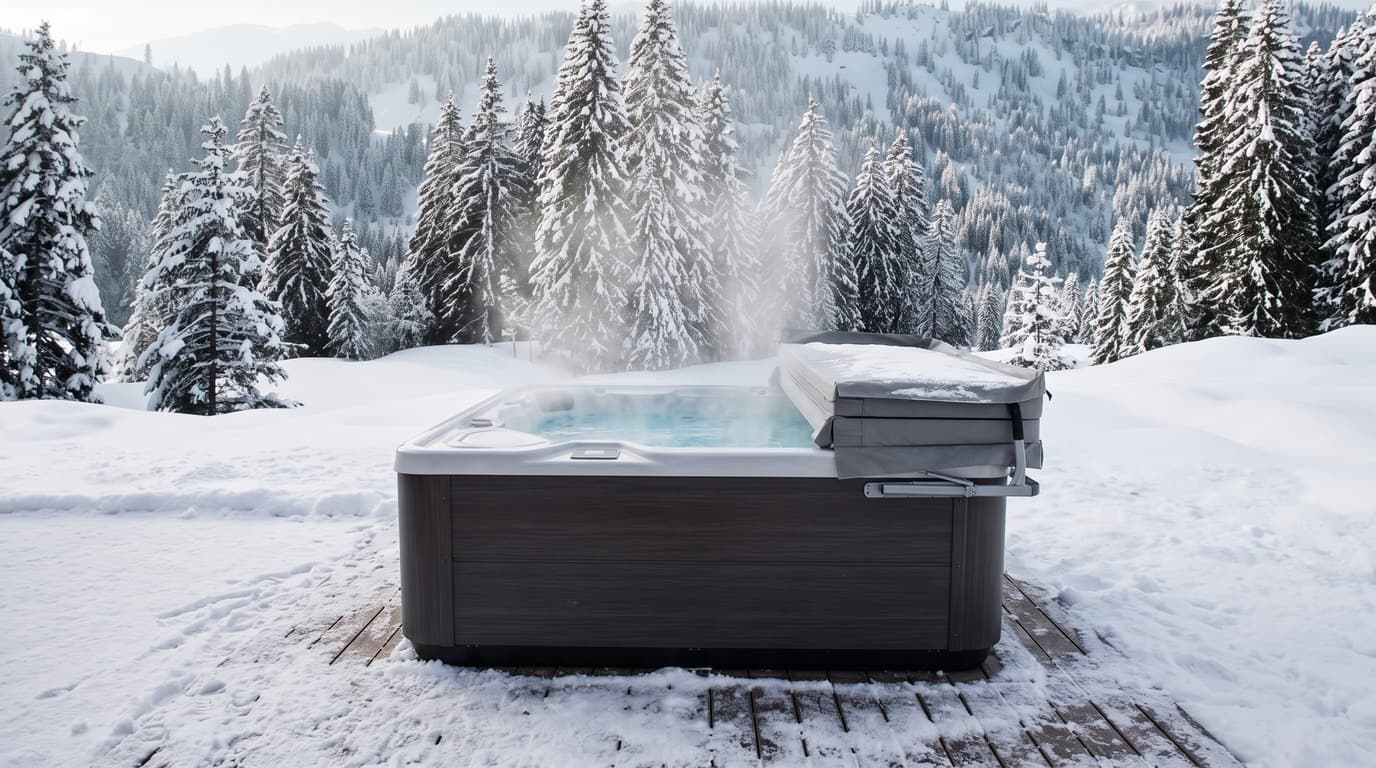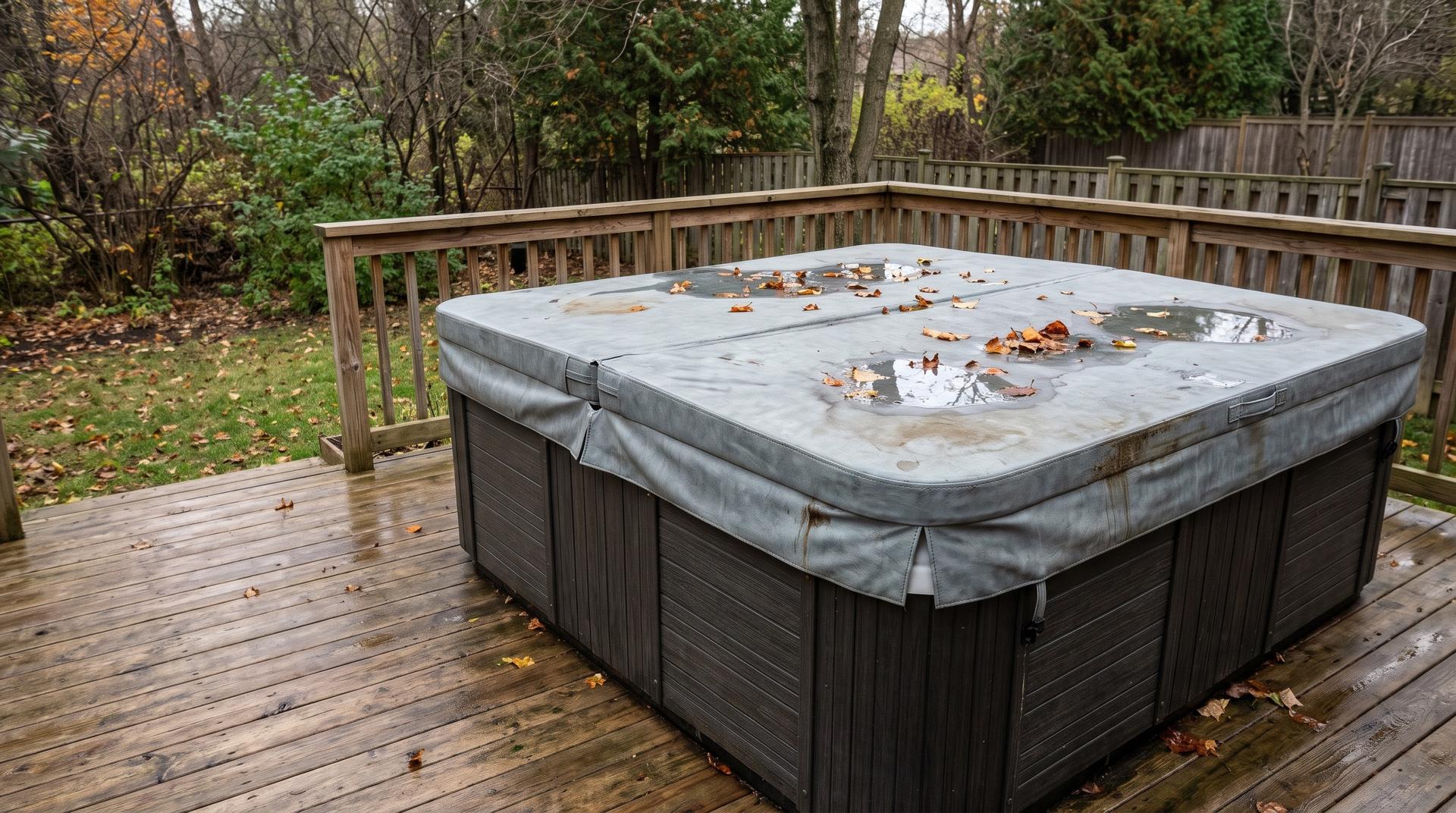
The cover is the hot tub's insulation, its lid against leaves and rain, and, locked, a barrier between a small child and the water. It also gets less attention than the filter.
I read the owner's manuals and warranties of nine hot tub makers for this page: Hot Spring, Caldera, Jacuzzi, Sundance, Bullfrog, Marquis, Master Spas, Arctic and Cal Spas. They agree on most of it. Where they don't, I've named both and said which I'd follow.
Key takeaways
- Most makers say to clean the cover monthly with mild soap, rinse the underside with plain water, and keep petroleum, silicone and abrasive products off it.
- Leave the cover open after adding chemicals: 15 minutes for Master Spas, 20 for most makers, 30 for Bullfrog. Trapped sanitizer gas attacks the underside.
- A cover that's heavy, sagging or holding puddles has a waterlogged foam core. California's energy commission says wet foam loses nearly all its insulating value, and no maker's manual says a soaked core can be dried.
- Several hot tub warranties exclude the cover entirely. Where it is covered, it's for one to three years, and fading and water absorption are often excluded.
- California's pool safety law doesn't apply to a hot tub with a locking safety cover that meets ASTM F1346, and Florida exempts a portable spa with one. Lock it every time.
Vinyl or fabric? Check before you clean
Not every cover is vinyl anymore, and the care differs.
Hot Spring's and Caldera's 2026 manuals describe their covers as solution-dyed polyester. Marquis and Arctic sell a fabric cover called Weathershield, beside their vinyl ones. Most of the rest are vinyl.
- Fabric: Bullfrog, Marquis and Arctic point to an outdoor fabric protectant, and Marquis and Arctic name 303 High Tech Fabric Guard. Hot Spring's blog says not to use its Cover Shield on polyester covers.
- Vinyl: a vinyl protectant. Arctic names its own Cover and Cabinet Renew, and Marquis its vinyl cleaner followed by 303 Cover Protectant. Cal Spas says never to use the vinyl products sold for cars, because they're oil-based and cloud the water.
Caldera's own website still calls its covers marine-grade vinyl and recommends a vinyl conditioner every four to six months, against a 2026 manual that says polyester. Read the tag on your cover, or your own manual, before buying anything for it.
Cleaning it
Monthly is the common figure. Hot Spring, Caldera, Jacuzzi, Sundance, Bullfrog and Arctic all say once a month. Master Spas' manual says monthly in one place and twice a month in its maintenance table, and its cover warranty says at least twice a month.
- 1
Hose it off
5 minLoosen the dirt and leaves with a garden hose first, which is where Jacuzzi's and Sundance's steps start.
- 2
Wash the top with mild soap
10 minThe ratios vary. Hot Spring's and Caldera's manuals say four tablespoons of mild soap or dish soap to a gallon of lukewarm water. Bullfrog and Marquis say 2 ounces to a gallon. Use a soft bristle brush or a sponge.
- 3
Rinse before it dries
5 minHot Spring says not to let a soap film dry on the fabric, and Jacuzzi and Sundance say the same for theirs.
- 4
Rinse the underside with plain water
5 minHot Spring, Caldera, Jacuzzi, Sundance and Arctic all say no soap on the underside, which faces the water. Master Spas wants the underside cleaned monthly to remove chemical residue, and allows a bleach and water mix for mildew there.
What to keep off it. No maker bans mild dish soap; Hot Spring, Marquis and Arctic name it. The bans are these:
- Petroleum-based products: Bullfrog and Master Spas, and Cal Spas bans the oil-based vinyl products sold for cars.
- Silicone: Jacuzzi, Sundance and Master Spas.
- Alcohol: Jacuzzi and Sundance.
- Solvents, abrasives and strong detergents: Jacuzzi, Sundance and Master Spas.
Hot Spring and Caldera go furthest: no chemicals or cleaners except the ones they or their dealer recommend.
Stains on a fabric cover. Marquis and Arctic allow at most 1 cup of bleach to a gallon of water, sprayed only on the uncoated face and left no more than 2 minutes. Then the fabric needs its protectant again.
What wears a cover out
Chemical gas trapped underneath. Every maker says to leave the cover open after adding chemicals, so the gas vents instead of attacking the underside and the pillows. They don't agree on how long:
| Cover open after chemicals | |
|---|---|
| Master Spas | At least 15 minutes; longer for larger doses |
| Hot Spring, Caldera | At least 20 minutes after a shock |
| Jacuzzi, Sundance, Arctic | At least 20 minutes |
| Marquis | 20 to 30 minutes |
| Cal Spas | 20 minutes; 30 with all the jets on high after an oxidizer shock |
| Bullfrog | At least 30 minutes after shocking |
Hot Spring calls the damage chemical abuse, and it isn't covered. Floating dispensers do the same harm: Hot Spring says they chemically burn the shell and cover, and Cal Spas says they discolor the cover's underside.
Weight. Every manual says not to sit, stand or walk on the cover, and Jacuzzi and Sundance add heavy objects. Master Spas adds animals. Snow counts as weight: the winter guide has the makers' rules for clearing it.
Lifting it wrong. Unlock the straps first, then lift by the handles. Hot Spring, Jacuzzi, Sundance and Marquis all say never to pull it by the skirt or the lock straps, and Hot Spring says a torn skirt isn't covered. Master Spas warns that its handles can't carry the whole cover's weight.
Heat and tarps on a running tub. Hot Spring and Caldera say not to put anything metal or heat-holding on the cover, or a plastic tarp over it, because the foam core can melt and that isn't covered. Their winterizing steps for a drained tub do put a tarp over the cover and plywood, as Cal Spas and Master Spas recommend. The difference is a heated tub underneath.
Sun. Cal Spas makes UV protectant the owner's job, and its warranty doesn't cover sun damage on a cover that wasn't treated.
Wind and water from above. Hot Spring and Marquis say their covers and lifters aren't meant for wind above 25 mph, and suggest extra straps. Jacuzzi and Sundance say runoff from a roof without gutters shortens a cover's life, and Master Spas says not to let water features spray onto it.
Waterlogged: how to tell, and what it means
This is how most covers end, and no owner's manual I read explains it. The makers' websites do.
Hot Spring's blog says that when the vapor barrier, the plastic wrap around the foam, fails, the foam absorbs water and becomes a home for mildew and bacteria. A cover that has gotten heavier, it says, means spa water has gotten past that barrier. Caldera lists the signs: the cover has become heavy, is sagging, or has puddles forming on top, which means the foam core is damaged.
California's energy commission put the cost plainly in its 2018 staff report. Most cover foam is expanded polystyrene, and its voids can absorb a lot of water. Once they do, the report says, the insulation loses nearly all its thermal resistance, and freezing water can break the foam apart. (It cites a foam maker and a foam retailer for those points, so read them as an industry account.) The running costs guide has the simple weight check, and what a dead cover does to the power bill.
Can it be dried? No maker's manual says so. Cal Spas' blog says damaged cores can't be effectively dried. What some covers allow is replacing the foam:
- Master Spas' foam inserts come out through a zipper at the hinge. Its care sheet says to turn them over every 6 months to keep the slope that sheds water, and to keep the plastic barrier intact.
- Cal Spas' warranty covers the material for a new vinyl sleeve or replacement foam.
Otherwise, a heavy, sagging cover is a replacement.
What the warranties cover
Less than you'd think. Several spa warranties leave the cover out entirely.
| Cover warranty | Left out | |
|---|---|---|
| Hot Spring, Caldera | Excluded from the spa warranty | — |
| Jacuzzi | The spa warranty doesn't cover the insulating cover | — |
| Marquis | 1 year, parts only | Fading, staining, torn stitching and broken foam cores, for any reason |
| Master Spas | Separate cover warranty: vinyl skin 2 years, foam inserts 1 year, parts only | Dragging, snow and ice, broken inserts, fading |
| Arctic | 1 to 3 years by cover, parts | Water absorption, chemical burn, mishandling; lifter wear on seams |
| Bullfrog | 3 years, for its Patio Performance cover | Normal fading or wear |
| Cal Spas | 3 years against defects | Normal wear, chemical abuse, sun damage on an untreated cover |
Arctic says outright that its covers aren't warranted against water absorption, and Marquis excludes broken foam cores. Don't count on a warranty to pay for a waterlogged cover.
How long one lasts
No hot tub maker's manual or warranty gives a lifespan. California's energy commission puts the average at five years, against ten for the spa itself. Jacuzzi's blog says 3 to 7 years with good upkeep, and Cal Spas' blog says 5 to 7 with care, or 3 or fewer without it. Caldera's answer is that it's hard to say.
Five years is a fair planning number. The weight check tells you the truth about yours.
Locks, and whether it's a safety cover
CPSC has said it since 1996: use a locked safety cover whenever the hot tub isn't in use. In 2006 it added that a soft cover, like a solar blanket, gives no protection from drowning.
The standard for a safety cover is ASTM F1346. Whether your cover meets it depends on the maker:
- Say it does: Hot Spring and Caldera call theirs a manual safety cover meeting the 1991 edition, Marquis says the same, and Master Spas cites the 2010 edition.
- Say two things: Bullfrog's manual says its locking system meets F1346, and two pages later that the cover isn't rated as a safety cover.
- Promise nothing: Jacuzzi, Sundance and Arctic say there's no representation that the cover or its locks will keep anyone out.
The law leans on that standard. California's pool safety law doesn't apply to a hot tub with locking safety covers that meet ASTM F1346, and its list of drowning prevention features includes a safety cover labeled to the 2023 edition. Florida exempts a portable spa with a safety cover that meets the 1991 edition. In both states, a compliant locked cover stands in for the fence.
So lock it every time. Hot Spring, Marquis, Bullfrog and Master Spas all say so, Marquis and Bullfrog whether the tub is full or empty. And don't let rain stand on top of it. Master Spas warns that pooled water there is itself a drowning risk, which is one more reason a sagging cover has to go.
Cover lifters
A lifter saves your back and the cover's hinge, but it needs room behind the tub. The makers' figures:
| Lifter type | Space behind the tub |
|---|---|
| Upright (Hot Spring UpRite, Caldera ProLift IV, Bullfrog upright) | 7 in. |
| Gliding (Hot Spring Lift 'n Glide, Caldera ProLift, Bullfrog gliding) | 14 in. |
| Folding (Hot Spring CoverCradle, Caldera ProLift III, Bullfrog folding) | 24 in. |
| Bullfrog's manual, any lifter | Up to 18 in.; check with the dealer |
| Bullfrog shelf-style | Up to 4 ft |
| Arctic Cabinet Free Universal Assist | At least 30 in. |
Hot Spring, Caldera and Bullfrog give about 3 inches at each side. Hot Spring and Marquis say not to use their lifters in wind over 25 mph, and Hot Spring says to check the gas springs and pivots for ice in winter. Arctic counts seam wear from a lifter as normal wear, and Master Spas' cover warranty excludes lifter damage.
Buying a replacement
The makers want you to buy theirs, and some back that with the warranty. Marquis says an aftermarket cover won't protect the shell as well and voids the shell warranty. Master Spas excludes damage caused by a cover it didn't make or approve.
There's an energy reason too. California's spa labels name the cover model the spa was tested with, and the energy commission notes that buyers have no direct way to know a replacement matches it.
What to look for, from what the makers publish:
- A taper, so water and snow run off. Arctic is the only one that gives numbers: 5 to 4 inches, or 4 to 2 inches.
- A hinge gasket. Hot Spring describes an insulated gasket along the whole hinge, where heat escapes first.
- Locks. Hot Spring's replacement covers include child safety locks, and Bullfrog's have locking clips.
- Foam density is where you'll find the least. No maker publishes a figure; Arctic says only that its foam is twice the industry average.
If you buy from someone other than your tub's maker, Jacuzzi's blog says to measure the full length and width, and the radius of any rounded corners. Buying through the dealer, Hot Spring says, gets you help choosing the right one.
Go deeperHot tub maintenance scheduleWhere the cover fits in the weekly, monthly and quarterly jobs.Frequently asked questions
How often should you clean a hot tub cover?
About once a month. Hot Spring, Caldera, Jacuzzi, Sundance, Bullfrog and Arctic all say monthly, and Master Spas' cover warranty says at least twice a month. Use mild soap and water on top, rinse it off before it dries, and rinse the underside with plain water.
Can you dry out a waterlogged hot tub cover?
No maker's manual says you can. Cal Spas' blog says damaged cores can't be effectively dried. Master Spas' foam inserts come out through a zipper at the hinge, and Cal Spas' warranty can supply replacement foam, so on some covers the inserts can be replaced instead of the whole cover.
How long does a hot tub cover last?
No hot tub maker's manual or warranty gives a figure. California's energy commission puts the average life of a spa cover at five years. Jacuzzi's blog says 3 to 7 years with good upkeep, and Cal Spas' says 5 to 7 with care, or 3 or less without.
Is a hot tub cover a safety cover?
Only if it meets ASTM F1346. Hot Spring, Caldera and Marquis say their covers meet it, and Master Spas cites the 2010 edition. Bullfrog's manual says its locks meet it but that the cover isn't rated as a safety cover, and Jacuzzi, Sundance and Arctic make no promise that the cover or locks keep anyone out. CPSC says to use a locked safety cover whenever the tub isn't in use.
How long should a hot tub cover stay off after shocking?
By the manual: 15 minutes for Master Spas, 20 for Hot Spring, Caldera, Jacuzzi, Sundance, Arctic and Cal Spas, 20 to 30 for Marquis and 30 for Bullfrog. Cal Spas wants 30 minutes with the jets on high after an oxidizer shock. The point is to let the gas vent instead of attacking the cover's underside and the pillows.