How to Close a Pool for Winter Without Freeze Damage
When to close, how far your cover's maker says to lower the water, and the pump, filter and heater steps from the manuals, so nothing cracks in a freeze.
Opening and closing are the two jobs where doing it a week too late costs you far more than doing it right costs you at all. A pool closed warm goes green under the cover. A pool opened late gives algae a running start.
Here is the sequence for both ends of the season, plus how to handle the in-between months in climates that never fully shut down.
11 guides in this section
Start here
If you only read one page in this section, make it this one. Everything else here builds on it.

When to close, how far your cover's maker says to lower the water, and the pump, filter and heater steps from the manuals, so nothing cracks in a freeze.
Everything published on seasonal care, newest first.

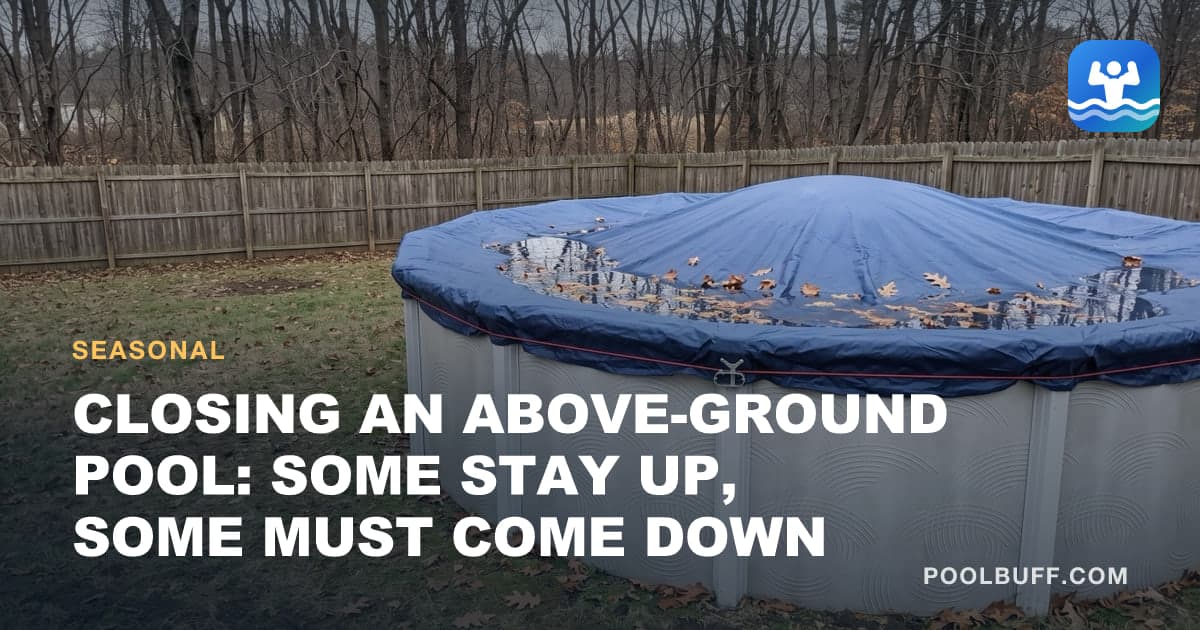
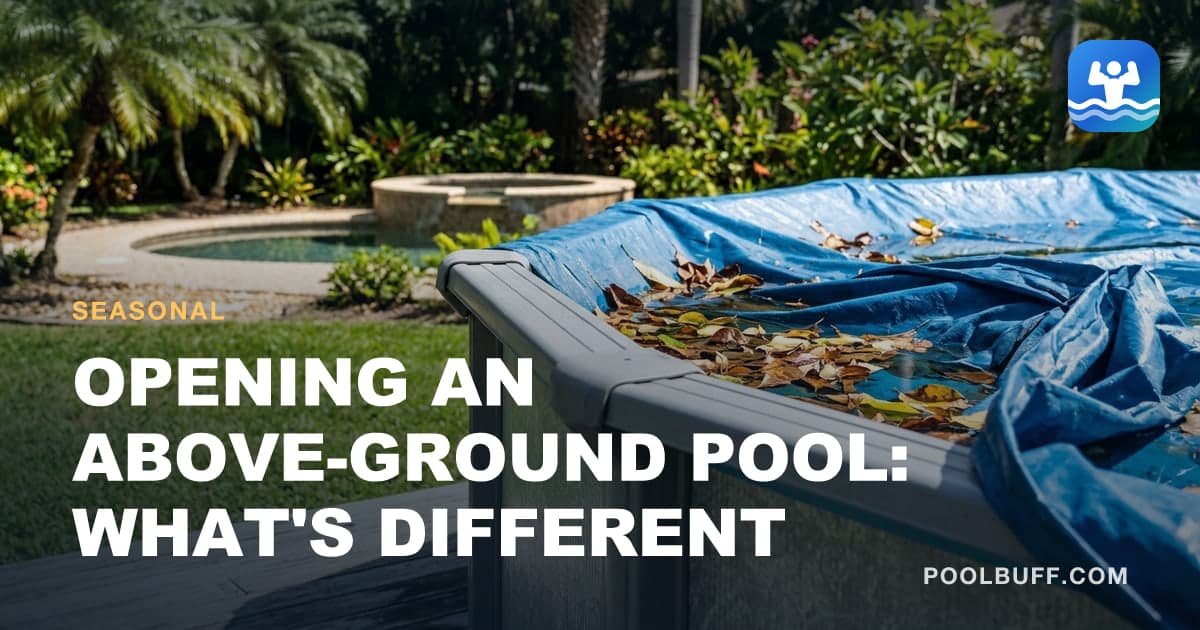
Which above-ground pools can stay up, how far each maker says to lower the water, and the plugs, pillow and cover that keep winter ice off the wall.

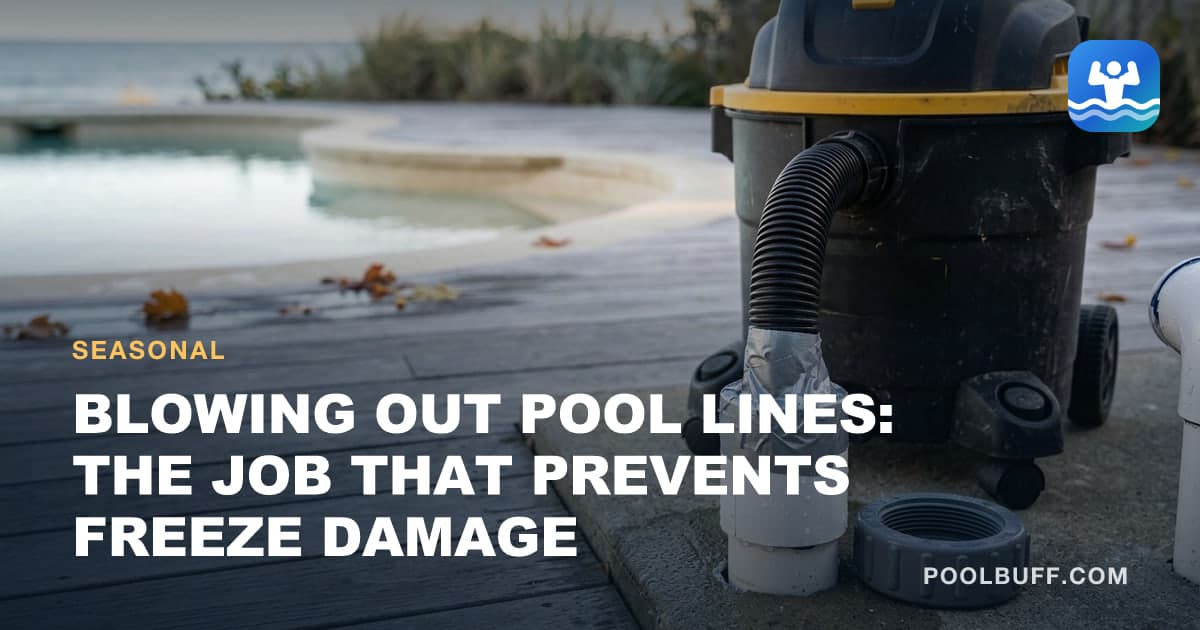
A shop vac, a compressor and which one the manuals allow. Line order, how much pressure is too much, and why antifreeze is the backup rather than the plan.

Moving water is the whole strategy, right up until the power fails. What to do while the pump runs, and what to do the moment it stops.

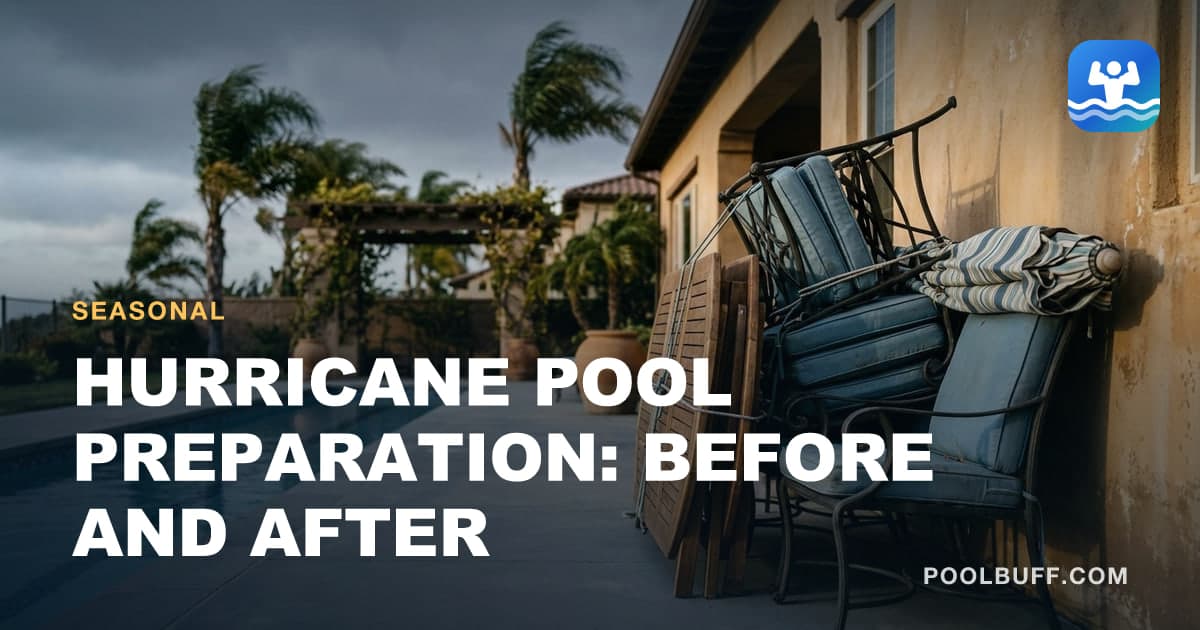
Do not drain the pool, do not put the furniture in it, and do not cover it. The short list that protects your surface and your equipment before a storm.

No main drain, a wall that moved over winter and a fraction of the volume. The opening steps that change on an above-ground, and the two that matter most.

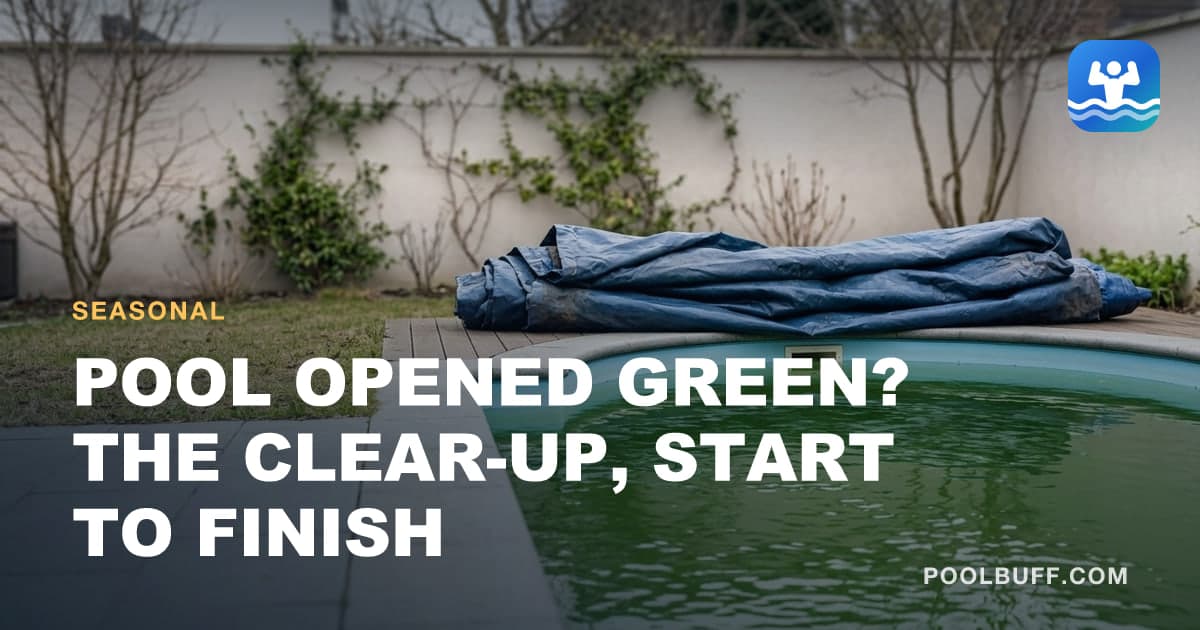
Green at opening is a shock-and-hold job on a clock, not an algaecide problem. The sequence, realistic timings, and when refilling beats treating.

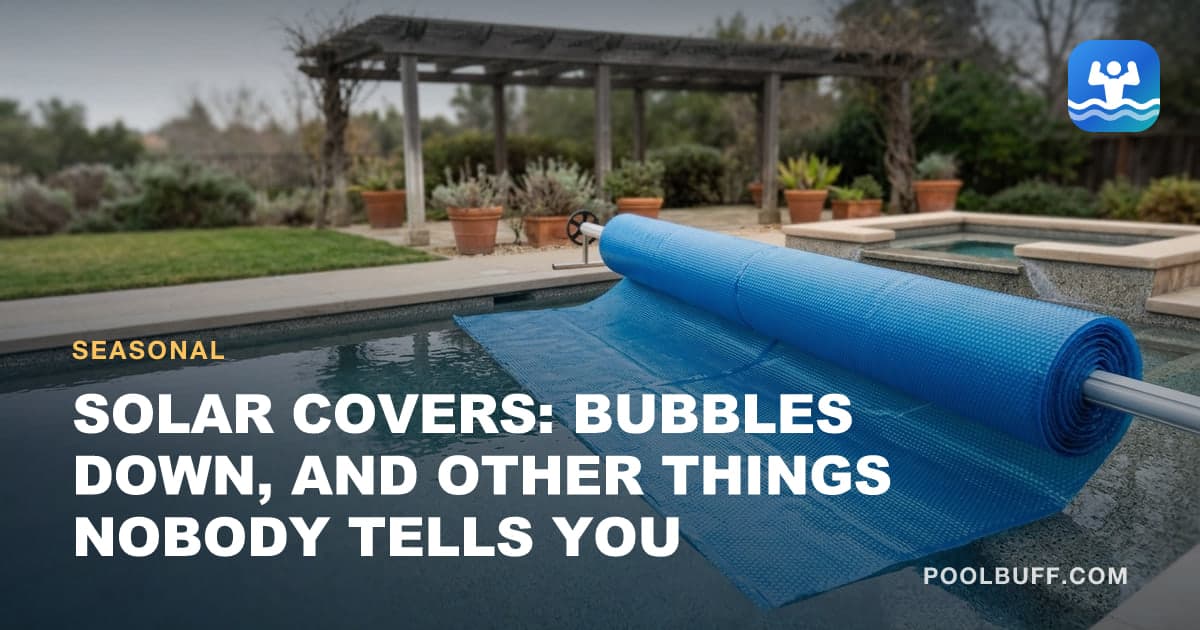
Which way up a solar cover goes, how much heat it really adds, how long one lasts, and the safety point that matters more than any of it.

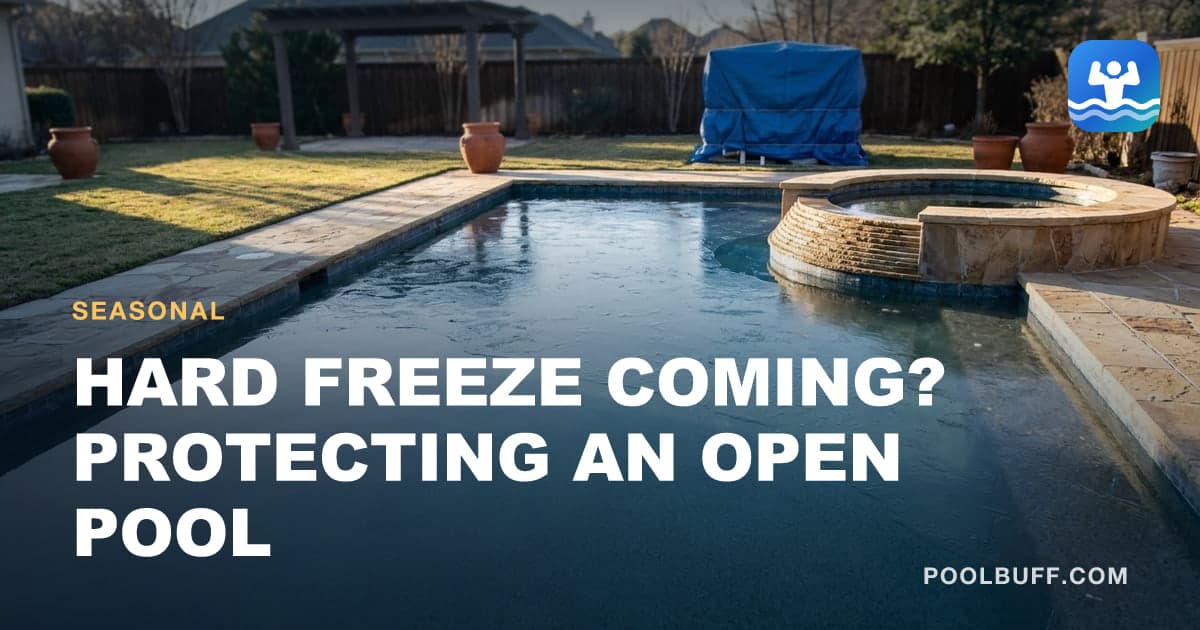
In mild climates, not closing is usually less work and less money. Here's the reduced winter schedule and the freeze protection that makes it safe.

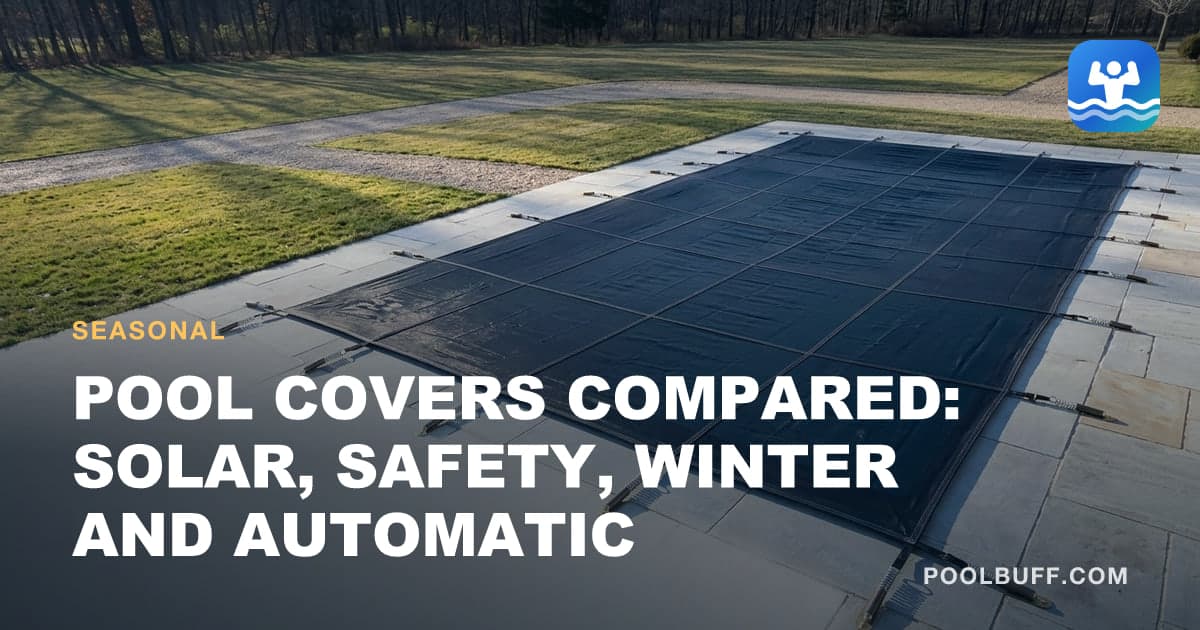
Solar, winter, safety and automatic pool covers compared from the makers' manuals: what each one is for, what its warranty covers, and which hold weight.

Opening early beats every chemical you can buy in April. The full sequence, in order, including what to do if it's already green.
Wait until water temperature holds below 60°F (15°C). Closing warmer leaves enough biological activity under the cover to burn through your winterizing chlorine and open green. In mild climates it is often better not to close at all and simply run a reduced schedule.
Open before the water consistently passes 60°F, which is earlier than most people expect. Algae wakes up at that threshold, and opening ahead of it means balancing clear water instead of clearing a swamp. Cover removal on a cool, still day also makes the job far cleaner.
Only in hard-freeze climates, and only to the level your closing method requires. If lines are blown out and plugged properly, many pools winter safely at normal level with a gizmo in the skimmer. Dropping the level too far strains vinyl liners and can float a pool in a high water table.
One short email with the seasonal jobs that matter, the fixes worth doing yourself, and the gear that earned its price.
Keep going
Pool problems rarely stay in one category. These are the ones that come up next.
Weekly, monthly and seasonal pool maintenance done properly — brushing, vacuuming, filter cleaning and the routines that keep water clear with less work.
14 articlesExploreChlorine, pH, alkalinity, cyanuric acid and calcium explained in plain English — with the dosing math, target ranges and fixes that actually hold.
20 articlesExplorePumps, filters, heaters, salt cells, automation and lighting — how each one works, how to size it correctly and what actually justifies the upgrade.
18 articlesExplore