FeaturedSafety
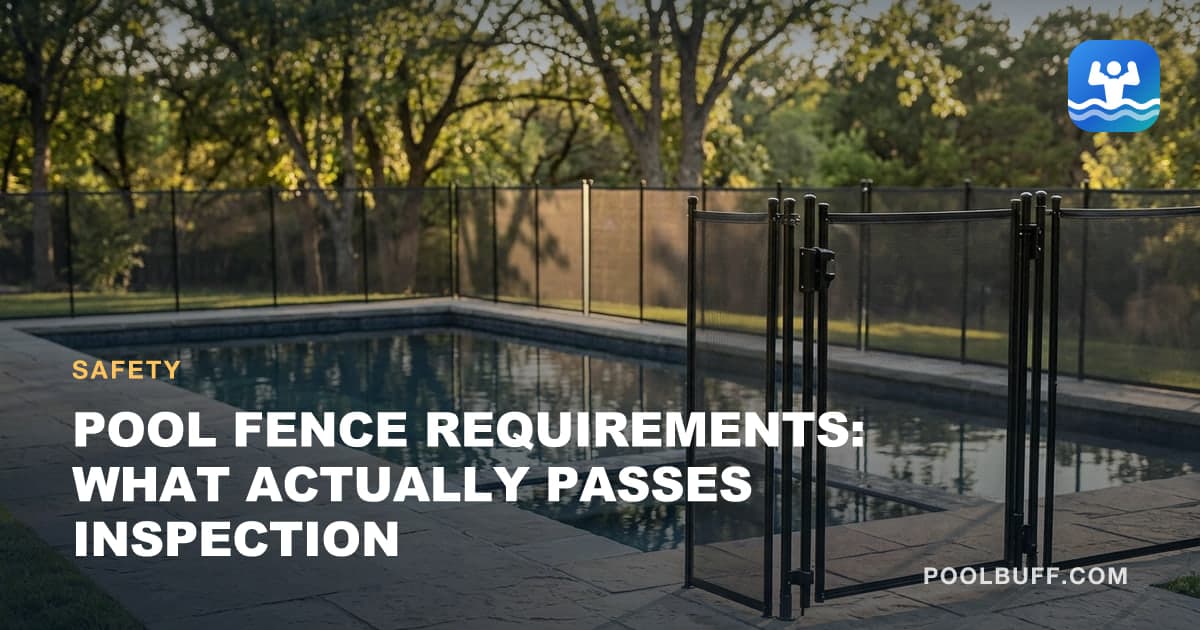
Pool Fence Requirements: What Actually Passes Inspection
Barrier heights, gap limits, gate hardware and the climbable-surface rule that fails more inspections than anything else.
6 min readUpdated Aug 4, 2026
Drowning is the leading cause of death for US children ages one to four, and it happens quietly, in seconds, usually at a pool the family knows well.
Nothing here is about scaring you out of owning a pool. It is about the specific, boring layers that have been shown to work — and getting them installed correctly rather than approximately.
7 guides in this section
Start here
If you only read one page in this section, make it this one. Everything else here builds on it.
Barrier heights, gap limits, gate hardware and the climbable-surface rule that fails more inspections than anything else.
Everything published on safety, newest first.
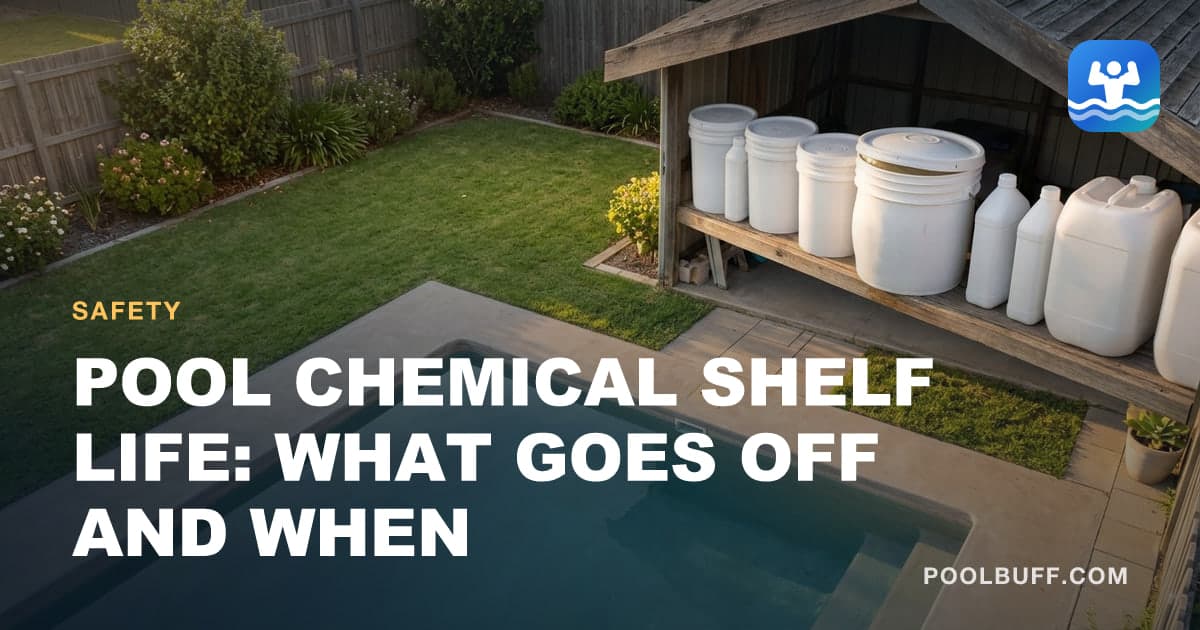
Liquid chlorine is perishable, tablets pressurize a sealed bucket, and cal hypo cakes without losing its bite. How long each product lasts and how to tell.
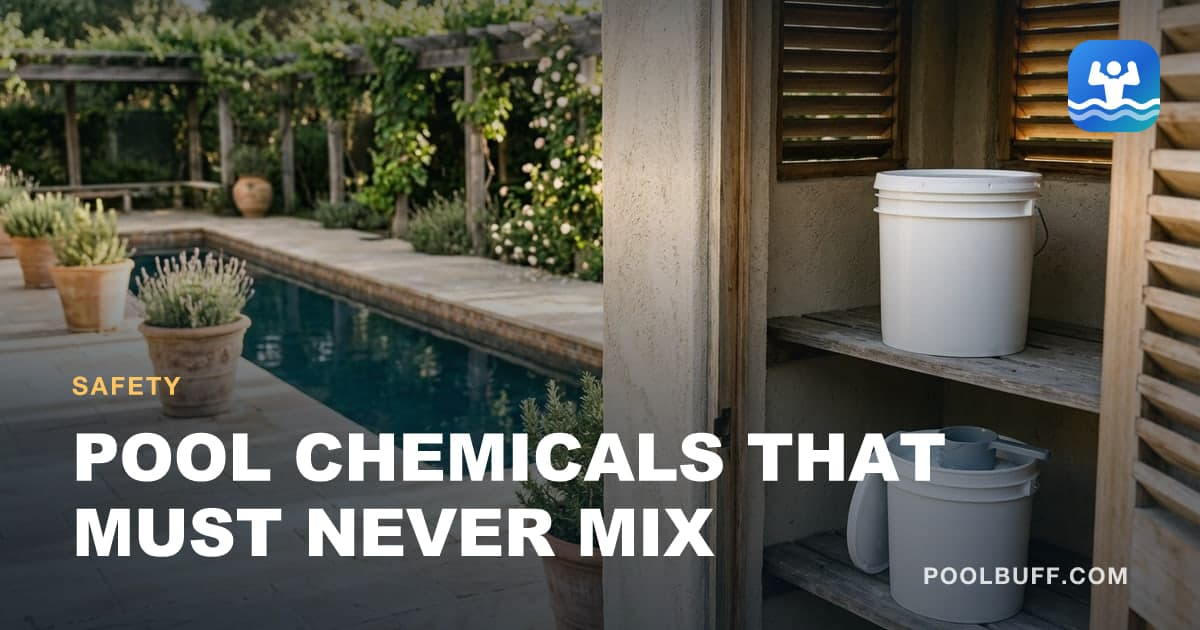
The specific combinations that cause fires and gas, plus the five ordinary moments they happen in — a shared scoop, a topped-up feeder, a leaking shelf.
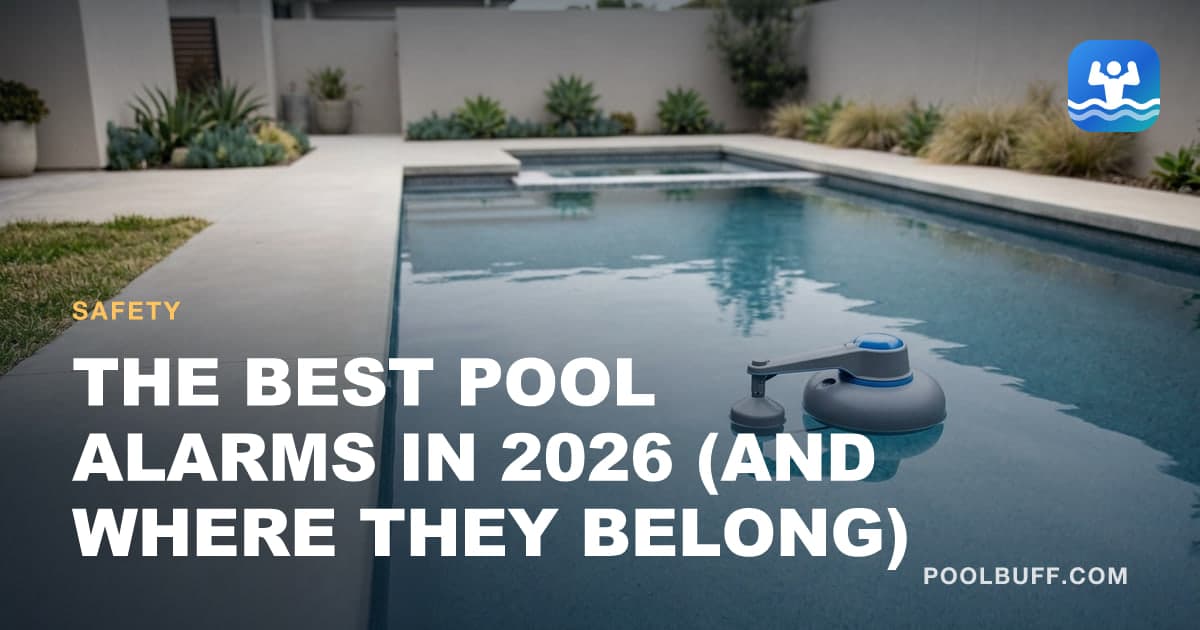
An alarm is the last layer, not the first. Which type covers which gap, what ASTM certification means, and the failure that makes all of them useless.
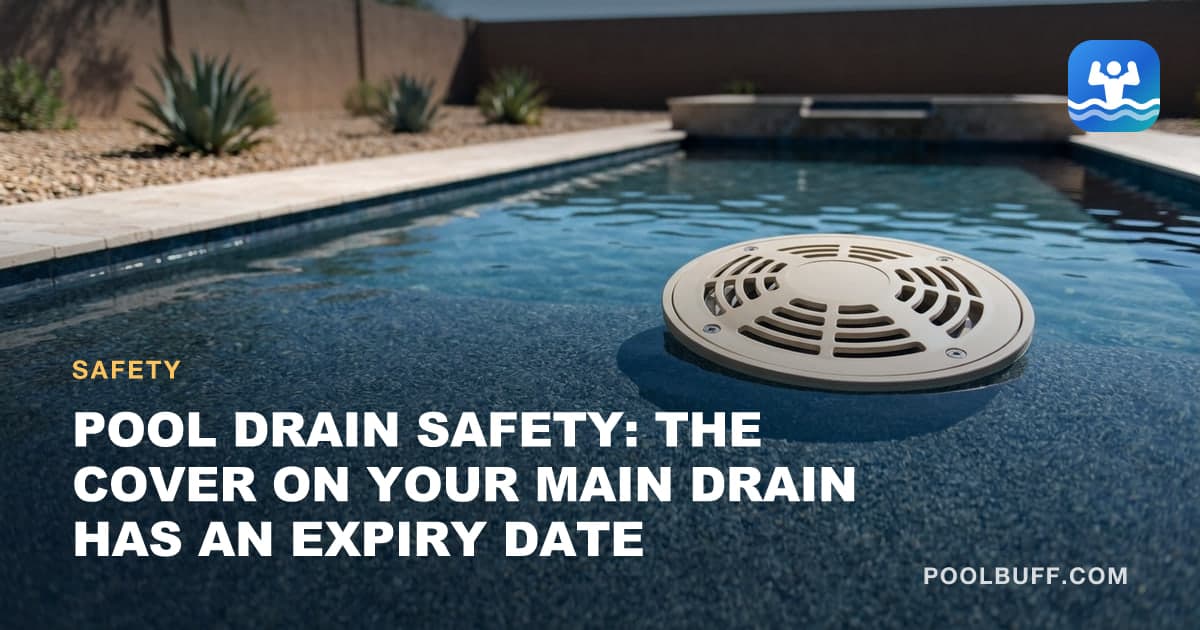
Entrapment risk, VGB compliance, and the date-stamped drain cover almost no homeowner has ever checked.
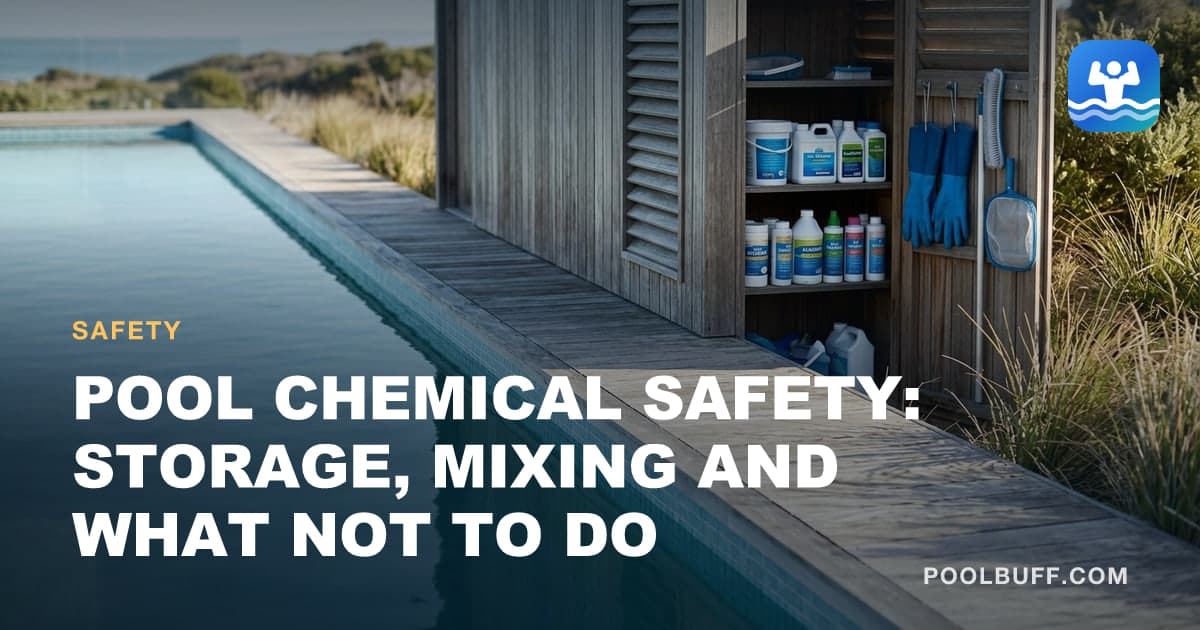
Pool chemicals cause thousands of ER visits a year, almost all preventable. Storage rules, handling order, and what to do when something goes wrong.
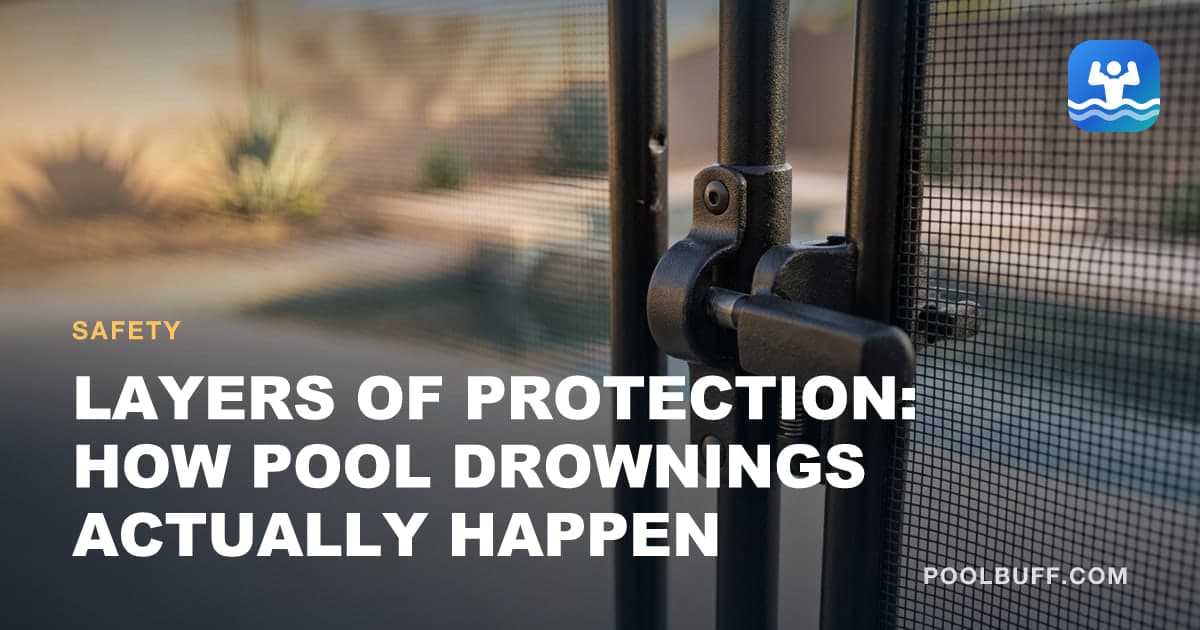
Drowning is fast, silent and usually happens during a gap in supervision at a pool the family knows well. Here's what each safety layer catches.
Most jurisdictions follow the International Swimming Pool and Spa Code: a barrier at least 48 inches high, gaps no wider than 4 inches, no climbable footholds on the outside, and a self-closing, self-latching gate that swings away from the pool with the latch at least 54 inches up. Always confirm your local amendments — they vary.
No. Alarms are a useful layer but a poor primary defense — they fail, get muted, and only tell you after someone is already in the water. Supervision plus a compliant four-sided barrier is the foundation; alarms, covers and swim lessons are additional layers on top.
Cool, dry, shaded, off the floor, and with oxidizers such as chlorine kept well away from acids and from anything flammable. Never mix chemicals with each other, never add water to acid, and always dose into water rather than water into chemical. Keep original containers with lids sealed.
One short email with the seasonal jobs that matter, the fixes worth doing yourself, and the gear that earned its price.
Keep going
Pool problems rarely stay in one category. These are the ones that come up next.
Fiberglass, vinyl liner, gunite and above-ground pools compared — plus permits, excavation, timelines and the questions to ask before you sign.
6 articlesExploreWeekly, monthly and seasonal pool maintenance done properly — brushing, vacuuming, filter cleaning and the routines that keep water clear with less work.
14 articlesExploreStep-by-step pool guides for owners at every level — from your first week with a pool to the jobs most people pay a service company to handle.
4 articlesExplore