Pool chemicals send thousands of people to emergency rooms in the US every year, and almost every one of those visits was preventable by following about five rules.
I'm not trying to scare anyone off. Handled sensibly this stuff is routine — I've handled it for decades. But it deserves respect in a way that "add as directed" on the back of a bag doesn't really convey.
Key takeaways
- Never mix two pool chemicals, including two different chlorine types. That reaction is violent.
- Acid into water. Always. Water into acid can boil and spit acid back at your face.
- Chlorine and acid stored next to each other is the single most common serious mistake.
- Wet trichlor plus organic material can ignite. This is a real fire cause, not a theoretical one.
- US Poison Control is 1-800-222-1222. Put it in your phone before you need it.
The rules that matter
1. Never mix chemicals. Not two different chlorine products. Not chlorine and acid. Not "a bit of the old stuff into the new bucket." Trichlor and cal hypo together can react violently — this is a documented cause of pool shed explosions, not a theoretical risk. The specific combinations, and where they actually meet covers the accidental routes, which is how it nearly always happens.
2. Chemical into water, never water into chemical. Especially acid. Concentrated acid meeting a small amount of water releases heat fast enough to flash it to steam and spit acid back out. A bucket of water first, then the acid, slowly.
3. One at a time. Add one chemical, let it circulate for hours, then add the next. Convenience is not worth the reaction.
4. Dedicated equipment. One bucket for acid, a different one for chlorine. Label them. Residue in a shared bucket is exactly how the reactions people warn you about actually happen.
5. Original containers, sealed. Don't decant into unlabeled jugs. Don't leave lids off. Both are how a garage ends up with an atmosphere nobody realized was there.
Getting them home
The part of chemical safety that happens before the shed.
Never in the passenger compartment. Chlorine fumes in a closed car are unpleasant at best, and a leaking jug of acid is considerably worse. The trunk, or better, the bed of a truck.
Upright, and contained. Liquid chlorine jugs leak from the cap when they tip, and eventually they tip. A crate or a plastic tub in the trunk contains the spill that is coming.
Not on a hot day with a long errand. Liquid chlorine off-gasses as it warms, and jugs can swell and vent. A car standing in a parking lot in August is the wrong place for it.
Not acid and chlorine in the same trip if you can avoid it. Those two traveling together in a trunk is the same adjacency you would refuse in a shed, at a higher temperature and with more movement.
And leave whatever you bought visible rather than buried under groceries, so whoever unloads the car knows what they are lifting.
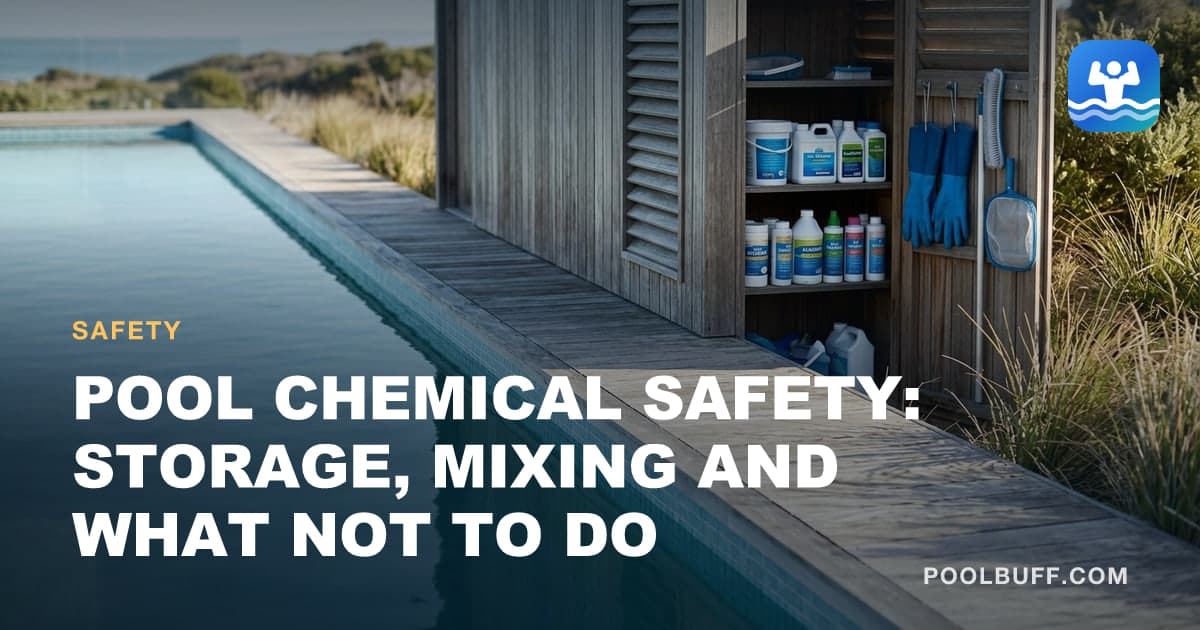
Storage
Where chemicals sit for nine months a year matters as much as how you handle them for ten minutes.
Cool. Heat degrades chlorine and raises pressure in containers. A sealed shed in a Phoenix August can exceed 130°F.
Dry. Moisture in granular chlorine starts reactions. Wet trichlor is genuinely dangerous.
Shaded. UV breaks down liquid chlorine fast. A jug left in the sun for a month can lose a third of its strength. How long each product actually lasts covers which ones are perishable and which are ruined only by getting wet.
Ventilated. Chlorine products give off gas over time. In a sealed space it accumulates.
Off the floor. Floods, spills, and the corrosion that comes from a container sitting on damp concrete.
Separated. This is the big one:
| Keep apart from | WhyMy default | |
|---|---|---|
| Chlorine (any type) | Acids, other chlorine types, anything flammable | Chlorine gas, or a violent exothermic reaction |
| Muriatic acid | All chlorine products, metal tools | Chlorine gas. Fumes corrode metal even through a closed lid |
| Cal hypo | Trichlor, dichlor, oils, fuel, brake fluid | Strong oxidizer. Contamination with organics can ignite |
| Trichlor | Cal hypo especially, and moisture | This specific combination has caused documented explosions |
Different shelves is the minimum. Different cabinets is better. Acid in a sealed plastic tub on the floor, chlorine on a shelf above and several feet away, is a reasonable home setup.
Never store chemicals near a gas heater, water heater or anything with a pilot light.
Handling
Wear the gear. Chemical-resistant gloves and proper eye protection. Not sunglasses. Muriatic acid in an eye is an emergency.
Stand upwind. Sounds obvious. People forget, get a lungful of acid fumes, and it ruins their afternoon at best.
Open containers away from your face, slowly, and let pressure equalize before tipping.
Dose into water, pump running. Pour liquid chlorine slowly around the perimeter, ideally in front of a return. Pre-dissolve granular products in a bucket of pool water rather than broadcasting them, especially on a vinyl liner — undissolved cal hypo sitting on vinyl bleaches a permanent white patch.
Never put anything in the skimmer unless the product specifically says to. Concentrated chemical drawn straight through the pump, filter, heater and salt cell does real damage.
Rinse the scoop and bucket thoroughly afterward, and let them dry before storing.
When something goes wrong
Chlorine gas exposure. Get to fresh air immediately. Stay upright — chlorine gas is heavier than air, so low is worse. Don't go back in for anything. Call emergency services if breathing is difficult. Symptoms can worsen over several hours, so get checked even if you feel fine after twenty minutes.
Acid on skin. Flush with cool running water for at least 15 minutes. Remove contaminated clothing while flushing. Seek medical attention for anything beyond a small splash.
Acid or chlorine in eyes. Flush with running water for 15–20 minutes, holding the eyelid open. Then to hospital. Don't stop flushing early to drive there — flush first.
Acid spill, and you know it is only acid. Ventilate first. Neutralize it with soda ash, baking soda or garden lime — that is what the manufacturers' own safety data sheets call for, not water alone. Expect fizzing and some heat, which is the reason for ventilating before you start. Once it has stopped reacting, absorb with sand or cat litter, bag it, and dispose of it per the label.
That is not a contradiction of rule 2 above. Never pour water into a container of concentrated acid — that is the one that spits back. A thin spill on the floor, neutralized and then rinsed, is a different situation and a routine one.
Any other spill. If you do not know what it is, or two things have mixed, or anything is smoking or hot — leave it. Get everyone out, stay upwind, and call for help. Do not try to identify it and do not add a third product to it.
US Poison Control: 1-800-222-1222. Put it in your phone now, not when you need it.
The bit people skip
Read the label. Actually read it, once, when you buy a product.
Dose rates vary between brands and concentrations. Chlorine strength varies. A 12.5% jug and a 10% jug look identical on the shelf and aren't. The label also tells you what it must never be mixed with, which is the part worth two minutes of your time.
Frequently asked questions
How should pool chemicals be stored?
Cool, dry, shaded, off the floor and in original sealed containers. Keep oxidizers such as chlorine well separated from acids and from anything flammable — different shelves at minimum, ideally different cabinets. Somewhere ventilated, and never in a sealed hot shed in August.
What happens if you mix chlorine and acid?
They react to produce chlorine gas, which is immediately dangerous to breathe. This is the reaction behind most serious pool chemical incidents, and it usually happens because containers were stored together and one leaked, or because someone added both to the same bucket or feeder.
Can pool chemicals catch fire?
Yes. Calcium hypochlorite and trichlor are strong oxidizers. Contaminated with organic material such as oil, brake fluid, or even a small amount of water in a dirty container, they can react exothermically and ignite. Pool chemical fires are a documented cause of shed and garage fires every year.
Why do you add acid to water and not water to acid?
The reaction is exothermic. Pouring water into concentrated acid releases heat rapidly at the surface, which can flash the water to steam and spit acid out of the container at your face. Adding acid to a larger volume of water spreads the heat safely.
What should I do if I inhale chlorine gas?
Get to fresh air immediately and stay upright. Do not go back in for anything. Call emergency services if breathing is difficult, and Poison Control at 1-800-222-1222 in the US for guidance. Chlorine gas exposure can worsen over several hours, so get checked even if you feel alright.