Almost every pool problem is a water chemistry problem wearing a disguise. Cloudy water, algae, itchy skin, stained plaster, a heater that keeps scaling up — chase them back far enough and you land on a number that drifted out of range.
We cover the chemistry the way a good service tech explains it at the equipment pad: what each number does, which ones matter most, what order to fix them in, and how much of what to add.
The five numbers that matter, the order to fix them in, and the doses that actually work. Written by people who've done this on real pools for 20 years.
9 min read·Updated Sep 12, 2026
All water chemistry guides
Everything published on water chemistry, newest first.
Borates slow pH creep and the labels claim algae suppression. What the EPA labels really say, how much to add, the pH catch, and why only draining removes them.
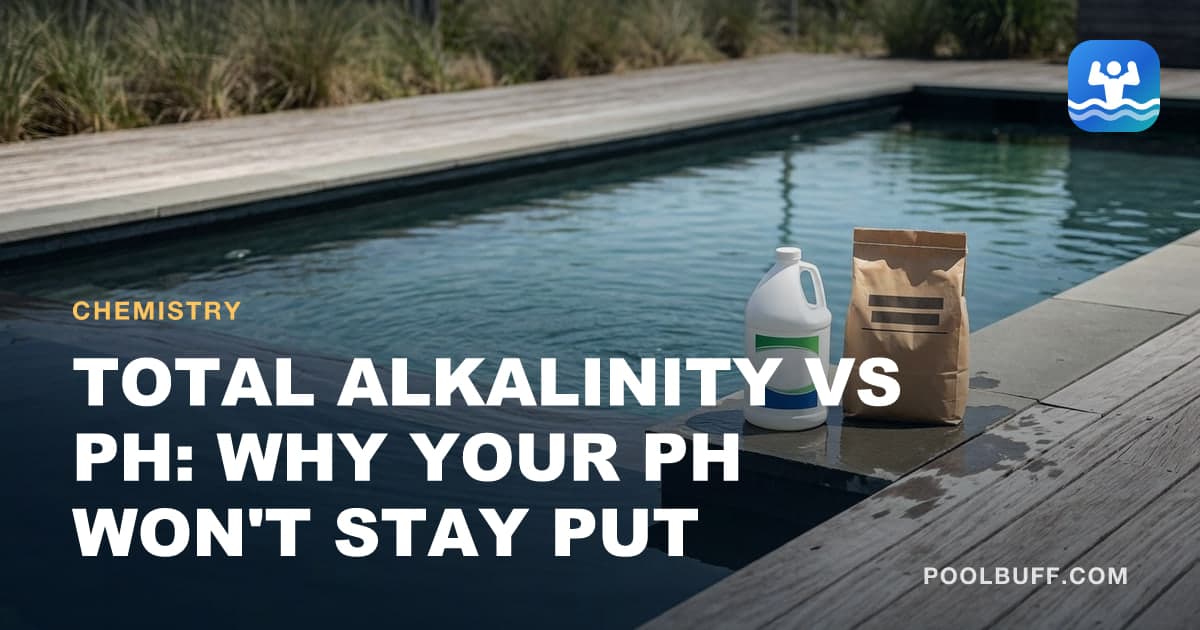
It raises alkalinity, not pH — which is why people add it, get the wrong result, and add more. How much to use, and when soda ash is the right product.
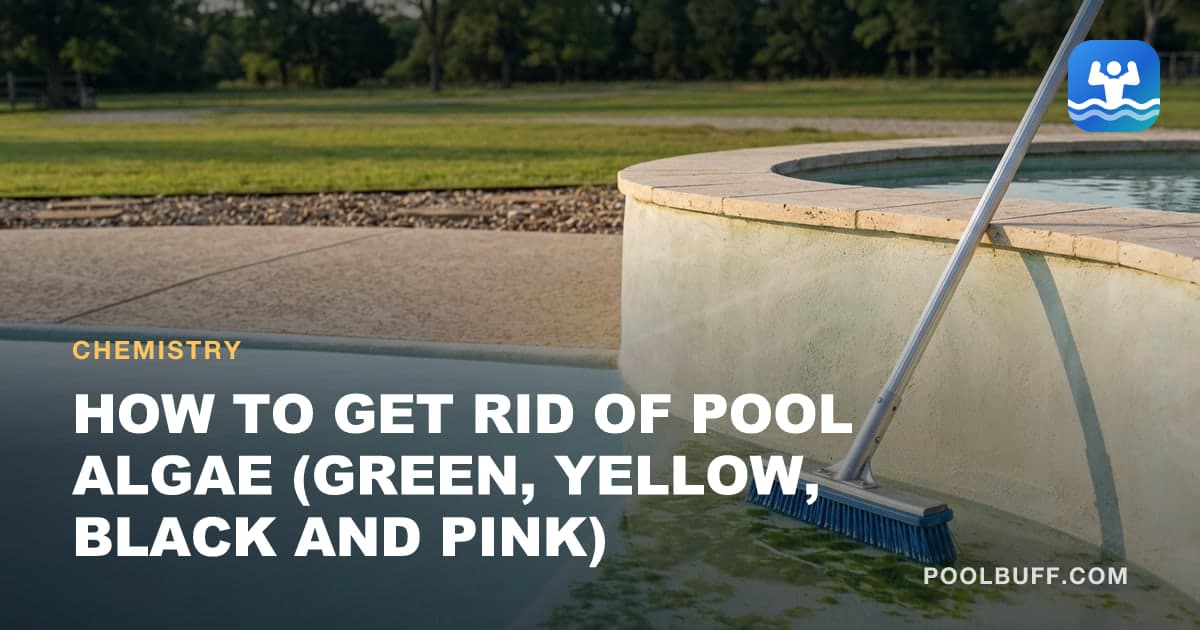
It is not algae, it has roots, and it builds a shell over itself. Why chlorine alone never touches it, and the brushing protocol that actually clears it.
The honest answer is not a number of hours. It is a chlorine reading — and knowing which one saves you a day of waiting or an evening of stinging eyes.
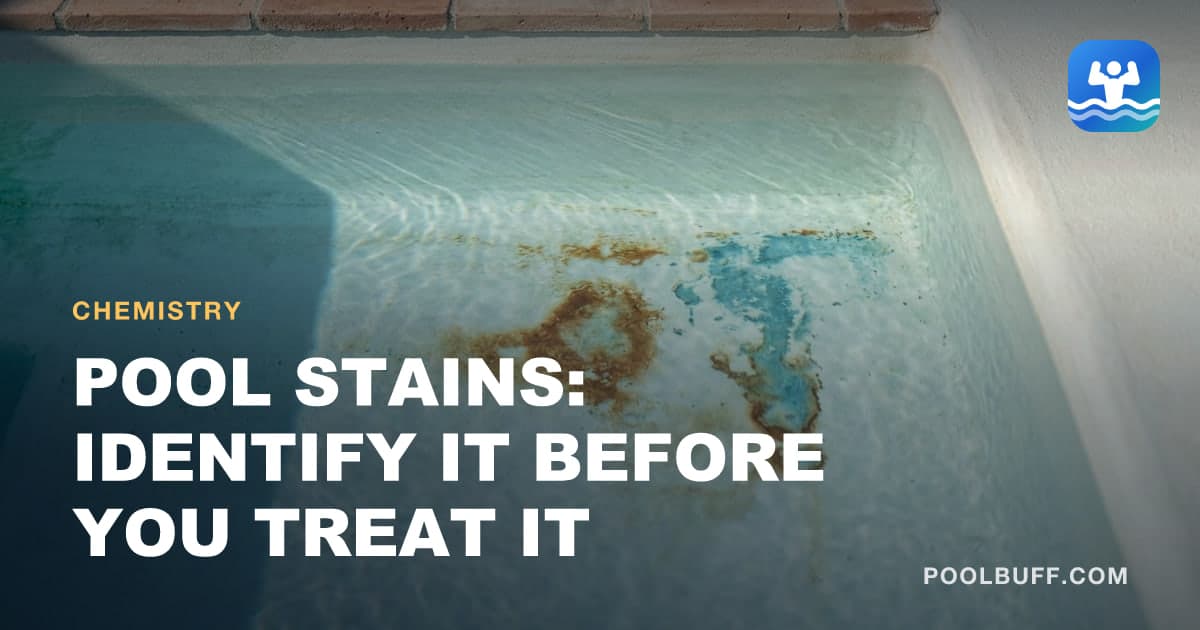
Iron, copper and manganese ride in on the fill water and stain the pool the moment you chlorinate. How to test first, and what a sequestrant cannot do.
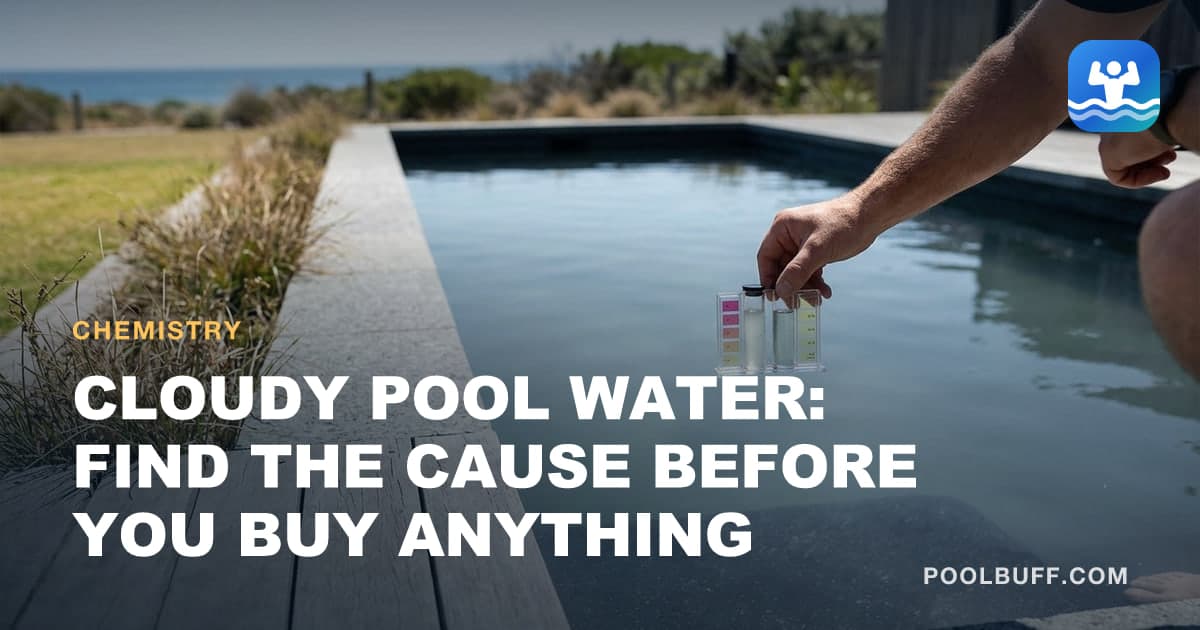
Six things turn pool water cloudy and only one of them needs clarifier. Work through them in this order and you'll fix it in a day instead of two weeks.
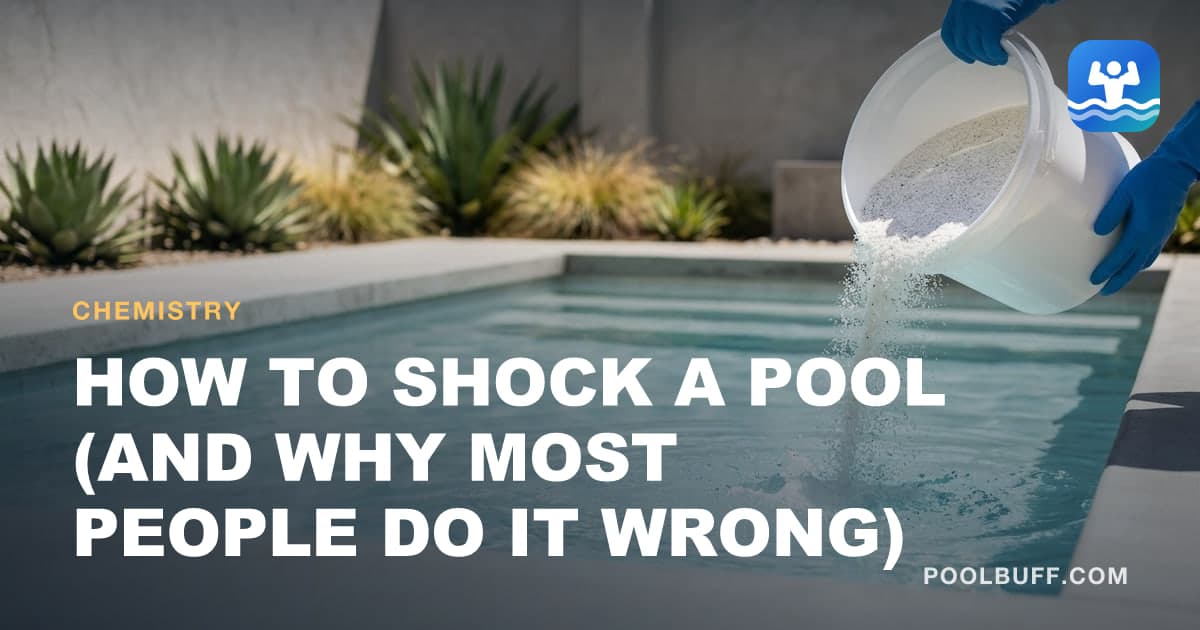
Shock isn't a product, it's a level. Here's how to work out the right target for your pool, how much to add, and why the bag instructions fail so often.
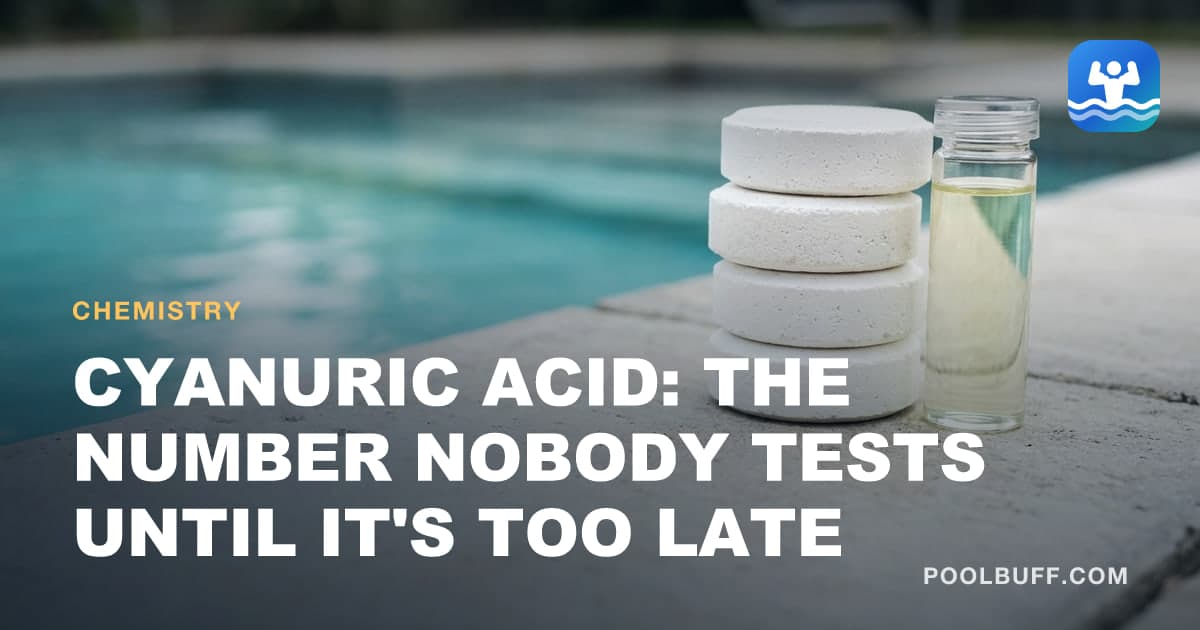
What CYA actually does to your chlorine, why 30-50 ppm is the sweet spot, and how to bring it down when tablets have run it up to 100.
7 min·Updated Oct 1, 2026
Common water chemistry questions
What should my pool chemistry numbers be?
For a typical chlorine pool: free chlorine 2–4 ppm (scaled to your CYA level), pH 7.4–7.6, total alkalinity 70–120 ppm, calcium hardness 200–400 ppm for plaster or 150–250 ppm for vinyl and fiberglass, and cyanuric acid 30–50 ppm outdoors. Salt pools run CYA a little higher, around 60–80 ppm.
What order should I adjust pool chemicals in?
Chlorine first if the water is unsanitary, then total alkalinity, then pH, then calcium hardness, then cyanuric acid. Alkalinity before pH matters because alkalinity is what keeps pH from bouncing — set the buffer before you fine-tune the number it protects.
Why does my chlorine disappear so fast?
Three usual suspects: cyanuric acid is too low so sunlight is burning it off, cyanuric acid is far too high so the chlorine you do have is chemically hobbled, or there is a live organic demand in the water — early algae, a heavy bather load, or debris breaking down in a corner the brush never reaches.
The Skimmer
One short email with the seasonal jobs that matter, the fixes worth doing yourself, and the gear that earned its price.
Keep going
Sections that pair with this one
Pool problems rarely stay in one category. These are the ones that come up next.