Water ChemistryHow-to
How to Lower Chlorine in a Pool
Chlorine reading high? Make sure the test isn't lying, stop whatever is feeding it, and let the sun do the work. When a neutralizer is worth using.
10 minUpdated Sep 27, 2026
Topic
Every good decision about your water starts with an accurate test. Most bad ones start with a strip.
15 guides on this topic
Chlorine reading high? Make sure the test isn't lying, stop whatever is feeding it, and let the sun do the work. When a neutralizer is worth using.
It is a water problem before it is a skin problem. What lets the bacteria survive a hot tub, and the sanitizer habits that stop it recurring.
The honest answer is not a number of hours. It is a chlorine reading — and knowing which one saves you a day of waiting or an evening of stinging eyes.
Too low and the water eats your plaster. Too high and it scales everything. Targets by surface, how to raise it, and why lowering it means draining.
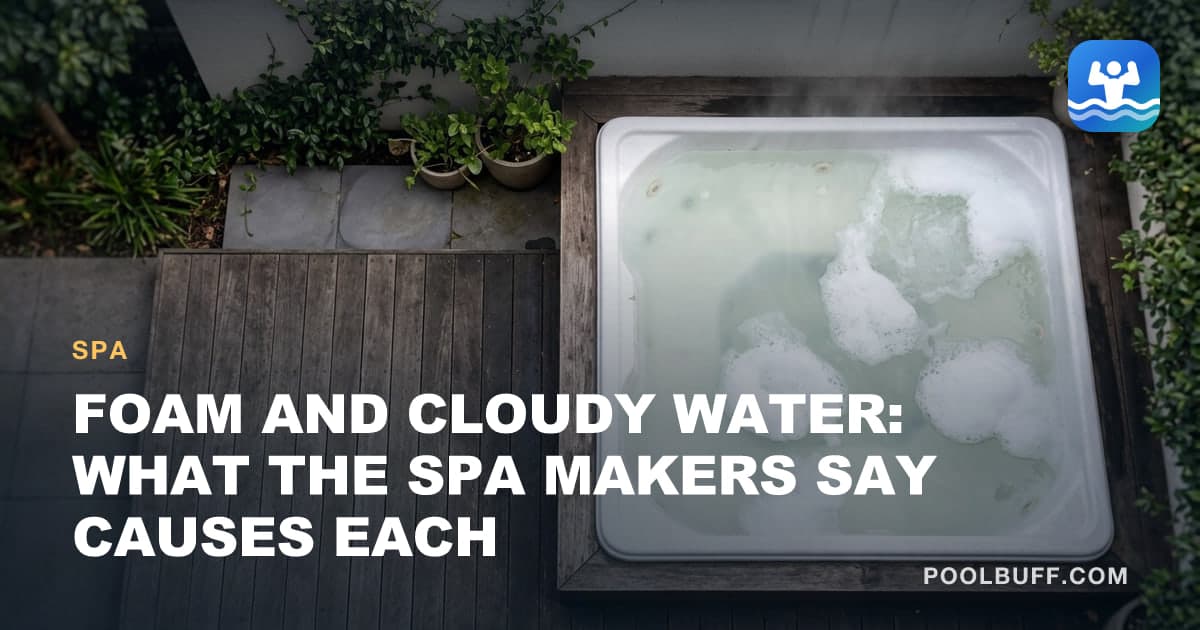
Why hot tubs foam and why they go cloudy, from the spa makers' own manuals, and how to find which cause you have before you buy another bottle of something.
Bromine versus chlorine in a spa, the target ranges that differ from a pool, and why 400 gallons at 102 degrees is a completely different problem.
Phosphates feed algae, but a high reading is not why your pool went green. What the number means and when removing it is money well spent.
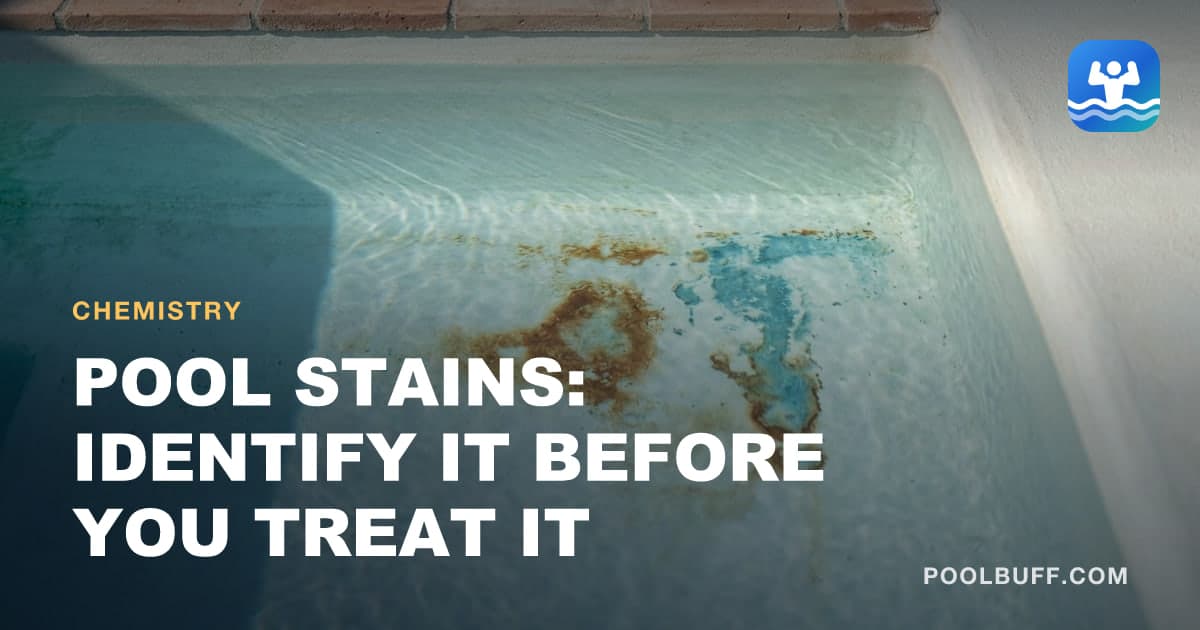
Metal stains, organic stains and scale all look similar and need completely different treatments. Here's how to tell them apart.
Why two pools with identical test results behave completely differently, and how the saturation index ties all your numbers together.
Sampling technique, which test kit to buy, what to test how often, and the reading errors that send people chasing problems they don't have.
That strong chlorine smell means you don't have enough chlorine, not too much. Here's what free, combined and total chlorine each tell you.
Real models and real prices. Why a $150 drop kit beats a $20 box of strips, and what each one can and cannot actually measure.
If you're adding acid every three days, you don't have a pH problem. Here's what alkalinity actually does and how to stop chasing the number.
What CYA actually does to your chlorine, why 30-50 ppm is the sweet spot, and how to bring it down when tablets have run it up to 100.
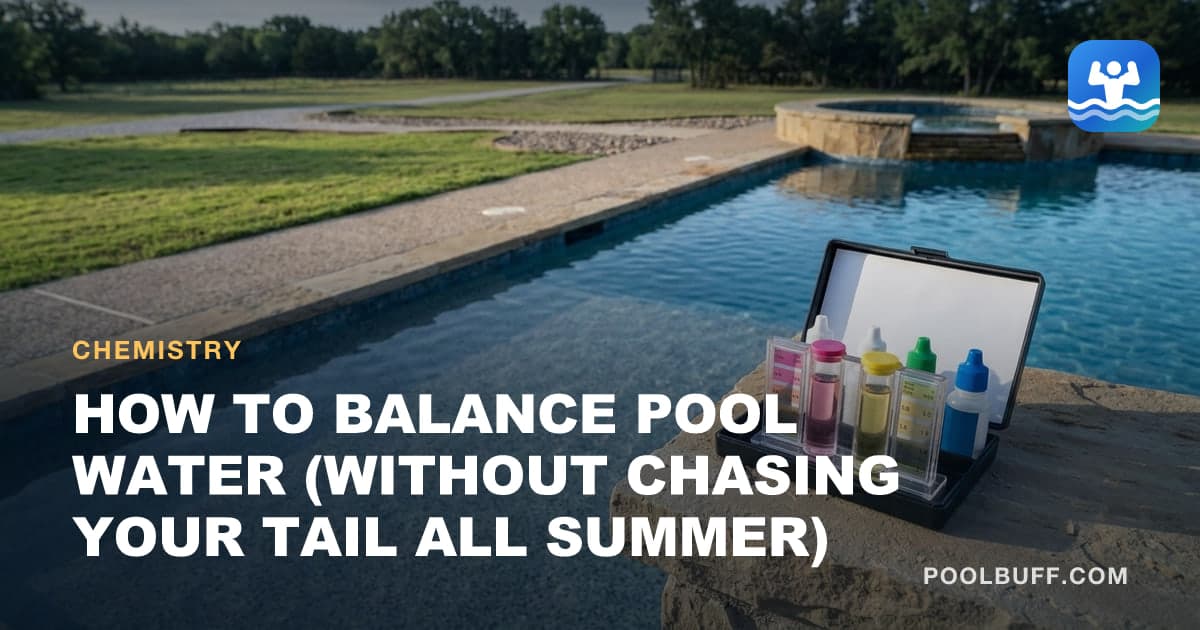
The five numbers that matter, the order to fix them in, and the doses that actually work. Written by people who've done this on real pools for 20 years.