FeaturedInstallation
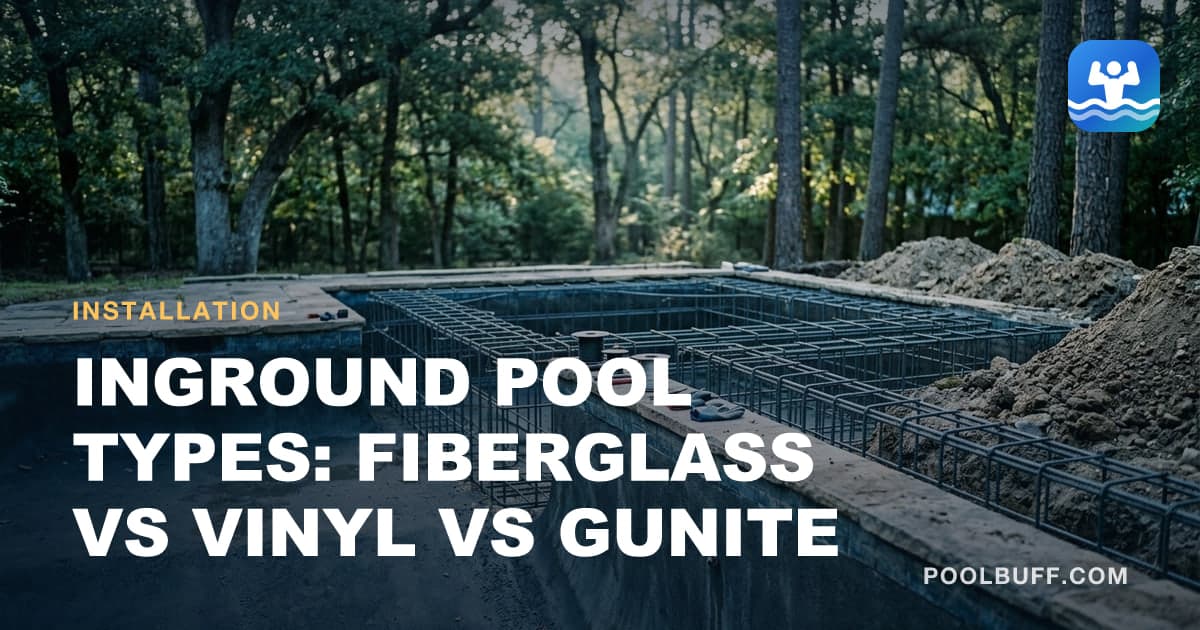
Inground Pool Types: Fiberglass vs Vinyl vs Gunite
A builder's honest comparison of the three inground pool types — build time, real lifespan, running costs and what you can't change later.
6 min readUpdated Aug 18, 2026
Buying a pool is the single largest discretionary purchase most households ever make outside a vehicle, and it is sold in an industry where quotes are hard to compare on purpose.
These guides tell you how each construction type is actually built, what the timeline really looks like, where builders pad and where they cut, and which decisions you cannot change later.
6 guides in this section
Start here
If you only read one page in this section, make it this one. Everything else here builds on it.
A builder's honest comparison of the three inground pool types — build time, real lifespan, running costs and what you can't change later.
Everything published on installation, newest first.
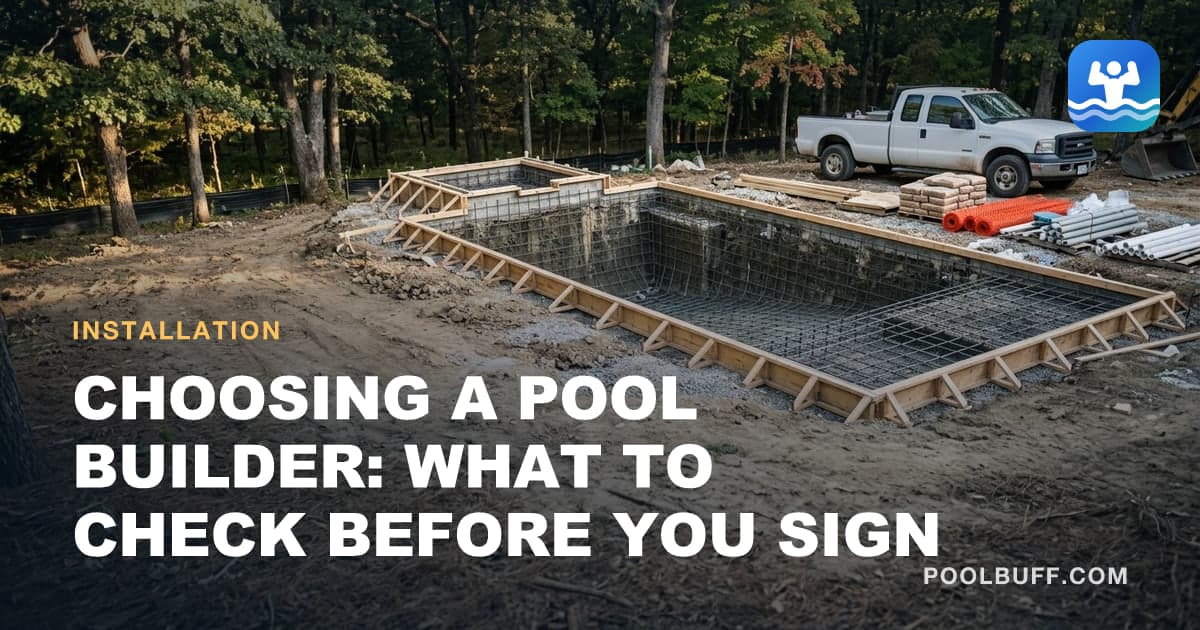
How to vet a pool builder, what has to be in the contract, the exclusions that blow budgets, and the equipment line in the spec that nobody reads.
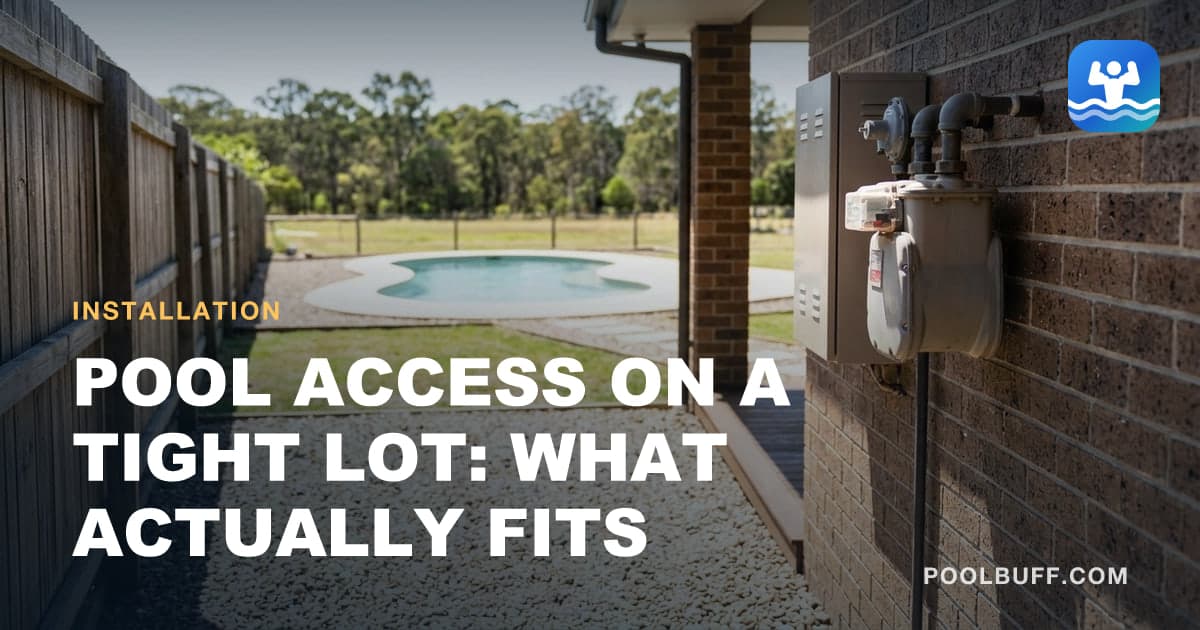
More small-lot pool projects die on access than on space. Gate widths, what each machine needs, and the options ladder when nothing fits.
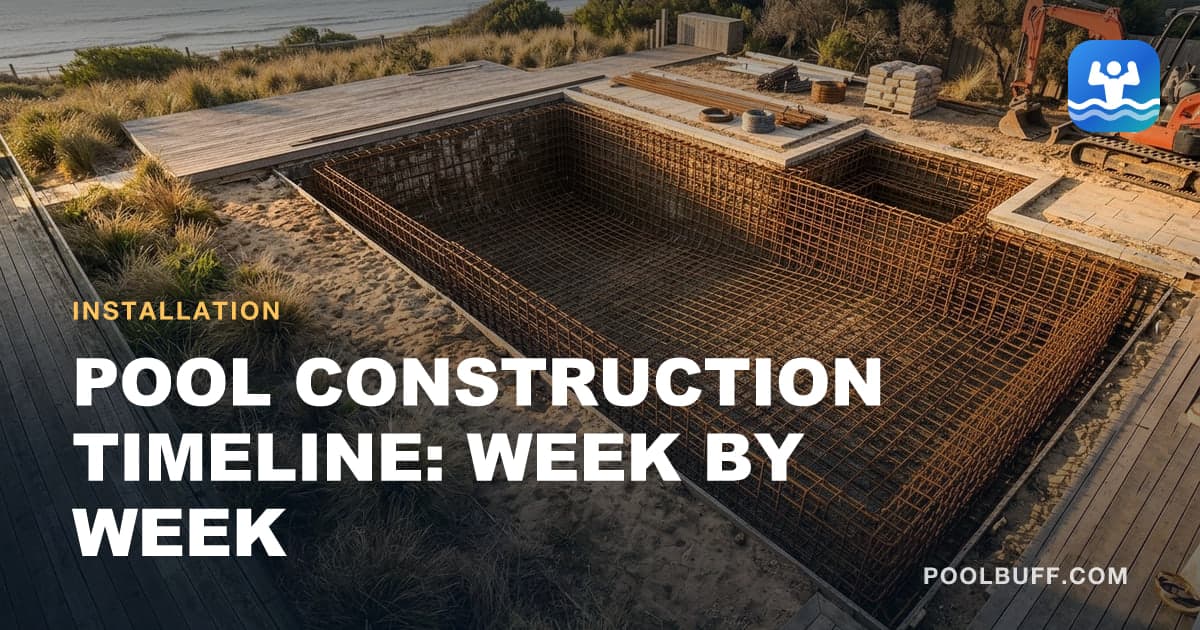
The real build sequence for gunite, fiberglass and vinyl pools, where delays come from, and what your yard looks like at each stage.
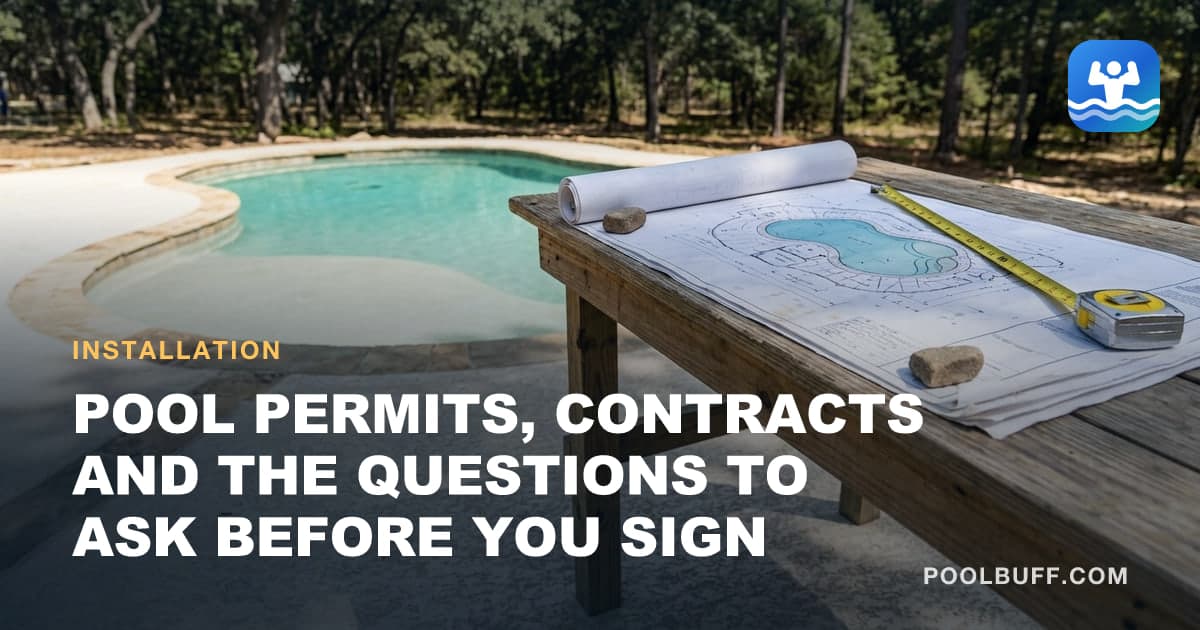
What permits you need, how long they take, the contract terms that cause disputes, and how to compare three quotes that all say different things.
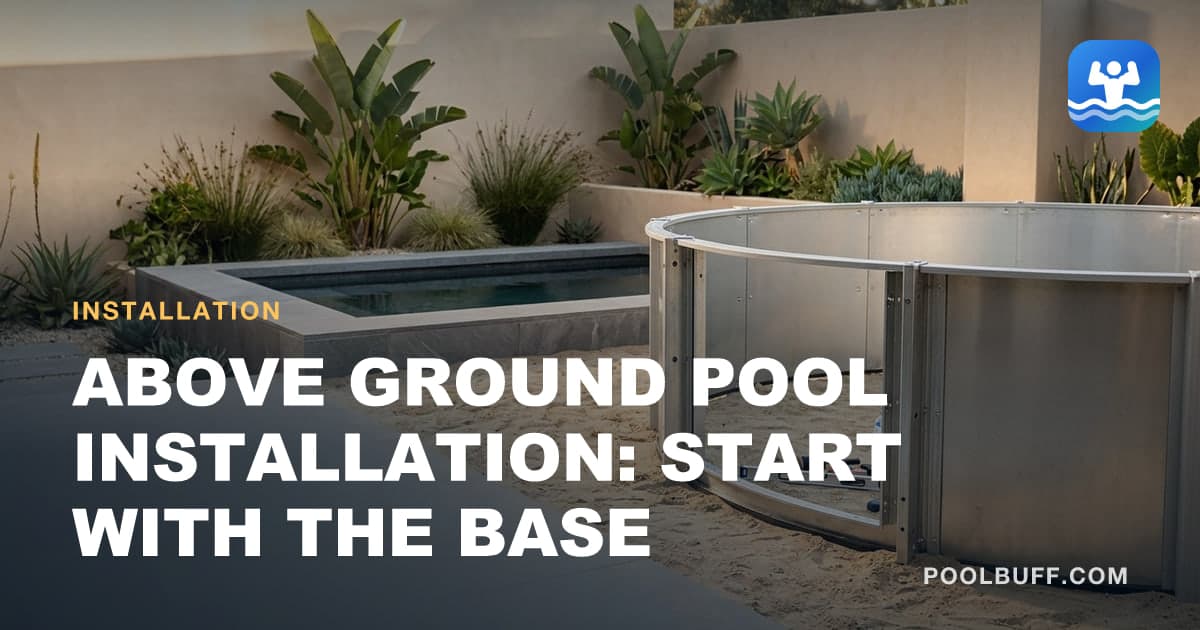
Site prep, leveling tolerances, what actually shortens an above ground pool's life, and where people go wrong on day one.
Fiberglass is fastest at roughly 2–5 weeks on site once permits are in hand. Vinyl liner runs 3–6 weeks. Gunite or shotcrete runs 8–16 weeks because the shell has to cure and the finish trades stack in sequence. Permitting can add anywhere from two weeks to several months depending on the jurisdiction.
Almost everywhere in the US, yes — for anything holding more than about 24 inches of water, and separately for the electrical bonding and any gas line. Above-ground pools are not automatically exempt. Building without one risks a stop-work order and problems at resale.
A well-built gunite shell can last 50 years with resurfacing every 10–15 years. Fiberglass shells routinely go 30+ years with no resurfacing but the gelcoat can fade. Vinyl liner pools have the longest-lived structure but need a new liner every 8–12 years.
One short email with the seasonal jobs that matter, the fixes worth doing yourself, and the gear that earned its price.
Keep going
Pool problems rarely stay in one category. These are the ones that come up next.
What pools really cost to build, run and repair. Transparent price ranges for installation, monthly upkeep, heating, resurfacing and common repairs.
10 articlesExplorePool design that works in a real backyard — shapes, decking, lighting, planting and the layout decisions that make a small yard feel generous.
5 articlesExplorePool safety that holds up in the real world — barrier and fence requirements, drowning prevention layers, drain safety, chemical handling and rescue readiness.
7 articlesExplore