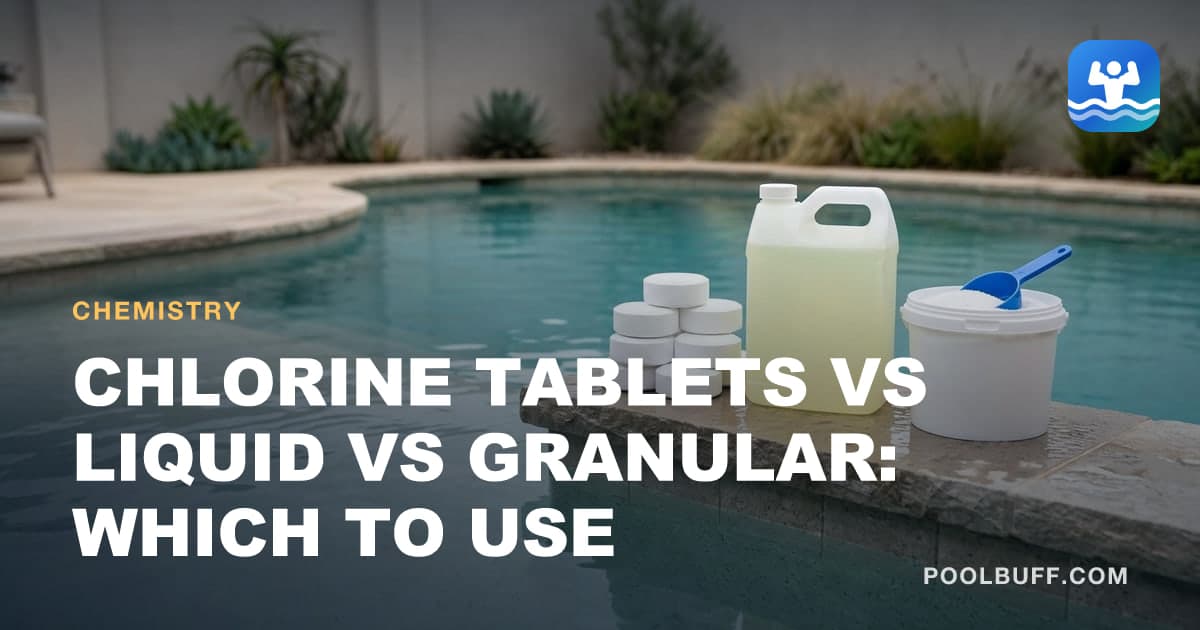
Compare the chlorine types on the shelf and they all do the same job once they hit the water. Hypochlorous acid is hypochlorous acid, whether it arrived as a puck, a jug or a scoop of powder.
What separates them is the passenger. Nothing delivers chlorine on its own — each one brings something else along, and that something accumulates. Stabilizer, calcium or sodium. Understanding which passenger you are signing up for is the entire decision, and it explains most of the water problems people spend a season chasing.
Key takeaways
- Every chlorine product leaves something behind. Tablets leave stabilizer, cal hypo leaves calcium, liquid leaves a little salt.
- Tablets are the usual reason a pool ends up with 100+ ppm stabilizer and no working chlorine.
- Liquid chlorine is net pH-neutral once the chlorine is used up, despite what the label suggests.
- Cal hypo is a poor choice in hard water and a good one in a vinyl pool with soft fill water.
- Dichlor belongs in a hot tub, not in routine pool chlorination.
The three you will actually buy
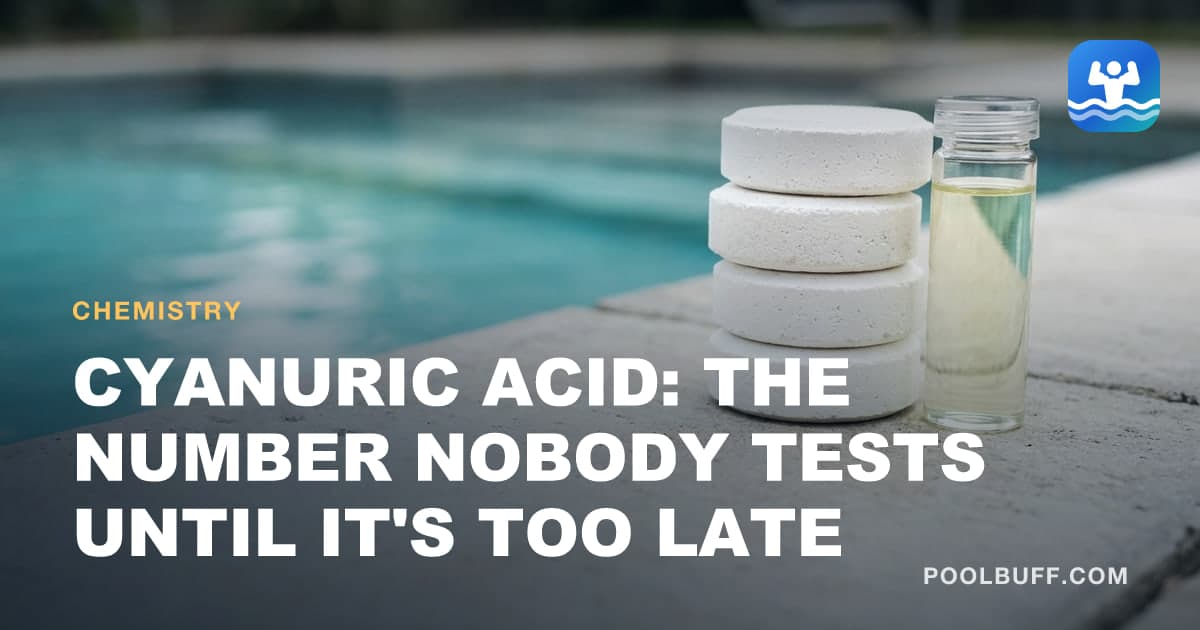
Trichlor tablets — 90% available chlorine, slow-dissolving, sit in a floater or an inline feeder. The convenience is real. You load them once a week and walk away.
The passenger is cyanuric acid, about 0.6 ppm for every 1 ppm of chlorine delivered. They are also acidic, around pH 3, so they pull total alkalinity and pH down steadily.
Liquid chlorine — sodium hypochlorite, 10% to 12.5% in pool strength, the same thing as household bleach at roughly twice the concentration. No stabilizer, no calcium. The passenger is a small amount of salt, which is harmless and takes years to become measurable. It also carries none of the fire risk granular cal hypo does, which matters for what can share a shelf with what.
Two catches. It is heavy, and it degrades in storage — a jug can lose a third of its strength over a hot summer month in a shed, so buy it fresh and buy it often.
Cal hypo — calcium hypochlorite, 65% to 73%, granular. No stabilizer. The passenger is calcium: roughly 0.7 ppm of hardness per 1 ppm of chlorine at 73% strength. Strongly alkaline, so it pushes pH up.
What each one leaves behind
| Trichlor tablets | Liquid chlorineMy default | Cal hypo | |
|---|---|---|---|
| Available chlorine | 90% | 10-12.5% | 65-73% |
| Adds stabilizer | Yes, ~0.6 ppm per ppm | No | No |
| Adds calcium | No | No | Yes, ~0.7 ppm per ppm |
| Effect on pH | Lowers | Neutral over a cycle | Raises |
| Shelf life | Years | Weeks to months | Years, if dry |
| Effort | Load weekly | Pour every day or two | Pre-dissolve, then pour |
| Best at | Hands-off routine chlorination | Daily dosing and shocking | Shocking soft water |
The tablet trap
Tablets are how most pools are chlorinated, and they are how most pools end up broken by August.
The arithmetic is unforgiving. A pool consuming 2 ppm of chlorine a day through trichlor gains around 36 ppm of stabilizer a month. Start the season at 30 ppm and you are past 100 by July. At that level your chlorine is still present and barely working, because stabilizer holds it hostage — you need a much higher free chlorine reading to get the same sanitizing power, and most owners never raise their target to match.
What follows is predictable. Algae in a pool that tests fine. Water that will not clear. Someone selling you a clarifier for a problem no clarifier can touch.
Tablets are not the villain here. Unlimited tablets are. Run them in a chlorinator, not the skimmer, while your stabilizer has headroom, watch the number monthly, and switch to liquid once you are near 50 ppm.
Where cal hypo wins and loses
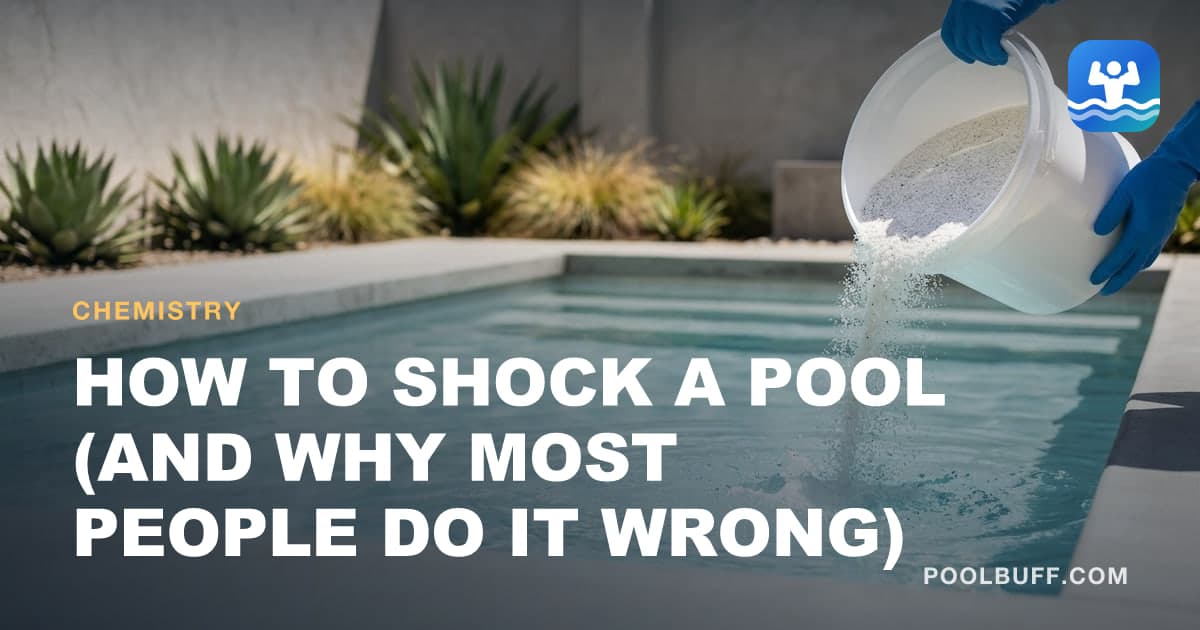
Cal hypo is the right shock for a vinyl or fiberglass pool filled with soft water, because the calcium it adds is calcium you needed anyway.
It is the wrong product for a plaster pool in a hard-water region already sitting at 400 ppm hardness. There, every shock nudges you closer to scale, and the saturation index is what tells you how close.
Two practical notes. Pre-dissolve it in a bucket of water before it goes in, because undissolved granules sit on the floor and bleach vinyl or stain plaster. And it clouds water briefly on dosing, which is calcium, not a problem.
Dichlor, and where it belongs
Dichlor is granular and stabilized — around 56% chlorine, and it adds about 0.9 ppm of cyanuric acid per ppm of chlorine, which is more per dose than trichlor.
It is near-neutral in pH and dissolves fast, which makes it genuinely good for hot tubs, where the water gets replaced every three or four months and stabilizer never accumulates. In a pool it combines the worst of both worlds: the stabilizer load of tablets with none of the convenience.
Bleach, and the one you will rarely see
Two more products come up, and each deserves a paragraph rather than a section.
Household bleach is the same sodium hypochlorite as liquid pool chlorine at roughly half the strength — typically 5 to 8% against 10 to 12.5%. It works, and on a spa or a small pool it is a perfectly reasonable thing to buy on a Sunday when the pool store is shut. Two cautions: buy plain unscented bleach with no added detergents or thickeners, and remember you are paying to carry home twice as much water for the same chlorine.
Lithium hypochlorite is a granular unstabilized chlorine at around 35%. It dissolves instantly with no pre-dissolving and adds no calcium, which makes it genuinely useful on a vinyl pool with hard water. It is also several times the price of anything else here and has grown scarce as lithium demand went elsewhere. Worth recognizing on a shelf; rarely worth buying.
Neither changes the basic picture. The three above cover essentially every pool.
So which one
- Established pool, stabilizer under control, you want it hands-off — tablets, with a monthly stabilizer test as the price of admission.
- Stabilizer already high, or you like managing it properly — liquid chlorine, dosed every day or two.
- Shocking anything — liquid, unless your calcium is low, in which case cal hypo.
- Hot tub — dichlor.
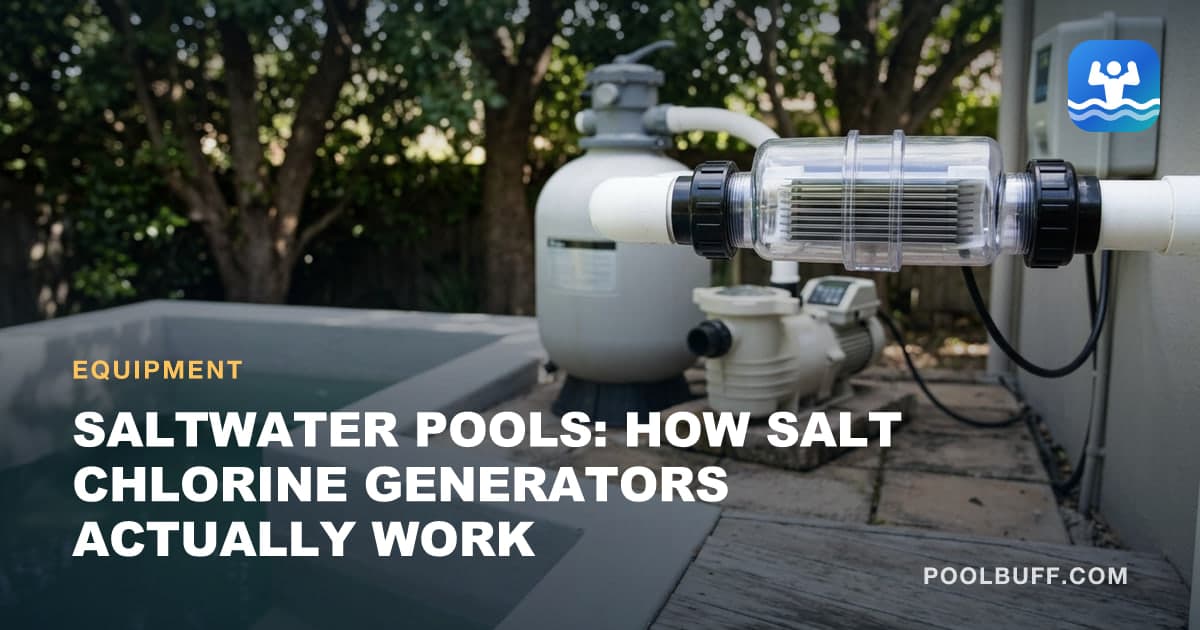
- Tired of hauling any of it — a salt chlorine generator makes its own from salt, which is its own decision with its own passenger.
Whichever you land on, the discipline is the same: know what your product adds, and test for it. A drop-based kit reads stabilizer and calcium as well as chlorine, which is exactly the set of numbers this decision turns on.
Go deeperHow to shock a poolWhat dose actually does the job, and why most people stop hours too early.Frequently asked questions
Is liquid chlorine better than tablets?
For daily dosing on an established pool, usually yes, because it adds no stabilizer. Tablets are more convenient and cost less per unit of chlorine, but every tablet raises cyanuric acid, and once that number climbs past roughly 80 ppm your chlorine stops working properly and the only fix is replacing water. Tablets suit a pool with room in its stabilizer budget.
Does liquid chlorine raise pH?
Only briefly. Sodium hypochlorite is strongly alkaline going in, so pH jumps on dosing, but the reaction that consumes the chlorine releases acid and brings it back down. Over a full cycle it is close to neutral. The pH creep most people blame on liquid chlorine is usually aeration from returns and water features.
How much cyanuric acid do chlorine tablets add?
Trichlor adds roughly 0.6 ppm of cyanuric acid for every 1 ppm of free chlorine it delivers. A pool that uses 2 ppm of chlorine a day through tablets picks up about 36 ppm of stabilizer a month. That is why summer-long tablet use is the most common route to a stabilizer problem.
Can I mix different types of chlorine?
In the water, yes — they all become the same sanitizer. Never mix the products themselves. Cal hypo and trichlor in contact with each other, especially with a little moisture, can react violently and start a fire. Different chemicals, separate containers, separate shelves, separate scoops.
Which chlorine is best for shocking a pool?
Liquid chlorine if your calcium hardness is already adequate, cal hypo if it is low and you want to raise it. Both deliver unstabilized chlorine fast. Avoid dichlor for shocking a pool, because a shock-sized dose of it adds a large slug of stabilizer you then cannot remove.