Spas & Hot TubsHow-to
How to Clean a Hot Tub Filter, and When to Replace It
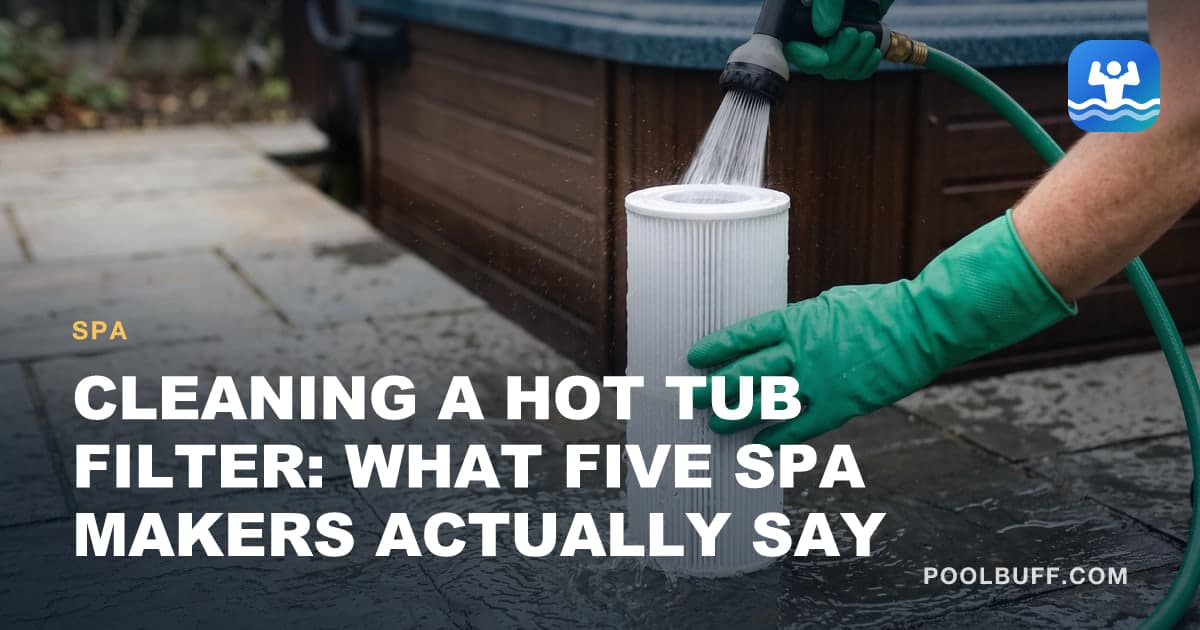
How Hot Spring, Jacuzzi, Sundance, Caldera and Bullfrog say to clean a hot tub filter, how often, what to soak it in, and when to replace it.
10 minUpdated Oct 1, 2026
Topic
Clear water is a routine, not a product. These guides cover the routine.
40 guides on this topic
How Hot Spring, Jacuzzi, Sundance, Caldera and Bullfrog say to clean a hot tub filter, how often, what to soak it in, and when to replace it.
Chlorine reading high? Make sure the test isn't lying, stop whatever is feeding it, and let the sun do the work. When a neutralizer is worth using.
What actually goes wrong while you're gone, how to set the chlorine and the pump before you leave, and when a pool genuinely needs someone to visit.
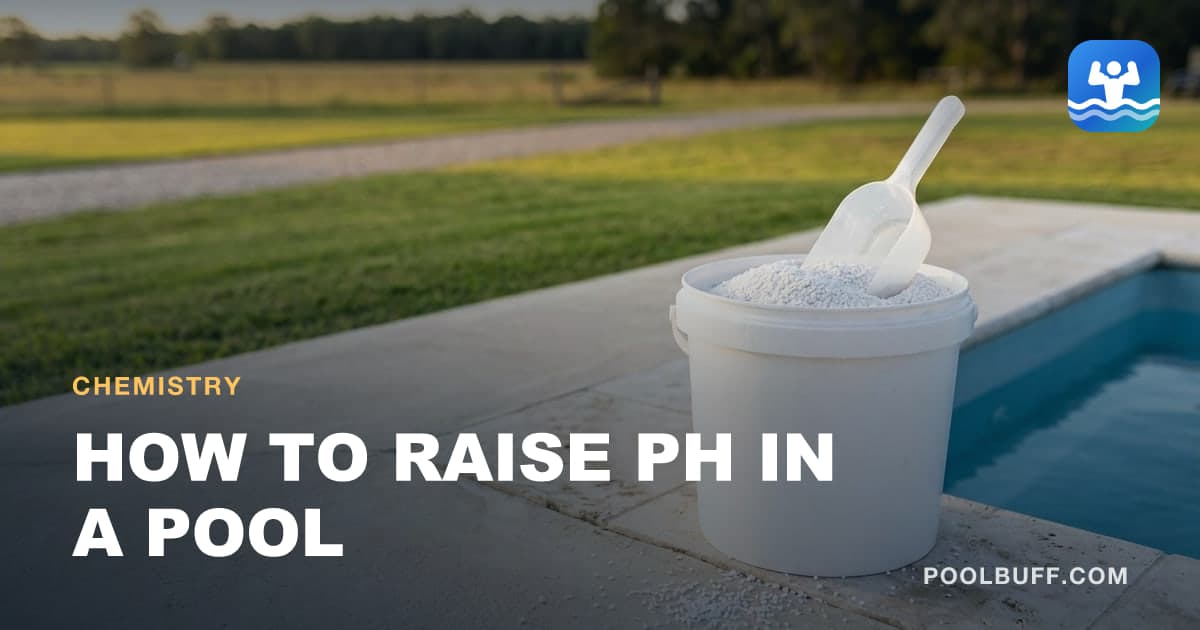
Aeration, soda ash or baking soda: which one your test calls for, how much to add, and why pH below 7.0 takes far more than the rule of thumb says.
Borates slow pH creep and the labels claim algae suppression. What the EPA labels really say, how much to add, the pH catch, and why only draining removes them.
It raises alkalinity, not pH — which is why people add it, get the wrong result, and add more. How much to use, and when soda ash is the right product.
It is a water problem before it is a skin problem. What lets the bacteria survive a hot tub, and the sanitizer habits that stop it recurring.
The honest answer is not a number of hours. It is a chlorine reading — and knowing which one saves you a day of waiting or an evening of stinging eyes.
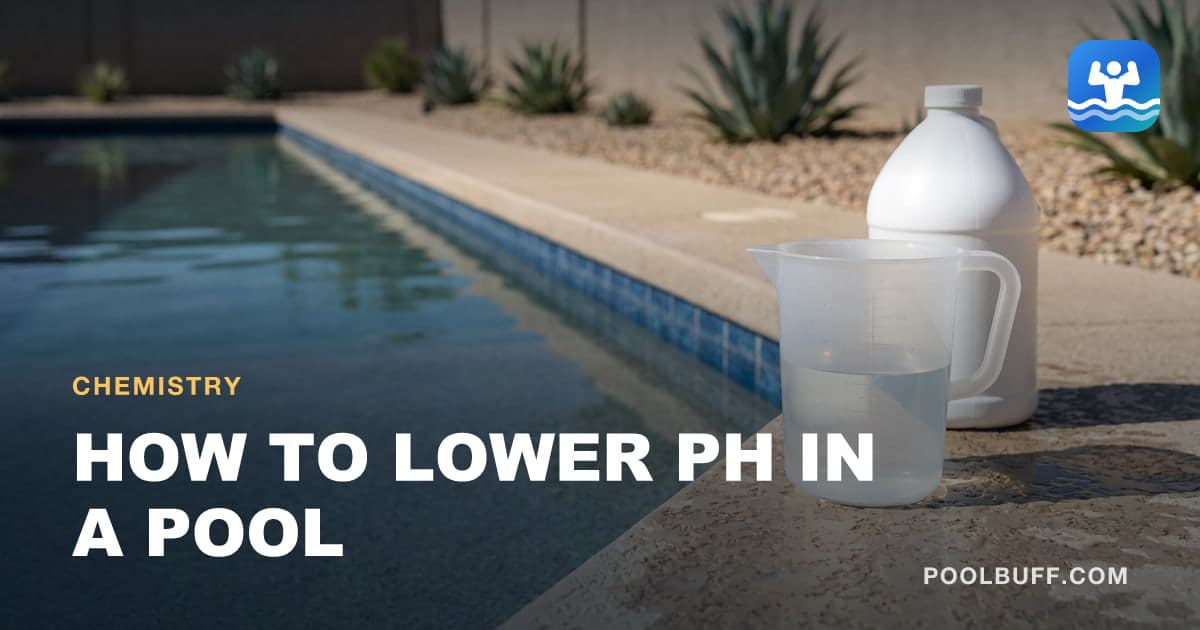
Muriatic acid or dry acid, how much to add, and why the pH you keep chasing back down is usually an alkalinity problem wearing a disguise.
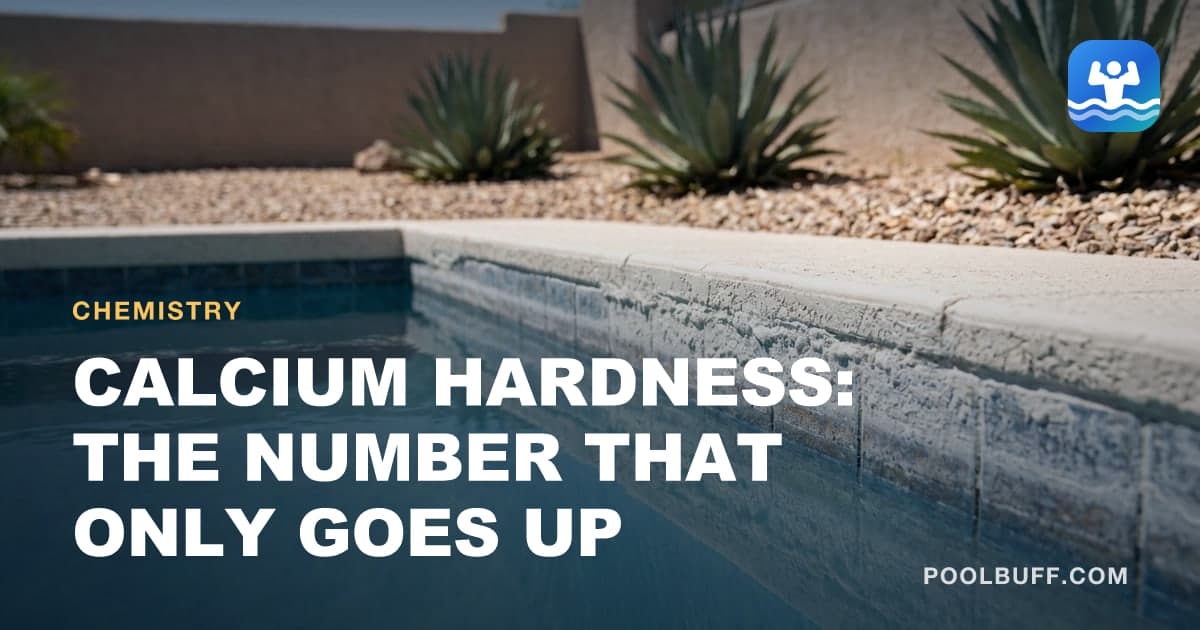
Too low and the water eats your plaster. Too high and it scales everything. Targets by surface, how to raise it, and why lowering it means draining.
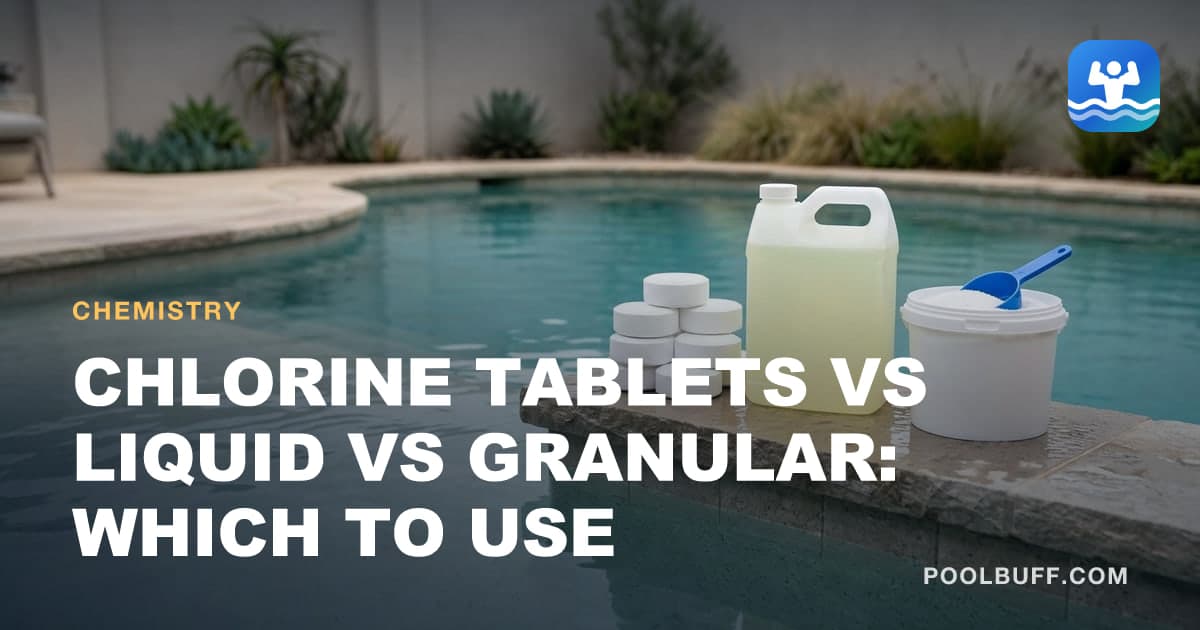
Every chlorine product adds something besides chlorine — stabilizer, calcium or salt. Pick the one whose leftovers your water can still absorb.
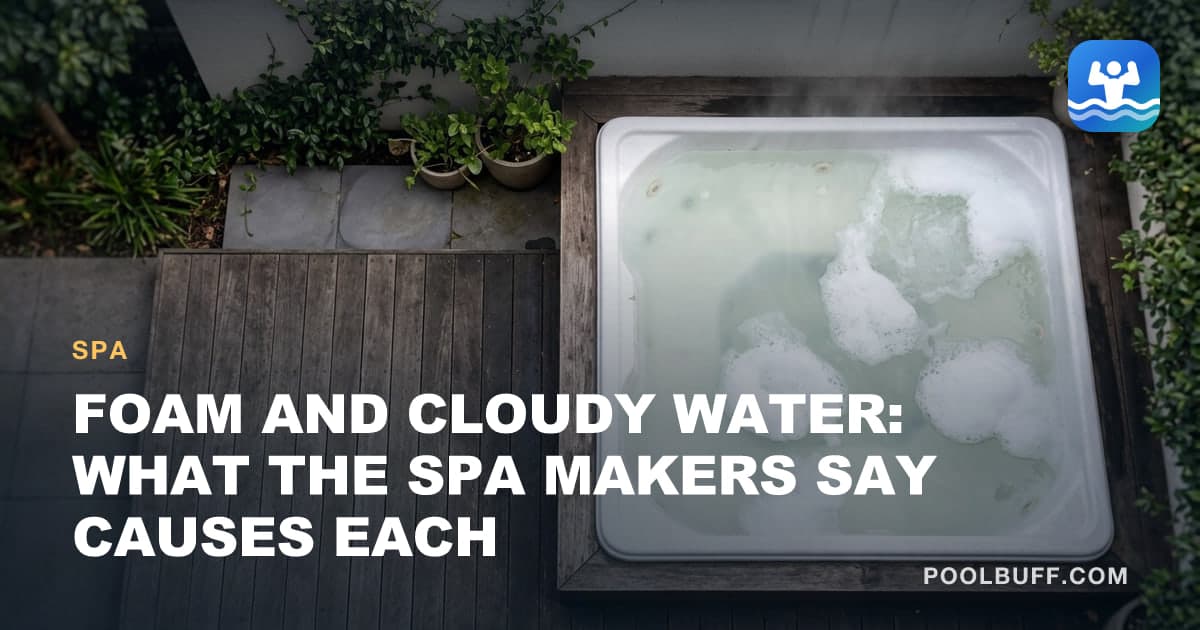
Why hot tubs foam and why they go cloudy, from the spa makers' own manuals, and how to find which cause you have before you buy another bottle of something.
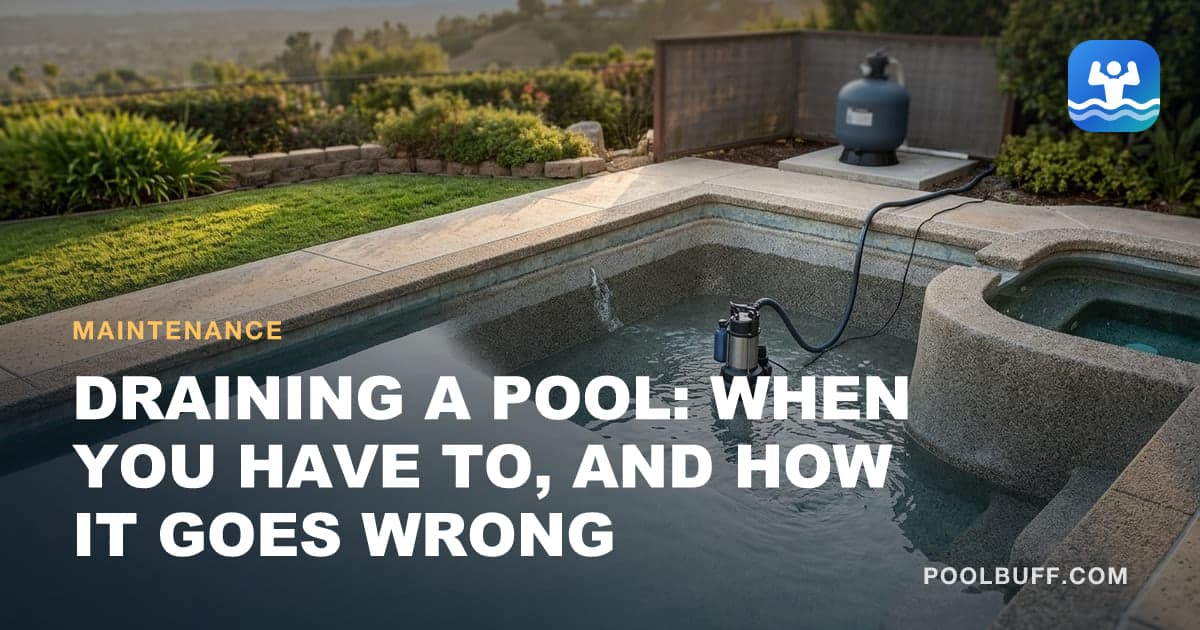
An empty pool can float out of the ground. When a partial drain is enough, when a full drain is genuinely needed, and the checks that come first.
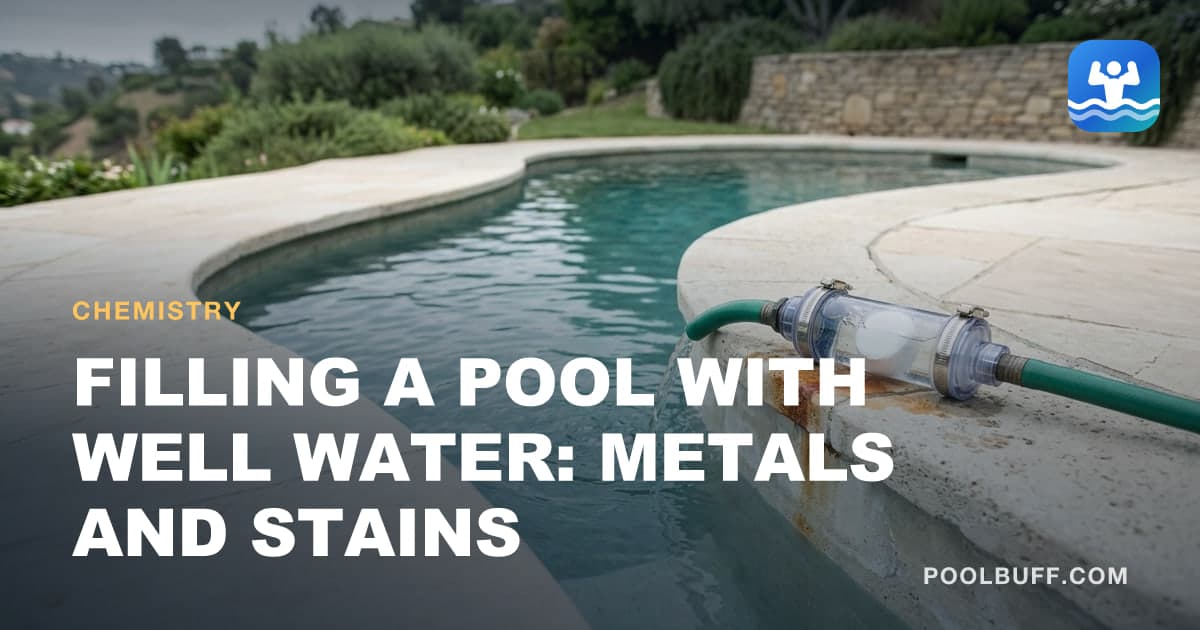
Iron, copper and manganese ride in on the fill water and stain the pool the moment you chlorinate. How to test first, and what a sequestrant cannot do.
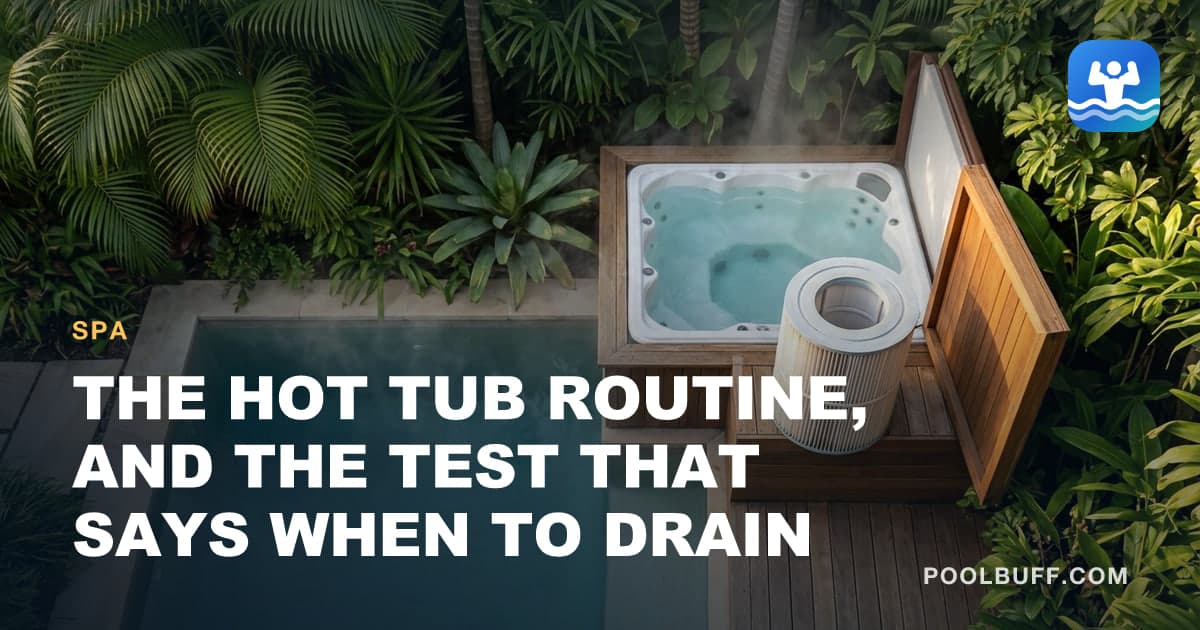
What a hot tub needs after each soak, each week and each month, by the spa makers' own manuals, and the dissolved-solids test that says when to drain.
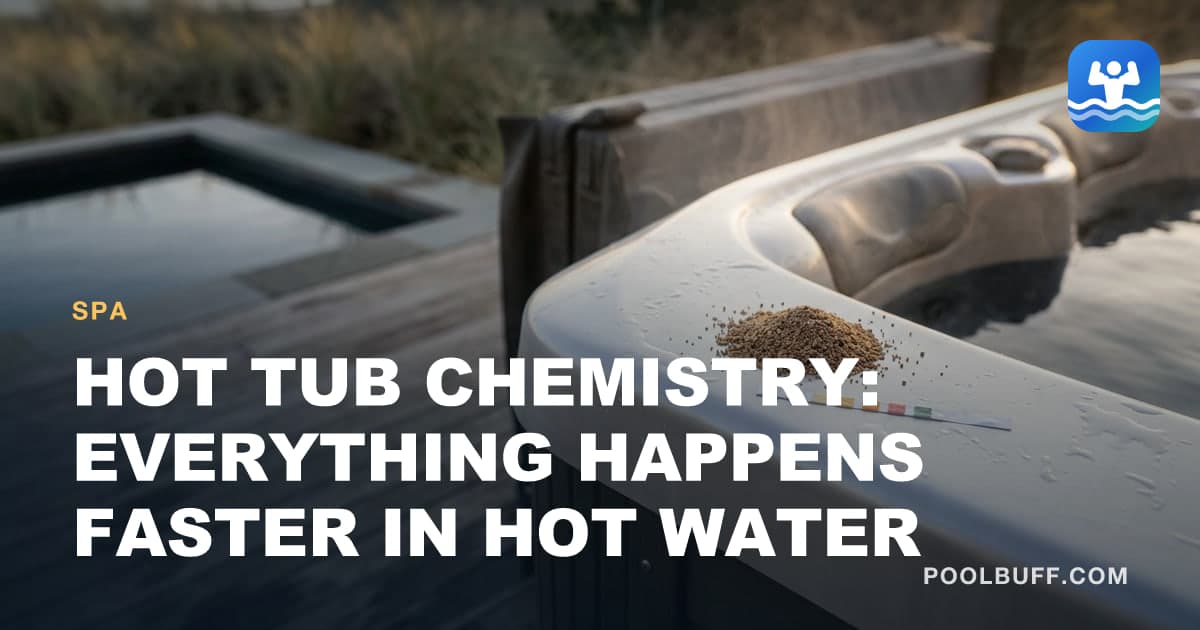
Bromine versus chlorine in a spa, the target ranges that differ from a pool, and why 400 gallons at 102 degrees is a completely different problem.
The full drain and refill: power off at the breaker first, what each spa maker says to clean the shell with, and how to refill without an airlock.
Phosphates feed algae, but a high reading is not why your pool went green. What the number means and when removing it is money well spent.
Floodwater is a health problem, not a chemistry problem. What to do first, what to replace, and why the pool stays full while the ground is saturated.
Rain dilutes your chemistry and dumps organic load in at the same time. The order to work through, and the one thing to do before the storm arrives.
Eight products cover a season. Two of them are sold at four times the price under a pool label, and most of the rest of the shelf treats symptoms.
That greasy band at the waterline is body oil, sunscreen and dust. Here's how to remove it properly and stop it returning every week.
Chlorine gone by morning means something is consuming it. The overnight test that tells you what, and why ammonia is the one that needs a shocking dose.
A chelated copper cartridge that genuinely suppresses algae for months. Here's what it does, what it doesn't, and the chlorine advice to ignore.

What to actually keep in the shed. Which chlorine to buy for daily dosing, which for shocking, and the two you should never store side by side.
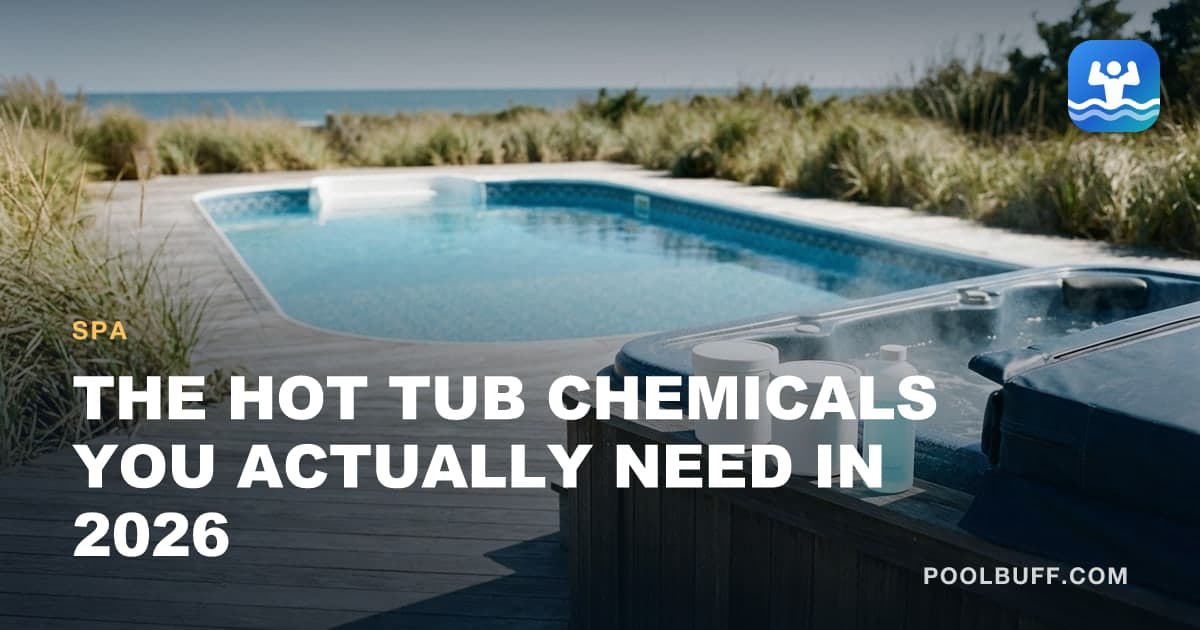
What to buy for a hot tub, starting from your maker's own sanitizer list: chlorine granules, a weekly oxidizer, and bromine only if your tub allows it.

Every part of a pool skimmer explained, why water level decides whether it works at all, and what the equalizer line at the bottom is really for.

In mild climates, not closing is usually less work and less money. Here's the reduced winter schedule and the freeze protection that makes it safe.
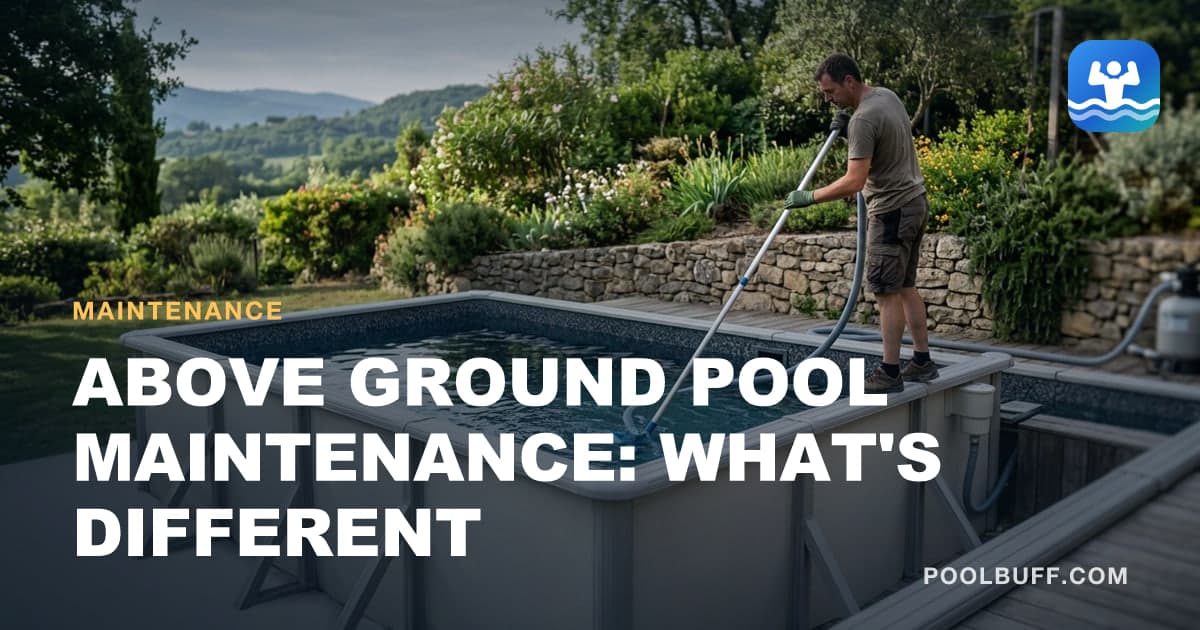
Smaller volume means faster chemistry swings. Here's what changes, plus the wall and liner care nobody mentions.
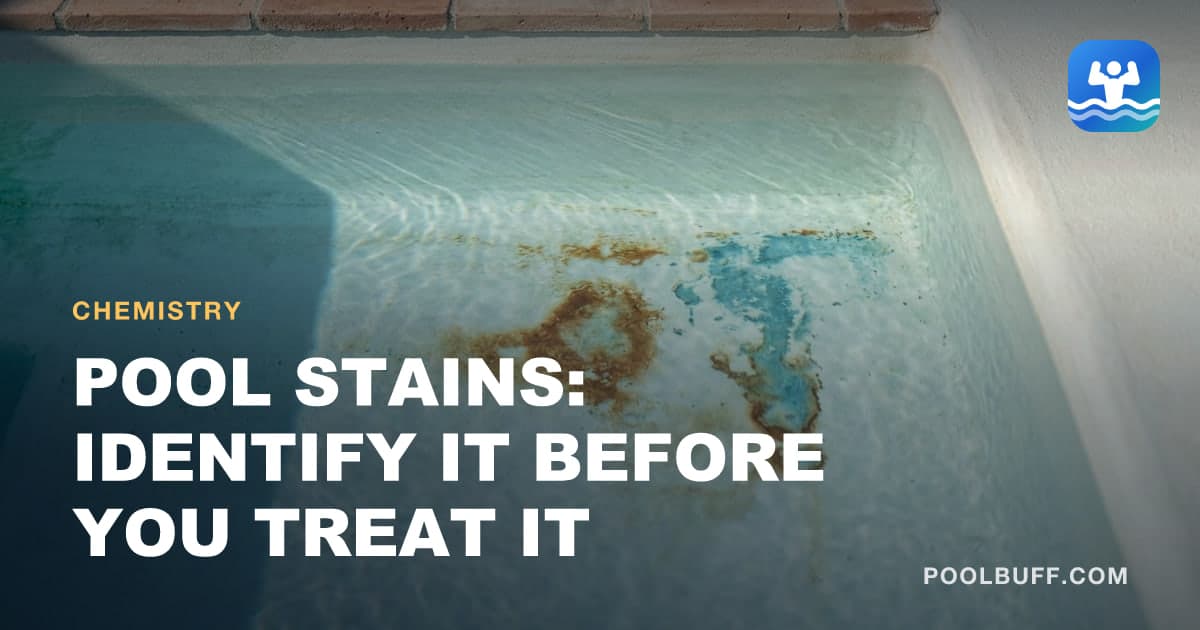
Metal stains, organic stains and scale all look similar and need completely different treatments. Here's how to tell them apart.
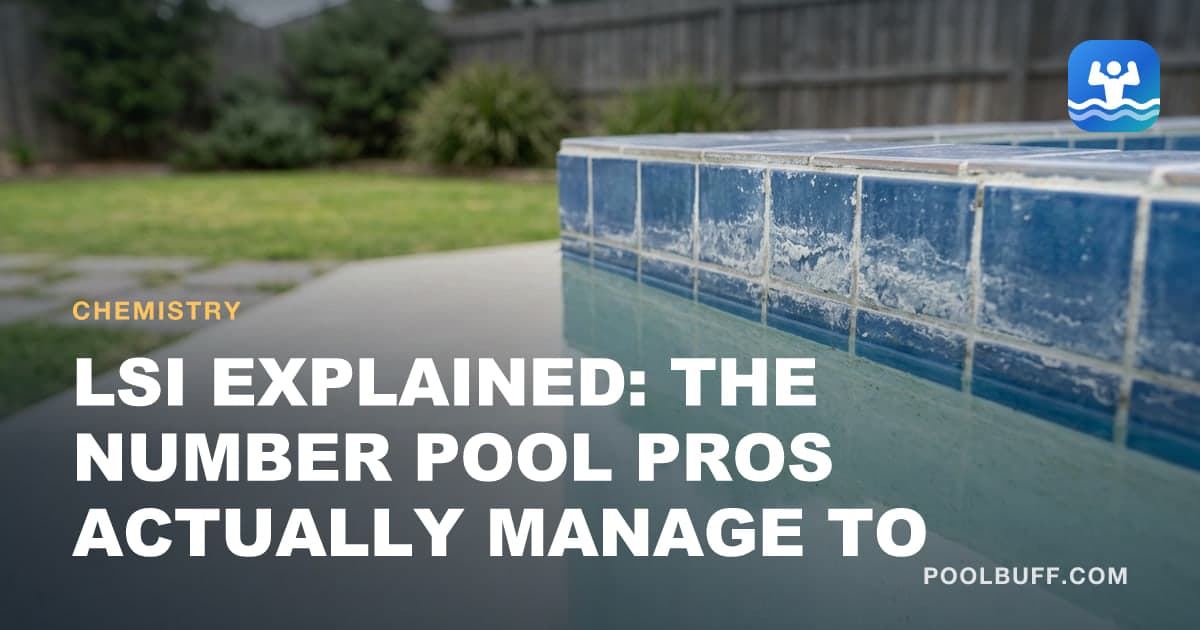
Why two pools with identical test results behave completely differently, and how the saturation index ties all your numbers together.
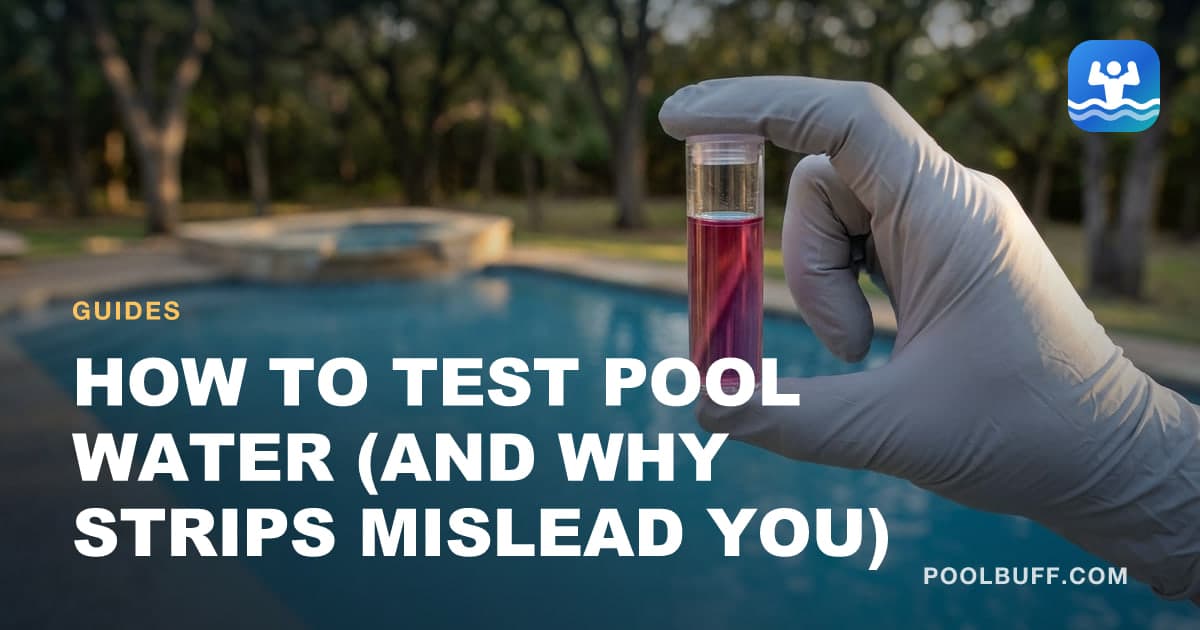
Sampling technique, which test kit to buy, what to test how often, and the reading errors that send people chasing problems they don't have.
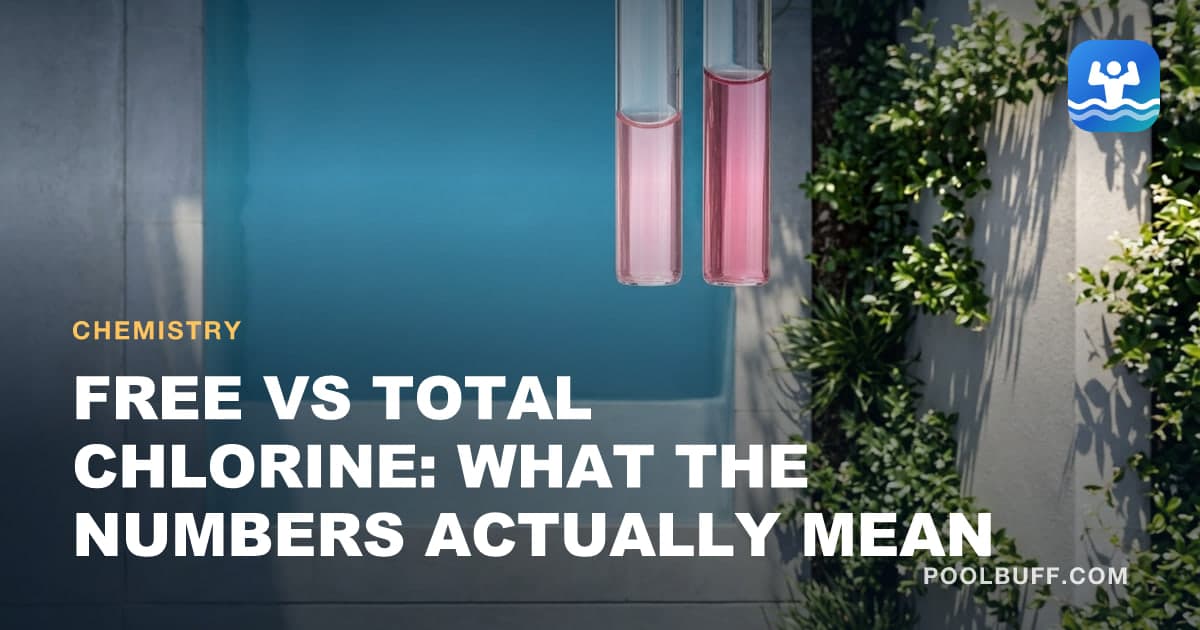
That strong chlorine smell means you don't have enough chlorine, not too much. Here's what free, combined and total chlorine each tell you.
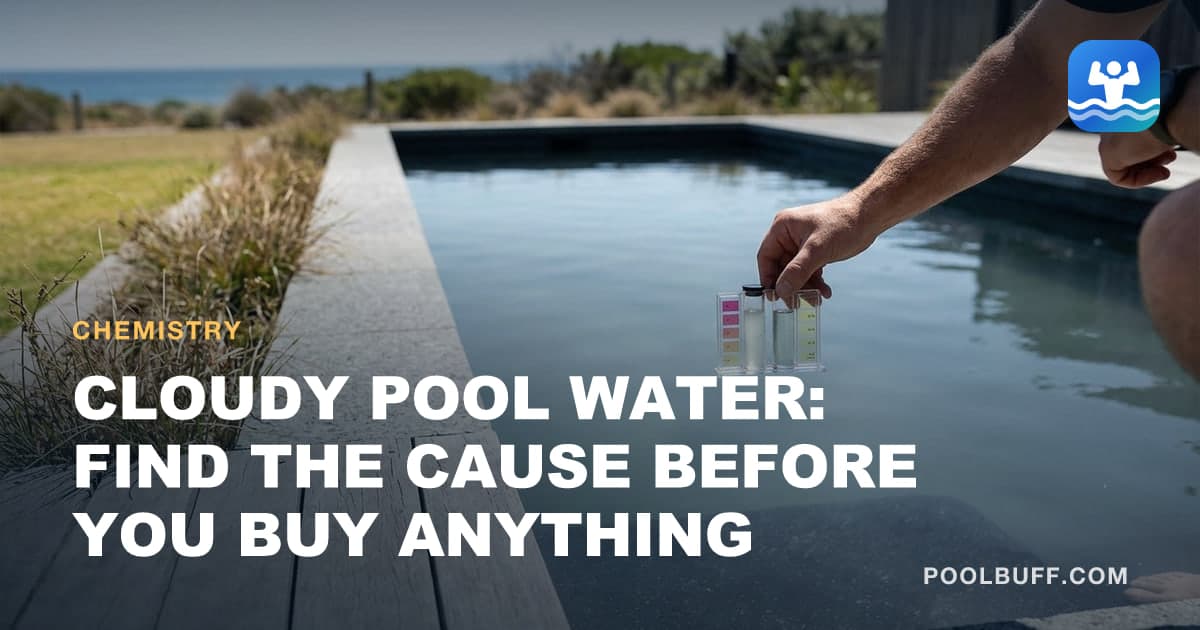
Six things turn pool water cloudy and only one of them needs clarifier. Work through them in this order and you'll fix it in a day instead of two weeks.
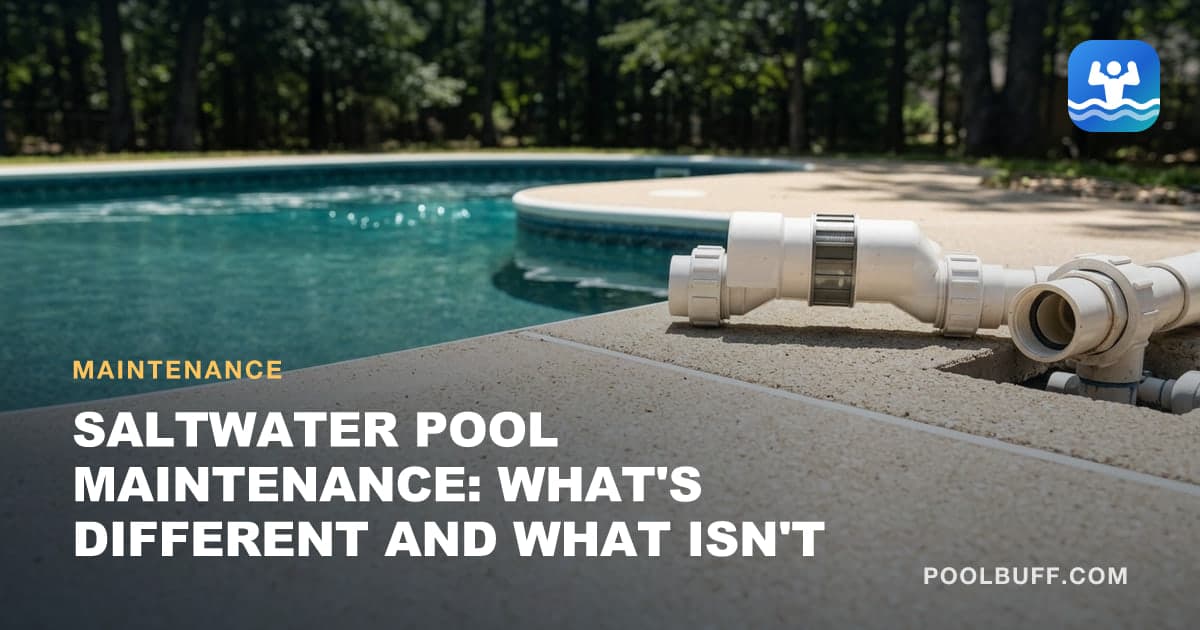
Salt pools need the same weekly care plus three specific things. Here's what changes, what doesn't, and the mistakes that kill cells early.
If you're adding acid every three days, you don't have a pH problem. Here's what alkalinity actually does and how to stop chasing the number.
A pool came with the house and nobody explained it. Here's what to identify, what to test, what to buy and what to ignore in your first month.
Everything a new pool owner needs to know about keeping water clear, in the order you'll actually need it.
The exact weekly pool routine, in order, with the twice-weekly jobs separated from the once-weekly ones. Takes about 25 minutes.
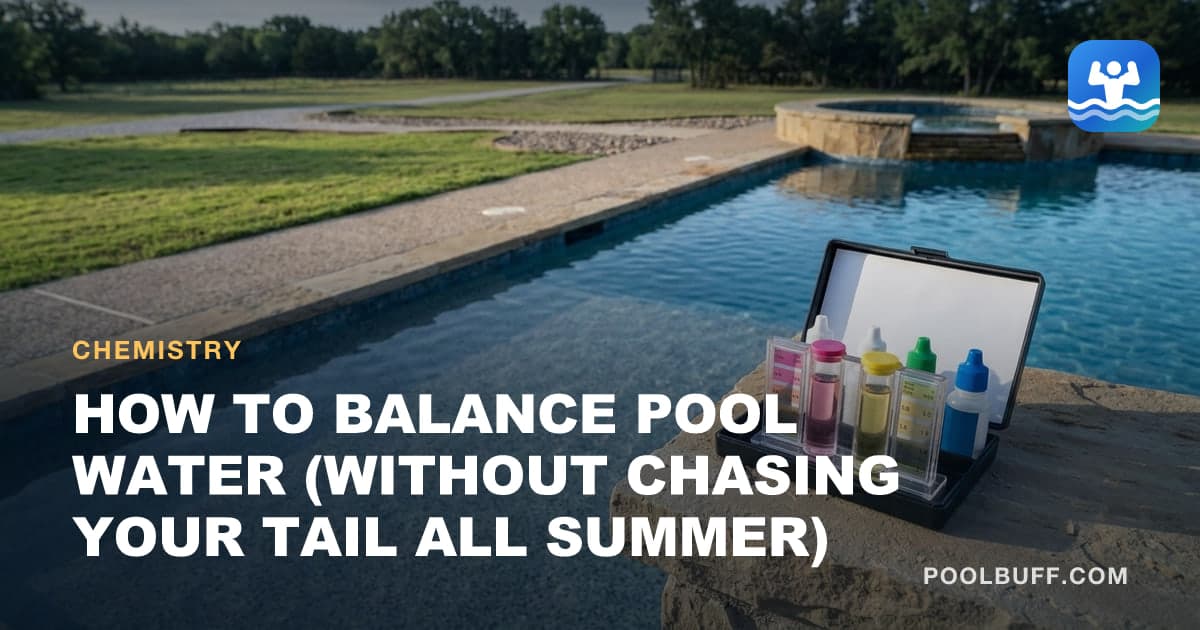
The five numbers that matter, the order to fix them in, and the doses that actually work. Written by people who've done this on real pools for 20 years.