Two things about solar covers get repeated wrong constantly.
The first is which way up it goes. The second is what it's actually doing. Both are worth two minutes, because getting them right is the difference between a cover that pays for itself and a sheet of plastic you resent every time you drag it off.
Key takeaways
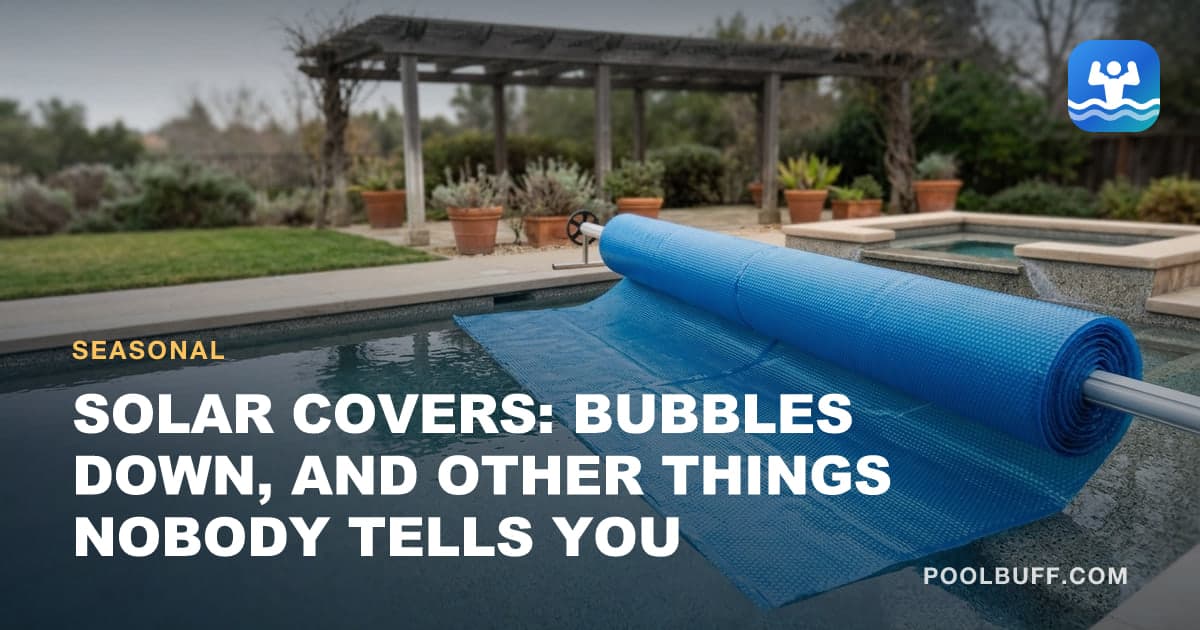
- Bubbles go down, touching the water. Bubbles up does almost nothing.
- Evaporation is the biggest way a pool loses heat. Stopping it matters more than the sun the cover collects.
- It also slows chlorine loss, because UV destroys chlorine and the cover blocks some of it.
- Two to four seasons is a realistic lifespan. Sun destroys the thing that sits in the sun all day.
- It is not a safety device. A child can slip under a solar cover and be invisible from the deck.
Bubbles down. Always.
The bubble side goes against the water.
The bubbles are air pockets, and trapped air is what insulates. Face them down and they sit in the water, holding the flat sheet just clear of the surface with an air layer in between. That's the whole design.
Float it bubbles up and the flat side lies on the water. You've made a plastic sheet. It still cuts evaporation somewhat, but you've thrown away the insulation and you're wearing the bubbles out against the sun for nothing.
What it's really doing
Most people buy a solar cover to add heat. It does add some. But the bigger effect is stopping heat leaving.
Evaporation is the largest way a pool loses energy. Every gram of water that evaporates takes a lot of heat with it. That's why an uncovered pool goes cold overnight even when the air isn't cold — it isn't losing heat to the air so much as losing it to water turning into vapor and leaving.
A cover on the surface stops most of that. So the pool that was 84°F at 6pm is still close to it at 8am, instead of starting the day several degrees down and asking your heater to make it up again.
The solar gain is real but secondary. Expect a few degrees over several days in good sun. Shallow pools gain more than deep ones, because there's less water to warm.
And it slows chlorine loss. UV destroys free chlorine — that's the whole reason cyanuric acid exists. A cover blocks part of that, so you burn through less.
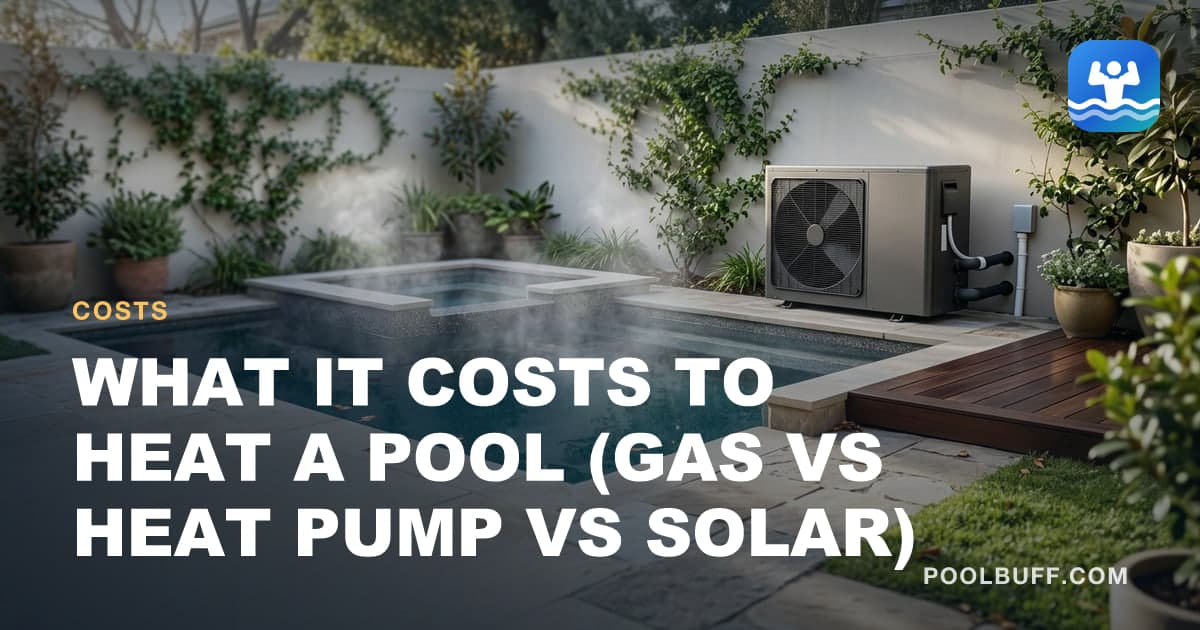
Go deeperWhat heating actually costsGas, heat pump and solar compared, and why a cover is the cheapest heating upgrade there is.Picking one
Thickness runs roughly 8 to 16 mil. Thicker lasts longer and insulates a bit better, and costs more and weighs more. Twelve mil is a sensible middle for most people. Eight mil is fine if you're gentle with it and don't mind replacing it sooner.
Color. Clear transmits the most light to the water, so it gains the most heat. Blue is the common compromise and hides dirt better. Dark covers absorb heat in the cover itself rather than passing it through, which is not what you want.
Size. Buy it oversized and cut it to shape with scissors, floating it on the pool and trimming to the edge. Aim for it to reach the walls without riding up them.
What kills them
Sun. The obvious one, and unavoidable. The cover's job puts it in full sun all day.
Leaving it on in high chlorine. After shocking, chlorine attacks the plastic hard. Leave the cover off until free chlorine is back down near normal.
Storing it in the sun. A cover rolled on a reel in direct sun cooks. Use a reel cover, or pull it into shade.
Folding it wet and leaving it. That's how you get a black mildew bloom through the folds.
Two to four seasons is realistic. When bubbles start splitting and you're skimming plastic confetti, replace it — those fragments end up in your pump basket and your filter.
What it does to your chemistry
A cover changes more than temperature, and two of those changes are worth planning around.
Chlorine lasts longer. The cover blocks a good share of the UV that destroys it, so a covered pool consumes noticeably less chlorine than the same pool open. That is a real saving, and it is also a reason to test before dosing on the habit you built while uncovered — over-chlorinating a pool that has just started living under a cover is easy to do.
pH tends to climb a little faster. A covered pool loses less carbon dioxide to the air, which ought to hold pH steadier, but warmer water pushes the other way and most owners find it rises. Test it rather than assuming either direction.
Never leave it on through a shock. High chlorine concentrated under a cover attacks the material directly, and a cover left on during a shock treatment can be visibly damaged overnight. Off for the dose, back on the next day.
And take it off in genuinely extreme heat. A covered pool through a Phoenix August reaches temperatures nobody actually enjoys swimming in.
The safety part
This is the bit worth taking seriously.
A solar cover holds no weight whatsoever. It's a floating sheet. A small child or a pet that gets onto it goes straight through, and then they're underneath something opaque that a person on the deck cannot see through.
That's a worse situation than no cover at all, because it delays discovery.
So: a solar cover is a heating accessory, not a barrier. It doesn't count as a layer of protection, it doesn't substitute for a fence, and it comes fully off before anyone gets in — not folded back halfway.
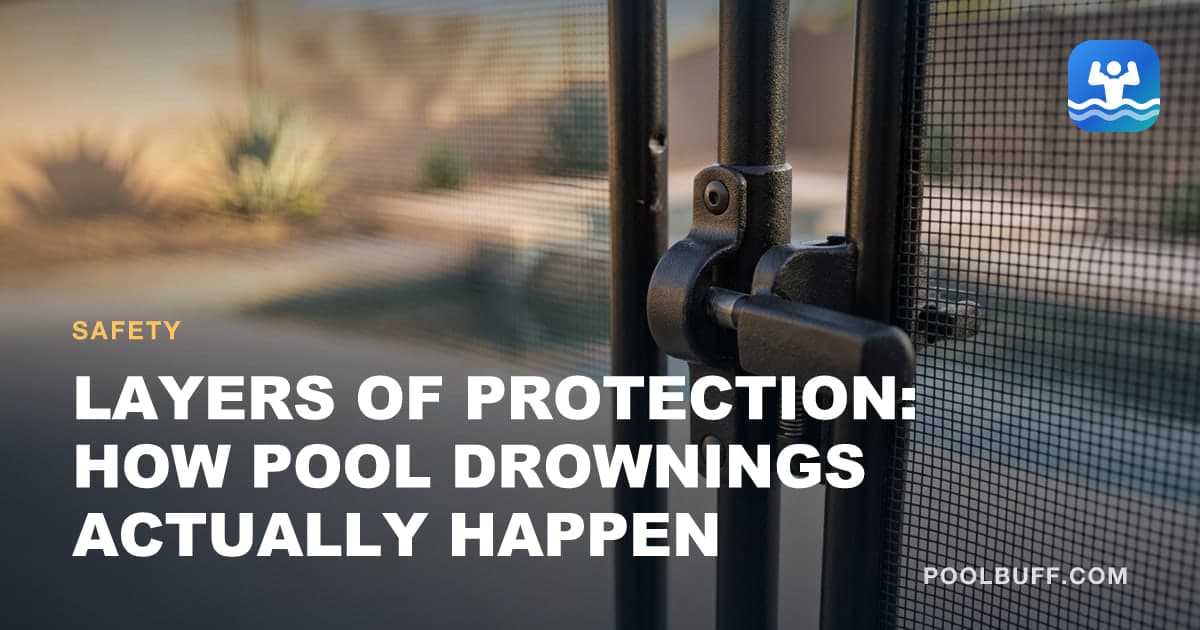
Go deeperWhat actually counts as a layerBarriers, alarms, covers and supervision, and which of them genuinely hold.Liquid solar covers
A thin layer of alcohol-based product that spreads across the surface and slows evaporation. Invisible, nothing to drag off, no reel.
They do something. They do less than a physical cover, they get broken up by wind and swimming, and they need re-dosing. Reasonable if a physical cover is genuinely impractical for your pool — an odd shape, no storage, a lot of overhanging trees. Not a straight replacement.
Is it worth it?
If you heat your pool at all, yes, easily. A cover is the cheapest thing you can do to cut heating cost, and it works every night whether or not you remember to think about it.
If you don't heat, it's a smaller call. You'll get a slightly longer swim season and use less chlorine and less water. Against that, it's the one bit of pool equipment you interact with physically every single time you swim.
Buy the reel. That's what decides it.
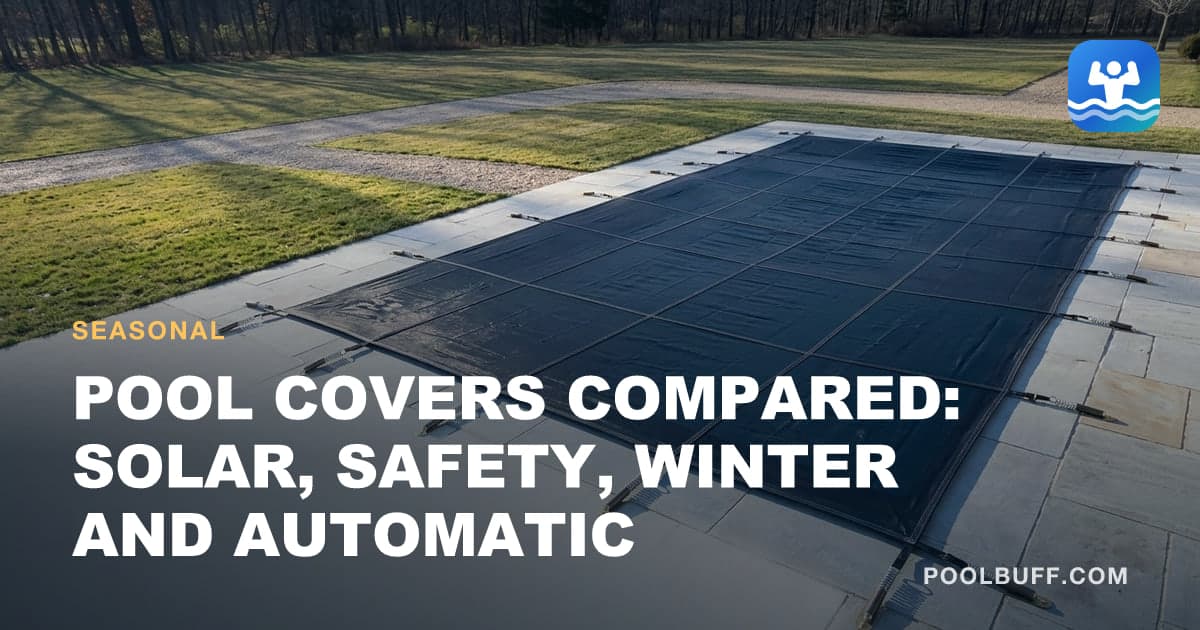
Go deeperSolar, safety, winter or automatic?All four cover types compared on what they actually do.Worth having alongside
- Check price
automatic cover pump
Water sitting on a cover is what stretches and tears it. This runs on its own.
Frequently asked questions
Which side of a solar pool cover goes down?
The bubble side goes down, against the water. The bubbles trap air, which is what does the insulating, and they hold the smooth surface slightly clear of the water. Floating it bubbles up leaves the flat side on the water and loses most of the benefit.
How much will a solar cover heat my pool?
In good sun, a few degrees over several days, and more in a shallow pool than a deep one. The bigger effect is overnight — a covered pool holds the heat it already has instead of losing it to evaporation, so you are not starting each morning from scratch.
How long does a solar pool cover last?
Two to four seasons for most. UV is what kills them, and the cover lives in full sun by definition. Bubbles start splitting and shedding, and once it is leaving plastic confetti in your skimmer it is done.
Do solar covers save money on chemicals?
Yes, noticeably. UV destroys free chlorine, and a cover blocks part of that. It also stops evaporation carrying off water you would have to replace and rebalance. Most owners see a real reduction in chlorine use with a cover on overnight.
Is a solar cover a safety cover?
No, and this matters. A solar cover holds no weight at all. A small child who gets onto it sinks straight through and is then underneath something opaque, invisible from the deck. Never treat one as a barrier, and take it off before anyone swims.