A stream of bubbles blowing out of a return jet looks like a plumbing mystery. It is usually a ten-dollar part.
The useful thing to know before you start is that the search area is small. A pool circuit has two halves: everything before the pump is under vacuum, everything after it is under pressure. A leak on the pressure side pushes water out — you get a drip at the filter, a wet patch under a union. It cannot pull air in. So every bubble arriving at your returns entered somewhere on the short run between the skimmer mouth and the pump impeller.
That is maybe fifteen feet of pipe and half a dozen joints, and you can check nearly all of it standing at the pad.
Key takeaways
- Air enters on the suction side only. Pressure-side leaks drip water, they never pull air.
- A low water level and a stuck skimmer weir account for a large share of complaints.
- A dry pump lid o-ring is the single most common part at fault, and it costs about ten dollars.
- A little air right after cleaning the filter is normal and clears in a few minutes.
- Bubbles plus a falling pressure gauge is a suction restriction, not just an air leak.
First, rule out normal
Air in the lines right after you have opened something is expected. Clean the filter, empty the pump basket, backwash — any of those let air in, and it takes a few minutes of running to purge out through the returns.
Give it fifteen minutes of steady running. If the bubbles thin out and stop, nothing is wrong. If they are still going strong, keep reading.
Also check the obvious impostor: a return jet aimed up at the surface churns air into the water and looks a lot like the real thing. Point it down and see if the bubbles disappear.
Before you start
- Time
- 45 min
- Difficulty
- Easy
- Cost
- $4-$25 in parts for most causes
Tools
- Garden hose
- Screwdriver
- Pliers or strap wrench
Supplies
- Pump lid o-ring
- Silicone o-ring lubricant
- PTFE tape
Work along the suction line
- 1
Water level
1 minuteHalfway up the skimmer mouth. Below that, the skimmer periodically gulps air straight into the suction line, and you get bubbles in bursts rather than a steady stream.
This is the single most common cause and it costs nothing. Top it up with the hose and give it ten minutes.
If the level keeps dropping back down, you have a separate problem — find the leak before chasing the air.
- 2
Skimmer basket and weir
2 minutesA basket packed with leaves restricts flow enough that the skimmer starts pulling air at the top of its range. Empty it.
Then check the weir, the hinged flap in the skimmer mouth. It should swing freely. Jammed open, surface flow drops and air gets in; jammed shut, flow stops. A skimmer in poor shape causes more odd symptoms than most people expect.
- 3
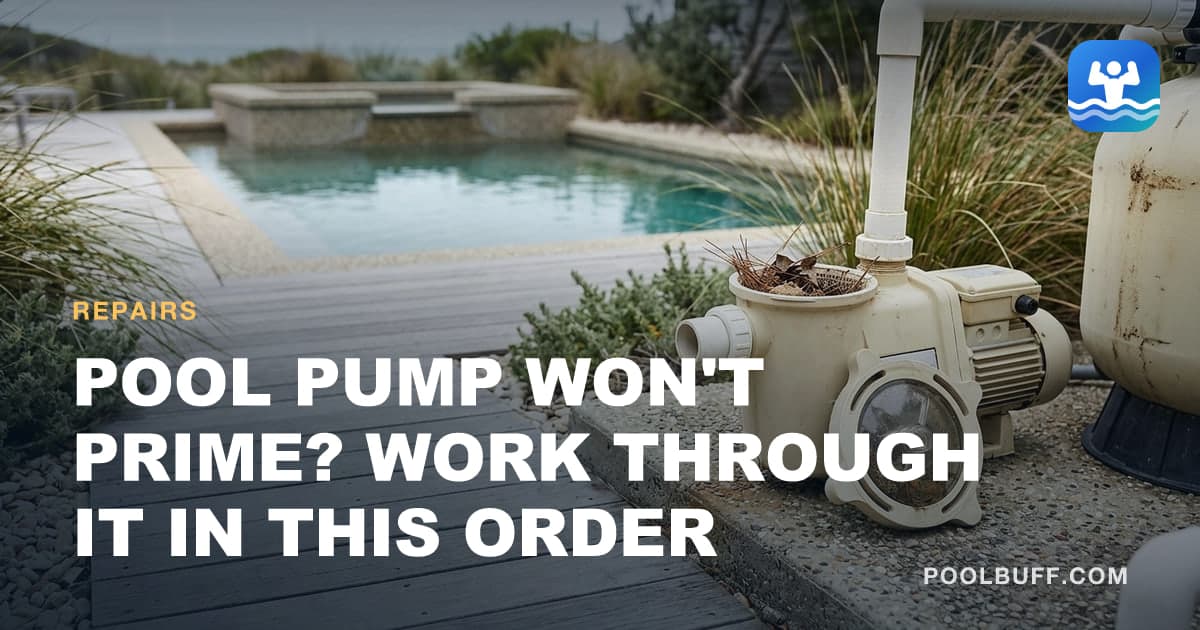
Pump lid and its o-ring
5 minutesThis is the one. More air leaks are here than everywhere else combined.
Shut the pump off, take the lid off, and pull the o-ring out. You are looking for flat spots, cracks, hardening, or a ring that has gone square in section instead of round. Any of those and it needs replacing. The pump maker's own ring runs about $9 to $20, and copies cost about the same or less.
Even a good one needs silicone lubricant, not petroleum grease, which swells and destroys the rubber. The exception is a Jandy variable-speed pump, whose manual says soapy water only and no lubricant on the o-ring. A thin smear, refit, and hand-tighten the lid. Do not lever it down with a tool; over-tightening distorts the ring and makes the leak worse.
Check the lid itself for hairline cracks while it is off, and make sure the sealing surface on the housing is clean.
- 4
Drain plugs
2 minutesTwo threaded plugs at the bottom of the pump housing, opened for winterizing and often refitted carelessly.
Take them out, wrap the threads with PTFE tape, and refit snug. Their o-rings perish the same way the lid ring does, and a plug that is merely finger-tight will draw air all season.
- 5
Unions and valves
10 minutesWork backward from the pump. Each union should be hand-tight against its o-ring — cracked open a quarter turn is enough to pull air.
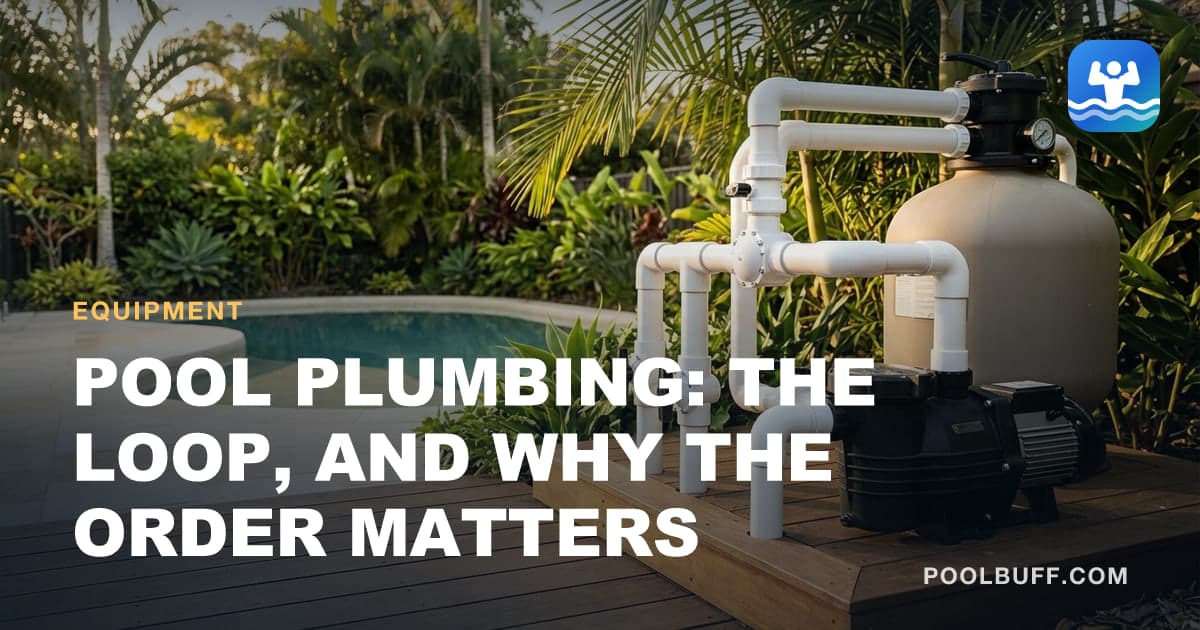
Diverter and ball valves on the suction side have stem o-rings that dry out, and those leak air without ever leaking water. If a valve body looks crazed or a handle feels loose on its stem, that is your candidate. The suction-side layout is worth understanding here, because it tells you which valves are even capable of causing this.
- 6
The water test
10 minutesStill bubbling? Now find it properly. With the pump running, pour water slowly from a cup over each suction-side joint in turn — unions, plug threads, the lid seam, valve stems.
Watch the pump basket while you pour. When you cover the leak, the water gets drawn in, the air stream stops for a second, and the basket clears. That momentary change is the tell, and it is far more reliable than looking for bubbles at the jets.
What the pump basket tells you
The clear lid is a diagnostic instrument, and most people never use it.
With the pump running normally, the housing should be completely full of water. Some swirl is fine. What you are looking for is a persistent pocket of air at the top that never clears, or a vortex spinning down into the impeller eye.
- Basket full, occasional bubbles at the jets — small leak, likely a lid o-ring or a plug.
- Basket a third to half air — a real leak, and worth shutting off for.
- Basket full but pressure low and flow poor — probably not an air leak at all. That is a restriction, and low flow has its own diagnostic path.
When it is the buried pipe
If every accessible fitting is sound and the leak persists, the suction line between the skimmer and the pad is the remaining suspect.
This one is genuinely awkward. An underground suction leak pulls air while the pump runs and often loses no measurable water when it is off, which is why the pool level can look fine. Diagnosis usually means pressure-testing the line, and that is the point where a leak detection company earns their fee.
Before you get there, though, check the least glamorous thing on the list: the skimmer's own throat, where the plastic body joins the pipe. That joint cracks with ground movement and freeze cycles, sits just below the deck, and is the last cheap thing you will find.
Go deeperPump won't prime at all?Same suction side, further along. The order to work through when it will not pull water in the first place.Frequently asked questions
Why are there air bubbles coming out of my pool jets?
Air is being pulled into the plumbing somewhere between the skimmer and the pump impeller. Everything downstream of the pump is under positive pressure, so a leak there pushes water out rather than drawing air in. Start at the water level and the skimmer, then work along the suction line toward the pump.
Is it normal to have some bubbles after cleaning the filter?
Yes. Opening the filter or the pump lid lets air into the system, and it takes a few minutes of running for that air to work through and out of the returns. If bubbles are still coming after fifteen minutes of steady running, you have a real leak rather than trapped air.
Can air bubbles damage my pool pump?
Yes, if you leave it. A pump moving air instead of water loses the flow that cools and lubricates the seal. Run it that way long enough and you cook the shaft seal, then the motor bearings. A pump that is clearly sucking air should be shut off until you have found the cause.
Why does my pump basket only fill halfway?
That is the classic sign of an air leak on the suction side. Water should fill the basket housing completely with the pump running. A visible air pocket at the top that will not clear means air is entering upstream, most often at the lid o-ring, a loose drain plug, or a union that has backed off.
Could air bubbles mean a leak in my underground pipes?
It can, but it is the last thing to check, not the first. An underground suction line leak draws air while the pump runs and often leaks no water at all when it is off, which makes it hard to spot. Rule out every accessible fitting first, because those account for the overwhelming majority of cases.