Nobody plans this one. It arrives because the shell finally went, or the kids grew up, or the quote to fix it came back close to the quote to remove it.
And it is the one pool number almost nobody publishes honestly, because there is no product at the end of it.
Key takeaways
- Partial removal is roughly half the price and leaves land you generally cannot build on.
- It normally has to be disclosed at resale, and some jurisdictions record it against the property.
- Access decides the price more than pool size does. If a machine cannot reach the yard, costs climb fast.
- Fill is a real line item. A mid-sized pool needs around 100 cubic yards of it.
- Get the demolition permit. Filling a pool quietly is the version that causes problems years later.
The decision that drives the price
Everything else is detail. There are two ways to do this and they are not really the same job.
| Partial removal | Full removal | |
|---|---|---|
| Typical cost | $3,000-$10,000 | $6,000-$16,000 |
| What happens | Top few feet broken, floor punched, rubble buried, backfilled | Entire shell removed and hauled away, engineered fill compacted in layers |
| Time on site | Two to four days | Roughly a week |
| Buildable after | Generally not | Yes, with compaction testing |
| Disclose at resale | Usually required | Normally nothing to disclose |
| Settling risk | Real, and it can take years to show | Low if compacted properly |
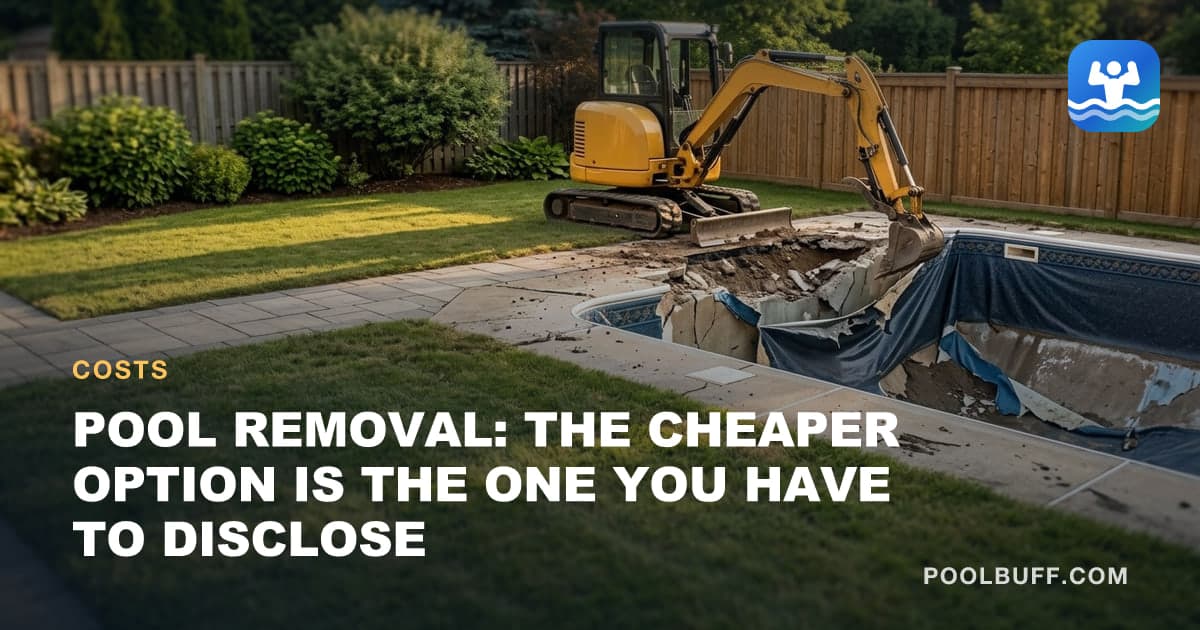
Partial removal is not a bodge. It is a legitimate, commonly permitted method, and for a yard that is only ever going to be lawn it is a reasonable choice. It just comes with a permanent asterisk on the property.
Full removal is what you pay for if you want the ground back. Any future structure — an extension, a garage, a garden building on a foundation — needs ground that has been properly filled and compacted, and usually tested.
What actually moves the number
Access, more than anything. If an excavator can drive into the back yard, this is a machine job. If it cannot — narrow side gate, a slope, a neighbor's wall — then the shell comes out through the house or over the fence by conveyor and wheelbarrow, and the labor cost multiplies. Two identical pools can differ by five figures on access alone.
Construction type. Gunite is the most work to break. Vinyl is the least — a liner, a steel or polymer wall and a floor. Fiberglass sits between, and comes out in large pieces if there is room to lift them.
Disposal distance and fees. Concrete disposal is priced by weight and varies enormously by region. A long haul to the nearest facility shows up in the quote.
Decking. Often more square footage than the pool itself, and it usually has to come out too.
Anything attached. A spa, a raised wall, a waterfall feature — each one is more structure to break and remove.
The costs that are not in the headline number
| Typical | Notes | |
|---|---|---|
| Demolition permit | $100-$800 | Required almost everywhere. Includes inspection |
| Utility disconnection | $200-$1,000 | Gas capping and electrical disconnect need licensed trades |
| Fill material | $2,500-$6,000 | A mid-sized pool needs around 100 cubic yards |
| Compaction testing | $500-$2,000 | Only for full removal, and only if you want it buildable |
| Restoration | $500-$3,000 | Topsoil, grading, seed or sod |
| Equipment pad removal | $200-$800 | Pump, filter, heater and the slab they sit on |
The fill volume surprises people. A 16 by 32 foot pool averaging five feet deep holds roughly 2,500 cubic feet, which is about 95 cubic yards of material to put back. That is a lot of truckloads, and it is why "just fill it in with dirt" is never as cheap as it sounds.
Above ground removal
Much simpler, and much cheaper.
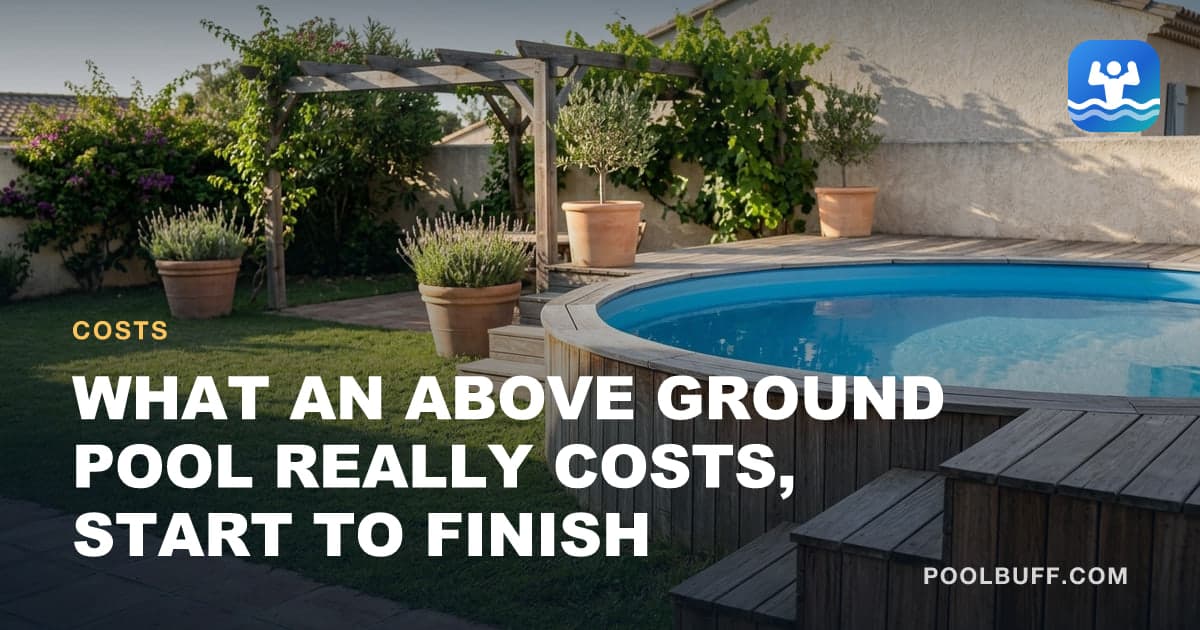
$500 to $2,500 professionally, depending on size, whether decking has to come off first, and how easy the yard is to get to. Doing it yourself costs disposal fees only.
Two things worth knowing if you do it yourself. A steel wall is under tension and sharp — it is genuinely the most dangerous part of an otherwise easy job. And you will be left with a compacted circle of base material and dead grass that needs breaking up, topsoil and seed before it looks like a yard again.
Go deeperThe whole above ground pictureKit, install, running costs and the cost per year of ownership.The resale problem with partial removal
This is the part that deserves more attention than it gets.
A partially removed pool is buried demolition debris under a section of your yard. Three consequences follow:
It usually has to be disclosed. Rules vary by state, and in many places the fill is recorded against the property. Assume a buyer will find out, because they generally do.
It can settle. Even well-compacted fill over rubble moves, and it can keep moving for years. A dip appearing in the lawn three summers later is a normal outcome, not a failure.
It is generally not buildable. Anything needing a foundation over that footprint is off the table without excavating and doing the job properly — at which point you are paying for full removal, later, at higher prices.
Getting comparable quotes
Demolition quotes vary more than pool construction quotes, because there is less standardization in what the job includes. Line them up on these before comparing the numbers.
Full or partial, stated plainly. The two are different products at different prices with different consequences at resale, and a quote that does not say which is not a quote.
Where does the material go, and is haul-away included? Broken concrete is heavy, and disposal fees are a real share of the job. Some contractors bury what they can on site, which is fine for a partial and is exactly what creates the settlement problem later if it is not done properly.
What is the fill, and is it compacted in lifts? "Backfilled with clean fill, compacted in twelve-inch lifts, compaction test on request" and "filled in" are different jobs, and the difference shows up as a depression in your lawn three winters later.
Is the pad, plumbing and electrical removed? Often excluded, and left behind it is somebody's problem eventually.
Who pulls the permit, and is the final inspection included? A documented, inspected removal is what protects you at sale. An undocumented one becomes a disclosure conversation.
When removal is the right call
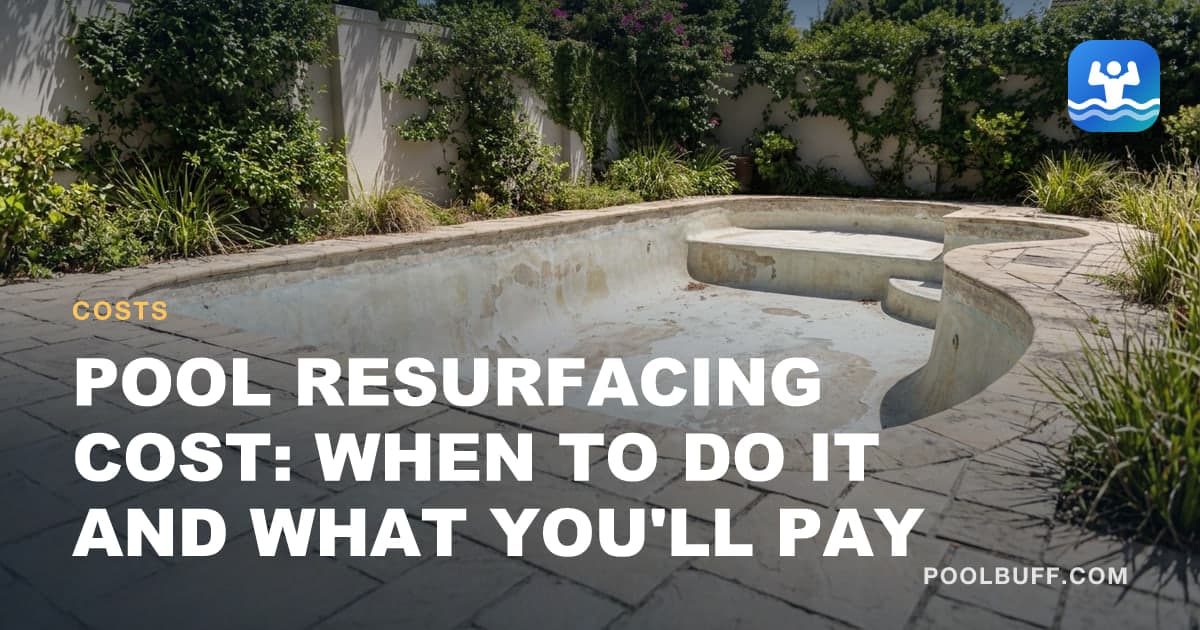
Repair is approaching removal money. A failing gunite shell, major structural cracking, or a pool that has been drained and lifted are all in that territory. At that point you are choosing between two large numbers, not between spending and not spending.
Nobody swims in it. A pool costs money every month whether or not anyone gets in, and the maintenance does not scale down with use.
It is a deterrent in your market. In a cold climate, on a small lot, or where local buyers skew toward families with toddlers, the pool can genuinely be costing you buyers.
It is a liability you no longer want. Insurance, fencing obligations and simple worry are legitimate reasons on their own.
Go deeperBefore you decide, check the value questionWhat a pool actually does to resale, and the four things that decide it.The alternative nobody mentions
You do not have to fill it with dirt.
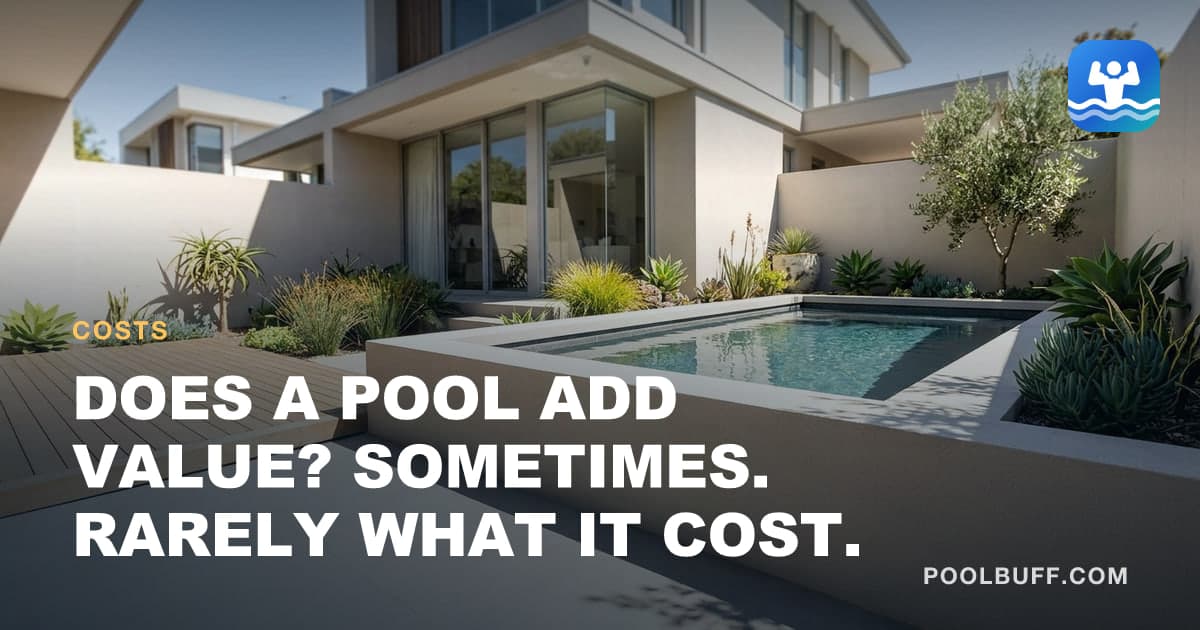
A drained shell can become a sunken patio, a planter, a garden room floor or a rainwater feature. It is not always cheaper — you still need drainage, and you still need it made safe — but on a pool with a sound shell it can cost less than full removal and produce something better than lawn.
Worth one conversation with a landscape contractor before you commit to burying it.
Go deeperOr is it worth saving?What resurfacing costs by material, and the signs a pool is genuinely done.Frequently asked questions
How much does it cost to remove an inground pool?
Partial removal runs about $3,000 to $10,000, and full removal about $6,000 to $16,000, with gunite and awkward access at the top of that. The spread inside each range comes down to access, pool construction, how far the debris has to travel and whether there is decking to take out as well.
What is the difference between partial and full pool removal?
Partial removal breaks up the top few feet of the shell, punches holes in the floor so water drains, pushes the rubble into the hole and backfills over it. Full removal takes the entire shell out and replaces it with engineered fill compacted in layers. Partial is cheaper and faster. Full is what leaves you buildable land.
Do you have to disclose a filled-in pool when selling?
In most places, yes. A partially removed pool is buried debris under a section of your yard, it can settle for years, and it usually cannot be built on. Disclosure rules vary by state, and some jurisdictions record the fill against the property, so treat it as something a buyer will find out about.
How much does it cost to remove an above ground pool?
About $500 to $2,500 professionally, driven by size, whether there is decking to dismantle and how easy the yard is to reach. Doing it yourself costs disposal fees only, but a steel wall under tension is sharp and deserves respect.
Can you fill in a pool yourself?
Physically, sometimes. Sensibly, rarely. Most jurisdictions require a demolition permit and an inspection, the shell has to be broken for drainage or it becomes a buried swimming pool full of groundwater, and the fill has to be compacted in layers or the yard sinks. The cost of getting it wrong lands years later when you sell.