Pool pricing is opaque on purpose. Not maliciously, exactly — it's just that every job is genuinely different, and that ambiguity happens to work in the builder's favor when you're comparing three quotes that all say different things.
I've worked the construction side of this business — gunite and fiberglass builds, from the dig through to handover. Here's what the numbers actually look like, and more usefully, where they move.
Key takeaways
- The quote you're given is rarely the number you'll pay. Budget 15-30% on top for the things that aren't in it.
- Site access is the biggest hidden variable. A backyard a machine can't reach adds five figures.
- Allowances for decking, tile and coping are where quotes get padded and where change orders start.
- Running costs are $1,500-$4,000 a year before you heat anything. Heating can double it.
- A pool returns maybe 50-70% of its cost at resale in warm markets, less elsewhere. Build it because you'll swim in it.
The headline ranges
| Shell + basic install | Realistic finished costMy default | High end | |
|---|---|---|---|
| Vinyl liner | $35,000-$55,000 | $45,000-$70,000 | $80,000+ |
| Fiberglass | $45,000-$65,000 | $55,000-$85,000 | $110,000+ |
| Gunite / shotcrete | $50,000-$75,000 | $65,000-$110,000 | $200,000+ |
| Plunge pool (any type) | $25,000-$40,000 | $30,000-$55,000 | $70,000+ |
The national average sits around $62,500, and most people land between roughly $45,000 and $88,000. But averages hide the thing that matters, which is that two identical pools three miles apart can differ by $30,000 based on nothing but access and soil.
One note on why the ranges on this page start higher than the headline numbers you will see elsewhere. Published totals commonly open around $25,000, and that figure is real — it is a small pool, a simple shape, easy access and not much else. The bands here describe a finished backyard: shell, decking, equipment, fence and the permits. If you are pricing a plunge pool or a compact vinyl build, work from the low end of the table above rather than from these numbers.
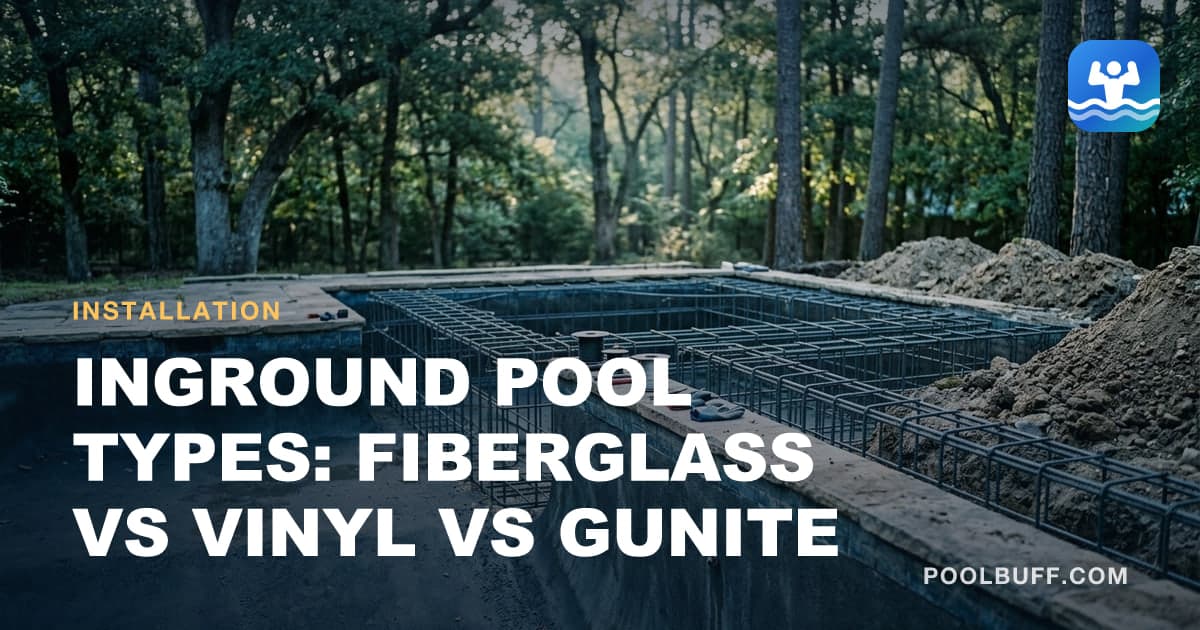
Which type you build moves that number more than almost anything else — fiberglass vs vinyl vs gunite covers the trade-offs properly.
Where the money actually goes
On a mid-range gunite build coming in around $85,000:
| Item | Typical share | Notes |
|---|---|---|
| Excavation and spoil removal | 8–12% | Rock, high water table or bad access blows this up |
| Steel and shell | 18–25% | The pool itself |
| Plumbing and equipment | 12–18% | Pump, filter, sanitizer, valves, lines |
| Interior finish | 8–15% | Plaster cheapest, pebble and quartz more |
| Tile and coping | 6–12% | Where allowances bite |
| Decking | 10–20% | Often the biggest surprise line |
| Electrical and bonding | 4–7% | Non-negotiable, non-DIY |
| Permits and engineering | 2–5% | Varies enormously by jurisdiction |
| Fencing | 3–8% | Frequently excluded from the quote entirely |
| Startup and first fill | 1–3% | Water plus initial chemistry |
The things that aren't in your quote
This is the part I'd most want someone to read before signing.
Ask for a written exclusions list. If a builder won't give you one, that tells you something.
Commonly excluded:
- Fencing. Required by code almost everywhere, and often not in the quote. Budget $3,000–$12,000 depending on material and run length.
- Decking beyond a small band. Many quotes include three or four feet of concrete around the shell. Anything more is extra, and decking is $8–$30 per square foot depending on material.
- Electrical run from the house panel. The bonding is usually included. The run to the equipment pad often isn't. $1,500–$5,000.
- Gas line for a heater. $1,000–$4,000 depending on distance and whether the meter needs upsizing.
- Landscaping repair. Your yard will be destroyed. Putting it back is on you.
- Irrigation repair. They will cut your sprinkler lines. Every time.
- Water to fill it. 15,000–25,000 gallons. Anywhere from $80 to $600 depending on your rate, and more if you truck it in.
- Cover. $1,500–$6,000 for a safety cover, $8,000–$20,000 for automatic.
That's how a $65,000 quote becomes an $85,000 project. Not because anyone lied — because those items were never in it.
What moves the number most
Site access. The biggest single variable, and the one nobody thinks about. If an excavator can get to the backyard, excavation is routine. If it can't — narrow side yard, no rear access, a slope, a neighbor's fence in the way — you're looking at smaller machines, more days, hand digging, or a crane. Add $8,000–$30,000.
I've seen a crane lift for a fiberglass shell over a house add $12,000 to a job on its own. Working out your access first is the cheapest hour in the whole project.
Soil and rock. Clay is fine. Sand needs shoring. Rock needs a hammer and a lot of hours — $5,000–$25,000 extra is normal when you hit it, and nobody knows it's there until they dig. Get a soils report if your neighbors have stories.
Water table. High groundwater means dewatering during construction and a hydrostatic relief valve after. Common in Florida, coastal Carolinas and parts of the Gulf. Adds cost and constrains what you can do later.
Region. Labor rates vary hugely. The same pool in Texas versus coastal California can differ 40%. Permitting is also wildly variable — some jurisdictions take two weeks, some take five months.
Slope. A sloped yard means retaining walls or a raised bond beam. Engineering plus structure. $5,000–$40,000.
Size, but less than you would think. Excavation, plumbing, a permit and an equipment pad cost much the same on a small pool as a large one, so halving the size does not halve the price — which is worth knowing before you assume a plunge pool is a budget option.
Season. Book in the fall or winter for a spring start and you'll often get better pricing than someone signing in May when every builder is booked out.
Running costs, which nobody quotes you
The build is a one-time number. This is the one you live with.
| DIY maintainedMy default | Weekly service | |
|---|---|---|
| Chemicals | $400-$900/yr | Usually included |
| Electricity (pump) | $120-$500/yr with VS pump | Same, you still pay it |
| Water top-up | $100-$500/yr | Same |
| Service fees | $0 | $1,560-$4,200/yr |
| Filter media / parts | $100-$300/yr averaged | Often extra |
| Heating, if used | $500-$3,000/season | Same |
| Annual total | $1,500-$4,000 | $3,000-$8,000 |
Then the long-cycle costs that arrive as a lump:
| Item | Frequency | Cost |
|---|---|---|
| Vinyl liner replacement | 8–12 years | $3,000–$8,000 |
| Plaster resurfacing | 10–15 years | $6,000–$15,000 |
| Pebble resurfacing | 15–20 years | $10,000–$20,000 |
| Pump replacement | 8–12 years | $900–$2,000 installed |
| Filter replacement | 10–15 years | $800–$2,500 |
| Heater replacement | 8–15 years | $3,500–$8,000 |
| Salt cell replacement | 3–7 years | $450–$1,500 |
| Cover replacement | 5–10 years | $1,500–$6,000 |
Anyone quoting you a pool without mentioning that a plaster pool needs $6,000–$15,000 of resurfacing in year twelve is telling you a partial story.
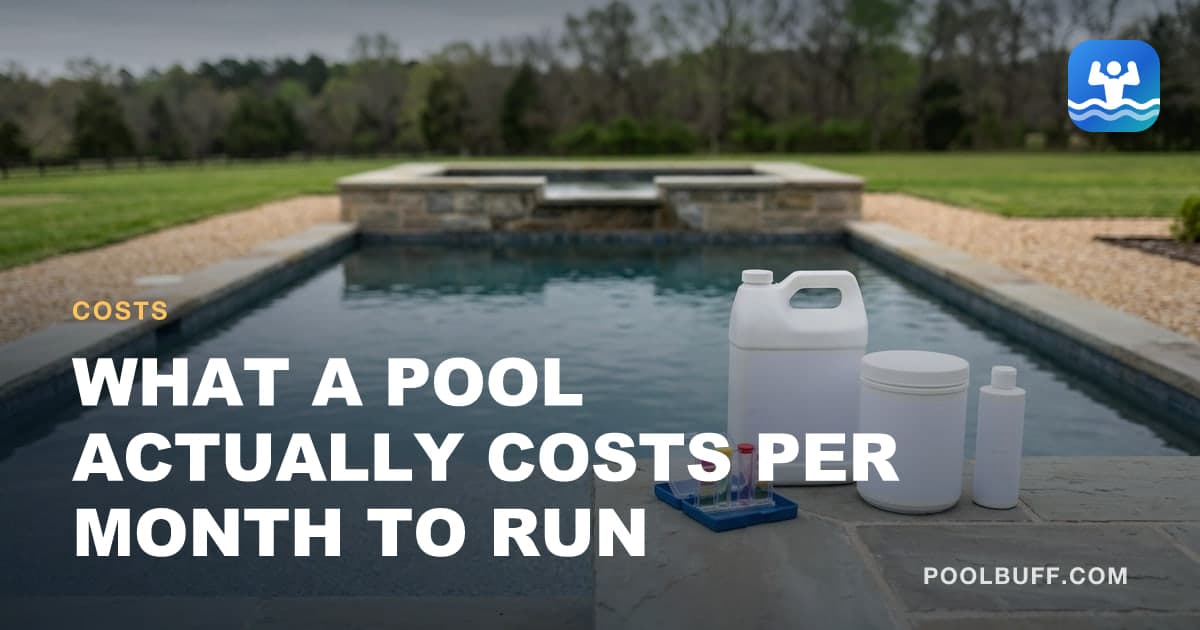
Go deeperWhat a pool costs every monthThe running-cost breakdown, including where people overspend.Financing, briefly
Most pools get financed. Common routes:
- Home equity loan or HELOC — usually the lowest rate, secured against the house
- Cash-out refinance — only makes sense if you're refinancing anyway
- Unsecured pool loan — fast, and noticeably more expensive
- Builder financing — convenient, and check the rate against your bank before accepting
The thing to model: your monthly payment plus $150–$350 a month in running costs. A lot of people budget the loan and forget the pool also has an ongoing bill.
Does it add value?
Sometimes, and less than it cost.
In markets where pools are expected — Phoenix, Florida, Texas, southern California — a well-maintained pool typically returns 50–70% of its cost at resale, and a house without one can be harder to sell.
In cooler markets it's roughly break-even at best, and some buyers price it as a liability because they're inheriting a maintenance obligation they didn't want.
Build a pool because you'll swim in it. If the investment case is what's convincing you, don't build it.
Getting quotes that are actually comparable
- Give every builder identical specs. Same size, same finish, same equipment brands and models. Otherwise you're comparing nothing.
- Get the exclusions in writing. Every time.
- Set real allowances, not placeholders. Go to the showroom first.
- Ask about site conditions specifically. What happens if they hit rock? Get the rate in the contract.
- Check the payment schedule. Money should follow completed work. Be wary of large deposits before anything is dug.
- Verify license and insurance yourself. Not from the brochure — from the state licensing board.
- Talk to three of their customers from two or three years ago, not last month. You want to hear about how the warranty went, not how the sales process felt.
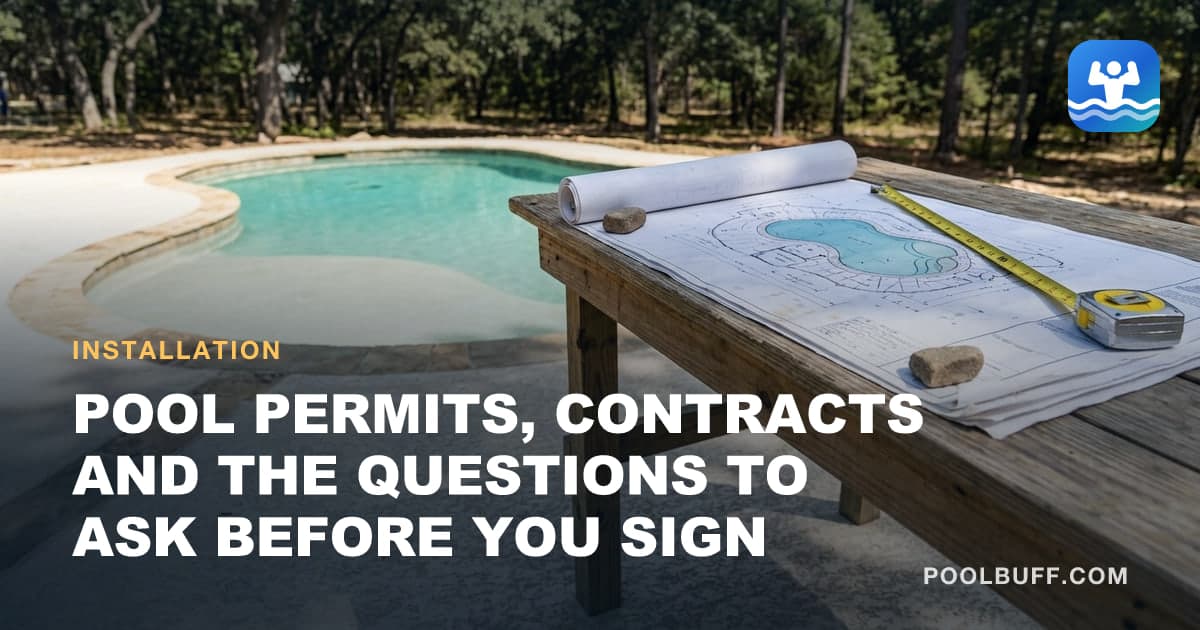
The lowest quote is very rarely the cheapest pool. Permits, contracts and the questions to ask goes through the paperwork side in detail.
Go deeperNow compare the quotes properlyExclusions and allowances are where the real price hides, not the total at the bottom. Go deeperOr the other optionWhat an above ground actually costs installed, and why the kit is the smallest line on the bill. Go deeperWill you get any of it back?What a pool actually does to resale value, and the four things that decide it. Go deeperLooking at fiberglass specifically?Why those quotes vary less, the access cliff, and the twenty-year math.Frequently asked questions
How much does an inground pool cost in 2026?
Most fall between $45,000 and $110,000 installed for a finished backyard, with a national average near $62,500 across all inground pools including small and basic builds. Vinyl liner typically runs $40,000-$80,000, fiberglass $55,000-$95,000, and gunite $60,000-$150,000 or more. Regional labor rates and site conditions move these numbers more than the shell itself.
What is the cheapest type of inground pool?
Vinyl liner, both to install and usually to run. The trade-off is the liner itself, which is a consumable needing replacement every 8-12 years at $3,000-$8,000. Over 20 years the total cost of ownership often lands close to fiberglass.
What is not included in a pool quote?
Commonly excluded: fencing, decking beyond a small perimeter band, electrical run from the panel, gas line for a heater, landscaping and irrigation repair, permits in some cases, and the water to fill it. Ask for a written list of exclusions and get it before you sign anything.
How much does it cost to run a pool per year?
Budget $1,500-$4,000 a year for chemicals, electricity, water and routine parts on a DIY-maintained pool. Weekly professional service adds $1,500-$4,200 a year. Heating is the biggest single variable and can add $500-$3,000 a season depending on climate, heater type and whether you use a cover.
Does a swimming pool add value to a home?
In warm-climate markets where pools are expected, a well-maintained pool can return roughly 50-70% of its cost at resale. In cooler markets it's closer to break-even or a mild negative, and some buyers see it as a liability. Build a pool because you want to use it, not as an investment.
How long does an inground pool take to build?
Fiberglass is fastest at 2-5 weeks on site once permits are in hand. Vinyl liner runs 3-6 weeks. Gunite runs 8-16 weeks because the shell has to cure and the finish trades stack in sequence. Permitting adds anywhere from two weeks to several months depending on your jurisdiction.