The pool industry has been selling oversized pumps for forty years, and the reason isn't a conspiracy. Bigger pumps sound better on a quote, they cover for sloppy plumbing design, and until electricity got expensive nobody was counting the cost.
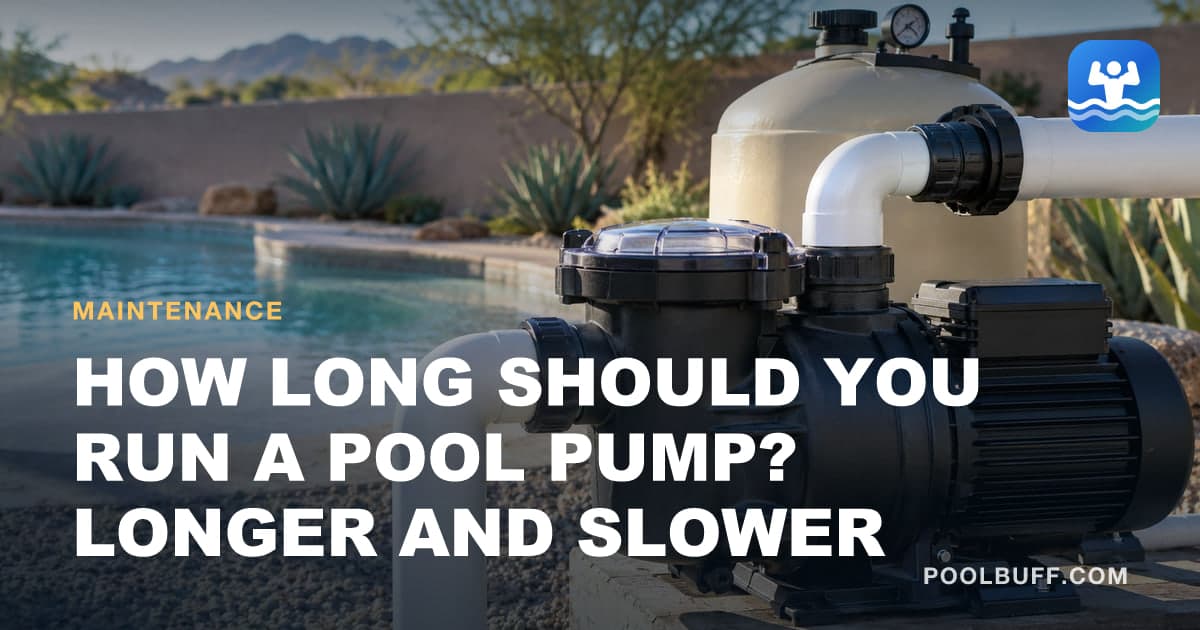
But an oversized pump on 1.5-inch plumbing doesn't move more water. The pipe won't let it. What it does is burn power, make noise, wear its bearings out faster, and push your filter pressure up.
I've pulled 2 HP single-speed pumps off 14,000 gallon pools more times than I can count. Every one of them was moving the same water a 3/4 HP unit would have moved, for four times the money.
Key takeaways
- Horsepower is a marketing number. Flow rate against your system's head is the real spec.
- 1.5-inch plumbing tops out around 40 GPM before pipe velocity gets destructive. Most pools have it.
- An oversized pump doesn't move more water through undersized pipes. It just burns power and wears itself out.
- Buy variable-speed even if you never use the top speed. The low-RPM running cost is the whole point.
- Check for a utility rebate first. The ones I checked in September 2026 paid $300 to $900, and every one required an ENERGY STAR certified pump.
Horsepower is the wrong number
There are three horsepower figures on a pool pump and manufacturers pick whichever flatters them.
- Nameplate HP — what's printed on the motor
- Service factor (SF) — a multiplier, often 1.0 to 1.65
- Total HP (THP) — nameplate × service factor. This is the honest one.
A "1 HP" pump with a 1.65 service factor is a 1.65 THP pump. A "1.5 HP" with a 1.0 service factor is a 1.5 THP pump. The first one is bigger, despite the smaller label.
Regulations use THP for exactly this reason. When you're comparing pumps, compare THP, and better still compare flow at your head.
The clearest example of the problem is a manufacturer selling the same pump twice. Jandy's Stealth comes in a full-rated SHPF line and a max-rated SHPM line, and the pairs line up exactly: SHPF1.0 and SHPM1.5 are both 1.65 THP, and they take the same impeller part number. One box says 1 HP, the other says 1.5, and there is no difference between them.
Work out the flow you actually need
Turnover first:
For a worked example on a specific machine, the Hayward Super Pump moves 66 GPM at 40 feet of head — compare that against the target flow you calculate here before assuming you need more pump. Specs, warranty terms and parts are on the Hayward and Pentair equipment pages, and every pump with a page here is listed by type.
Target GPM = pool gallons ÷ turnover hours ÷ 60- 15,000 gallons over 10 hours = 25 GPM
- 20,000 gallons over 10 hours = 33 GPM
- 30,000 gallons over 10 hours = 50 GPM
Those numbers surprise people. They're much lower than what most installed pumps produce at full speed.
Now check your plumbing can take it
This is the constraint nobody mentions, and it's the one that actually caps your system.
Water moving too fast through PVC causes erosion at fittings, noise, and turbulence that costs you head. The limit is a velocity, and the flow that falls out of it depends on the pipe.
The International Swimming Pool and Spa Code caps residential pool piping at 8 feet per second, suction and return both. Public pools get a tighter suction limit of 6 fps, and that lower number is what most designers aim at on a residential suction line anyway, because velocity you don't use is head loss you don't pay for.
Both columns, for schedule 40 PVC:
| Pipe size | At 6 fps — design target | At 8 fps — code maximum |
|---|---|---|
| 1.5 inch | 38 GPM | 51 GPM |
| 2 inch | 63 GPM | 84 GPM |
| 2.5 inch | 89 GPM | 119 GPM |
| 3 inch | 138 GPM | 184 GPM |
Those are computed from the pipe's actual inside diameter. Manufacturers publish their own maximums and they sit below the 8 fps column rather than on it — Hayward's TriStar VS installation manual gives 45, 80, 110 and 160 GPM for the same four sizes, which works out at 6.9 to 7.6 fps. Treat 8 fps as the ceiling nobody should reach and the manufacturer's figure as the one to design to.
Most residential pools built before about 2005 have 1.5-inch suction and return lines. Which means something in the high 30s to about 50 GPM is your ceiling, no matter what pump you bolt on — call it 40 GPM if you want one number to plan around.
Put a pump capable of 90 GPM on that plumbing and you don't get 90 GPM. You get about 40, high velocity, and a very expensive electricity bill.
Check your own pipesPump and filter sizing calculatorYour volume, turnover and pipe sizes in, the flow you need and whether your plumbing can carry it out, with the filter to match.Total dynamic head
Head is the resistance the pump fights. It's measured in feet, and it comes from:
- Pipe friction — length, diameter, and how fast the water's moving
- Fittings — every elbow, tee and valve adds resistance
- Elevation — how far up the water has to go
- Equipment — filter, heater, salt cell, chlorinator
Typical residential systems land somewhere between 40 and 60 feet of TDH. A pool with a long run to a raised spa, a heater and a cartridge filter might hit 70. That upper end is where a high-head pump like the WhisperFlo earns its place, and where a medium-head pump quietly stops delivering the flow on its box.
Why it matters: a pump rated "80 GPM" is rated at some specific head. At 50 feet of head it might deliver 55 GPM. The pump curve in the manual shows this — flow on one axis, head on the other. That curve is the real spec sheet.
If you want it done properly, a good installer will calculate TDH for your system. If you want it done roughly, assume 50 feet and pick a pump that gives you your target GPM at that point on its curve, at a low RPM.
Why variable speed changes the whole calculation
Flow scales roughly with speed. Power falls much faster. The textbook says it goes with the cube of speed: half the RPM, half the flow, an eighth of the power. Run twice as long for the same turnover and you've used a quarter of the electricity.
Real pumps fall short of that at low speed, because the motor and its drive lose some efficiency as they slow down. At 1,750 RPM the variable-speed pump below draws about 320 watts, a sixth of the single-speed's 1,900, and moves the same water for about a third of the electricity. That's still the whole case for variable speed.
| Single-speed 1.5 HP | Variable-speed, low RPMMy default | |
|---|---|---|
| Power draw | ~1,900 W | ~320 W at 1,750 RPM |
| Run time for one turnover | 8 hrs | 15.8 hrs |
| Cost per 6-month season at $0.17/kWh | ~$471 | ~$157 |
| Noise | Full speed every hour it runs, and you hear it indoors | Far quieter at low RPM. You have to check it is on |
| Filtration quality | Faster water, less contact time | Slower water filters finer |
| Purchase price, September 2026 | No longer made at this size. A 1 HP is about $850 | $1,600-$2,000 |
Because a variable-speed pump can run at any speed, sizing gets more forgiving. You buy something with enough top-end for the occasional job — backwashing, running a spa jet, a suction cleaner — and then live at low RPM for everything else. A 1.85 HP variable-speed covers that range on most residential pools, and our variable-speed pump picks compare it against the alternatives.
Go deeperPump running cost calculatorYour pump, your rate, your schedule. And what the same turnover would cost slow.What to actually buy
Standard residential pool, 10,000–25,000 gallons, 1.5-inch plumbing, no spa: A variable-speed pump in the 1.0–1.65 THP class. Run at 1,600–2,000 RPM for filtration. This covers the vast majority of backyard pools. The Pentair IntelliFlo3 is the common quote here, and its 1.5 HP model is both cheaper and more efficient than the 3 HP — the smaller pump is rated WEF 9.4 against 7.1.
Pool with an attached spa or water features: Same filtration requirement, but you need the top end for spa jets. 2.0–2.7 THP variable speed, or a dedicated booster for the features.
Pool with an in-floor cleaning system: These need real pressure. Check the manufacturer's flow requirement — usually 60+ GPM — and size to that, which often means 2-inch plumbing too.
A pool that genuinely needs more than 80 GPM: Rare in a backyard, and worth re-checking the head calculation before believing it. Pentair's IntelliFloXF VSF is the variable-speed answer at 3.95 total horsepower, and it holds a flow you set anywhere between 20 and 140 GPM rather than an RPM. Its single-speed sibling the WhisperFloXF is discontinued residentially and still sold commercially, which is the useful part if you already have one: the parts are current even though the pump is not.
Above-ground pool: Much smaller. 0.75–1.0 THP is plenty, and the plumbing is usually 1.25 or 1.5 inch. Don't let anyone sell you a 2 HP pump for an above-ground.
Once you know what you are buying, replacing it is a couple of hours — provided the ports match, which is the part that catches people.
What regulation says now
Since July 19, 2021, federal rules have effectively required variable speed on new inground pool pumps above 0.711 hydraulic horsepower. That's the work the pump does on the water in DOE's test, not the number on the label, and DOE set the line so most pumps rated 1 total horsepower and below fall under it. Since September 29, 2025, pool pump motors from 1.15 to 5 total horsepower have had to be variable speed too, including replacement motors sold on their own. California already required that of replacement motors. What that means for a pump that still works has the dates in full.
Practical effect: if you're replacing a single-speed pump today, you're almost certainly buying variable-speed whether you planned to or not. Which is fine, because you'd want to anyway.
Check for rebates before you buy. The four I checked in September 2026 paid $300 to $900. All four required an ENERGY STAR certified pump, which not every variable-speed pump is, and Duke Energy's also required a participating contractor. Five minutes on your utility's website is worth real money.
The mistakes that cost the most
Replacing like-for-like. "The old one was 2 HP so I'll get a 2 HP." The old one was probably wrong. Size it fresh.
Ignoring the plumbing. A big pump on small pipe is money set on fire.
Buying variable speed and never programming it. I find pumps running at 3,000 RPM constantly because the installer left the default and nobody touched the panel. If you'd rather not think about it, pool automation can handle the schedule — though on a simple pool the pump's own panel is enough. That throws away almost the entire benefit. If you have a VS pump and you've never opened the menu, go look at it today.
Undersizing the filter. Match filter capacity to pump flow. An undersized filter means short cycles, high pressure and constant cleaning.
Forgetting the heater's minimum flow. Most gas heaters need a minimum flow to fire. Run the pump too slow and the heater won't light. Schedule a higher-RPM block during heating hours.
Go deeperNow size the filter to itFilters work the opposite way to pumps — oversizing one is a good thing. Go deeperThe pipe the pump has to push throughWhy undersized plumbing is what stops a variable-speed pump saving you money. Go deeperA word on timersPutting a variable-speed pump behind a mechanical timer undoes most of what you paid for.Frequently asked questions
What size pool pump do I need?
Work backward from flow, not horsepower. Divide your pool volume by the hours you want for one turnover, divide by 60, and that's your target GPM. A 20,000 gallon pool over 10 hours needs about 33 GPM. Then check your plumbing can handle it — 1.5-inch pipe safely carries about 42 GPM, 2-inch about 75 GPM.
Is a 2 HP pool pump too big?
For most residential pools with 1.5-inch plumbing, yes. The pipe can't pass the flow the pump wants to produce, so you get high velocity, noise, premature wear, and a power bill for water you're not moving. A 2 HP single-speed on a 15,000 gallon pool is a very common and very expensive mistake.
Are variable speed pool pumps worth it?
For most pools open more than a few months a year, yes. DOE's national analysis put a variable-speed pump's running cost 71% below a single-speed's. Mid-range pumps were about $1,600 in September 2026, so payback runs from a couple of years on a pool open all year to five or more on a short season. And since 2021, federal rules have effectively required variable speed on new inground pumps above 0.711 hydraulic horsepower, so most replacements are variable speed anyway.
What is total dynamic head and why does it matter?
It's the total resistance the pump has to overcome — pipe friction, fittings, elevation change, the filter, the heater, the salt cell. A pump's flow rating is meaningless without a head figure attached to it. A pump rated 80 GPM at 40 feet of head might only manage 55 GPM on your system.
Can I replace my pool pump with a smaller one?
Usually yes, and it's often an upgrade. If your current pump is oversized for your plumbing, a properly sized variable-speed unit will move the same usable water at a fraction of the cost, run quieter, and be gentler on the whole system. Just check that a spa, water feature or in-floor cleaning system doesn't need the higher flow.