Search for an above-ground pool and you will get results ranging from four hundred dollars to eight thousand, presented as though they are alternatives. They are not.
Frame pools — Intex, Bestway and similar — are a soft liner supported by a metal frame. They ship in a box, go up in an afternoon, and last five to eight years. Steel-wall pools are a rigid wall on a prepared base, installed by a crew, and last fifteen to twenty-five. Both are called above-ground pools. Comparing their prices tells you nothing.
This page covers frame pools, because that is what most people shopping online are actually buying. If you want two decades out of it, you are shopping the other category and you want a dealer rather than a listing.
Key takeaways
- Frame pools and steel-wall pools are different products. Comparing their prices is meaningless.
- The ground under it matters more than the pool. Level base, or the wall fails.
- Judge a set's pump by its system flow and run time, not the number on the box. Many are cartridge when sand is better.
- Budget for chemicals, a cover and a ladder even when the set says they are included.
- A frame pool on unlevel ground is genuinely dangerous, not just untidy.
My picks at a glance
- 1
Intex Ultra XTR 18ft round
Best overall frame pool · a family that wants a real swimming pool without an excavation
- 2
Intex Ultra XTR 18ft x 9ft rectangular
Best for a narrow yard · long thin gardens where a round pool will not fit
The ground matters more than the pool
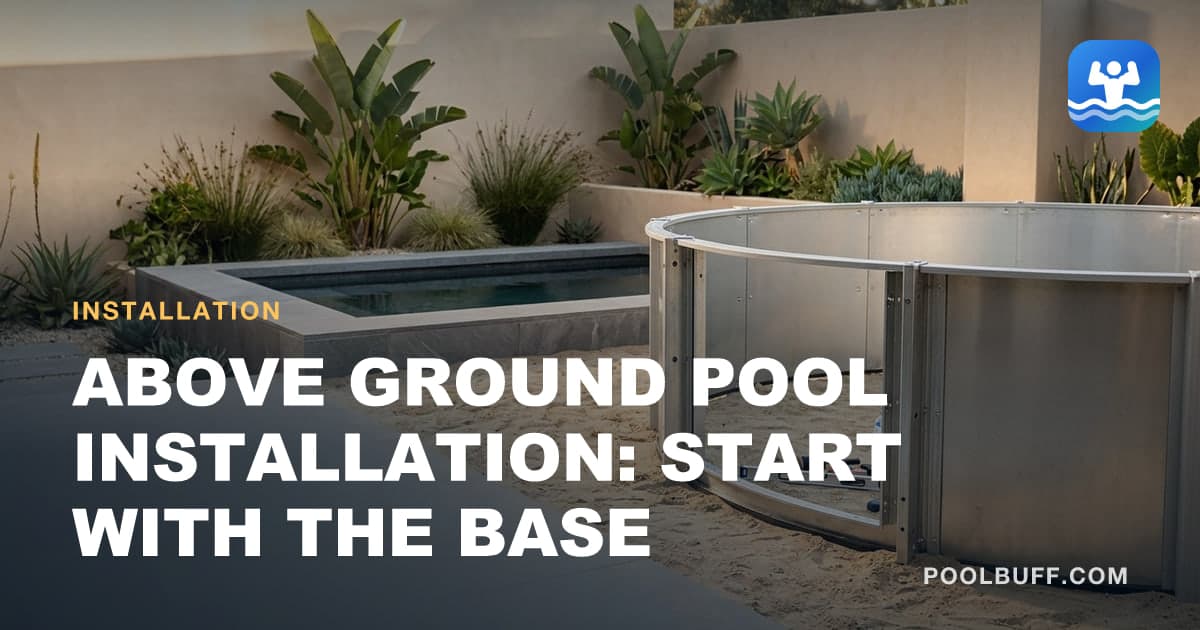
This is the part that gets skipped, and it is the part that causes the failures.
Water finds level whether or not your garden does. A pool that is two inches out across its width puts sustained uneven load on one arc of wall, and thousands of gallons pressing on a frame that was not designed for asymmetric load. At best the liner stretches and the pool looks wrong. At worst a wall lets go, and eight thousand gallons leaving at once is genuinely dangerous — to anyone nearby, and to anything downhill.
Get it flat and level across the whole footprint, on firm, compacted ground rather than fresh fill, and do the work before the pool arrives rather than while it is half full. Intex's manual asks for ground that is absolutely flat and level, and rules out mud, sand and loose soil. Its check is to put in no more than an inch of water: if it runs to one side, drain it and level again. Getting the base right is the difference between a pool that lasts its expected life and one that does not see a second season.
Intex Ultra XTR 18ft round
Best for a family that wants a real swimming pool without an excavation
Eighteen feet across and 52 inches deep is genuinely swimmable rather than a paddling compromise, and this set ships with a sand filter rather than a cartridge — which is the specification that separates the good sets from the ones you end up upgrading in year one. The sand itself is not in the box. Galvanized steel frame; Intex recommends two or three people for setup and estimates 45 to 60 minutes for the pool, before the pump goes on.
Strengths
- Sand filter pump included, though the 50 lb of sand is not
- 52 inches of depth is enough to actually swim in
- Frame goes together without tools, and Intex allows it up or down for winter
Trade-offs
- Realistic life is five to eight years, not decades
- Punctures are a patch job with your own glue, and the warranty excludes them
- Needs genuinely level ground, which is the part people underestimate
Intex Ultra XTR 18ft x 9ft rectangular
Best for long thin gardens where a round pool will not fit
The same 52-inch depth as the round version in a footprint that suits a narrow plot, which is a real constraint for a lot of the people shopping this category. The frame is different: instead of straight legs, twelve U-shaped side supports brace the long walls, and on anything but concrete Intex requires a flush pad of pressure-treated wood under each one. It ships a smaller 10-inch sand filter pump, which Intex runs for the same five hours a cycle as the round set's, for a pool holding about two-thirds as much water.
Strengths
- Fits plots a round pool cannot
- Rectangular shape swims better for lengths
- Same 52-inch depth as the round model
Trade-offs
- Needs a flush pad under each of its 12 side supports unless it stands on concrete
- Intex lists it at $100 more than the round set, for about two-thirds of the water
- Corners collect debris more than a round wall does
Picking a size you will actually use
Round pools are sold by diameter, and the numbers do not scale the way they feel. Going from 15 feet to 18 is a 44% jump in water — roughly 5,700 gallons against roughly 8,200 at the same 52-inch depth, before allowing for the fact that you fill below the top rail. Everything downstream scales with it: chemical dose, heating, how long the pump has to run, how long the hose runs on fill day.
Depth matters more than most people expect. Forty-eight inches puts an adult in water to mid-chest; fifty-two reaches the shoulders, which is the difference between standing in a pool and swimming in one. If there is a single specification worth paying up for, it is those four inches.
For a family of four who want to swim rather than cool off, 18 feet round at 52 inches is the smallest size that does not feel like a compromise. Under 15 feet you are buying a cooling-off pool, which is a perfectly good thing to buy as long as that is what you meant to buy.
Then check the footprint against the yard properly. The pool needs its diameter plus at least four feet all around, which is Intex's minimum clearance from anything a child could climb, and it has to sit at least six feet from any outlet — and all of it has to sit on ground you can get level, which rules out more of a typical yard than a tape measure suggests.
The pump in the box, and what it is sized for
Set pumps are specified to a price and a carton. The number that matters is not the gallons per hour printed on the box but whether the whole volume can pass through the filter in a reasonable working day.
The round Intex set ships a 12-inch sand filter pump that Intex rates two ways: 2,100 gph at the pump and 1,600 gph through the system. For that pool's 6,981 gallons, Intex's own time table runs it five hours a cycle, and the set's page has the rest of Intex's figures. The rectangular Intex set ships a smaller 10-inch sand pump, and Intex's pages give three different flow figures for it, but its time table runs that pool the same five hours. On paper, both clear the one-turnover-a-day bar comfortably.
The catch is that the printed number is pump flow with clean media and nothing restricting it, and what actually reaches the pool is less, which is why Intex publishes both. Flow falls as the cartridge or the sand loads, and a cartridge on an uncovered pool loads quickly.
That is the real argument for sand over cartridge in this category, and it is not about filtration quality. Sand holds its flow longer between cleanings, and cleaning it is a valve turn rather than a wet cartridge and a hose. On a pool nobody covers and everybody swims in, that difference decides whether the pump gets run properly or gets resented.
What "set" leaves out
Sets bundle a pump, a ladder, a cover and a ground cloth, which sounds complete and is not.
The filter is the specification to check. Many sets include a cartridge filter chosen to hit a price point, and owners replace it within a season because it cannot cope with the debris an uncovered backyard pool collects. Both Intex sets here ship with a sand filter, which is the meaningful difference between a set you keep and a set you upgrade. Check whether the sand is included, too: Intex's is not.
The cover included is a debris cover, not a solar cover and not a safety cover. It keeps leaves out. It does not retain heat, and it will not hold a child's weight.
Nothing chemical is included. Budget for a test kit and the basic chemicals on day one, because a fresh fill needs balancing before anyone swims.
A ladder is included and a fence usually is not. Barrier requirements apply to above-ground pools in most jurisdictions, and a removable ladder is not a barrier in the eyes of most codes.
Honest expectations on lifespan
Five to eight years is the realistic window for a frame pool that is looked after, and the liner is almost always what ends it — a puncture in the wrong place, or the material simply going brittle after enough seasons of UV.
That is not a criticism. A pool that costs a fraction of an in-ground installation and gives a family six or seven summers is good value on any reading. It only becomes a disappointment when someone bought it expecting twenty years, which is what the other category is for.
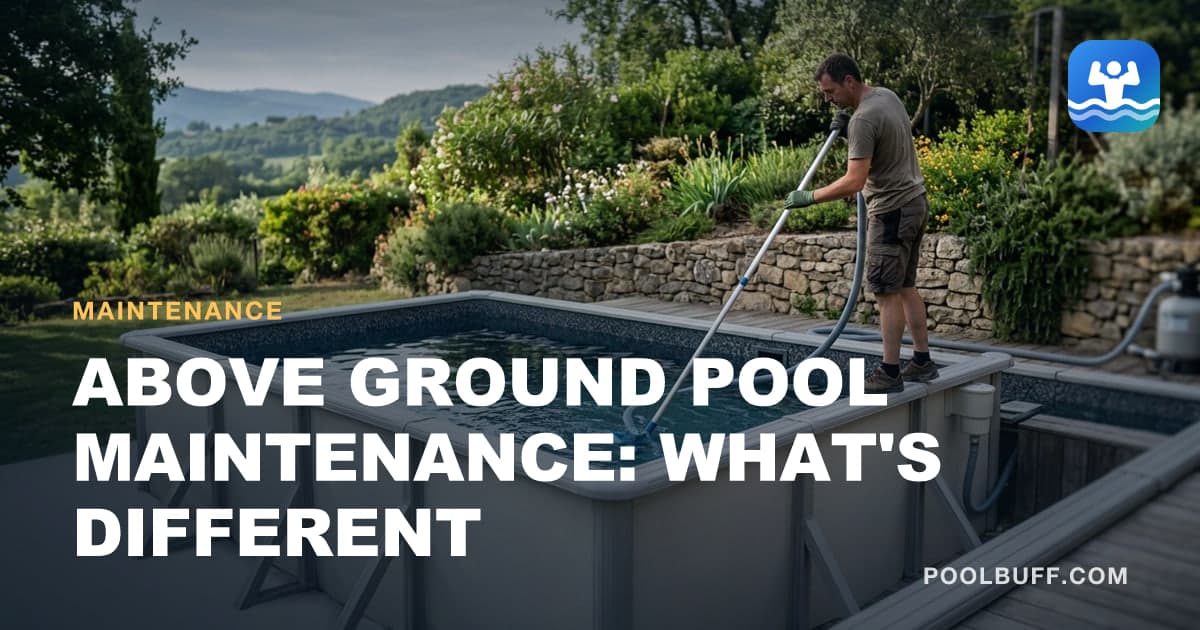
Care extends it meaningfully: a cover when not in use, water chemistry that does not sit acidic, and winterizing it the way its maker says. Intex's manual allows an Ultra XTR to be taken down or winterized in place, but the pump always comes indoors, and freeze damage is not covered. Above-ground maintenance differs from in-ground in a few ways worth knowing before the first season.
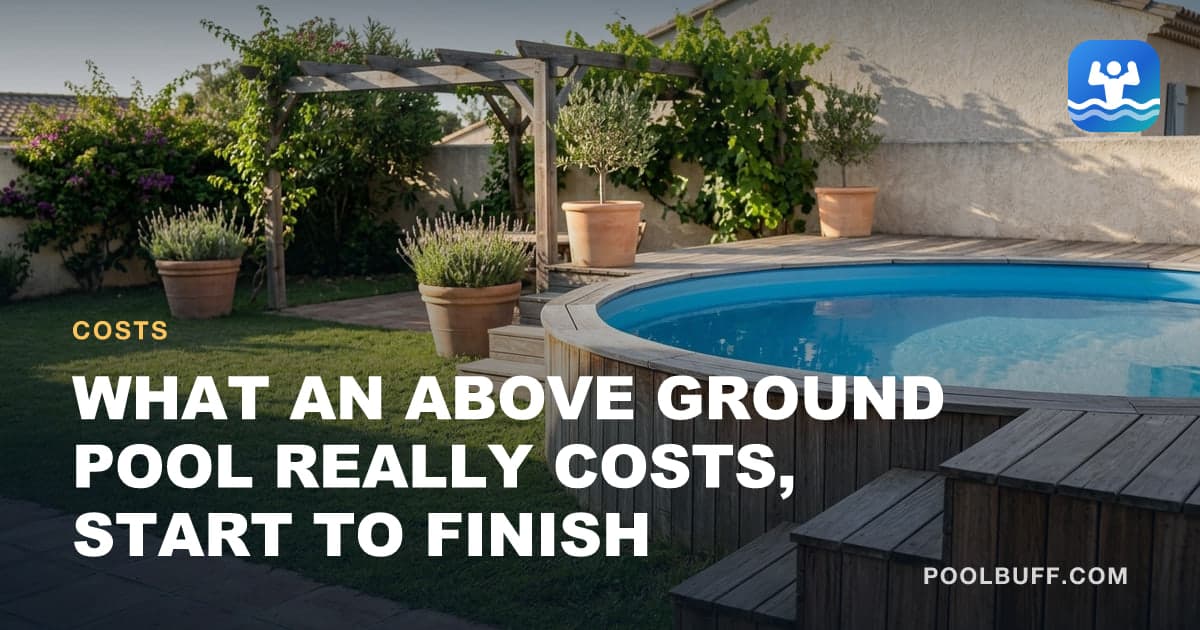
Go deeperWhat one really costsPurchase, base preparation, running costs and the items the set does not include.Frequently asked questions
How long does an above ground pool last?
It depends entirely which type you bought. A frame pool with a soft liner realistically lasts five to eight years with reasonable care, and the liner is usually what ends it. A steel-wall above-ground pool, professionally installed on a proper base, commonly lasts fifteen to twenty-five years. They are sold under the same name and are not the same product.
Do I need to level the ground for an above ground pool?
Yes, and this is the step people most underestimate. Water finds level even when the ground does not, so an out-of-level pool puts uneven pressure on one section of wall. At best the pool looks wrong and the liner stretches; at worst the wall fails and releases thousands of gallons at once. Intex, for one, asks for absolutely flat, level, compacted ground, and gives a simple test: put in no more than an inch of water, and if it runs to one side, drain the pool and level the ground again. Do it before the pool arrives.
Is the pump included with an above ground pool any good?
It varies, and it is the specification worth checking before buying. Many sets bundle a cartridge filter sized to hit a price rather than to suit the pool, and owners replace it within a season. A set that includes a sand filter is meaningfully better, because sand handles the debris load of an uncovered backyard pool far more gracefully.
What does an above ground pool actually cost to run?
Less than an in-ground pool, but not nothing. You still need chlorine, test kit, a cover and electricity for the pump, which lands most frame pools somewhere in the tens of dollars a month through the season. The bigger unbudgeted item is usually the replacement liner or the upgraded filter.
Can you leave an above ground pool up over winter?
A steel-wall pool, yes, closed properly with a winter cover. For a frame pool, follow the maker's manual. Intex's manual for its Ultra XTR pools allows either: drain it and store it, or leave it up with clean, balanced water, the fittings plugged and an air pillow under a winter cover, which Intex says helps prevent ice damage. Either way the pump, hoses and ladder come indoors, and Intex's warranty excludes freeze damage.