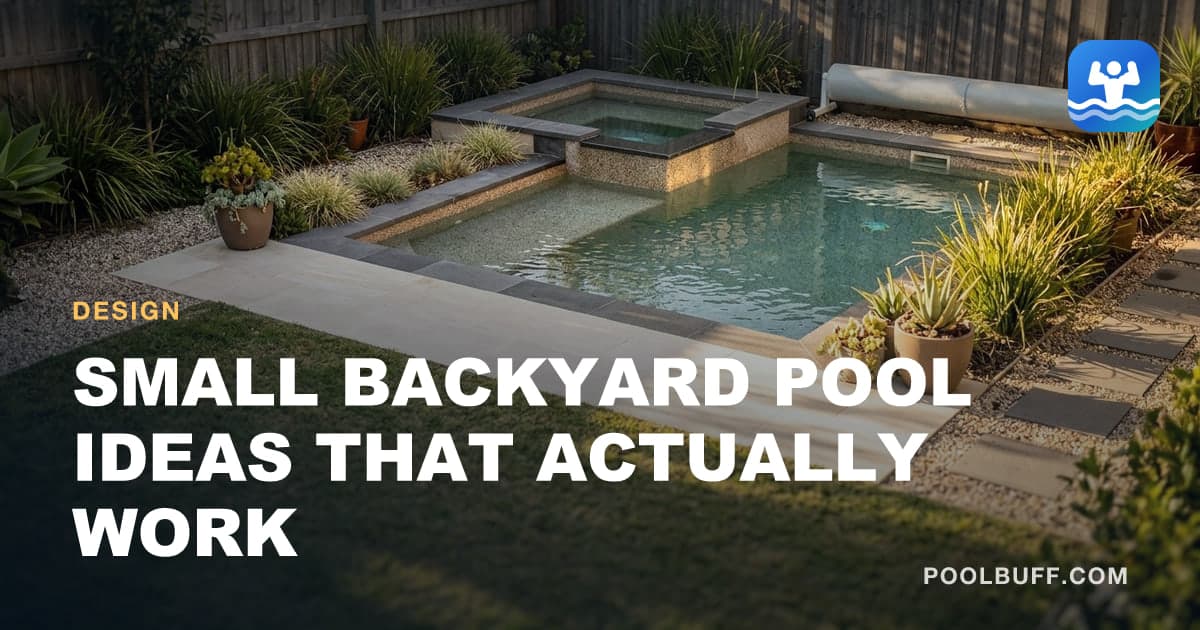
Small yards don't need clever shapes. They need honest measurements and one or two decisions made properly.
The mistake I see most is somebody trying to fit a scaled-down version of a big pool into a small space — a kidney shape with a deep end and a strip of deck all the way round. What they end up with is a pool that's awkward to use surrounded by a walkway nobody sits on.
Key takeaways
- Rectangles win in small yards. Freeform shapes waste the corners you needed.
- Deck on one long side, generously, beats a thin strip all the way around.
- Don't go deep. Depth costs money, heating, chemicals and usable space you'd rather have.
- A tanning ledge in a small pool adds more usable time in the water than extra length would.
- Work out access and setbacks before you fall for a design. They kill more small-yard pools than space does.
Eight small pool ideas that fit a tight yard
Start with what you want the water for. Cooling off and lounging, swimming, or somewhere for the kids to splash are three different pools, and in a small yard you only get room for one of them.
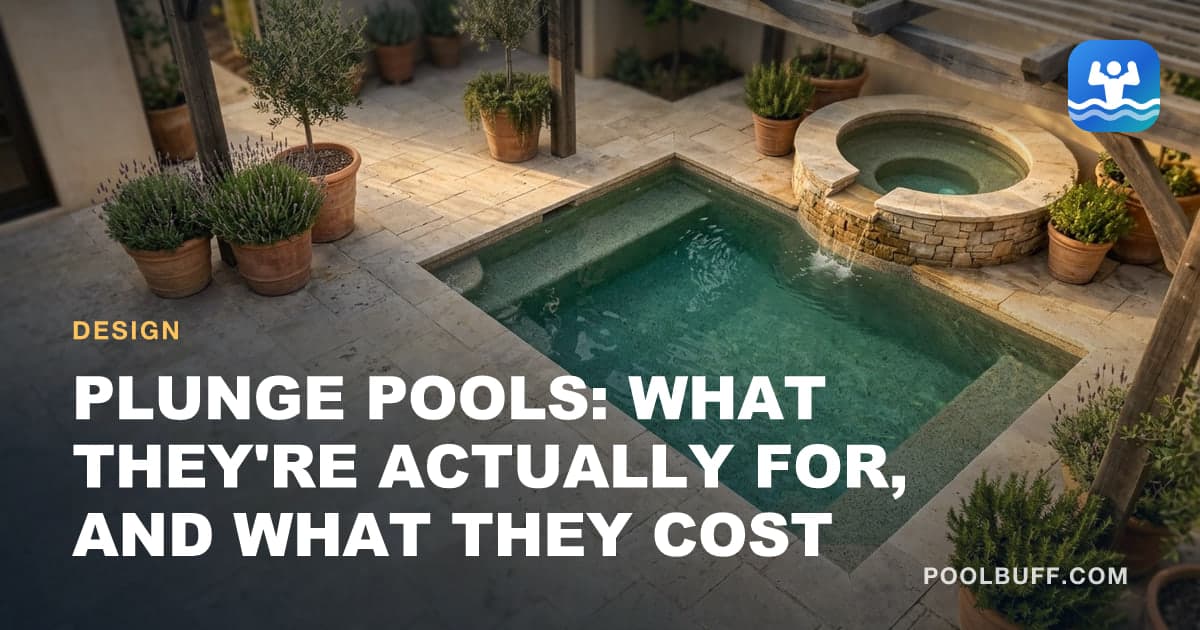
A plunge pool
The default answer for a small lot, and for good reason. It's a short, shallow pool built for cooling off, sitting and floating rather than swimming. HomeGuide says most are 6 to 12 feet wide and 12 to 21 feet long. It puts an inground plunge pool at $10,000 to $70,000 or more, and an above-ground one at $3,000 to $30,000 installed. What a plunge pool is actually for covers the sizes and the heating advantage that makes them worth building.
A cocktail pool
A plunge pool built for sitting in with a drink rather than cooling off after a run. HomeGuide describes cocktail pools as typically shallower than plunge pools and designed more for entertaining, at $15,000 to $35,000 installed. Build in a bench and a wide shallow step and it's the most sociable few hundred square feet in the yard.
A lap lane down the side of the house
Plenty of small lots are really one long, narrow strip. If you want to swim rather than float, that's the shape you want anyway: a long, narrow lane lets you swim lengths in a yard that couldn't take a family pool. The catch is access. A side yard is often the only way a machine gets to the back, and a pool in it can close that route for good.
A small fiberglass shell
Fiberglass arrives in one piece, so the build is quick and the site is torn up for less time. You choose from the maker's molds rather than drawing your own. The shell has to reach the hole on a truck or a crane, which is why access decides this option before anything else does. Fiberglass pool cost covers what that lift costs.
A spool
A spool is a small pool built with spa features: jets, a heater, and seating around the walls. You get a pool for summer and a hot tub for the rest of the year from one footprint, which in a small yard beats finding room for both. Heating the small volume is what makes it work.
A swim spa
A long hot tub with a current to swim against. It arrives as one manufactured unit with its own heater, sits on the ground or partly sunk, and needs no excavation. Along with a lap lane, it's the small option you can actually swim in. The plunge pool guide weighs a swim spa against a plunge pool at the same budget.
A semi-inground or above-ground pool
The cheapest way to get a real pool into a small yard. HomeGuide notes that semi-inground pools cost less than the inground average, and an above-ground pool with a deck built around it can look far better than its price. What an above-ground pool actually costs goes through the numbers, and the installation guide shows why the base is the whole job.
A stock tank pool
The DIY idea. A galvanized livestock tank, a small filter pump, and a weekend. HomeGuide puts the tank alone at $500 to $2,500. Before you fill one, call your building department: depending on how deep it is and your local rules, it can count as a pool, and a pool comes with a permit and a barrier. It's still water a small child can drown in, so the layers of drowning prevention apply to a stock tank as much as to a pool.
The best shape for a small backyard: a rectangle
In a large yard a freeform pool can look wonderful. In a small one it wastes exactly the space you needed.
A rectangle:
- Uses the full width of the available footprint
- Leaves straight, usable deck along the long sides
- Costs less to cover, because automatic covers run on tracks along two parallel sides
- Is cheaper to build, in every construction type
- Reads as a deliberate design decision rather than a compromise
Freeform shapes in tight spaces leave curved leftovers along the boundary that are too narrow for furniture and too wide to ignore. If you want something softer than a hard rectangle, round the corners or curve one short end. You keep the straight long sides, and the deck along them.
Sizes that work
| Size | What it gives you | HomeGuide installed range |
|---|---|---|
| 8×16 plunge | Cool off, float, sit on a bench. Not for swimming | $10,000–$70,000+ (inground plunge pools) |
| 10×20 | Room to move, small family use | $16,000–$50,000 |
| 12×24 | Feels like a proper pool, games work | $23,000–$72,000 |
| 14×28 | Full family pool, lap swimming is possible | $31,400–$98,000 |
Those ranges are HomeGuide's, from July 2025, and they're for the pool. Decking, a fence and the equipment push a finished backyard toward the top of each one. What an inground pool really costs explains why, and what moves the number most.
Below 12×24, be honest with yourself about what it's for. A plunge pool is for cooling off and lounging, and it's genuinely excellent at that. It's not for swimming laps, and buying one expecting otherwise leads to disappointment.
Don't go deep
Depth is the easiest thing to overbuy in a small pool.
Depth costs you:
- Money — excavation, shell, more of everything
- Heating — more volume to warm
- Chemicals — more volume to treat
- Usable space — a deep end in a small pool is a large area you can't stand in
Keep it to 3.5 to 5 feet. A constant-depth 4-foot pool is more usable for lounging, for kids, and for standing around with a drink. The fiberglass plunge shells in the plunge pool guide run 4 to 5½ feet, and nine of the ten hold one depth throughout.
If you want a diving depth, you need a much bigger pool anyway for safety.
Layout: stop centering it
The instinct is to put the pool in the middle of the yard with an even margin around it. In a small yard this creates two useless strips.
Push it toward one boundary. Leave three feet of access on that side, and put all your remaining space into one generous deck on the other.
Four feet of deck is a walkway. Eight to ten feet is somewhere you can put two loungers and a table and actually spend an evening. In a small yard you can only afford one of those, so choose the one you'll use.
Features worth the space
A tanning ledge. In a small pool, a 6–12 inch shelf at one end adds more usable time in the water than extra length would. Lounge chairs sit in it, small children play safely in it, and it costs relatively little.
A bench along one side. Somewhere to sit in the water. Cheap to build into the shell and used constantly.
A single water feature. One sheer descent or a spillway from a raised spa gives you sound and movement. Three features in a small pool is noise, maintenance and clutter.
Lighting. In a small yard, good lighting roughly doubles the hours you use the space. It's the highest-value thing on this list per dollar.
Features that waste it
A deep end. Covered above.
A large integrated spa. It eats footprint. A separate portable spa tucked into a corner often works better in a tight yard, and it's far cheaper. If you want both, build a spool instead.
A slide. Needs run-out depth and clearance you don't have.
Elaborate rock work. Visually heavy in a small space, and every ledge is somewhere debris collects.
Can you build a small pool yourself?
An inground pool, for most people, no. Digging the hole is the easy part to imagine. The plumbing, the electrical work and the inspections are what make it a contractor's job, and a mistake in the bonding or the wiring is a safety problem rather than a cosmetic one.
What you can realistically build yourself is an above-ground pool or a stock tank. Both still need their pump on a proper outdoor circuit with GFCI protection, not an extension cord from the garage. And both can count as a pool in your building department's eyes, so ask before you buy rather than after.
Access is your real constraint
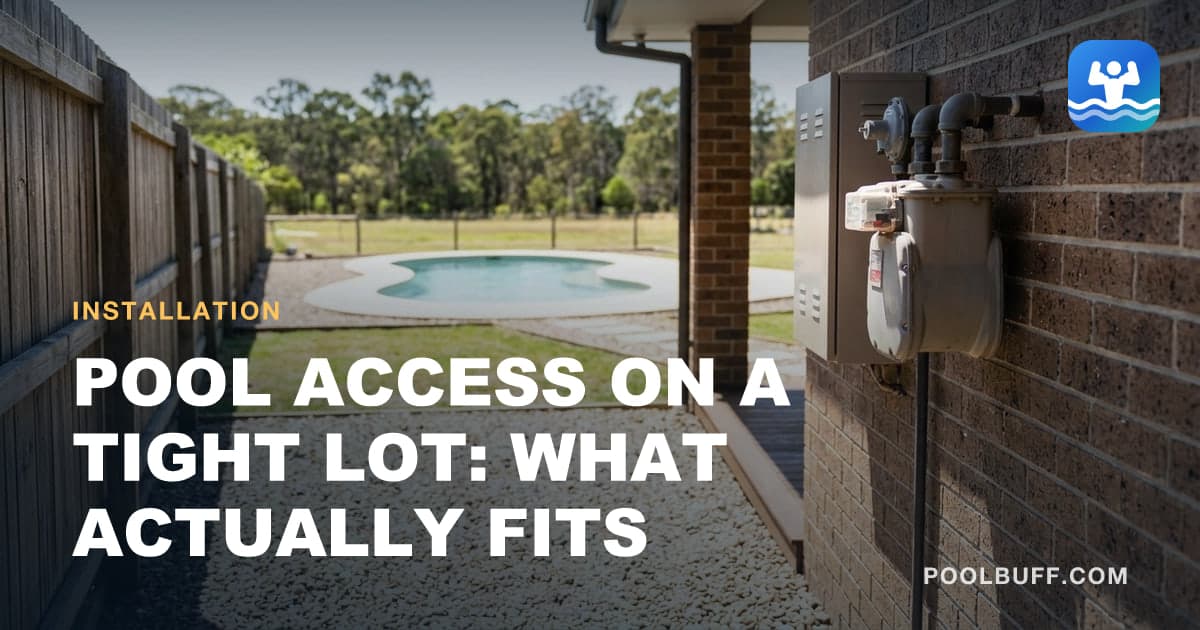
More small-yard pool projects die on access than on space.
Ask, before anything else:
- Can an excavator physically reach the backyard? Gate width, side yard width, overhead clearance?
- If not, does a fiberglass shell have to be craned over the house, and what does the crane add to the quote?
- Where does the spoil go? A pool excavation produces a lot of dirt and it has to leave.
- Where do the equipment pad and the utilities run?
Get a builder to walk the site before you get attached to a design. What actually fits down the side of a house has the dimensions each machine needs and the options ladder when nothing does.
Setbacks and barriers
Small lots make setbacks bite. Most jurisdictions require the water's edge to sit some distance from property lines, and there are often separate rules for the equipment pad.
The barrier requirement also eats space. If you're fencing a small yard, the fence line and the pool edge both need clearance, and the math gets tight fast.
Call your building department before you design anything. Ten minutes, and it stops you falling for a layout that can't be permitted. Pool permits and planning covers what to ask.
Go deeperBarrier requirementsHeights, gaps, gate hardware and the rules that shape small-yard layouts.Patio, planting and making a small yard feel bigger
Continue the deck material into the surrounding landscape rather than stopping it abruptly at a fence. Visual continuity reads as more space.
Use a light-colored interior finish. Dark finishes look dramatic and make small pools read smaller and deeper than they are.
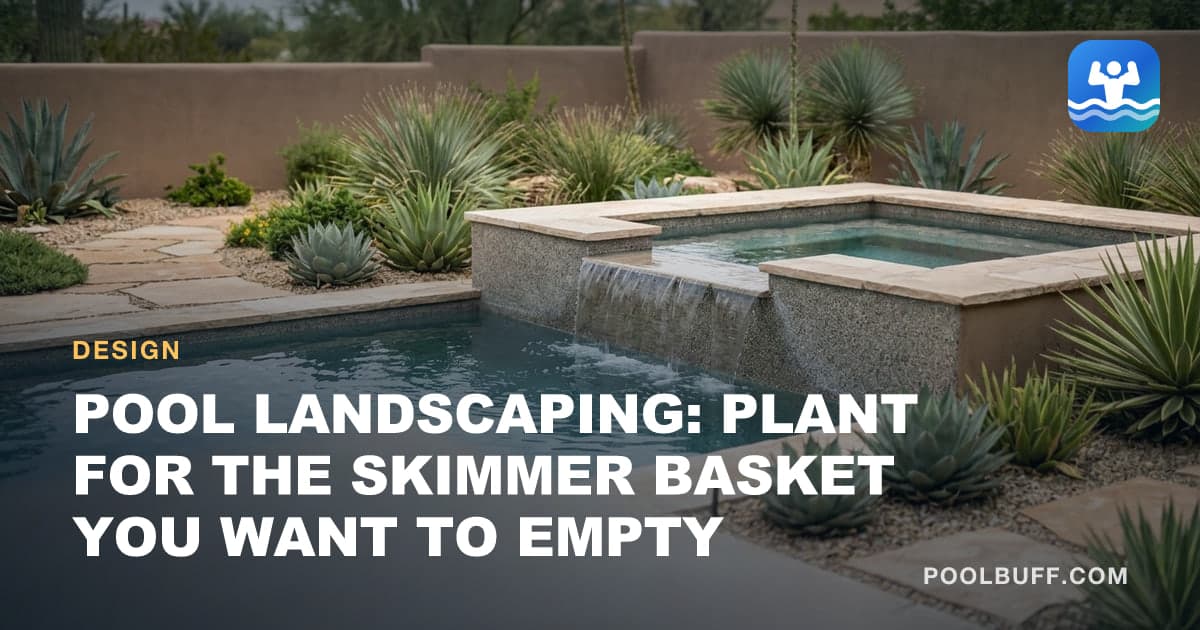
Plant carefully. Poolside planting is where design and maintenance collide, and small yards have less room for mistakes.
Plant vertically. Tall narrow plants — columnar cypress, clumping bamboo, ornamental grasses — give you screening without eating floor area.
One material, not four. A small space with travertine coping, composite decking, a stone wall and a tiled water feature is busy. Pick two materials and repeat them.
Screen the equipment pad properly and it stops being part of the view.
Go deeperTight access?Fiberglass shells arrive in one piece. What that costs when a machine cannot reach the yard.Frequently asked questions
What is the smallest practical inground pool?
Around 8x16 feet for a genuine plunge pool you can cool off and float in. 10x20 gives you room to move about. 12x24 is where a pool starts feeling like a pool rather than a large spa.
What shape pool is best for a small backyard?
A rectangle. It uses the available space efficiently, leaves usable deck on the long sides, costs less to cover, and reads as a deliberate design choice rather than a compromise. Freeform shapes lose exactly the corners you needed in a tight yard.
How much does a small inground pool cost?
HomeGuide puts a 10x20 pool at $16,000 to $50,000 installed and a 12x24 at $23,000 to $72,000, and inground plunge pools at $10,000 to $70,000 or more. Those figures are for the pool. Decking, a fence and the equipment push a finished backyard toward the top of each range.
How deep should a small pool be?
3.5 to 5 feet for most small pools. Depth adds cost, heating expense, chemical volume and water you'll rarely use. A constant-depth pool at 4 feet is more usable for lounging and games than a small pool with a deep end that eats a third of the footprint.
How much deck do I need around a small pool?
Better to have generous deck on one long side than a narrow strip all the way around. Four feet of walkway is functional but not usable space. Eight to ten feet on one side gives you somewhere to actually sit, and three feet on the other sides is plenty for access.
Can I build a small pool myself?
Not an inground one, for most people. The digging, plumbing, electrical work and inspections are a contractor's job. The realistic DIY options are an above-ground kit and a stock tank pool. Either way, call your building department first: depending on its depth and your local rules, it can count as a pool, with a permit and a barrier to match.
Can you put a pool in a really small yard?
Often yes, and access and setbacks decide it as much as the yard's size does. You need equipment access, or a crane, and you need to meet property line setbacks and barrier requirements. Check both before falling in love with a design.