"Mineral" is one of the friendliest words in pool marketing. It sounds like spring water. What's actually in the cartridge is silver, copper or both, and every one of these products is registered with EPA to work alongside chlorine.
That's not a knock on them. I've used PoolRx, and as an algae guard it does its job. The trouble starts when the box makes the chlorine look optional.
So here's what a mineral system is, what the labels really say, and the jobs it adds to your week.
Key takeaways
- Every mineral system I read is registered to work with chlorine. PoolRx is an algaecide, and Nature2, FROG and the ionizers supplement chlorine. None is registered to replace it.
- The labels' 0.5 to 1.0 ppm chlorine ignores stabilizer. At 40 ppm stabilizer, 0.5 ppm is a ratio CDC's model code calls an imminent health hazard at a public pool.
- Change cartridges on the label's clock: six months or one season for Nature2 and FROG, 12 months for PoolRx. FROG says a spent one can still rattle.
- Copper is in Nature2, PoolRx and copper ionizers, not in FROG's cartridges. LaMotte flags copper above 0.2 ppm and says it stains surfaces, hair included, blue-green.
- Don't stack metals or strip them. Nature2 rules out copper algaecides, and ClearBlue says sequestrants strip its minerals for up to six weeks.
What "mineral" means on the box
Three different things get sold under the word.
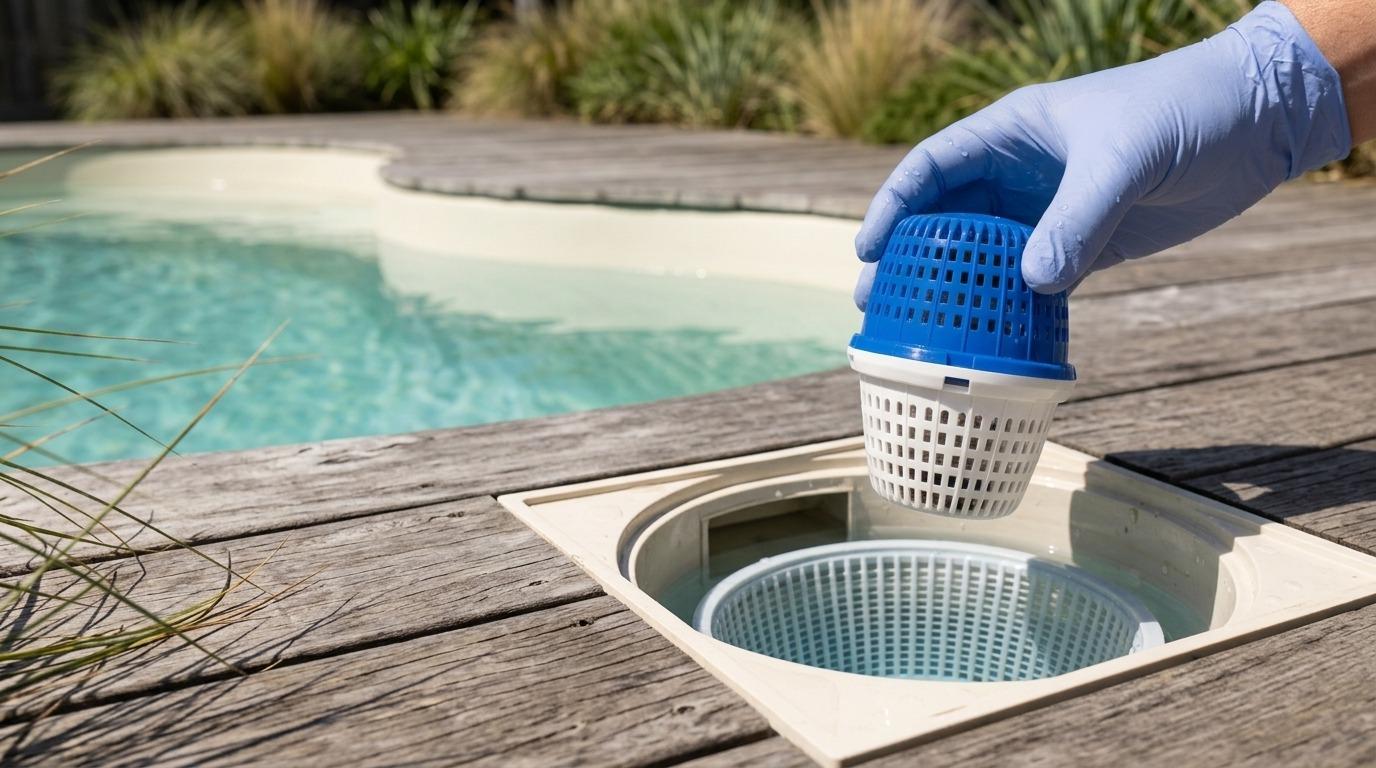
Mineral cartridges. A cartridge of metal-bearing media sits in the skimmer basket, the pump basket or its own vessel on the return line. It releases metal slowly into the water, with no power and no controller. The common ones:
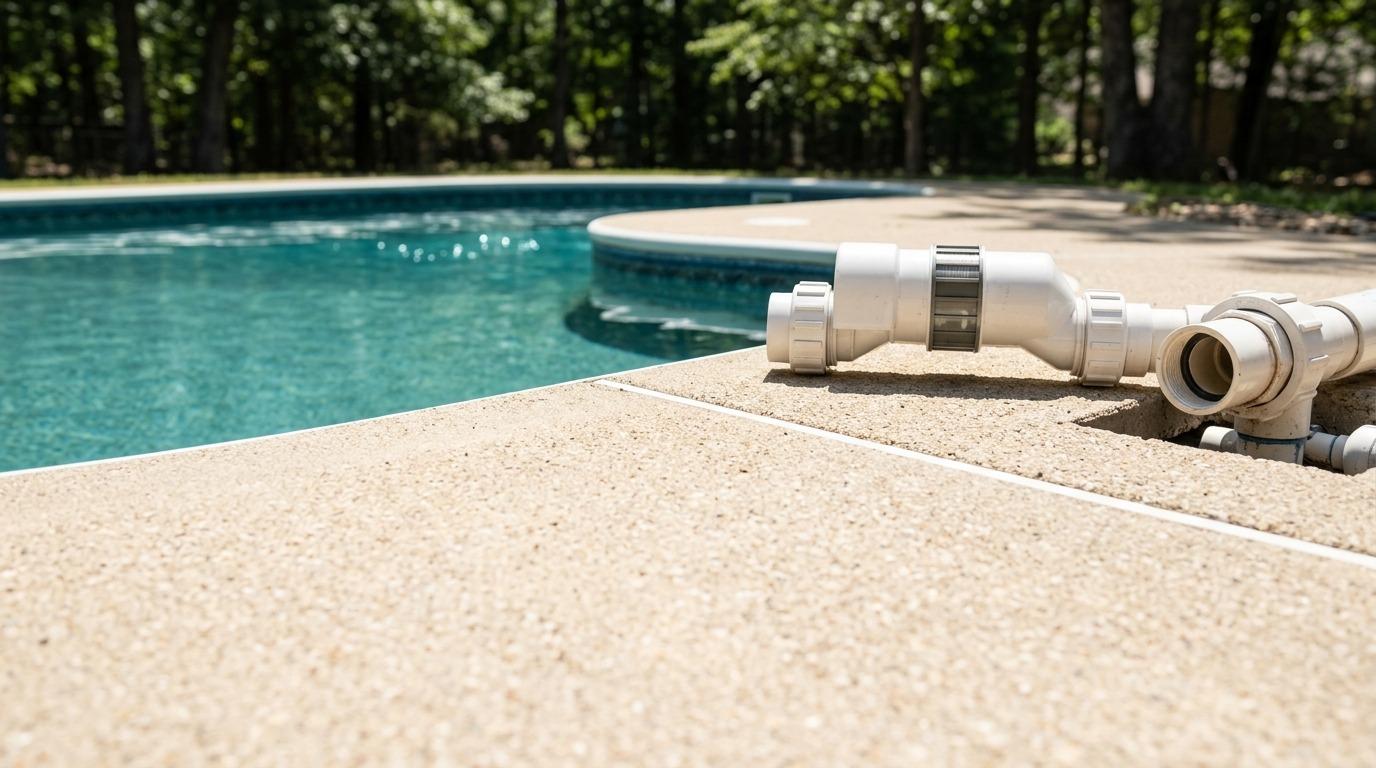
- Zodiac Nature2: silver and copper. It comes in vessels on the return line, an Express unit that clamps onto the return pipe, and versions that sit inside a cartridge filter.
- King Technology's FROG pool line (Instant FROG, FROG Leap, Pool FROG, Flippin' FROG): silver chloride, and no copper at all.
- PoolRx: chelated copper in a skimmer unit. I cover it in detail in my PoolRx review.
Ionizers. An electrode cell goes on the return line, and a controller runs current through copper bars, or copper and silver ones. The bars wear away as they release metal. ClearBlue is one, and its full manual is printed inside its EPA label.
Magnesium "mineral pools." These are salt chlorinator pools that run on a magnesium and potassium chloride blend instead of plain salt. Zodiac's MagnaPool is the best known, and Zodiac Australia says its cell "produces active chlorine." So it's a chlorine pool. I found it sold in Australia and Europe, and no US listing from the maker. The rest of this guide is about silver and copper. If you run a salt cell, you want my saltwater maintenance guide.
| Metal | Where it goes | Label's chlorine | Replace | |
|---|---|---|---|---|
| Nature2 | Silver and copper | A vessel on the return line, an Express clamp, or inside a cartridge filter | At least 0.5 ppm | 6 months (4 on some labels) or one season, whichever is shorter |
| FROG pool products | Silver only | Skimmer basket, an in-line holder, the Pool FROG cycler or a floater | 0.5 to 1.0 ppm | 6 months or one season, whichever is shorter |
| PoolRx | Chelated copper | Skimmer basket | 0.5 to 1.0 ppm | Unit every 12 months, a booster at 4 to 6 if algae comes back |
| ClearBlue ionizer | Copper and silver bars | A cell on the return line, with a controller | 0.5 to 3 ppm once copper is up | Cell averages 6 months. Change it when the bars wear to 10 mm |
Every figure in that table is from the product's EPA-accepted label. Where a label leaves the maker a choice, as Nature2's does on four or six months, go by the box in your hand.
Every one is registered to work with chlorine
A pool product that kills algae or bacteria has to be registered with EPA. The label EPA accepts is the legal instruction sheet. EPA's consumer guide puts metal ions in that group: products that "generate metal ions, such as silver, are generally pesticides and not devices." A salt cell, by contrast, is a device.
And here's what the registrations say:
- Nature2's label defines its system as the cartridge "used in conjunction with a chlorine delivery device or 0.5ppm" of a registered chlorine product.
- FROG's label says the mineral reservoir goes with its own chlorine pac, another registered chlorine product, or a chlorine feeder. It says to keep 0.5 to 1.0 ppm free chlorine at all times.
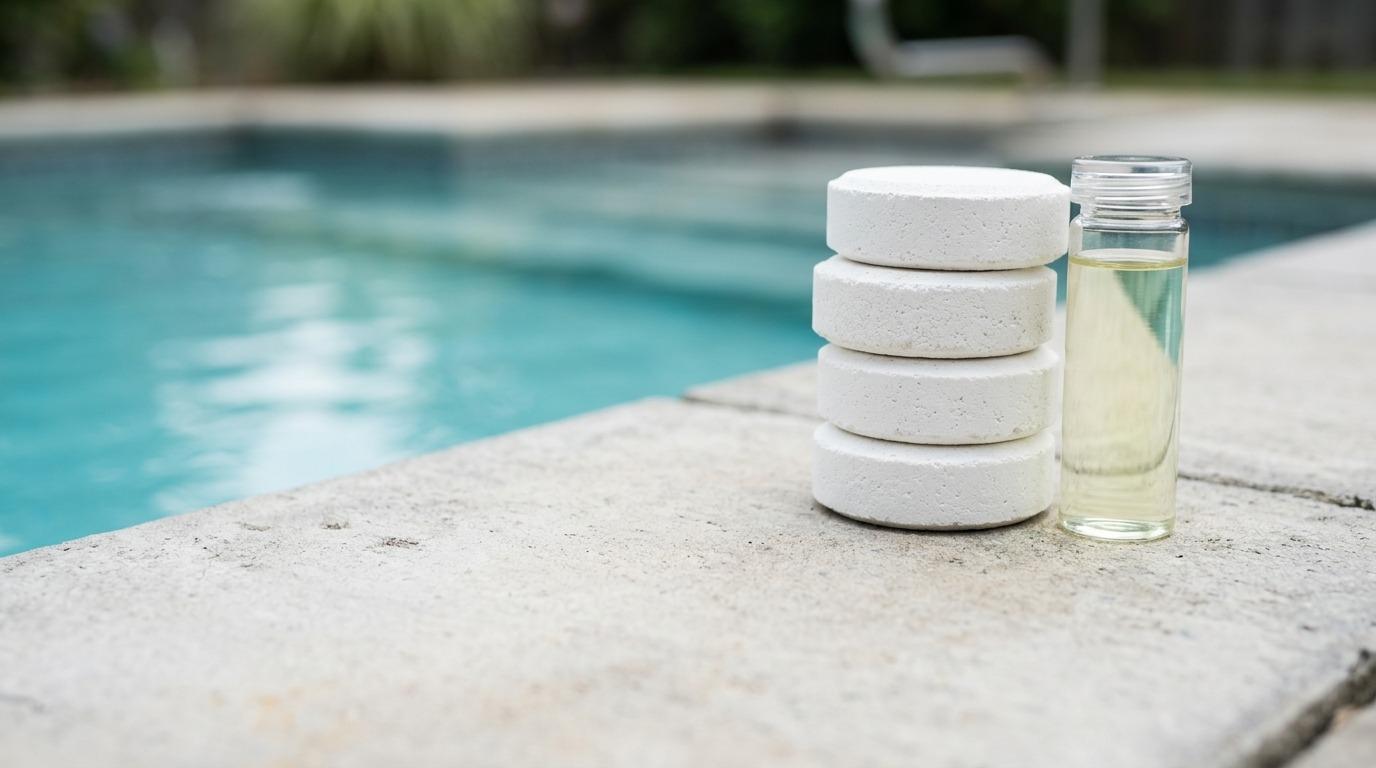
- PoolRx is registered as an algaecide, not a sanitizer. Its label says it works with "a constant low level of chlorine."
- ClearBlue's label says the ionizer works by augmenting primary disinfectants such as chlorine or bromine.
CDC's Model Aquatic Health Code, guidance written for public pools, is blunter. Its annex says copper and silver systems are "not meant to replace disinfecting halogen," meaning chlorine or bromine. It caps public pools at 1.3 ppm copper and 0.10 ppm silver and keeps the normal chlorine minimums on top. The annex also notes that the evidence for these systems is mostly against bacteria, usually with chlorine present, and thin against viruses and parasites.
That code doesn't govern your backyard. It's still the plainest statement I found of what these systems are for.
The chlorine number is where it goes wrong
The mistake I've seen with mineral systems is owners trusting the minerals and letting the chlorine drop. The labels make that easy. Every one above lets you run 0.5 to 1.0 ppm.
Nature2 and FROG both footnote their "up to 50% less chlorine" claim against an EPA level of 1.0 ppm for a stabilized pool. Nature2 calls it "EPA's previously approved level." I couldn't find that figure in any EPA document I read.
The bigger problem is stabilizer. Cyanuric acid protects chlorine from the sun, but it also holds most of it in reserve. The more stabilizer you carry, the more chlorine you need for the same effect. The labels don't scale with it. FROG's and PoolRx's both allow stabilizer up to 80 ppm with chlorine at 0.5 to 1.0 ppm. Nature2's 2024 label gives no stabilizer figure at all.
Work it through at a common 40 ppm of stabilizer:
- At the labels' 0.5 ppm, the ratio is 80 to 1. CDC's model code calls anything past 45 to 1 an imminent health hazard, one a health department can close a public pool for.
- CDC's floor for a public pool with stabilizer is 2.0 ppm.
- Trouble Free Pool, a pool owners' forum whose figures this site uses, puts the minimum at 7.5% of stabilizer. That's 3 ppm. Its target is 11.5%, about 4.6 ppm.
Copper and silver don't change that arithmetic. So run the chlorine your stabilizer calls for, the same as you would without minerals, and test it at least twice a week, as Nature2's own recipe says. A kit that reads stabilizer as well as chlorine, like the Taylor K-2006C, gives you both numbers. If you want to carry less chlorine, carry less stabilizer. That's the honest way to need less, and the CYA reduction calculator shows how much water that takes.
Go deeperFree vs total chlorineWhich number to read on the test, and what the gap between them means.What changes in your routine
Everything in the weekly routine stays: baskets, brushing, filter pressure, and testing chlorine and pH. A mineral system adds four jobs.
1. Change the cartridge on the label's clock
- Nature2: six months, or four on some labels, or one season, whichever is shorter. Its label says to replace it every 6 months whether or not you swim.
- FROG: six months or one pool season, whichever is shorter. The label says to replace it even if you can still hear media rattling inside.
- PoolRx: the unit every 12 months, with a booster after 4 to 6 months if algae starts coming back.
- ClearBlue: change the cell when its bars wear to 10 mm, about half an inch. If it's more than six months old at opening, replace it then.
A spent cartridge can look and sound like a working one. Write the date on it the day it goes in.
Replacement cartridges
- Price at Amazon: PoolRx Blue unit (7.5k-20k gallons)
PoolRx Blue unit (7.5k-20k gallons)
Sized by volume. Buying under your gallonage underdoses it rather than lasting longer.
- Price at Amazon: PoolRx Black unit (20k-30k gallons)
PoolRx Black unit (20k-30k gallons)
The larger unit. Check your volume before ordering — the two are not interchangeable.
- Price at Amazon: Instant FROG mineral cartridge
Instant FROG mineral cartridge
Silver only, in the skimmer basket of an in-ground pool up to 25,000 gallons. The label says to replace it after six months or one season.
2. Keep pH in the label's range
The ranges don't agree, so use yours:
- Nature2: 7.4 to 7.8
- FROG and PoolRx: 7.2 to 7.8
- ClearBlue: 7.2 to 7.6
On copper, CDC's annex says proper pH control is very important to keep staining down. Most pools drift up, and my guide to lowering pH covers the acid.
3. Don't stack metals, and don't strip them
- Nature2, FROG and PoolRx all rule out biguanides, the Baquacil-type sanitizers. PoolRx rules out bromine too.
- Nature2's label says not to use it with copper-based algaecides. CDC's annex says copper algaecides shouldn't go into pools with ion systems at all. Before you add any algaecide to a copper pool, read its label for copper.
- ClearBlue says metal removers, sequestering agents and some stain removers conflict with it. They strip its minerals and stop new ones working for up to six weeks. It warns that opening and closing kits sometimes contain them, so read the kit before it goes in.
4. Test copper, if you have copper
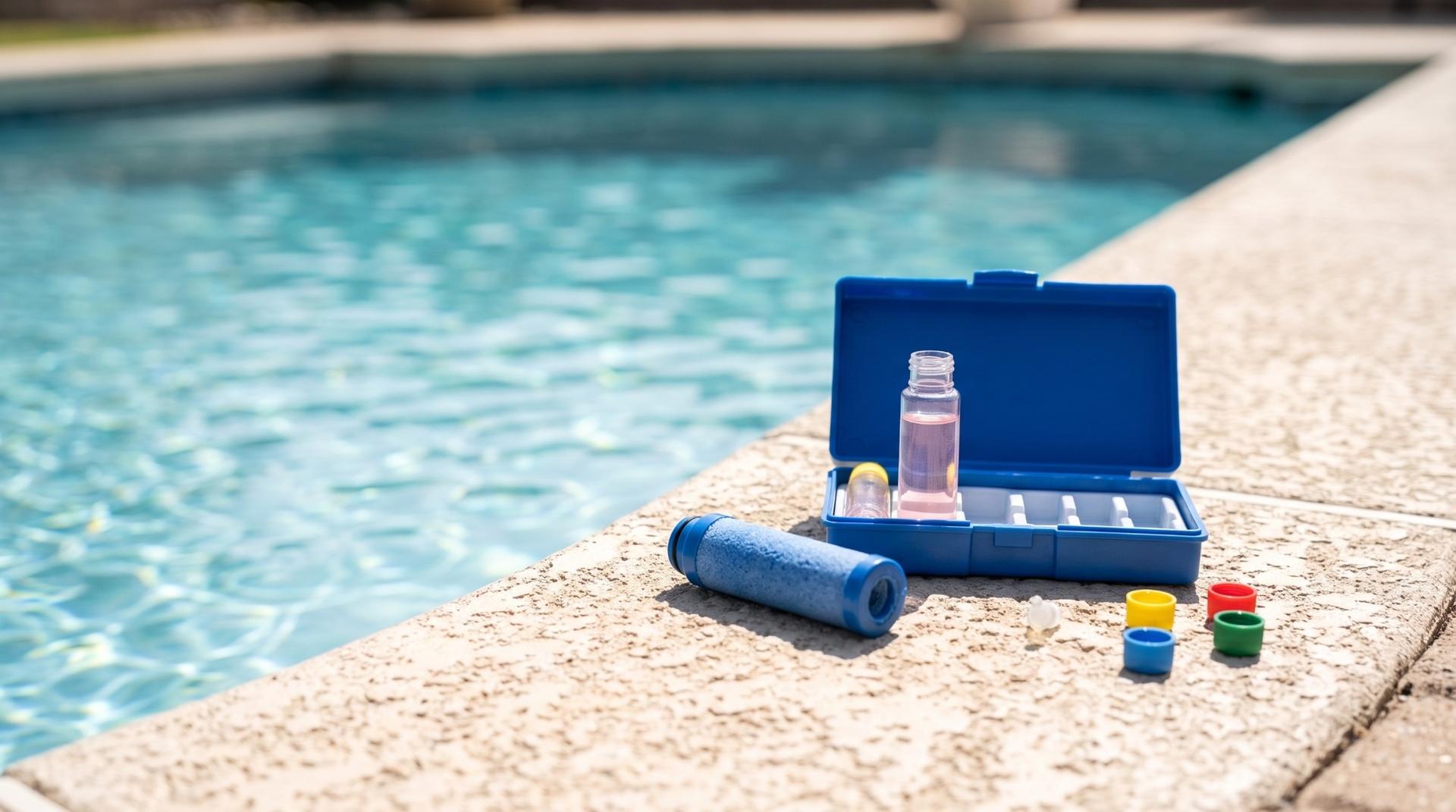
Test your fill water before you install anything with copper. A copper and iron kit such as Taylor's K-1264 does it. PoolRx asks for 0.2 ppm or less, and says a copper test won't read its chelated copper reliably afterward. So the reading before you start is the one that counts.
An ionizer is different, because you run it to a copper number. ClearBlue's is 0.2 to 0.4 ppm, tested every two weeks once you get there. Other makers set other targets, so use your unit's.
LaMotte, a test-kit maker, gives copper an ideal of 0.0 ppm, keeps it under 0.3, and flags anything above 0.2. It says to test for metals twice a month.
Stains and green hair
Copper is behind both. It's in Nature2, PoolRx and copper ionizers. FROG's pool cartridges carry silver only.
LaMotte says copper "will tend to stain surfaces (including hair) blue-green." It also says that when copper is properly maintained or chelated, it can do a useful job. That's a fair summary of the whole category.
What I couldn't find is a primary source giving the copper level where plaster starts to stain. The numbers that exist are ceilings: LaMotte's 0.3 ppm, and CDC's 1.3 ppm for public pools. So the protection is in the routine. Keep pH in range, don't add copper algaecide on top, and size the cartridge to your pool. Nature2's label warns that a cartridge too big for the pool may stain it.
If you already have a stain, identify it first. Copper reads blue-green or teal, and my guide to well water and metals covers where else copper comes from.
Shocking a pool with minerals
- Nature2: the label's recipe says to shock with chlorine when the water is hazy, and after rainstorms or heavy use. Don't swim until free chlorine is back to 3 ppm or less.
- FROG: it recommends a non-chlorine shock, and says a chlorine shock is fine too. Start-up takes chlorine shock only. Never add shock in or near the skimmer or into the FROG system.
- PoolRx: it warns that cal-hypo granules can turn black or gray where they land. Dissolve them in a bucket first.
On a green pool, none of this matters yet. The minerals keep algae away; they don't clear a pool that's already turned. Kill the algae with chlorine first, using my shocking guide and the shock calculator, and let the cartridge take over once the water is clear.
Is a mineral system worth it?
As an algae guard, yes, as long as chlorine stays where your stabilizer needs it. I've used PoolRx, and it does what it says on algae. Nature2, FROG and the ionizers are registered for the same supporting role.
Where it isn't worth it: if the reason you're buying one is to run 0.5 ppm chlorine. The labels allow that number. The stabilizer arithmetic doesn't, and chlorine left that low is the habit I've seen with these systems. I'd also skip a copper system on a plaster pool with a history of metal stains, or if your fill water already tests high for copper. A silver-only FROG cartridge avoids the copper question entirely.
Go deeperPoolRx reviewWhat the copper cartridge does, what it doesn't, and the chlorine advice to ignore.Frequently asked questions
Do mineral pools need chlorine?
Yes. Every mineral label I read requires a chlorine residual: at least 0.5 ppm for Nature2, 0.5 to 1.0 ppm for FROG and PoolRx, and 0.5 to 3 ppm for ClearBlue's ionizer. CDC's model code for public pools says copper and silver systems are not meant to replace chlorine or bromine.
What chlorine level should a mineral pool have?
The same level your stabilizer calls for without minerals. The labels say 0.5 to 1.0 ppm, but they don't scale with stabilizer. Trouble Free Pool, a pool owners' forum, puts the minimum at 7.5% of your cyanuric acid reading and the target at 11.5%. At 40 ppm stabilizer that's 3 ppm and about 4.6 ppm.
How often do you change a mineral cartridge?
Nature2 says six months, or four on some labels, or one season, whichever is shorter. FROG says six months or one season, even if you can still hear media inside. PoolRx says the unit every 12 months, with a booster after 4 to 6 months if algae comes back. ClearBlue's ionizer cell averages six months.
Will a mineral system stain my pool or turn hair green?
Copper can do both. LaMotte, a test-kit maker, says copper stains surfaces, hair included, blue-green, and flags anything above 0.2 ppm. FROG's pool cartridges carry silver, not copper. With a copper system, keep pH in the label's range, size it to your pool and don't add a copper algaecide on top.
How do you shock a pool with a mineral system?
Nature2's label says to shock with chlorine when the water is hazy, after rainstorms and after heavy use. FROG recommends a non-chlorine shock and says chlorine shock is fine too, but never in or near the skimmer or into its system. On a green pool, clear the algae with chlorine first.