Hayward · SwimClear
Hayward SwimClear
The four-cartridge Hayward filter, which model fits your pump, the cartridge number for each one, and why the C7030 takes eight elements rather than four.
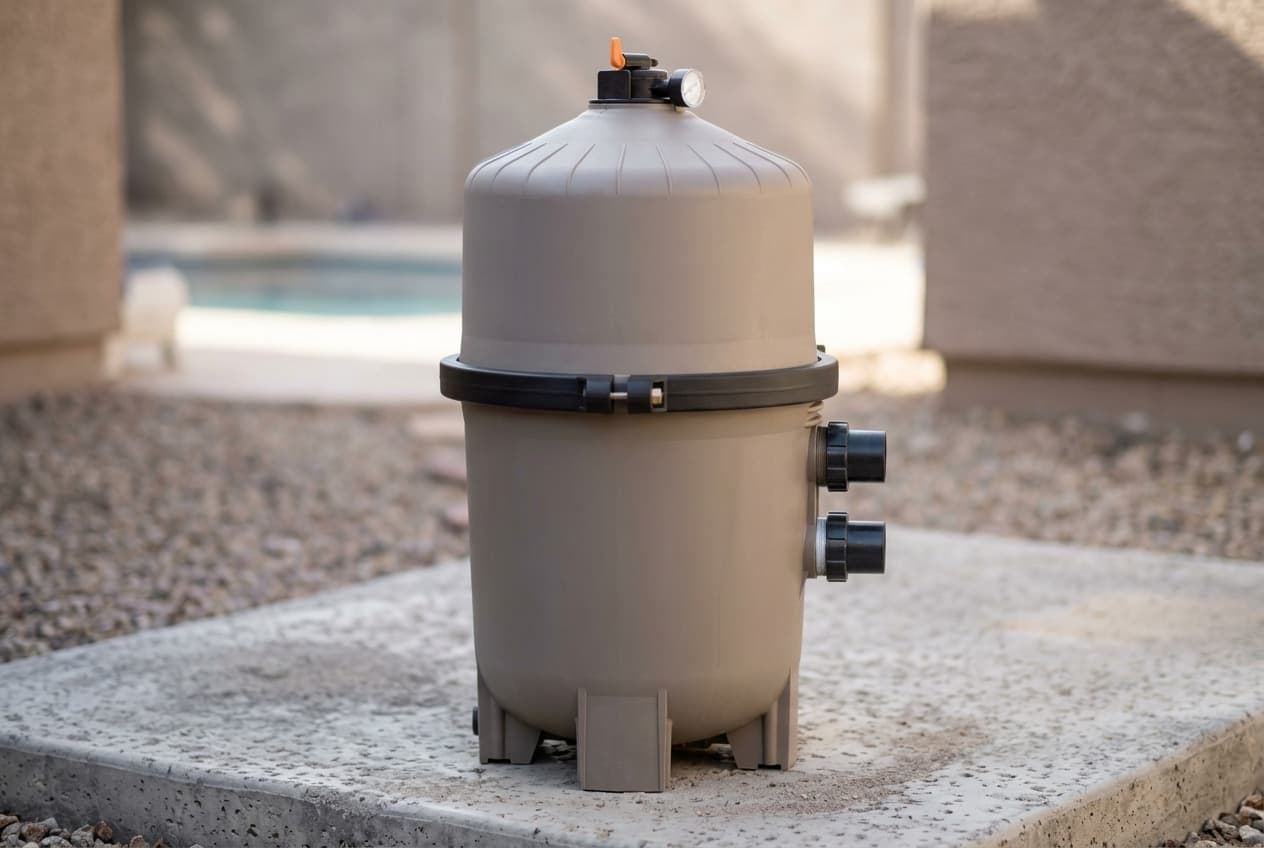
Two different filters carry the SwimClear name, and the parts on this page fit only one of them.
SwimClear multi-element is the tall tank with four cartridges clustered inside it and a single clamp band around the middle. Models run C2030, C3030, C4030, C5030 and C7030. That is the filter this page covers.
SwimClear single-element is a different product, with one cartridge in a smaller tank, covered on its own page. Hayward's 2026 manual lists the C100S, C150S and C275S, which replaced the C200S. The S on the end is the difference in the model number. None of its cartridges, heads or bodies fit this filter, but Hayward's parts lists give both filters the same adapter nut (CCX1000N), drain plug (SP1022CBLK) and union connection kit (SPX3200UNKIT).
The C7030 takes eight cartridges
This is the one thing worth knowing before you order anything for the largest model, because the mistake is easy and expensive.
Every other SwimClear holds four elements. The C7030 holds eight, in two clusters of four, with a mid-plate connector — CX7020M — between them. It is also the one model Hayward has discontinued, which the section below goes into, so this matters for maintaining one rather than buying one. Hayward's parts list spells it out in the description column: CX591XRE, 1 of 8 required, and the four-pack CX591XREPAK4, 1 of 2 required.
So a "cartridge set" for a C7030 is two boxes. One four-pack rebuilds half the filter, and a filter running four new elements and four tired ones is worse than one running eight tired ones, because the clean half takes the flow and the dirty half stops doing anything at all.
What Hayward's flow numbers actually mean
The design flow rate on the spec sheet is not the maximum the filter can pass, and reading it as one is how people end up buying too much filter.
The figures — 84 GPM on the C2030, 122 on the C3030, 150 on the rest — come with a footnote in Hayward's own brochure: "Based on NSF recommended rate for commercial use at .375 GPM/ft²." That is the commercial rating, and it is deliberately conservative. On the C2030, 225 square feet at 0.375 gives 84.4. On the C3030, 325 gives 121.9.
Hayward's product pages print the residential figure beside it. They call the 84 and 122 the public design flow, and give a residential design flow of 120 GPM on the C2030 and 150 on the C3030. From the C4030 up, both read 150.
The three biggest models all read 150 for a different reason. The C4030's area would give 159 and the C7030's would give 262, but Hayward caps the published figure and states plainly that it does not recommend flow rates above 150 GPM on any of them. The brochure also asks for 2-inch piping at or above 90 GPM, which on this line means anything from the C3030 up.
Pentair's Clean & Clear Plus is the direct competitor, and it rates the same way and on the same figure — 0.375 GPM per square foot, with a 150 GPM ceiling on the larger tanks. The two lines land in much the same place; what differs is the cartridge numbers and which dealer network is near you.
None of which a backyard pool is likely to test. A 20,000 gallon pool moving 50 GPM is a long way under the smallest model's rating, and that is normal — a cartridge filter sized well above your pump's real flow does not filter better on any given day. It goes longer between cleanings. Work out the flow your pump actually moves, then pick the tank by how often you are willing to pull cartridges, which is what the filter sizing guide walks through.
Hayward's own documents disagree about the C7030, and it is now discontinued
Take the second part first, because it changes what to do about the first.
Hayward has discontinued the C7030. Its product page says so outright and names the replacement: HCF7030C, from the HCF series, which Hayward describes as a dual-quad-cluster cartridge filter at 700 sq ft. The 2024 SwimClear sell sheet backs this up by simply not listing the C7030 at all — that sheet covers four models, 225 through 525, all four-element. So the SwimClear line as Hayward sells it today stops at the C5030, and the eight-cartridge tank has moved to a different family.
Existing C7030s are not affected. The manual still covers it, the cartridges are still cataloged, and everything below about eight elements and the mid-plate connector still applies to the one on your pad.
Now the numbers, which matter if you are comparing it against anything. Hayward publishes three different areas for the same filter:
- 680 ft² / 63.2 m² — both owner's manuals, ISC2031 Rev B and the earlier ISC2030 Rev C
- 700 ft² / 65.0 m² — the 2019 brochure, and the description on the CX591XRE cartridge pack
- 725 sq ft — the title of the product page
Each is internally consistent — 680 ft² really is 63.2 m², and 700 ft² really is 65.0 — so this is not a typo in one cell. 680 is the number to use. It is what both installation manuals say, across two revisions, and the manual is the document Hayward puts in the box. The 700 comes from a brochure Hayward has since replaced, and the 725 appears only in a page title, above a listing that also tells you the product is discontinued.
It makes no practical difference to how you run the filter. It matters if you are comparing tanks on square feet per dollar, which is exactly when a 45-foot spread changes the answer.
Torque the clamp, and do not do it by hand
Hayward is blunter about this than most manufacturers, and the reason is that a filter lid letting go is the one genuinely dangerous failure on a residential equipment pad.
The manual's instruction: torque the clamp nut to 150 inch-pounds using a ¾-inch socket, and never rely on hand tightening. Note the unit. That is 12½ foot-pounds, so a torque wrench that reads in foot-pounds needs the conversion first — and it is a lower figure than some other cartridge filters call for, so do not carry a number over from a different brand's tank.
Hayward also restricts what may go in the clamp system at all: DEX2421JKIT for the clamp assembly, DEX2421J2 for the nut and bolt, DEX2422Z2 for the metal reinforced seal. Its warning says non-Hayward clamp components may fail in use and cause explosive separation of the upper body.
The startup sequence that keeps it safe:
- Kill power at the breaker and set the valves so nothing can flow to the filter.
- Put the manual air relief valve in the OPEN position before the pump starts, and check the valve body is in LOCK in the filter lid.
- Start the pump standing clear of the filter, not over it.
- Close the air relief only when a steady stream of water comes out — not air, and not an air and water mix.
If water appears at the clamp on startup, shut the system down immediately and reassemble the clamp properly. Never adjust a band on a running filter.
Clean at 7 to 10 psi, and know when to stop cleaning
Write down the pressure on the day clean elements go in. That reading is your baseline and it is the only one that means anything.
Hayward's trigger is 7 to 10 psi above that starting pressure, or whenever flow drops below the rate you want. The gauge has two arrows for exactly this: line the green one up with the pressure when the filter is clean, and clean again when the needle reaches the red one.
The more useful rule is the one almost nobody quotes, and it answers the question people actually have — when do cartridges stop being worth cleaning?
After the elements have been cleaned and reinstalled, if the starting pressure is more than 6 psi above the starting pressure you recorded with new elements, replace them the next time the gauge reaches the red arrow. That is Hayward's own wording, and it is on page 5 of the manual.
That turns a judgment call into a measurement. Elements that come out of a proper clean and still start 6 psi high are not dirty, they are worn — the pleats have lost their shape and no amount of further cleaning brings the flow back. Knowing that saves a season of cleaning cartridges every three weeks and wondering why it keeps happening.
The cleaning method itself — degreaser before acid, never acid on an oily element — is in the filter cleaning guide.
Check the prefix before you buy the tank
A plain C3030 and a W3C3030 are the same filter. The prefix is the sales channel: W3 is Hayward's Open Line, approved for online sale, and the version without it is Expert Line through authorized dealers, on longer coverage.
Buying the W3 online is sanctioned rather than void — you are trading warranty length for price, which is a fair trade to make on purpose and an unpleasant one to discover afterward. The Hayward brand page has the full channel explanation.
Only the three middle models have a W3 version. W3C3030, W3C4030 and W3C5030 exist. W3C2030 and W3C7030 do not — Hayward lists the 225 and the 680 as bare part numbers with no Open Line equivalent, so the smallest and largest tanks in the range are dealer purchases whether you want them to be or not. If a listing offers you a "W3C2030", it is not a Hayward SKU.
One inconsistency to be aware of on the warranty itself: Hayward's current terms are three years parts and one year field labor on the Expert Line, but the owner's manual PDF still carries an older one-year warranty on its back page. Go by the published terms rather than the PDF, and keep the receipt.
What actually fails
The list is short, and it is the same on every cartridge filter of this size.
Cartridges, first and by a distance. Two to four seasons depending on how loaded they run and how well they get cleaned. The tell is pressure climbing back to the cleaning point within days of a proper clean, and the 6 psi rule above tells you when it has stopped being worth the effort.
The seal and the clamp hardware, usually after a service rather than on their own. A seal that gets pinched on reassembly leaks on the first restart.
The gauge, quietly and without anyone noticing, which is why it is worth the few dollars to replace alongside cartridges rather than trusting a reading you have no reason to trust.
The drain plug o-ring, every spring, because it spent the winter out of the filter as Hayward instructs.
Which model do you have?
The model number is on the filter label. Everything else in the range is shared — these are the parts that change with it.
| Model | SKU | Filter area | Residential design flow | Public design flow | Cartridge, single / set | Upper filter body | Top manifold | Outlet pipe | Mid-plate connector | Note |
|---|---|---|---|---|---|---|---|---|---|---|
| C2030 | C2030 | 225 sq. ft. | 120 GPM | 84 GPM | CX481XRE / CX481XREPAK4 | DEX2420BTC | CX3030C | CX3031F6 | — | Dealer only — like the C7030 at the other end of the range, the smallest model has no W3 version. 32½ inches tall and 24 across, and it wants 15 inches of headroom above the lid to lift the cartridges out. |
| C3030 | W3C3030 | 325 sq. ft. | 150 GPM | 122 GPM | CX580XRE / CX580XREPAK4 | DEX3620BTC | CX3030C | CX3031F7 | — | The size most often sold. 34½ inches tall, 16 inches of headroom. |
| C4030 | W3C4030 | 425 sq. ft. | 150 GPM | 150 GPM | CX880XRE / CX880XREPAK4 | DEX4820BTC | CX3030C | CX3031F8 | — | Its public rating is 150 GPM rather than the 159 the area would give, because 150 is where Hayward caps the whole line. 40½ inches tall, 18 inches of headroom. |
| C5030 | W3C5030 | 525 sq. ft. | 150 GPM | 150 GPM | CX1280XRE / CX1280XREPAK4 | DEX6020BTC | CX5030C | CX3031F9 | — | Also 150 GPM — the extra area buys longer runs between cleanings, not more flow. 46½ inches tall and it needs 22 inches above. |
| C7030 | C7030 | 680 sq. ft. in the manuals; 700 on the product page | 150 GPM | 150 GPM | CX591XRE / CX591XREPAK4 | DEX7220BTC | CX5030C | CX3031F10 | CX7020M | 680 sq ft per both owner's manuals, though Hayward also publishes 700 and 725 for it — see the note below. The only model that takes eight cartridges, so it needs two of the four-packs, and the only one with a mid-plate connector. Dealer only: there is no W3 version. 52½ inches tall and 28 inches of headroom — measure before you order, it is taller than a lot of pads allow. |
Hayward SwimClear parts, and what goes wrong
Read off the manufacturer’s parts list and checked before it ships. Open a row for what a bad one actually does — or start from the symptom and work down, which is the cheaper order.
What is it doing?
Four cartridges, sold as a set. Replace all four together — three good elements and one collapsed one passes dirty water through the weak spot, and you will never find it by looking. Hayward also sells them singly as CX580XRE if you damaged just one.
Live pricing arrives when the retailer programs are approved.
The C2030 set. Same diameter as the C3030 element, shorter — they are not interchangeable, and a short element in a taller tank leaves a gap the water goes straight past.
Live pricing arrives when the retailer programs are approved.
The C4030 set. Check the tank label rather than the box on the shelf — the C4030 and C5030 tanks look alike on a pad and take different elements.
Live pricing arrives when the retailer programs are approved.
The tallest of the four-element sets. The C5030 costs more per set but goes longer between cleanings on the same pool, which is most of why people size up.
Live pricing arrives when the retailer programs are approved.
The C7030 holds eight elements, not four, so one four-pack is half a filter. Hayward's own parts list says it plainly — CX591XRE, 1 of 8 required. This is the most common wrong order on this filter by a distance.
Live pricing arrives when the retailer programs are approved.
Check this before buying cartridges. A gauge that has sat in the sun for six seasons reads high, and a filter that is actually fine looks like one that needs a few hundred dollars of elements. With the pump off and the air relief open it should read zero.
Live pricing arrives when the retailer programs are approved.
The seal between the two tank halves. Hayward names it as one of the three clamp-system parts that must be genuine, because a seal that fails here is what turns a leak into a lid coming off.
Live pricing arrives when the retailer programs are approved.
Clamp, nut and bolt, metal reinforced seal and labels in one kit. Hayward's warning is unusually direct: use only its own clamp components, because non-Hayward parts may fail and cause explosive separation. This is not the part to improvise on.
Live pricing arrives when the retailer programs are approved.
The hardware that pulls the band together. It takes 150 inch-pounds on a ¾-inch socket — that is 12½ foot-pounds, so a torque wrench set in foot-pounds needs converting first. Hayward says never to rely on hand tightening.
Live pricing arrives when the retailer programs are approved.
The valve you open before every start and close only once a steady stream of water comes out — not air, not a mix. The nut and the valve body are also sold separately as CCX1000N and CCX1000V if only one of them is done.
Live pricing arrives when the retailer programs are approved.
The 1½-inch plug that comes out every fall. Hayward says to leave it off through the winter so the body cannot crack, which means the o-ring spends six months loose in a drawer and is the thing you cannot find in spring. Buy the spare with the cartridges.
Live pricing arrives when the retailer programs are approved.
If you are doing the job anyway
These get replaced together. Doing them in one pass costs a few dollars more and saves taking the same thing apart twice.
Cartridge change
New elements go in with the tank open anyway, so the seal costs you nothing in labor and it is what leaks on the first restart after a service. The gauge is on the list because a gauge reading high is what sends people to buy cartridges they did not need. Swap the cartridge number for your own model from the table above — and if it is a C7030, order two.
- Cartridge set, C3030CX580XREPAK4
- Metal reinforced sealDEX2422Z2
- Pressure gaugeECX2712B1
Leaking at the clamp
Hayward allows exactly three genuine parts in the clamp system and warns that anything else can separate under pressure. The seal and the hardware together cost a fraction of what the failure does.
- Metal reinforced sealDEX2422Z2
- Clamp bolt and nutDEX2421J2
Winterizing
The plug comes out every fall and Hayward tells you to leave it out until spring. The o-ring is the part that goes missing in between.
- Drain plug with o-ringSP1022CBLK
Hayward SwimClear manuals and documentation
Hosted by the manufacturer. These open on Hayward’s own servers, so they stay current.
- Owner's manual, models C2030 to C7030 (ISC2031 Rev B)manual
- Owner's manual, earlier revision (ISC2030 Rev C)manual
- SwimClear multi-element sell sheet (LITSCMESS24B, 2024) — the current four-model rangespec
- SwimClear multi-element brochure (LITSCME19C, 2019) — the superseded one, and the only sheet listing the C7030spec
- C2030 product page — residential and public design flowspec
- C3030 product page — residential and public design flowspec
- C7030 product page — discontinued, 700 sq. ft. in its specifications and 725 in its titlespec
Hayward SwimClear warranty
3 years parts, 1 year labor
Three years parts and one year field labor under Hayward's 2026 Expert Line terms. The owner's manual PDF still prints an older one-year term, so the two disagree — go by the published terms and keep your proof of purchase. The channel matters more than the discrepancy: a plain C-prefix is Expert Line, a W3C prefix is Open Line, and Open Line is one year parts with no field labor. Worth knowing what is excluded either way, because it is most of what wears out on a filter — cartridges, fingers, grids, o-rings and pleated elements are all normal wear items, covered for manufacturing defects only, which Hayward says normally appear within thirty days of installation. Two conditions apply to everything Hayward sells: the warranty covers only products bought from Hayward or an authorized seller, and coverage cannot start before the delivery date. It transfers with the house — coverage continues from the original installation date, provided the product is still in its original location.
Manufacturer’s termsHayward SwimClear complete parts list
Every part on the manufacturer’s exploded diagram, in their numbering. Marked rows are the ones covered above with a symptom and a diagnosis.
45 parts
| No. | Part | Description |
|---|---|---|
| 1 | ECX2712B1 | Pressure gauge what goes wrong |
| 2 | DEX2420Z8A | O-ring kit, set of 2 |
| 3 | CCX1000N | Air relief valve nut |
| 4 | CCX1000V | Manual air relief with o-ring |
| 5 | DEX2420MAR2 | Manual air relief assembly what goes wrong |
| 6a | DEX2420BTC | Upper filter body, C2030 |
| 6b | DEX3620BTC | Upper filter body, C3030 |
| 6c | DEX4820BTC | Upper filter body, C4030 |
| 6d | DEX6020BTC | Upper filter body, C5030 |
| 6e | DEX7220BTC | Upper filter body, C7030 |
| 7 | DEX2421J2 | Clamp bolt and nut what goes wrong |
| 8 | DEX2421JKIT | Clamp system, complete with seal and labels what goes wrong |
| 9 | DEX2422Z2 | Metal reinforced seal what goes wrong |
| 10a | CX3030C | Top manifold, C2030 / C3030 / C4030 |
| 10b | CX5030C | Top manifold, C5030 / C7030 |
| 11 | CX3000J1 | Air relief filter |
| 12 | CX2030Z3 | Air relief tube |
| 13a | CX481XRE | Cartridge element, C2030 — 1 of 4 |
| 13a | CX481XREPAK4 | Cartridge 4-pack, C2030 what goes wrong |
| 13b | CX580XRE | Cartridge element, C3030 — 1 of 4 |
| 13b | CX580XREPAK4 | Cartridge 4-pack, C3030 what goes wrong |
| 13c | CX880XRE | Cartridge element, C4030 — 1 of 4 |
| 13c | CX880XREPAK4 | Cartridge 4-pack, C4030 what goes wrong |
| 13d | CX1280XRE | Cartridge element, C5030 — 1 of 4 |
| 13d | CX1280XREPAK4 | Cartridge 4-pack, C5030 what goes wrong |
| 13e | CX591XRE | Cartridge element, C7030 — 1 of 8 |
| 13e | CX591XREPAK4 | Cartridge 4-pack, C7030 — 1 of 2 required what goes wrong |
| 13e | CX7020M | Mid-plate connector, C7030 only |
| 14 | DEX2400Z5 | O-ring |
| 15a | CX3031F6 | Outlet pipe, C2030 |
| 15b | CX3031F7 | Outlet pipe, C3030 |
| 15c | CX3031F8 | Outlet pipe, C4030 |
| 15d | CX3031F9 | Outlet pipe, C5030 |
| 15e | CX3031F10 | Outlet pipe, C7030 |
| 16 | CX3030F | Inlet elbow |
| 17 | CX3030H | Piping assembly |
| 18 | CX3030D | Bottom seal plate |
| 19 | DEX2420ATC | Lower filter body |
| 20 | DEX2420LA6PAK | Label pack, with hang tag and owner's manual |
| 21 | SP1022CBLK | Drain plug with o-ring, 1½ inch what goes wrong |
| 22 | SX220Z2 | O-ring |
| 23 | CX3035F | Bulkhead fitting |
| 24 | SPX3200UG | Union gasket, T-seal |
| 25 | SPX3200UNKIT | Union connection kit, with nut, connector and gasket |
| 26 | DEX2420DCKIT | Strap kit, optional |
Buy the filter
One retailer for now. More get added here as their programs are approved, and this becomes a comparison rather than a link.